Summary

... Read More

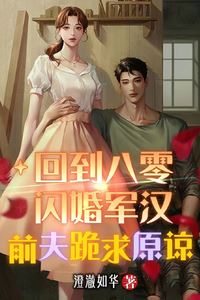
Lin Anran is a dedicated emergency room doctor and orphan who lives a solitary life in a bustling city. Her routine is disrupted when she saves a critically ill elderly man who gifts her a family heirloom jade bracelet, insisting it is destined for her. After accidentally cutting her hand, her blood merges with the bracelet, granting her access to a mysterious spatial dimension. This space contains a traditional siheyuan courtyard, fertile land, a river, and a ginseng tree bearing fruits that restore youth and health. The space also features an infinite storage room and accelerated crop growth, allowing five days inside to equal one day outside. Initially, Lin Anran uses this power to transform her physical appearance and stockpile essential supplies, including food, clothing, medical equipment, and livestock, preparing for an uncertain future while navigating workplace jealousy from a colleague named Wang Tian.

While driving to a rented warehouse, Lin Anran is involved in a severe car accident after brake failure. She wakes up in 1980, inhabiting the body of a woman with the same name. This original owner was an overweight, neglected wife married to Gao Ershan, who despised her and openly cheated with a widow named Chen Yan. Driven to suicide by humiliation, the original owner’s spirit merges with Lin Anran’s consciousness. Using the ginseng fruit from her space, Lin Anran rapidly transforms her body, shedding weight and restoring her beauty. She asserts dominance over her abusive husband, catching him in the act of infidelity and threatening him with a knife to establish boundaries. She demands a divorce, which Gao Ershan reluctantly agrees to, though he is confused by her sudden change in demeanor.

As Lin Anran adapts to life in the 1980s, she uses her medical skills to gain respect in the community, notably saving a child from choking. Her quiet life is interrupted when she discovers Leng Feng, a special forces soldier, bleeding in an alley after being ambushed by underworld assassins. Despite the danger, she hides him in her home and performs emergency surgery to save his life. Leng Feng, recovering in her bedroom, confesses his feelings and proposes marriage, offering her protection and love. Their relationship develops amidst the tension of Leng Feng’s pursuers searching the area and the hostility of Gao Ershan and Chen Yan, who suspect Lin Anran is hiding a man. The story culminates in a confrontation when Gao Ershan, tipped off by Chen Yan, bursts into the house accusing Lin Anran of adultery, forcing Leng Feng to hide on the ceiling beams while Lin Anran faces the enraged crowd.

Latest Release
DateGroupRelease
2026-08-11shanghai fantasy c77
2026-08-11shanghai fantasy c76
2026-08-11shanghai fantasy c75
2026-08-11shanghai fantasy c74
2026-08-11shanghai fantasy c73
2026-08-11shanghai fantasy c72
2026-08-11shanghai fantasy c71
2026-08-11shanghai fantasy c70
2026-08-11shanghai fantasy c69
2026-08-11shanghai fantasy c68
2026-08-11shanghai fantasy c67
2026-08-11shanghai fantasy c66

Community Reviews

Rating(3.7 / 5.0, 9votes)
5 stars
2(22%)
4 stars
2(22%)
3 stars
5(56%)
2 stars
0(0%)
1 stars
0(0%)

Popular reviews

... Read More
I have to talk about the dialogue in this because it's actually really sharp, especially for the genre. Most web novels just have characters say whatever the plot needs, but here the author gives each person a distinct voice and more importantly, subtext. Take Gao Ershan. His dialogue is all threats and deflections — 'Don't think that just because you're dressed like this, you're trying to seduce me.' Classic abuser language. He's trying to reframe her change as manipulation instead of admitting she's become someone he can't control. And then the author drops this tiny detail: 'His throat felt oddly dry.' He's attracted to her. He doesn't want to be. The dialogue does so much work here — he's fighting his own reaction while trying to maintain power. Lin Anran's voice is completely different. Short. Direct. Zero emotional leakage. 'What do you want?' 'I know why you married me — but you'll be disappointed.' She doesn't explain herself, doesn't justify, doesn't perform grief for an audience that doesn't care. This is a woman who has already processed the trauma and is now operating purely on strategy. The scene where she catches them in the act is pure dialogue gold. The mistress screams 'Who's there?' and Gao Ershan stammers 'Lin Anran, do you want to die?' Meanwhile Lin Anran is sitting there like she's watching a bad movie. Her response — 'Tell me, where should I strike? Scratch her face or your lower half?' — is delivered with this casual cruelty that's so much scarier than if she'd screamed or cried. The author understands that silence and calm are more threatening than rage. The narrative voice itself is also worth noting. It's straightforward, almost clinical, which actually fits perfectly — Lin Anran is a doctor after all. The prose doesn't get flowery or overwrought. It observes. It reports. It lets the characters' actions and words carry the weight. I appreciate that restraint.
... Read More
Okay I know what you're thinking—ginseng? In a novel about assassins and romance? But hear me out because the ginseng scene in Chapter 23 is actually one of the most thematically rich moments in this entire batch. Let me walk through this. Director Chen receives a gift from Lin Anran—a box containing something shaped like a human figure with roots attached. His wife opens it and says "Old Chen, look—what is this that looks like a human?" And Chen Keren holds it "like a treasure." This isn't just a comedic beat about a funny-shaped root. This is about value, about recognition, about the weight of what someone gives you. Think about it: Lin Anran, a young woman who just saved a man's life, gives him gifts that are clearly expensive and meaningful. The cosmetics for his wife. The ginseng for him. And Director Chen's response is almost spiritual—he says "I've only read about this before. It's valuable; we really can't accept it." He's not just talking about the monetary value. He's talking about the emotional and moral weight of accepting such generosity from someone you've just met. And then the scene between him and his wife—"I like it, but it's too valuable; we shouldn't accept it" and his wife's comical expression of disappointment. This is a marriage built on mutual respect, on shared values, on saying no to things that could compromise your integrity. It's a quiet counterpoint to the chaos happening outside. Meanwhile, the hospital setting itself is symbolic. It's a place of healing, of second chances. Lin Anran enters this space as a savior and emerges as a daughter-in-law figure. Director Chen's recovery mirrors her own—she's been through trauma, been hunted, been threatened, and now she's finding her place in the world. The ginseng represents nourishment, vitality, the restoration of life. It's a small detail but it ties the whole theme together: this story is about people who have been broken or threatened finding wholeness again.
... Read More
I need to process what just happened because the stakes in this batch went from zero to existential threat and I'm still recovering. Let me just recount the sequence of events because this is absolutely wild. Lin Anran is followed by men who are clearly looking for Leng Feng. She's cornered in an alley. A bearded man pulls out a knife and slides it across her face while saying "Your choice—face or life." Let me repeat that: A KNIFE WAS SLID ACROSS HER FACE. This is not a minor inconvenience. This is a woman one second away from being mutilated or killed. "Silently, Lin Anran prepared the stun baton behind her, but the man, quick-witted, avoided the shock. Alarmed, she thought, 'This time, I'm doomed.'" DOOMED. She literally thought she was going to die. And then—Leng Feng appears. He saves her. The attackers flee. And then what happens? They go to a hotel. They eat buns. They talk about getting married. The tonal whiplash is so extreme I almost couldn't keep reading. One moment she's spitting in a man's face and kicking him in the groin to survive, the next she's blushing because her future husband caught her staring at his eight-pack abs. The juxtaposition is almost absurd. But here's what makes it work: the stakes were REAL. The author doesn't pull punches. The bearded man threatens to assault her. He draws a knife. He says "Kill you? Too easy." These aren't empty threats—these are people who mean business. And Leng Feng's arrival isn't some convenient deus ex machina; he's been tracking them, protecting her from the shadows, waiting for the right moment. The stakes also extend beyond Lin Anran's physical safety. Director Chen's life is on the line—he was attacked, he's recovering in the hospital, and his gratitude toward Lin Anran is what opens doors for her career. The political and social stakes are rising alongside the personal ones. She's not just fighting for her life; she's fighting for her future, for her place in this world, for the right to stand beside the man she loves. And yet, somehow, the author makes you believe that after all this danger, after all this fear, marriage is the next logical step. That's the power of good storytelling—when the emotional truth is strong enough, even the wildest plot developments feel inevitable.
... Read More
The first few chapters are basically a survival prep checklist and honestly? I didn't want to put it down. I know that sounds insane — it's a woman buying medical equipment and livestock — but the author makes it feel like watching someone defuse a bomb. Every item she stocks is a ticking clock counting down to something. The dreams, the bracelet, the sense of inevitability — it's all building this quiet dread that something massive is coming. Then BOOM. Car crash. Time travel. 1980. The pacing shift is so jarring in the best way. One minute she's researching solar generators, the next she's waking up in a mud-brick house with a rope on the beam. That transition from modern prep to historical survival is masterful — the author doesn't waste a single chapter. She hits you with the crash, the awakening, the mirror, the cleaning, the food, the bath, the knock on the door. Eight chapters and we've gone from 21st-century hospital to 1980s rural China and she's already holding a knife on her cheating husband. What I love is how the author uses the prep chapters as both worldbuilding AND foreshadowing. Every medical supply, every seed, every gallon of milk becomes relevant once she's in the past. The pacing isn't just fast — it's efficient. Nothing is wasted. Even the dream sequences with the clay-tiled house and dark-red furniture feel like the author is placing puzzle pieces that will matter later. The cliffhanger at the end of Chapter 6 is perfect though — she's just taken a bath, she's vulnerable, and someone is banging on her door. Is it the husband coming back? The in-laws? The mistress? I immediately hit 'next chapter' and I wasn't even being dramatic about it.
... Read More
There's something deeply symbolic about the mirror scene that I can't stop thinking about. Lin Anran looks into it and sees 150 jin of neglected, unwanted flesh. But here's the thing — she doesn't see herself. She sees the previous owner's failures. The mirror becomes this boundary between two lives, two identities, two versions of womanhood. One version hung herself because the world told her she was worthless. The other version looks at that same reflection and decides to wash it, feed it, armor it. The ginseng fruit is another symbol I keep coming back to. One bite and she loses ten jin, her skin becomes smooth. It's almost too convenient, but I think that's the point — the story is about transformation as survival. In a world where the original Lin Anran had no power over her own body, the magical fruit represents agency. She can change herself. She doesn't need permission. And the kitchen knife. Of all objects, a kitchen knife. The most domestic, mundane tool in a woman's world — the one she's supposed to use for cooking, for serving, for nurturing. And she picks it up and turns it into a weapon. That's not just plot convenience, that's theme. The tools of her oppression become the tools of her liberation. The space itself — this magical pocket dimension with rivers and fields and animals — is basically her inner world made physical. She's building something from nothing, cultivating life in a place where nothing was growing before. The original owner's life was a barren field. Lin Anran's is a thriving farm. The parallel is almost too on-the-nose, but I'm not complaining because it works. What really struck me though is the 1980 setting. This is post-Mao China, a time of massive social change, when women were starting to have more options than ever before — but still trapped by tradition. Lin Anran arriving with modern knowledge and a modern mindset into this era feels like the author is saying something about how far women have come and how much further they need to go. The past isn't just a backdrop — it's a commentary.
... Read More
I have mixed feelings about the pacing here and I need to be honest about it. Let me just lay it out: one chapter Lin Anran is being followed by assassins, the next she's getting proposed to, and by chapter 24 they're talking about wedding dates. Like... what?? The emotional whiplash is real. On one hand, I cannot deny that the action sequences are genuinely thrilling. The alley confrontation in Chapter 22 is so well-paced—you can feel the tension building as she's followed, as she turns into that narrow alley, as the man appears in front of her. "Her heart skipped a beat, and she boldly asked, 'Why are you following me?'" That line alone sent chills down my spine. The author does a great job of making you feel her fear, her desperation, and then the relief when Leng Feng appears like some kind of warrior angel. But then—bam!—we go from "Your choice—face or life" with a knife being slid across her face to a romantic hotel scene where they're eating buns and talking about marriage. The tonal shift is so abrupt it's almost jarring. One moment she's fighting for her life, the next she's blushing because he caught her staring at his abs. I was not prepared for that transition. That said, I will admit the author knows how to hook you. Chapter 22 ends with "A man nearby laughed: 'I didn't see anything… carry on…'" and I was immediately compelled to keep reading. The cliffhanger energy is strong. And the hospital scenes with Director Chen provide a nice comedic relief valve between the high-stakes action and the romance. The fruit basket scene where he and his wife banter about ginseng? Chef's kiss. It gives the reader a moment to breathe before diving back into the emotional intensity. Overall, the pacing is a rollercoaster and sometimes that rollercoaster goes from 0 to 100 too fast, but I can't say I hated it. I was too busy turning pages to complain.
See all reviews

Characters

See all characters

Custom lists

See all custom Lists