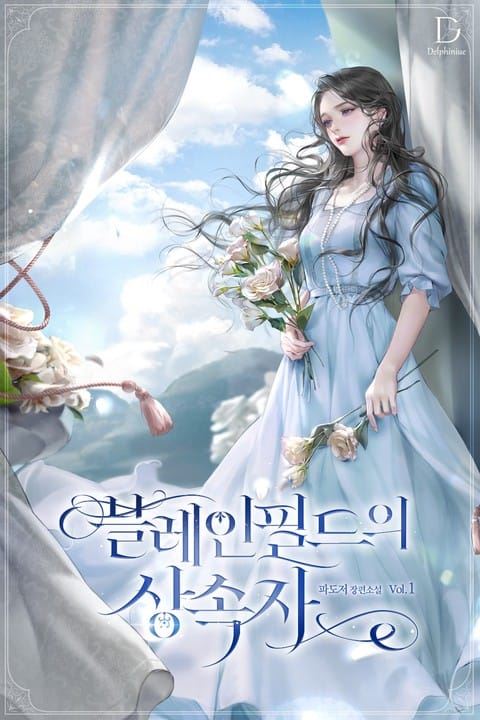
Azur Lane: Episode of Belfast
Novel Info

Summary

... Read More

The world is plagued by the Sirens, mysterious enemies emerging from the ocean depths that have seized ninety percent of the seas. In response, humanity formed the Azur Lane coalition to combat the threat, but philosophical divisions fractured the alliance into rival factions: the Eagle Union, the Royal Navy, and the Crimson Axis, which includes Iron Blood and the Sakura Empire. Amidst this geopolitical tension, a quiet military port hosts the Royal Navy’s dormitory, where shipgirls known as Belfast and her sister Edinburgh serve within the Maid Corps. Belfast is the Head Maid and the Second Ship of the Edinburgh Class, renowned for her perfection and elegance. Edinburgh, her older sister, is clumsy and prone to oversleeping, often relying on Belfast to manage their duties.

The story opens with Belfast’s disciplined morning routine, which includes feeding birds and preparing breakfast before her sister Edinburgh frantically joins her. The daily calm is interrupted when Warspite, a veteran Battleship and Queen Elizabeth’s personal bodyguard, requests use of the kitchen. Later, Queen Elizabeth, known as Her Majesty, demands a cream tea party in the afternoon. Belfast prepares scones and tea, but Warspite secretly attempts to bake her own scones for the Queen. In her inexperience, Warspite causes a fire in the oven, destroying Belfast’s scones and filling the kitchen with smoke. Faced with the prospect of disappointing the Queen, Belfast retrieves Warspite’s failed, rock-hard scones and presents them at the tea party, leading to a chaotic scene where guests suffer stomach aches.

During the party, Elizabeth insists that Edinburgh brew the tea, despite Edinburgh’s lack of confidence in her skills. Edinburgh nervously selects inferior autumn Nilgiri leaves, yet the resulting brew is unexpectedly smooth and beloved by all guests, including Belfast, who notes a unique flavor she cannot replicate. The successful event leaves Belfast curious and somewhat unsettled by her sister’s inexplicable talent. That night, after cleaning up a plate accident involving another maid named Kent, Belfast carries a sleeping Edinburgh to bed. Struggling to understand how Edinburgh achieved such a superior result, Belfast decides to investigate by mimicking her sister’s lifestyle, believing that adopting Edinburgh’s habits might unlock the secret to the tea’s unique taste.

The following morning, the atmosphere in the dormitory shifts dramatically. Belfast fails to wake Queen Elizabeth for duty, having stayed up late attempting to replicate Edinburgh’s methods. Enraged, the Queen storms into Belfast’s room with Edinburgh, shouting and physically waking the Head Maid. Belfast, exhausted and confused, remains unconscious to the Queen’s fury. The narrative highlights the contrast between Belfast’s rigorous perfectionism and the accidental successes that arise from Edinburgh’s carefree nature, while the broader conflict of factional tensions and the Siren threat looms in the background, waiting to disrupt the fragile peace of the Royal Navy port.

Latest Release
DateGroupRelease
2026-10-01light novels translations c208
2026-10-01light novels translations c207
2026-10-01light novels translations c206
2026-10-01light novels translations c205
2026-10-01light novels translations c204
2026-10-01light novels translations c203
2026-10-01light novels translations c202
2026-10-01light novels translations c201
2026-10-01light novels translations c200
2026-10-01light novels translations c199
2026-10-01light novels translations c198
2026-10-01light novels translations c197

Community Reviews

Rating(4 / 5.0, 33votes)
5 stars
10(30%)
4 stars
13(39%)
3 stars
10(30%)
2 stars
0(0%)
1 stars
0(0%)

Popular reviews

... Read More
I'm not usually the type to get emotional over a chapter about making tea, but something about Belfast's morning routine really stayed with me. It's not dramatic or flashy — it's the kind of moment where you realize the writer understands that tenderness doesn't need grand gestures to land. Belfast feeding the birds before anyone else is awake. Tying back the curtain so sunlight can stream through. The way she moves through the kitchen with practiced grace — spinning the tea blender, pouring boiling water, imagining the leaves swirling inside the pot. These aren't just actions; they're rituals. And the fact that she does all of this before dawn, when the rest of the dormitory is still asleep, gives it this almost sacred quality. There's a line where Edinburgh thinks about how her sister is "a perfect and impeccable maid" and how others find her overwhelming, and then adds that this giftedness is actually a source of worry for her. That's such a specific kind of sibling love — wanting your sister to be appreciated but also worrying that the world will exploit her perfection. It made me think about my own relationships in a way I didn't expect from a story about shipgirls. And Belfast herself — she doesn't seem to carry any resentment about being perfect. She just… does it. With a smile. For the birds, for her sister, for everyone in that dormitory. That's the kind of quiet emotional honesty that sticks with you long after you finish reading.
... Read More
The pacing here is absolutely wild, and I love it. You start with this slow, methodical teaching scene — Cygnet squinting at a flip chart, long silences, Ranger explaining danger prediction with actual educational content. It's calm. It's structured. It's boring, honestly. Then someone drops a manga page and everything explodes. The shift from practical driving instruction to romantic comedy analysis happens so fast it's almost disorienting. One moment Ranger is talking about bicycles wobbling into traffic, the next she's inventing entire backstory scenarios about an oversleeping girl and her nemesis-turned-crush. The narrative doesn't ease you into this change — it just happens, and you're along for the ride. What's interesting is how the author uses the students' reactions to control the pace. Javelin is the catalyst — she produces this line about destiny and suddenly Ranger transforms from embarrassed teacher into excited fangirl. The other Destroyers watch in confusion while York offers some Force-related solution that nobody asked for. Each character response adds to the escalating chaos. The dialogue between Ranger and Javelin speeds up dramatically. They're bouncing ideas back and forth like tennis balls, getting more enthusiastic with each exchange. The wall-slam scene discussion is peak energy — they're literally squealing and squirming. It's fast, it's loud, it's everything the opening scene wasn't. And then — Niimi. She appears at the end with her stack of textbooks and pointing stick, which suddenly grounds the scene back in reality. It's like the author needed a reset button after that complete emotional departure. "This is what my lecture is going to be all about!" — sounds promising, right? But you know what's coming. The chapter structure here is essentially: setup (serious lesson), inciting incident (manga discovery), escalation (romantic discourse), climax (wall-slam enthusiasm), and denouement (Niimi's earnest entrance). It's a perfect comedic arc. The pacing never drags because every beat pushes the scene further from its original purpose. By the time we're discussing whether love has "run cold," you realize we've completely abandoned driving safety. And yet — somehow — it all works. The energy is infectious, the humor lands, and you want to see what happens next. "Chase after him — without thinking. Without hesitation. Without even looking back." — that line changed the entire tone of this chapter. We went from practical instruction to romantic action movie in three seconds flat.
... Read More
I've been turning something over in my head since I finished this chapter, and it's about food. Not the food itself—though I'm genuinely invested in whether anyone gets to eat their eggs Benedict at the proper temperature—but what the constant emphasis on shared meals is actually communicating about this world and the people in it. Let me lay out the evidence because it's everywhere. The entire first act of this excerpt is structured around a meal: Elizabeth must be woken before breakfast, breakfast must be served on time, Warspite's mood is presumably connected to the dining room, and then by the end we're already looking forward to afternoon cream tea. Food isn't background decoration here. It's the structural scaffolding holding the whole chapter together. Then there's the dormitory's iron rule about full English breakfasts being followed by lighter lunches. That's not just culinary planning—that's a system designed to keep a community of super-soldiers functioning at peak capacity. Meals are logistical events, yes, but they're also social ones. The fact that Elizabeth insists she can't eat alone because of her royal image is a hilarious surface-level explanation, but underneath it, she's saying something much more vulnerable: I need to be with people when I eat. Presence matters. Shared meals are how we affirm that we belong to each other. And then there's Belfast's role as the one who makes all of this possible. She's not just serving food—she's maintaining the ritual. The washed sheets, the timed breakfast, the hand-scrubbed linens, the carefully prepared cream tea—all of these are acts of care disguised as duty. The text keeps reminding us that the "true work" of the maid corps starts AFTER breakfast, implying that breakfast itself was merely the preface, the warm-up, the opening act of service. But it's also the most humanizing part of the day, the one moment when warriors come together and eat in the same room. I think what this book is quietly arguing is that community isn't built through grand heroic declarations. It's built through someone making sure your eggs Benedict don't get cold. Through someone joking about phantom cats to get you out of bed. Through showing up, day after day, and ensuring that the people around you are fed, clean, and not alone. The symbolism is so understated I almost missed it, but now that I see it, I can't unsee it.
... Read More
There's something so domestic and tender about this entire sequence. A kitchen. After-hours. Just Warspite and Belfast, flour on the counter, a stone kiln oven, ingredients scattered everywhere. It's so ordinary and yet — and yet — it's the most important setting in this whole chapter. The contrast is everything. These are WARSHIPS. They're built for battle, for destruction, for the heavy burden of protecting their faction. And here they are, worrying about whether a cherry pie turned out right. The fact that the author chose a KITCHEN as the stage for Warspite's emotional breakdown and breakthrough is not accidental. It's intentional tenderness. And then we get the bath scene — polished marble floors, hot water from the main boiler, shipgirls relaxing after a long day. Edinburgh's casual "Don't you get a feeling that bathing together while naked is something that dating couples would usually do?" immediately undercuts any potential intimacy with pure comedic panic. The worldbuilding here is so grounded. This isn't some fantasy palace. It's a dormitory. A home. People live here, work here, argue in the kitchen and relax in shared baths. It makes the emotional beats feel earned because the world around them feels lived-in.
... Read More
"Taste is a truly subjective matter. And depending on the taste of each and every person, one might find something nasty, while the other person is going to love that very same taste." Belfast says this and it sounds like philosophy. Because it IS philosophy. This whole chapter is about comparison culture and why it's bullshit. Warspite is suffering because she's measuring herself against other people's metrics. The other Maids get praised for their sweets — she wants that same praise. She assumes the pathway is identical: better baking = more love = more worth. But Belfast keeps gently dismantling this. First by sharing her own failures, then by essentially saying: your pie doesn't need to be Belfast's pie. It just needs to be yours. And then there's the prayer scene, which is basically the thematic climax: "The greatest secret of making the most delicious of meals is to put all of your feelings into the dish." Not technique. Not talent. FEELINGS. The author is basically saying: authenticity beats perfection every time. Warspite's pie succeeds because she poured her actual desire — to see Elizabeth smile — into it. Not because she copied Belfast's method. Not because she achieved some standard. Because she meant it. The tea question Belfast brings up with Edinburgh at the end is the echo of this theme. She spent all day trying to REPLICATE Edinburgh's success instead of finding her own. How many of us do that?
... Read More
Okay so let me just say this outright—this entire tea party arc is so deceptively simple but the way it unfolds is genuinely clever. You've got this seemingly low-stakes scene where Edinburgh brews tea, and on the surface it's just 'oh Belfast tries it and goes wow.' But the real plot movement here is Belfast's obsession. She tastes that tea, Elizabeth drops this line about how Belfast couldn't recreate it even if she tried, and suddenly you realize this isn't about tea at all. It's about Belfast confronting something she can't control or perfect. And then—plot twist within a plot twist—she decides the only way to understand it is to literally copy Edinburgh's lifestyle. That's a brilliant narrative choice. Instead of a confrontation or a dramatic revelation, the story gives us this quiet, almost comedic moment where Belfast ends up thinking 'to change people you start with yourself' and goes to bed on some weird quest for self-improvement. Then Elizabeth shows up the next morning like a tornado because the Head Maid forgot her duty. The chapter structure itself mirrors Belfast's mindset—everything seems calm and orderly on the surface, but underneath there's this whole chain of consequences spiraling from one small moment. Also can we talk about how the kitchen disaster with Kent functions as a perfect midpoint? It's chaotic, visually vivid, and completely contrasts with the controlled elegance Belfast normally embodies. Three plates survive, two shatter, one flies across the room like a frisbee—and then Belfast ends up cleaning until midnight. It's almost like the universe punishing her for not being able to catch everything. Which honestly tracks.
See all reviews

Custom lists

See all custom Lists