Apothecary of the 60s
+Add to Custom List
Genres:
Novel Info

Summary

... Read More

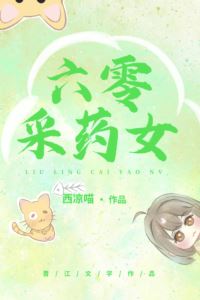
Guan Yue, a sixteen-year-old high school student from a wealthy family, survived the apocalypse only to witness her parents murdered by rebels who feared their viral research would end the chaos. Clutching a family heirloom jade pendant containing her parents' ashes, she used her wood-based abilities to exact revenge before dying, only to awaken transmigrated into the body of a herbalist's disciple named Guan Yue in 1970s China. She now lives in isolation on Daqing Mountain with a mutated vine companion and a puppy, guarding her secret powers while navigating a world far removed from the post-apocalyptic wasteland she left behind.

Gu Sui, a certified doctor from Beijing, is assigned as the Barefoot Doctor for the remote Qingxi Village after being transferred there by his family's political connections. Upon arrival, he learns that the village's supply of antidote pills is critically low after a villager is bitten by a venomous snake. Desperate to save the boy, Gu Sui climbs Daqing Mountain to seek more medicine from Doctor Xu, only to encounter his disciple, Guan Yue. After a tense initial confrontation where Gu Sui is mistaken for an enemy, he impresses her with his cooking skills. They strike a bargain: Gu Sui will cook for her in exchange for the antidote and medicinal herbs, establishing a unique partnership that bridges the gap between the mountain hermit and the valley village.

The village faces immediate internal strife when a local girl, Wu Min, who harbors romantic ambitions for a village accountant, orchestrates a conflict between the Li and Wu families. Her actions nearly cost Li Da his life, but Gu Sui's timely intervention and Guan Yue's provision of medicine prevent tragedy. Tensions rise among the group of Educated Youth sent to the village, revealing class divides and personal ambitions. Wang Lu, from a powerful political family, shows interest in Gu Sui, while others like Fang Jie scheme to escape their rural assignments. Meanwhile, Gu Sui continues his daily routine of treating villagers and cooking for Guan Yue, gradually uncovering the depth of her knowledge and the strange, almost supernatural efficiency with which she manages her mountain garden.

The stability of Qingxi Village is shattered when radical students, incited by an anonymous informant, arrive to destroy the local Mountain God Temple and arrest Guan Yue as a "feudal remnant." The villagers, fiercely protective of the herbalist who has kept them alive, confront the intruders. In a dramatic turn, Guan Yue unleashes a swarm of venomous snakes from the mountain, terrifying the attackers and the villagers alike. The incident is quickly suppressed by local officials who fear the unrest, but it reveals the growing political turmoil spreading from the cities into the countryside. Guan Yue realizes the danger of her hidden identity and the volatile environment, prompting her to travel to the county seat to investigate the source of the betrayal and assess the changing landscape, leaving Gu Sui to manage the village's growing medical needs alone.

Latest Release
DateGroupRelease
2026-08-11shanghai fantasy c92
2026-08-11shanghai fantasy c91
2026-08-11shanghai fantasy c90
2026-08-11shanghai fantasy c89
2026-08-11shanghai fantasy c88
2026-08-11shanghai fantasy c87
2026-08-11shanghai fantasy c86
2026-08-11shanghai fantasy c85
2026-08-11shanghai fantasy c84
2026-08-11shanghai fantasy c83
2026-08-11shanghai fantasy c82
2026-08-11shanghai fantasy c81

Community Reviews

Rating(3.8 / 5.0, 33votes)
5 stars
12(36%)
4 stars
6(18%)
3 stars
10(30%)
2 stars
5(15%)
1 stars
0(0%)

Popular reviews

... Read More
Okay so let me just say—this chapter sequence had me hooked from the very first line. Guan Yue asking Li Tao to make her meat buns? Iconic. But the real plot brilliance is how the author weaves together three separate threads without making it feel crowded. On one hand you've got the daily survival stuff—hunting a wild boar with one axe strike, growing cowpeas in seconds, raising piglets. On the other hand there's this simmering village politics subplot with Yang Guozhu figuring out that Li Tao can essentially milk medicine out of Guan Yue through cooking. That scene where he snatches the pill bottle and starts scheming? Chilling in the best way. And then Gu Sui's parallel journey to the county to find piglets adds this whole layer of danger and effort that pays off when he shows up at sunset with the basket. The narrative structure here is tight—each scene pushes the story forward without filler. The only slight drag is the transition between Guan Yue's mountain life and Gu Sui's town journey, but honestly the author handles it well by cutting back and forth to maintain tension.
... Read More
I need to talk about the sheer tension in that opening scene. Guan Yue walks up to Lei Fugui—who had just attacked Cai Guofu—and she doesn't hesitate. She breaks his arms. Then his leg. The author writes: 'At this point, it wasn't just Lei Fugui and his lackeys who were shocked, but also the onlookers who widened their eyes in fear. This girl was ruthless with her words and even more so with her actions!' The onlookers are terrified of HER now, not just Lei Fugui. That's the shift in power dynamic right there. And Lei Fugui's desperation is palpable—he's kowtowing, calling her 'Auntie' and 'Little Ancestor,' promising to pay double, appealing to old ties. But Guan Yue isn't moved. She's calculating. She gives him a path to survival: take responsibility for the street, keep order, and she won't kill you. The stakes are life and death, and she holds all the cards. What's fascinating is that the author never makes us doubt Guan Yue's capability. We're not wondering if she CAN defeat Lei Fugui—we're wondering what she'll do AFTER. And then the stakes shift subtly. The anonymous complaint letter at the end introduces a new kind of danger. This isn't a physical threat like Lei Fugui—it's institutional, bureaucratic, someone using the system against her. Liu Kai is the suspect, and the text says 'Writing a complaint letter required some literacy, and the person also had to know where to send it.' This is a different kind of conflict, one that Guan Yue can't just punch her way out of. The tension is building in a completely different direction, and I'm already worried about what's coming next.
... Read More
The dialogue in these chapters is deceptively simple. On the surface it reads like casual conversation, but every line is doing double or triple duty. Let me break down why this works so well. Guan Yue's voice is the most distinctive. She's direct, practical, and has this dark humor that slips out naturally. 'Don't worry, I'm a good person.' Said right after Li Tao instinctively pulls her hand back from warm pork belly. The humor isn't forced—it's born from the situation. And her line 'Even without you, I can still have good food' to Gu Sui? That's not just dialogue, that's a power move wrapped in casual observation. She's asserting independence while simultaneously revealing she cares about his cooking. The subtext is everything. Gu Sui's lines are more measured. 'Looks like you don't need me anymore. You probably don't care about what I brought either.' This is him testing the waters, slightly wounded but trying not to show it. And Guan Yue's immediate pivot from 'I don't need you' to jumping up about piglets? Perfect comedic timing written into dialogue. The Li Tao interactions are fascinating because her dialogue is full of hesitation—'Huh? Ah, well, kind of!' and her internal monologue about Guan Yue being terrifying. The author gives her a distinct voice through what she doesn't say as much as what she does. She's constantly holding back, choosing her words carefully around someone she perceives as dangerous. And Yang Guozhu's internal monologue when he figures out the cooking-for-medicine scheme? 'Heh, others can't get them, but I, Zhu San, can definitely get them. It's just that the price…' That's a different voice entirely—greedy, calculating, slightly comical in its villainy. Each character sounds different, and that's not easy to achieve.
... Read More
'How could they rust? They're not made of iron.' I literally laughed out loud. This man is so committed to his treasures. Aunt Caizi just drops these wooden boxes on the table with a THUD and his immediate reaction is 'My treasures... be careful!' The way he speaks throughout this whole section is so distinct—he's warm but slightly embarrassed, proud but trying not to seem like he's showing off. When Guan Yue asks about the needles he says 'I saw how you massaged me earlier, and how you dealt with Lei Fuguai. You already understand acupoints well. Don't waste your talent.' That's him being supportive without being sentimental. And then the marriage comment: 'You're a young woman, and you'll need to get married and have children someday. What good man can you meet up there in the mountains?' Classic Chinese uncle energy. He means well, he's just projecting his own assumptions onto her. Guan Yue's response—just a smile and silence—is perfect. She doesn't argue, she doesn't explain. She just... doesn't engage. Her dialogue is so sparse but so deliberate. Every time she speaks it's either action-oriented ('Scram!') or practical ('I'll study them carefully when I get back'). She's not a character who fills space with words. Even her threat to Lei Fugui—"I have ways to ensure you won't get involved"—is delivered so casually that it's infinitely more terrifying. And Li Tao's line about coming to practice: 'No need to ask. My family is poor and has nothing for her to gain. The worst that can happen is I'll have to do some work.' That's her voice—practical, self-deprecating, already resigned to being the one who does the extra labor. Three lines and you know exactly who she is.
... Read More
I want to talk about how this author controls the rhythm because honestly it's masterful. The chapter opens with a casual exchange about dumplings and meat buns—seems slow, seems like slice-of-life filler. But within three paragraphs you've got a wild boar charging at a tree and Guan Yue one-shotting it. That's the kind of pacing that makes you put the book down and stare at the wall for a second because your brain couldn't keep up. Then it slows back down. Li Tao cooking in a daze, the cowpea magic happening off-screen, the sour plum soup scene. The author knows when to breathe. The Li Tao interactions are deliberately quiet—she's nervous, she's flustered, she's being led around like a sheep. This gives the reader a moment to absorb what we just witnessed before the next wave of plot hits. Gu Sui's section is where the pacing really shines. He leaves, we follow him through town to county, he encounters the shady piglet seller Zhu San, he returns at sunset. It's a mini-quest structure compressed into a few paragraphs, and it works because every beat has purpose. The clinic scene establishes the scarcity of the world. The political disturbance at the school grounds the era. The piglet negotiation shows the underground economy. And his arrival at the wooden house with the moon already up—that's the climax of his journey, and it's handled with such economy that it hits harder than a longer scene would. The ending of this batch with Li Tao visiting regularly and the village chief scheming sets up the next conflict perfectly. The author never lets the reader get comfortable.
... Read More
I need to talk about the dog because honestly Gou Sheng'er had more emotional depth in this chapter than some protagonists I've read about. When the piglets arrive and Guan Yue is stroking them, the dog gets jealous and barks loudly. That's it. That's the moment. But it says everything about the little creature's loyalty and insecurity. Then there's Guan Yue and Gu Sui's dynamic, which is so quietly adorable. He goes on this whole trip—town, county, bargaining with a shady guy named Zhu San for piglets—and when he gets back she acts all casual like 'I don't need you anymore.' But the second he mentions piglets, she jumps up like 'Who said I don't care?' The subtext is screaming. And then he cooks for her and she gets to eat his noodles and just... exists with him. No grand confessions, no dramatic moments. Just two people who've survived together learning to share a kitchen. The Li Tao angle is interesting too. She's terrified of Guan Yue—'the kind of person who could be smiling one moment and then stab you to death the next'—but she keeps coming back. That's not just fear, that's trust building in the most awkward, realistic way possible. She's a girl who survived on her wits in a harsh world, and she's figured out that Guan Yue, for all her terrifying competence, is actually good to her. The pill bottle exchange where Guan Yue essentially bribes her with medicine but frames it as kindness? That's how these relationships actually form. Not through words but through actions that speak louder.
See all reviews

Characters

See all characters

Custom lists

See all custom Lists