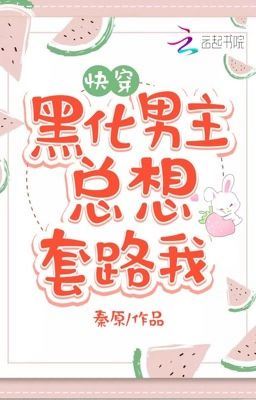
Apocalypse Survival: Starting with Potato Cultivation!
+Add to Custom List
Genres:
Tags:
Novel Info

Summary

... Read More

Qiao Xuejun is an agronomy doctoral graduate who transmigrates into an apocalypse novel on the eve of a catastrophic event. In the original story, mutated creatures emerge ten days later, leading to societal collapse and human cannibalism. She possesses a System that rewards food stockpiling with shelter upgrades. Upon arrival, she faces her exploitative maternal grandparents, who demand she buy thirty thousand jin of rotting potatoes from her cousin, Qiao Yaozu, for one hundred fifty thousand yuan. The potatoes are defective stock that Qiao Yaozu cannot sell. Qiao Xuejun, aware of the impending disaster, recognizes the potatoes as an ideal survival crop due to their high yield and ease of growth. She negotiates the price down to twenty thousand yuan, exposing the family's greed when the elders reveal their plot to short-weight her. Her refusal to be exploited triggers a public backlash after Qiao Yaozu’s livestream accidentally broadcasts his plan to use her betrothal funds. Netizens mobilize to support her, and she uses the incident to demand repayment of the one-point-two-million-yuan compensation from her parents’ death, which the family stole for Qiao Yaozu.

Having secured sixty thousand yuan in cash and seized Qiao Yaozu’s unsellable inventory—including dehydrated vegetables, snacks, and honey—as collateral, Qiao Xuejun shifts focus to preparing for the extreme heat that will precede the apocalypse. She exchanges her initial potato stockpile for a medium-sized production shelter beneath her parents' old rural house. The shelter includes fertile farmland but lacks defensive capabilities and power. Over the next several days, she spends her remaining funds on solar panels, diesel generators, massive fuel reserves, water purification tablets, and cooling systems. She also purchases hardware, medical supplies, and outdoor gear. The Qiao family elders, realizing the market value of potatoes has skyrocketed, break into her home to demand the produce back. They endure forty-degree temperatures waiting for her return, only to have her mock them by enjoying air conditioning elsewhere. The stress causes the grandfather to collapse, temporarily ending their harassment.

As the apocalypse arrives, the extreme heat reaches lethal levels, disrupting power grids and transportation networks. Qiao Xuejun retreats into her underground shelter, which remains cool and stocked. She plants the potatoes in the shelter’s automated farmland, initiating a cycle of cultivation to generate more food supplies. The System indicates that one hundred thousand jin of food is required to unlock defensive functions and water wells. With the current one mu of land producing insufficient yields quickly enough to survive the coming year, she exchanges seeds to expand her farmland to five mu. This expansion ensures she can meet the threshold for upgrades before mutated marine life reaches the inland region. While managing her crops, the System detects an unidentified intruder approaching the house, signaling the end of her isolation and the beginning of potential conflict with other survivors.

Latest Release
DateGroupRelease
2026-10-01lightnovelasia c520
2026-10-01lightnovelasia c519
2026-10-01lightnovelasia c518
2026-10-01lightnovelasia c517
2026-10-01lightnovelasia c516
2026-10-01lightnovelasia c515
2026-10-01lightnovelasia c514
2026-10-01lightnovelasia c513
2026-10-01lightnovelasia c512
2026-10-01lightnovelasia c511
2026-10-01lightnovelasia c510
2026-10-01lightnovelasia c509

Community Reviews

Rating(0 / 5.0, 25votes)
5 stars
0(0%)
4 stars
0(0%)
3 stars
0(0%)
2 stars
0(0%)
1 stars
0(0%)

Popular reviews

... Read More
Okay so let me just talk about this one moment because it is EVERYTHING. The Sand and Mortar grain under the door crack. That tiny, tiny detail. Qiao Xuejun placed it there before leaving and when she came back it was gone—only yellow dust remained. ONE GRAIN. That's it. That's all it took to shatter her entire sense of safety. And the horror of it? She didn't even see an intruder. She came home after surviving a night with monsters at her gate, already on edge, and the smallest possible clue tells her someone was inside her house. While she was gone. Not outside in the dangerous world—INSIDE. Her safe space was violated and she only knew because of something so microscopic most people wouldn't even notice it existed. "The grain of Sand and Mortar she had placed beneath the door crack before leaving had disappeared. Only yellow dust remained... Someone had crushed the Sand and Mortar." This is peak tension writing right here. No jump scare, no dramatic confrontation—just quiet devastating realization. And then her response? She doesn't panic. She calls the System. She checks. She approaches methodically with a flashlight and a knife. The way the author builds this scene is masterful. We go from the mundane act of checking a door lock to full adrenaline fight-or-flight in three sentences. And then the reveal—the man hiding in the wardrobe, blinded by the flashlight, screaming as she stabs his shoulder. The stakes went from 'is someone outside' to 'someone was inside my house the whole time' and the reader is just griping the edge of their seat the entire way.
... Read More
The atmosphere in this chapter is absolutely suffocating — and I mean that in the best possible way. The author doesn't just describe hot weather. They build an entire ecosystem of heat-induced chaos that feels terrifyingly plausible. Let me start with the most vivid scene: the crematoriums. People lining up to scavenge animal carcasses. Not because they're desperate cannibals, but because an old man told his grandson that fifty years ago they ate ANYTHING and it was fine. The image of someone dragging a whole dead cow home while the sun beats down is one of the most visceral pieces of worldbuilding I've encountered. It's grotesque. It's mundane. It's exactly what a collapsing society looks like. The wildfire scene is also stunning in its simplicity. A forest drying out and catching fire on its own. No human cause. No dramatic lightning strike. Just heat so extreme that nature ignites itself. And the cellular base station going down because of it — a tiny, invisible thing that cuts off the internet and isolates Qiao Xuejun even further. These details don't announce themselves as important, which is why they work so well. Qiao Xuejun's underground shelter is described with this beautiful tension: it's safe, it's convenient, it has water pipes running along ugly exposed routes, and it exists in complete contrast to the two-story house above ground that contains absolutely nothing. The shelter is full. The house is empty. Life survives below. Death reigns above. The night scene where the infected old man wanders toward Brother Zhang's house is pure cinematic horror. Moonlight on his bare body. Pupils enormous. Eyes like a cow's. Walking without blinking. The metallic clang of his body against the iron gate. Each sensory detail is chosen with surgical precision. And the fact that he's FOLLOWING BLOOD — not hunting, not patrolling, just following a scent trail — makes him feel less like a monster and more like a force of nature. The hazy night sky, the late afternoon light, the beer belly glistening with oil under the sun — every visual element reinforces the same message: this world is too bright, too exposed, too hot to hide in. The only safety is underground.
... Read More
Okay, so the pacing here is *insane* and I am here for it. Let me trace the arc: We start with something almost domestic — Qiao Xuejun cutting potato seed pieces, watching her grandparents suffer in the heat on camera. It's petty. It's satisfying. It's basically a family drama with a revenge subplot. I'm hooked. Then she drops the 600,000 yuan revelation. The old man faints. The stakes just went up. Then — BAM — ten days pass and the Apocalypse arrives. Power grids failing. Roads impassable. Logistics halted. The world ending while she's planting potatoes. And then she realizes her potato field won't be enough. She needs to expand. She needs more land. She needs a water well. The System starts throwing numbers at her — 100,000 jin for the Defensive Function, 7,000 jin per mu of farmland — and suddenly this isn't just about surviving a heatwave. It's about building an ark. The chapter structure is so clever because it uses the family conflict as a launchpad. Every scene with the grandparents escalates the tension, but the *real* tension is the ticking clock of the Apocalypse. The author is running two engines at once: the interpersonal drama (which we think is the main story) and the survival prep (which turns out to BE the main story). And that ending — an unidentified person approaching the shelter — is the perfect structural pivot. The family conflict subplot is about to collide with the larger survival narrative. I need to know who this person is immediately.
... Read More
"The Center for Disease Control found that Mad Cow Disease Patients were sensitive to the smell of Mugwort." So now we have this bizarre detail — a plant from Chinese folklore, traditionally hung during Dragon Boat Festival to ward off evil and disaster, suddenly becomes our only defense against what might be zombies. I couldn't help but laugh and cringe at the same time. It's such a specific cultural touchstone transplanted into an apocalyptic setting. And then Qiao Xuejun realizes she didn't stock up on it. Of course she stocked up on antibiotics and survival gear but somehow forgot the one thing the government is now telling everyone to hang on their doors. The irony is sharp. But here's what got me — she goes out into the dying world to find it anyway. The wetland is cracked and barren, frogs are dried jerky, birds are nothing but shriveled skeletons. Nature itself is being erased by the heat. And yet the mugwort survives. It's withered but still smells strong. It's a tiny green thread of resilience in a world that's actively killing everything. I found myself thinking about how we all cling to these small rituals when everything falls apart. A sprig of herb on your door doesn't seem like much, but it's also everything. It means someone figured something out. It means there's still a protocol, a plan, a chance.
... Read More
I did not expect to be drawn into a domestic dispute in the middle of an apocalypse. But Qiao Xuejun overhears this man yelling at a girl about chopping wood for a fence, and it's actually kind of devastating. Not because of anything dramatic — just the raw, petty cruelty of it all. "You're eating my food and living under my roof" — said while the world is ending and people are being eaten alive. The girl fires back that she came to see her grandfather, that this is her grandfather's house, and the man literally responds with: "Ask around the whole small town. Which family's ancestral home has anything to do with some little girl? These things pass through the male line, not the female one!" There it is. Decades of patriarchy surviving the end of the world. And then the money line — "What use is money now? You can't buy a single damn thing with it!" As if he hasn't noticed the same thing. The man is shouting about survival and the girl is defending her right to be there, and honestly I was rooting for her the entire time even though I've never met her. It's just so human. Even at the end of everything, people still find ways to be cruel to each other over inheritance and respect. The dialogue feels unpolished and real, like eavesdropping. Neither character gets a grand monologue or a heroic moment. They're just two people arguing in the dark while the world burns around them. It's one of my favorite passages in this entire section.
... Read More
I need a minute. I need to sit with this. The Qiao Family Elders. The absolute *monsters.* Let me count the ways: They made her stand in 40-degree heat for hours — just hours! — while they sat in the shade waiting for her to come back. And when she told them she was enjoying the air conditioner and would be there in twenty minutes? They actually waited. Twenty minutes. In the blistering sun. Because they thought they could force her into handing over money. And she saw the whole thing on the Surveillance Image. She *watched them suffer* and said literally nothing. But here's what got me: Old Master Qiao's reaction when he found out she sold the potatoes. He didn't care about *her.* He didn't ask if she was okay. He screamed about the price. "How could you sell them for only 20,000 yuan!" Not a single thought for his granddaughter's wellbeing — just calculation after calculation of lost profit. "Over 100,000 yuan had evaporated." Evaporated. Like her suffering meant nothing to him. Like *she* meant nothing. And then he fainted. And the first thing Old Madam Qiao did was call Qiao Yaozu to tell him — not to ask if Qiao Xuejun was okay, but to report that their son had been "angered" by Xuejun. As if Xuejun's existence is primarily a threat to the old man's health. The System even noted: "Host, why have they come back again? According to the System's calculations, humans' wisest choice in this heat was to stay somewhere cool." Even the AI was judging them. Qiao Xuejun, meanwhile, is sitting in her cool underground shelter planting potatoes, completely unfazed. She sent them back a voice message saying she's having milk tea with air conditioning. I love her energy.
See all reviews

Custom lists

See all custom Lists