Summary

... Read More

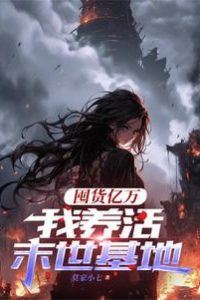
Gu Man is the heiress of the Gu Corporation, a woman who has endured profound personal betrayal and public vilification. Her father, described as a ruthless opportunist, attempted to seize her mother’s shares through illegal means, while her fiancé, Lin Muyu, abandoned her for her stepsister, Gu Xiaoya. The public narrative painted Gu Man as a cruel woman who sent her own mother to a psychiatric hospital, but in reality, she acted to protect her mother’s legacy and secure the family assets through legal channels. After reclaiming a billion-dollar fortune, Gu Man found herself isolated and emotionally exhausted, with no joy in her wealth and no desire for the superficial relationships that surrounded her. Her life changed when her smartphone underwent a mysterious transformation, activating an "Apocalyptic Disaster Game" that established a quantum link to a parallel world.

The parallel world is Xuanwu Base in the year 2366, a frozen wasteland where humanity struggles against mutant beasts and extreme cold. The base is on the brink of collapse due to severe food and water shortages, with citizens facing starvation and even considering cannibalism. Song Lüfeng, the young and capable City Lord of Xuanwu Base, discovers the antique phone and pleads to a higher power for salvation. Gu Man realizes she can transmit physical objects from her world to his through the phone. Her first act of kindness is sending a meal of chicken stew, braised pork, and vegetables, which the desperate survivors receive as a divine miracle. The food not only sustains them but also contains nutrients that help purify their bodies from environmental pollution and boost their supernatural abilities.

The relationship between Gu Man and Song Lüfeng develops into a mutually beneficial exchange. Gu Man provides food, water, and other supplies from the modern era, while Song Lüfeng offers crystal cores, gold, and advanced apocalyptic technology in return. The crystal cores heal Gu Man’s chronic health issues and insomnia, while the shape-shifting robots and energy fields provided by Song Lüfeng’s scientists offer her protection and comfort. Gu Man uses her vast wealth to purchase massive quantities of supplies, including tons of meat, rice, and flour, which she sends to the base. These shipments prevent the base from descending into chaos and give the 300,000 inhabitants hope for survival.

Meanwhile, Gu Man faces ongoing threats in her own world. Her ex-fiancé and stepsister attempt to invade her home, driven by greed and jealousy, particularly after spotting a valuable crystal core left behind. Gu Man firmly repels them, demonstrating her newfound strength and resolve. She also deals with the underlying threat of her father and his associates, who remain interested in her fortune. To protect herself, she hires a bodyguard and upgrades her home security, while the shape-shifting robots from the apocalypse serve as additional guardians.

The story highlights the stark contrast between Gu Man’s material abundance and the base’s desperate scarcity. In Xuanwu Base, a single steamed bun or a bowl of clean water is valued above all else. The citizens view Gu Man as a savior, a deity who descends from the Golden Age to rescue them. Song Lüfeng, initially skeptical, comes to deeply trust and rely on her. He organizes the distribution of supplies to ensure the most vulnerable, such as children and the elderly, are cared for, while also using the high-nutrition food to strengthen his warriors.

As the narrative progresses, Gu Man’s role expands from a passive sender of goods to an active participant in the base’s survival. She learns about the history of the apocalypse, the extinction of livestock, and the technological advancements that allowed humanity to survive in the frozen ruins. The connection between the two worlds becomes a lifeline that could potentially alter the fate of both. Gu Man finds emotional fulfillment in being needed, something her lonely life in the modern world lacked. The story sets the stage for further exploration of the apocalypse, the mysteries behind the quantum link, and the growing bond between the billionaire heiress and the apocalyptic city lord.

Latest Release
DateGroupRelease
2026-08-11shanghai fantasy c200
2026-08-11shanghai fantasy c199
2026-08-11shanghai fantasy c198
2026-08-11shanghai fantasy c197
2026-08-11shanghai fantasy c196
2026-08-11shanghai fantasy c195
2026-08-11shanghai fantasy c194
2026-08-11shanghai fantasy c193
2026-08-11shanghai fantasy c192
2026-08-11shanghai fantasy c191
2026-08-11shanghai fantasy c190
2026-08-11shanghai fantasy c189

Community Reviews

Rating(3.7 / 5.0, 35votes)
5 stars
10(29%)
4 stars
9(26%)
3 stars
12(34%)
2 stars
4(11%)
1 stars
0(0%)

Popular reviews

... Read More
This is chapter 16 through 18 and honestly the pacing is why I keep coming back to this novel. Let me break down why it works. Chapter 16 starts in media res — people already kneeling, already threatening self-immolation. No preamble, no setup. The author trusts us to figure out what's happening. The girl ignites herself in the first paragraph and we're immediately hooked. Then Bai Shuang appears, stabilizes the situation, and just as we think it's resolved — the sharp-faced man presses the button and a hundred fire starters explode. That's a double escalation. Most authors would stop at one crisis point; this one gives us two and then a third when Song Lüfeng arrives. The tension curve is essentially a staircase going up, up, up. Chapter 17 is the release and reorganization. The food arrives, the crowd cheers, and then the author immediately pivots to worldbuilding through the queuing system. This is smart pacing because if you just had the crowd cheer and eat, it would feel hollow. The author uses the celebration to show us how this society actually works — the different lines, the skill-based rations, the military recruitment. It's exposition disguised as plot progression. Chapter 18 is the payoff. The porridge scene, the man's reaction, the elderly woman, the resolution of the troublemakers. And it ends on a quiet note — Gu Man mentioning her crystal cores, Song Lüfeng thinking about the diamonds. The chapter doesn't end with a cliffhanger; it ends with warmth. That's a deliberate structural choice. After three chapters of escalating tension, the author gives us a soft landing. It makes you want to immediately start the next batch because you're emotionally satisfied but also curious about what comes next.
... Read More
I need to talk about Gu Man because WOW. She catches her fiancé and stepsister in bed, her father tries to drug her into a vegetative state so he can seize her mother's shares, and her mother tells her to live on... and what does she do? She doesn't spiral. She doesn't break. She sues, she reclaims her hundred-billion-yuan shares, and she becomes absolutely terrifying. That scene where Lin Muyu and Gu Xiaoya show up at her house expecting her to be a broken mess? Chef's kiss. She walks out in this silk gown looking like a rose blooming in ruins and just *eats them alive*. The dialogue is so sharp: "If you really want to make me feel better, it's simple—leave my house keys, grab your mistress, and get lost!" And then the SLAP. I literally gasped. Gu Xiaoya tries her usual trick—acting innocent, teary-eyed, "Sister, you can hit me instead!"—and Gu Man just *slaps her*. No hesitation. The author even notes that since using that blue crystal, Gu Man's strength increased, and this slap "felt amazing." I am not okay. But what really got me is the contrast between Lin Muyu and Song Lüfeng. Lin Muyu's voice used to mesmerize her, but now it makes her nauseous. Meanwhile, this guy she's never even met in person—this young city lord in a frozen wasteland—has already surpassed him in every way. When he looks at the screen and says "In my heart, you are the savior," Gu Man's frustration completely vanishes. The dynamic between these two is building in the most satisfying way. She's the powerful billionaire in her world; he's the humble leader bowing to survive in his. But both of them are capable, both are dealing with betrayal, and both are learning to trust again. I'm already shipping them and they haven't even met face to face.
... Read More
Okay so this dual-timeline setup is genuinely clever and I need to talk about it. The story bounces between Gu Man's modern-day life and this icebound apocalypse world, and at first I thought, "classic isekai-adjacent trope, whatever," but the way it's structured actually keeps me hooked. Every chapter ends on a little cliffhanger or revelation that makes you want to keep going. Like, the apocalypse folks send a crystal core through this ancient phone, everyone's panicking about whether the "Savior" will actually deliver, and then—BAM—steaming mantou just appears. No buildup, no explanation, just *poof*, food. That's the kind of moment that makes you sit up straight. And then we cut to Gu Man receiving a literal chest of gold. One hundred kilograms! Fifty-eight million! She's a billionaire but even THAT surprises her. The author doesn't waste time explaining the mechanics of how this cross-world exchange works, which I actually appreciate. It keeps the mystery alive instead of bogging us down in exposition. The plot also does something I really respect—it doesn't treat either world as secondary. The apocalypse scenes have real stakes (people are literally starving, their pollution thresholds are failing) and Gu Man's world has its own drama (scumbag ex, stepsister, family betrayal). Both threads feel essential. But here's what's got me most curious: Song Lüfeng's reply, "In my heart, you are the savior." That line hit different. It's not just gratitude—it's devotion. And Gu Man's reaction, the voice button moment, the fact that she's genuinely starting to believe this might be REAL and not a game... that's the plot hook that's gonna keep me reading. What happens when the two worlds start affecting each other more directly? I need to know.
... Read More
'People die for money, birds die for food, there will definitely be someone eyeing her!' Song Lufeng basically just said the quiet part out loud and I am SHOOK. Let me lay out the stakes because they are NO JOKE. On one side: a base of 300,000 people who haven't eaten real meat in 50 years, surrounded by mutated beasts that are evolving faster than humanity can fight back, with population declining for two centuries. They are ONE GOOD HARVEST away from survival or one bad battle away from extinction. On the other side: Gu Man, an ordinary girl with cold womb syndrome and cervical spondylosis, now sitting on a phone that can transport 3000 pounds of meat across timelines. She has crystal cores that can heal her body, shape-shifting robots that can turn into guns and shields, and a continuous water supply she just activated for 12 hours. But here's what keeps me up at night—Song Lufeng's warning about people eyeing HER. If there are humans in her timeline who would kill for this technology, and if the connection between the two worlds becomes known... the stakes just went from 'survival' to 'someone is going to die.' The base residents are already treating that phone like a divine object. What happens when a faction decides the Savior is more valuable alive than dead—or more valuable as a prisoner than as a partner? The young city lord is clearly the strategic mind here. He's already thinking about protection, about reciprocity, about the future. Meanwhile Gu Man is over here marveling at how her back pain disappeared. The contrast is terrifying and hilarious and I can't look away.
... Read More
Let me just say this about Bai Shuang — she's one of the most interesting supporting characters in this entire novel and I don't think the author gives her enough credit. When she appears, she doesn't scold the starving people. She doesn't call them animals. She literally hands a kowtowing girl two tubes of nutrient solution and tells her: "The old you has already died in the flames. Now, your life belongs to me!" That line is chilling and beautiful at the same time. It's authoritarian, sure, but it's also the kind of brutal honesty that keeps people alive in this world. The girl's condition — ribs visible, wounds layered, old and new scars — the author doesn't waste words but every detail lands. And then Bai Shuang orders her staff to distribute the remaining supplies despite their protests. She risks her own position for people who just tried to burn down her hall. That's character development through action, not through some internal monologue. But the real relationship gold is between Song Lüfeng and Gu Man. Their dynamic through text messages is fascinating. She's this all-powerful entity on the other end, casually dropping half a million pounds of meat like she's ordering groceries. And he's the City Lord, supposed to be the strong one, the warrior, but he's literally messaging her for backup in a crisis. When he reads her message, the text says his "chest swelled with joy and gratitude." That's not just relief — that's someone who has found someone he can trust completely. And then there's the guilt he feels about the cost. He asks "This must have cost a lot, right?" and offers tribute. She brushes it off, saying she's rich and can support them. The power dynamic here is fascinating — she has the resources, he has the authority, and together they're holding a city together. I want to know more about how this relationship started and what Gu Man really wants from all of this.
... Read More
The stakes in this book are wild because they operate on two completely different levels and both are genuinely tense. On one hand, you've got an entire city of survivors in an icebound apocalypse where people are literally dying. Their water supply is gone, their pollution thresholds are failing, and they're rationing everything down to their own urine. Song Lüfeng is willing to KNEEL and suffer a thousand cuts just to keep the food coming. That's not dramatic exaggeration—the text literally says he'd do it. The stakes are survival, pure and simple. On the other hand, Gu Man's personal stakes are just as real even if they don't involve imminent death. Her father tried to DRUG HER. Her fiancé cheated with her stepsister. Her stepsister is actively jealous and watching for opportunities to steal. When that crystal core rolls onto the floor and Lin Muyu's eyes go dark with greed, you can feel the threat escalating. Gu Xiaoya thinking "I suddenly wanted to steal it" gave me actual chills. What makes the conflict so effective is that both worlds are in constant danger. The apocalypse folks might lose their Savior if Gu Man gets bored or if something happens to her. Gu Man might lose her hard-won safety and wealth if her predators figure out she's got something valuable. And that ending—Song Lüfeng's message, "In my heart, you are the savior"—creates this beautiful tension where both characters are emotionally vulnerable while also holding power over each other's survival. The author keeps raising the stakes without ever letting you breathe. Just when you think things are settling, another threat emerges. I'm completely invested and I need to know what happens next.
See all reviews

Characters

See all characters

Custom lists

See all custom Lists