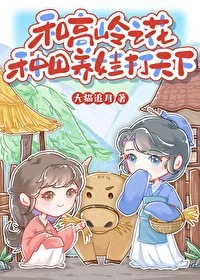
And the Flower of Kaolin, Farming and raising babies to fight the world
+Add to Custom List
Genres:
Tags:
Novel Info

Summary

... Read More

Pear Blossom is a fifteen-year-old girl from Daliushu Village, the eldest daughter of Xiang Dagen, a soldier who has served in the Grace Army for nineteen years. Her family lives in the western room of the Xiang household, enduring severe mistreatment from her grandmother, Xiang Mother-in-law, and her second and third aunts. The Xiang family is divided into three branches, with the eldest branch bearing the burden of military service while the second and third branches enjoy privileges and education. Pear Blossom, initially perceived as simple-minded, is exploited by her relatives who provide her and her siblings with only thin porridge and wild vegetables while they consume meat and white rice in secret.

The story begins when Xiang Mother-in-law and the second daughter-in-law, Zhou, deceive Pear Blossom into accompanying them to the city under the pretense of buying treats. Instead, they drug her and attempt to sell her to human traffickers for ten taels of silver. During the abduction, Pear Blossom finds herself trapped on a high window ledge with two men closing in. Just as she prepares to jump to her death rather than be sold, a mysterious voice inside her mind offers a binding contract. The voice identifies itself as the Crown Princess Development System, promising to help her achieve her wishes, including protecting her family and gaining the affection of a young widow named Dong Yun, in exchange for completing tasks and accumulating points.

Pear Blossom agrees to the binding and allocates her initial attribute points. Although the system suggests increasing her wisdom, she mistakenly assigns all points to her physique due to her inability to read the interface correctly. This decision proves advantageous as her enhanced physical strength allows her to leap from the tower, navigating across window ledges and roofs to escape the traffickers. After escaping, she returns to the village, retrieves food she had purchased for the widow, and steals a pot of pork trotters from the family kitchen to feed her starving mother and siblings.

Upon her return, chaos erupts as her mother, Mrs. Xiong, confronts the family about her disappearance. Pear Blossom publicly reveals that her grandmother attempted to sell her, causing shock among the villagers. The situation escalates when the two traffickers arrive at the village the next day demanding their "goods." The villagers, aware of the family's reputation and the recent commotion, drive the traffickers away, though the Xiang family fears future retaliation. Meanwhile, Pear Blossom's father, Xiang Dagen, returns home with his military pay, but the silver is stolen, likely by Pear Blossom who took it to secure her family's financial stability. His absence of funds leads to conflict with his parents, revealing the deep fractures in the family structure.

As the narrative progresses, Pear Blossom continues to utilize the system to improve her family's living conditions. She hunts wild rabbits and seeks the help of Dong Yun, the young widow she admires, to prepare meals. Her interactions with Dong Yun deepen, and she becomes a frequent visitor at the widow's home. The system monitors her progress, noting that her positive energy and improved physique are generating energy for the system. However, Pear Blossom remains focused on her immediate goals: ensuring her family eats well, defending them against the Xiang family's oppression, and building a closer relationship with Dong Yun. The story highlights her transformation from a passive victim into a proactive protector who uses her wits and newfound strength to challenge the patriarchal and exploitative structures within her family.

The core conflict revolves around the Xiang family's exploitation of the eldest branch. Xiang Dagen's military service funds the entire household, yet his wife and children suffer from malnutrition and abuse. The grandmother and uncles prioritize the education and well-being of the second and third branches, viewing the eldest son's contributions as an entitlement. Pear Blossom's defiance disrupts this dynamic, as she refuses to accept the status quo. She confronts her grandmother, steals food to feed her siblings, and hides her father's money to prevent it from being used against them. These actions mark a turning point in her character, shifting her from a naive girl to a strategic survivor.

Throughout the early chapters, the system serves as both a guide and a source of comic relief, often frustrated by Pear Blossom's literal-mindedness and lack of ambition for royal status. Despite its initial disappointment, the system adapts to her unique approach, recognizing that her energy output is unusually high. The narrative sets the stage for future challenges, including the potential return of the traffickers, the resolution of the missing silver, and the ongoing struggle for autonomy within the Xiang household. Pear Blossom's journey is one of empowerment, as she learns to navigate a hostile environment while pursuing her personal desires and protecting those she loves.

Latest Release
DateGroupRelease
2026-08-11shanghai fantasy c105
2026-08-11shanghai fantasy c104
2026-08-11shanghai fantasy c103
2026-08-11shanghai fantasy c102
2026-08-11shanghai fantasy c101
2026-08-11shanghai fantasy c100
2026-08-11shanghai fantasy c99
2026-08-11shanghai fantasy c98
2026-08-11shanghai fantasy c97
2026-08-11shanghai fantasy c96
2026-08-11shanghai fantasy c95
2026-08-11shanghai fantasy c94

Community Reviews

Rating(5 / 5.0, 29votes)
5 stars
2(7%)
4 stars
0(0%)
3 stars
0(0%)
2 stars
0(0%)
1 stars
0(0%)

Popular reviews

... Read More
Okay, I need to talk about Xiang Dagen because THIS man underwent a complete transformation in these chapters and I am HERE for it. Remember how earlier he was always bowing his head, being overly filial, letting everyone walk all over him? Well, the system clearly did something to him too, because after returning from the military, he's suddenly like "keep practicing until you master it. If anyone tells you to stop, you punch them. If anyone disrespects you, I'll deal with them when I get back." And then he SMASHES A TREE with his bare fist. Like, the text literally says "the entire trunk was shattered, with wood chips flying through the air like petals falling from the sky." I literally gasped reading that. Mrs. Xiang was so scared she dropped her broom and ran inside. And Pear Blossom? She watched this and felt SECRET SATISFACTION. Not because she wanted her mom's husband to be violent, but because she finally saw her father standing up for his family instead of shrinking away. The father-daughter dynamic in this book is so wholesome though. He takes time to teach her horse stance, measures everything out carefully, even lights an incense stick to time her practice. And when he sees her hold it longer than Daniu, he's both surprised and proud. He notices her calves are sore and shows her how to massage them. This man is trying his best, and it shows. But what really got me was the Xiang Dalang scene. Pear Blossom sees this nearly-twenty-year-old lazy cousin trying to climb Dong Yun's wall, and her reaction is INSTANT. No hesitation, no fear, just pure righteous fury. She throws down the chicken she was carrying, sprints, jumps, grabs his leg, and PULLS HIM DOWN. Then she KICKS him. Then she lands two hooks and sends him flying backward. And FUBAO is clapping and shouting "beat him, beat him" like this is the best show ever. I love how Pear Blossom's relationship with Dong Yun has evolved too. She's not just helping her anymore—she's actively protecting her. The text says "in the future, when her body was stronger and she knew some martial arts, she would make sure to beat those people so badly they'd run away crying." This girl has a whole protector complex and I respect it.
... Read More
This chapter operates on two ticking clocks and I am NOT handling it well. First clock: Dagen only has three days before he must return to the army. If he doesn't go, he's a deserter. Jail. Second clock: his father is systematically dismantling every argument he makes, and Dagen knows it. Each conversation ends the same way—father wins, son submits, mother watches silently. The stakes are layered like an onion made of pain. On the surface: food inequality. Deeper: who serves in the army and why. Deeper still: the children's futures. Daniu and Erniu are called 'dumb' by their own grandfather. Pear Blossom is blamed for her own suffering. The family isn't just unfair—they're actively destroying the first branch's prospects while demanding their loyalty. What makes this conflict so gripping is that Dagen is trapped from every direction. He can't quit the army (jail). He can't split the family (government decree). He can't win arguments with his father (who controls the narrative). He can't even save his own saved silver (which his family has presumably already consumed). The only leverage he has is the one thing his father values most: family reputation. 'Even if I have to risk my life, I'll make sure that our family will never have peace again!' — this threat is his only card, and we both know it's not enough. The suspense is suffocating in the best way. We know Dagen has to go back to the army in three days. We know nothing is resolved. We know his family is still vulnerable. And yet—there's a glimmer. Pear Blossom caught rabbits. She's learning to fight back. Dagen is finally seeing clearly. The conflict hasn't ended, but the balance of power might be starting to shift. Just a little. Just enough to keep reading.
... Read More
Okay so let me just say this right out: the missing silver is the single best plot device in this whole arc, and I am obsessed with how the author uses it. It's not just about money — it's the key that unlocks EVERYTHING. Xiang Dagen comes home after nearly twenty years away, and the first thing that happens is his mother accuses HIM of being dishonest. That reversal alone is chef's kiss. But then it gets better. The silver disappears, yes, but the real reveal is that the family was already eating meat while his wife and kids were drinking thin porridge. Pear Blossom literally drags her father to the kitchen and there it is — pig ears, fried eggs, half a plate of leftovers. The visual of that half-plate being hastily hidden is such a small detail but it says everything about this family's rot. And then the grandmother tried to SELL Pear Blossom. Ten taels of silver. That's the number that keeps looping in my head. The same amount of silver that Xiang Dagen lost — or didn't lose, who knows — is the same amount his own grandmother tried to sell his daughter for. The author is connecting these threads so deliberately. I keep waiting for the buyer to show up at the door. That morning report about two men looking for their purchased girl? That's a ticking clock. The plot is setting up a collision and I am HERE for it.
... Read More
I keep coming back to the breakfast scene. The porridge being thicker that morning—such a small detail, but it tells you everything about the power dynamics in this household. The grandmother controls the food, and the thickness of the porridge is a weapon. When Xiong notices it and exchanges a glance with her husband, you can feel the unspoken communication between them. They know what this means. And the kids cheering because they can finally 'eat enough'—that breaks my heart. This is a family that has normalized starvation. The setting details are so grounded too. The hail-damaged roof, the bean fields below Dufeng, the village teacher who supposedly assessed the children. This isn't a generic historical setting—the author has built a specific, lived-in world. The race scene in the barren field was surprisingly vivid. I could see it: the open space, the kids lined up, Dagen in his military clothes, Pear Blossom all confident and grinning. It felt like a painting. And then Liu Youcai and his son appearing at the village entrance—suddenly the whole atmosphere shifts from warm family moment to cold social reality. The contrast between the two scenes, one full of life and the other full of judgment, is masterful.
... Read More
The pacing in this section is a masterclass in controlled escalation, and I want to break down exactly how the author manages it. The chapter opens at a leisurely, almost meditative pace. Pear Blossom is hungry, the system scans for food, they catch rabbits, she walks to Dong Yun's house fixing her hair while balancing rabbits between her legs—that last detail is pure comedic timing, and it gives the reader a breath of lightness right when the story could easily become oppressively dark. The middle section slows down even further with the backstory exposition about Dong Yun's arrival in the village, her relationship with Mrs. Zeng, the courtyard partition. This could have been a slog, but the author keeps it moving by anchoring it to Pear Blossom's immediate concerns: Is the old woman home? Good, then my ears will be quieter. It's practical, grounded, and never feels like an info-dump. Then there's the shift after the meal. Pear Blossom returns the pot, helps with firewood, and the system conversation about her feelings introduces a new kind of tension—not external danger but internal conflict. The energy surge, the system's crackling electromagnetic guilt, the broken promise—this is where the emotional pacing accelerates. And then, just as Pear Blossom is walking back regretfully, the author pivots hard. A commotion at the village entrance. Two men. The buyers. The chapter goes from a quiet afternoon of cooking rabbits to a full-blown crisis in three paragraphs. The cliffhanger ending—Xiang Laoer cursing at the gate, the villagers exchanging glances, the buyers demanding the girl—is exactly the kind of stop-you-in-your-tracks moment that makes you immediately open the next chapter. The structural choice to end on collective tension rather than individual resolution is smart. It's not just Pear Blossom's problem anymore; the whole village is now implicated.
... Read More
'Is my dad adopted?' — Pear Blossom, age fifteen, delivering the most devastating family critique with the casual energy of a kid asking for candy. This girl has a voice, and I am HERE for it. The dialogue in this section is genuinely impressive because every character sounds different. Mrs. Xiang's dialogue is all sharp edges and loud noises—'You're ungrateful! A person like you should be locked up in prison!' She doesn't negotiate, she attacks. Dagen's dialogue is softer, more measured, but when he speaks up it lands: 'If my wife goes to work, who will I take with me?' Simple sentence, huge defiance. Liu Youcai's dialogue is the most layered—on the surface it's polite conversation, but every sentence is a knife. 'Honestly, I feel bad for you—tsk, but there's no point in saying more since you won't listen anyway.' The condescension is so thick you could spread it on bread. And the villagers? Their dialogue feels like a Greek chorus, commenting on the family's suffering while doing nothing about it. The narrative voice itself is interesting too—it's close third person, mostly following Dagen's perspective, but it dips into other characters' thoughts occasionally. When we get Pear Blossom's internal confidence during the race, or Xiong's embarrassment about walking around the village, it adds texture without slowing things down. The humor is dry and earned—like Dagen's internal thought about being a 'senior' soldier at thirty-five, or Pear Blossom teasing him about his age before absolutely destroying him in a race.
See all reviews

Custom lists

Oops…There is nothing here.