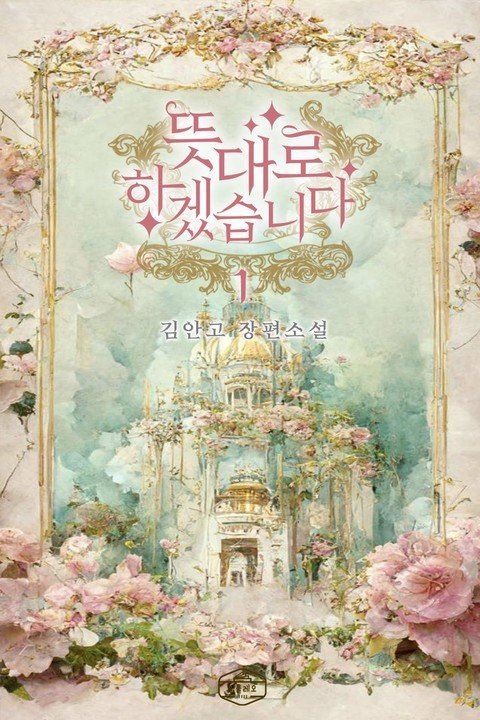
An Elegant and Effective Way to Avoid Courtship
Novel Info
  • Author:
  • Status:Ongoing

Summary

... Read More
Sienna Viper was the Sixteenth Empress of the Great Ostrin Empire, a woman who suffered abuse and neglect under the tyrannical Emperor Ainberg until she collapsed into a coma. Unbeknownst to her, her consciousness transferred into the body of Leonora Chadmon, the beloved daughter of Duke Rivensio, one of the most powerful dukes in the empire. For a year, Leonora lived a happy life surrounded by her doting father and brothers—Allentain, Orie, and the youngest brother—while Sienna’s original body lay comatose in the imperial palace.The tranquility of Leonora’s life is shattered when Duke Chadmon reveals that Emperor Ainberg intends to select a new Empress to secure the succession and address diplomatic pressures. Leonora, haunted by her traumatic past as Sienna, is determined to avoid the imperial throne at all costs. She attends the selection banquet in a deliberately plain ash-colored dress, hoping to appear unappealing and be overlooked. However, her striking beauty and noble lineage make her an obvious candidate, and Emperor Ainberg himself fixates on her during the event.After fleeing the overwhelming banquet, Leonora encounters Ainberg on a secluded balcony—a place that was her sanctuary as Sienna. The Emperor reveals that this is a spot his beloved once cherished, though he does not recognize Leonora as her. His words刺痛 her, and their tense exchange ends when his aide Oz arrives, visibly shocked to see her. Afterward, Leonora receives a gift from the Emperor: a beautiful pink satin dress. Enraged, she destroys it with scissors.That evening, Levi Merten, a nobleman from Bilmotz and childhood friend of the Chadmon family, arrives unexpectedly. Leonora impulsively declares she wishes to marry him to deter the Emperor’s attention. Levi, recognizing her desperation, agrees to a fake engagement. He reveals that Leonora once professed she would marry him as a child and shares memories of her illness, deepening her understanding of the life she now inhabits.Leonora and Levi visit the imperial palace to seek the Emperor’s approval for their marriage. There, Ainberg announces that all marriages are forbidden until a new Empress is selected, effectively making every noblewoman—including Leonora—a candidate. Before Leonora can protest, she collapses from stress and exhaustion. When she regains consciousness, Levi informs her that the comatose Empress has briefly awakened.The story concludes with Leonora struggling to process her dual identity and the political implications of the Empress’s return. She learns that if a new Empress is chosen, the current one’s fate remains uncertain, leaving Leonora trapped between her desire for freedom and the inescapable grip of the empire’s power structure.
Latest Release
DateGroupRelease
2026-10-03dusk blossoms c98
2026-10-03dusk blossoms c97
2026-10-03dusk blossoms c96
2026-10-03dusk blossoms c95
2026-10-03dusk blossoms c94
2026-10-03dusk blossoms c93
2026-10-03dusk blossoms c92
2026-10-03dusk blossoms c91
2026-10-03dusk blossoms c90
2026-10-03dusk blossoms c89
2026-10-03dusk blossoms c88
2026-10-03dusk blossoms c87

Community Reviews

Rating(0 / 5.0, 35votes)
5 stars
0(0%)
4 stars
0(0%)
3 stars
0(0%)
2 stars
0(0%)
1 stars
0(0%)

Popular reviews

... Read More
Okay so let me just... talk about this one moment for a sec. She blurts out "I want to marry Sir Levi Merten" at the dinner table and honestly? I SCREAMED. Like physically screamed at my phone. Who does that?! But also who wouldn't want to do that to escape the Emperor?? The stakes here are insane—she's basically choosing between a man who already hurt her deeply (the Emperor, her former self's trauma) and a complete stranger she's only just met. And yet... Levi's reaction? Absolutely perfect. He doesn't freak out. He doesn't laugh. He just calmly takes her outside and walks with her while she apologizes like a hundred times. The way he says "Don't you have more questions for me, Lady?" when SHE should be the one demanding answers??chef's kiss. But what really got me was the childhood memory scene. Levi telling her about how sick she was, how everyone took turns watching her breathe, how she'd insist on marrying him on the rare good days. And her thinking about Sabine—the servant who always checked her complexion with such care. That hit different. She's realizing that even though she doesn't remember being Leonora, this body's life had people who genuinely loved her. The moment where she almost chokes up about her dead mother? I was NOT okay.
... Read More
I need to talk about Leonora's voice because honestly? It's my favorite thing about this book. She's sharp, she's sassy, she's internally screaming while externally maintaining composure, and the author captures that duality perfectly. Take this exchange: "What is your name?" ... "Leonora Chadmon." "Chadmon." Yes, you bastard. I'm the youngest daughter of Duke Rivensio Chadmon, famous for being the wealthiest in Ostrin. She says it cheerfully on the surface but you can hear the defiance underneath. The author writes her thoughts in a way that makes you feel like you're inside her head, not just observing her from outside. And the Emperor! His dialogue is sparse but loaded. "This is a place my beloved used to love." Just six words that completely shift the entire tone. He could have given a regal, emperor-like answer, but instead he sounds like a guy who's still pining. The contrast between his position of power and his emotional vulnerability is written so subtly. Allentain's dialogue is also distinct—he's warm, slightly anxious, uses softer language. "I'm still moved just seeing you walk around." Compare that to Oz's panicked silence when he sees the Emperor with Leonora. Each character has a recognizable voice. The narrative voice itself has this great rhythm—it speeds up during moments of internal panic (watching her cut the dress) and slows down during atmospheric beats (the wind stopping and starting again). The author knows exactly when to stretch a sentence for drama and when to chop it short for impact.
... Read More
There's something almost cinematic about the garden scene. You have Leonora and Ainberg walking side by side, and the whole sequence plays out like a tension-filled stroll where every sentence lands like a physical blow. The setting feels important—not just decorative. This is where the power dynamic visibly shifts between them. I keep coming back to the imagery of Ainberg bending down to meet her eyes. It's such a deliberate physical gesture—breaking the expected distance between Emperor and subject. He comes to her level, literally and figuratively, and suddenly the whole garden feels smaller, more intimate, more dangerous. The attendants waiting at the edge of the garden create this perfect framing device: they're watching, but Ainberg and Leonora are in their own world for those few charged moments. And the details! The fluffy beds, the teacups, the towels—all of it described with this almost childlike wonder from Leonora's mouth, but read through Ainberg's silence it becomes something else entirely. His expressionless face is such a vivid contrast to her sparkling, performative enthusiasm. One is fire and motion; the other is ice and stillness. And somehow the ice is the one in control. The scene where Foil Viper appears among the attendants with those sharp, cold eyes watching her? Chills. Actually chills. The imperial setting isn't just backdrop—it's a living, breathing space where every person in it is a potential threat, and the garden walk was supposed to be Leonora's moment of agency. Instead, it became the moment she realized she was never actually free. The pinky promise at the end—so petty, so childish, so devastatingly significant. She shows him her pinky finger asking about the diamonds. It's both a genuine moment of levity and a symbolic binding contract that she can't take back.

... Read More
The imperial palace in this story isn't just a setting—it's practically a character that watches everything. Leonora's description of Avery exploring the room is one of my favorite worldbuilding moments because it shows the palace through fresh eyes. Avery stroking the chair, caressing decorations with her fingertips, struggling to remove her gloves because her hands are sweaty—that's such a human detail that makes the opulence feel tangible rather than just decorative. But what really sells the atmosphere is the contrast between the grandeur and the imprisonment. This room was personally given to Leonora by the Emperor, yes, but it's also where she's being kept under house arrest by her own physician's orders. The beautiful decorations become bars on a window she can't see out of. The string ensemble sent by the Emperor is magnificent and chillingly perfect—their breathing synchronized, their bows moving in unison—which makes it feel less like a gift and more like surveillance dressed in silk. The scene with Avery's visit captures this perfectly too. She arrives dressed 'as splendidly as if attending a ball' to come see someone who's been reduced to lying in bed. That visual contradiction says everything about the world this story lives in, where appearances are armor and even a sick visit requires full ceremonial attire.
... Read More
There's this one line that Leonora thinks to herself and it stuck with me like a splinter: "The end of extravagance is the guillotine. You know that, right?" She's being deliberately over-the-top, asking for endless clothes and massive diamonds, trying to make herself look like a frivolous disaster. But the guillotine reference—that's not just dramatic flair. That's the author sliding in the brutal reality of what happens to women who are too much, who consume too greedily, who refuse to play the modest role expected of them. Even in fiction, even in a romantic comedy framework, that shadow is there. The whole performance of herself as a shallow materialist is deeply ironic because she's actually being the most self-aware person in the room. She understands exactly what the empire expects—a dutiful, beautiful, obedient empress—and she's weaponizing those expectations against herself. The diamonds become a shield. The extravagant demands become a form of resistance. She's using the very language of feminine excess that the empire loves to condemn, and turning it into armor. But then Ainberg takes her performance seriously, and suddenly her armor becomes a cage. The theme here isn't just about love or power—it's about how difficult it is for a woman to control her own narrative in a system that only lets her speak through performance. Leonora can only be heard when she's performing either devotion or greed. Neither is the truth. And Levi's line—"A woman who loves His Majesty is no longer attractive"—that's the third option she can't access. Love itself is disqualifying. So she's trapped between being too cold, too hot, too smart, too dumb, too ambitious, too weak. The guillotine isn't just a historical reference—it's the structural violence of every expectation placed on her body and choices.
... Read More
"There really are so many different types of fathers in this world." This line opened my eyes to something I hadn't fully appreciated before—the way this mansion operates as both sanctuary and prison. The opening scene in the hallway with those scissors is so domestic yet so tense. She's standing there, guilty as sin, having just torn apart the Emperor's gift, and this ridiculously handsome man catches her. The contrast between the violence of her actions and the gentleness of his response? "It would be better to leave alterations to professionals." I'm still thinking about this line. It's so smooth. So gentlemanly. And completely covering up the fact that she committed fashion felony. Then the descent to the first-floor reception room—Duke Chadmon at the head seat, the whole family gathered, the tea cups, the political undertones swirling beneath every polite sentence. The author paints this world where every meal is a battlefield and every compliment is a loaded gun. When Father says "My sweet lark, come here" with genuine affection, it contrasts so sharply with the memory of Foil Viper—the previous owner of this body's father, who would "hold a knife to the Emperor's throat in his madness." Two fathers, two worlds, and our heroine is caught between remembering love and fearing power. The garden walk afterward feels like stepping into a painting. Silent. Peaceful. Two people who barely know each other walking side by side while the weight of everything unsaid hangs between them. Levi is tall—"at least two heads above me"—and she has to look up at him. The physical distance, the power dynamics, the history neither of them fully remembers... it all lives in the space between their footsteps.
See all reviews

Custom lists

See all custom Lists