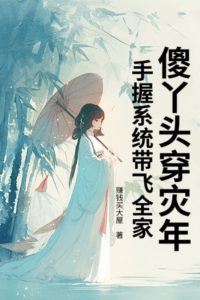
An Ancient-Era Elderly Woman with a Spatial Dimension Directly Connected to a Modern Vegetable Market
+Add to Custom List
Novel Info

Summary

... Read More

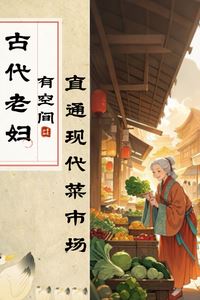
Lu Minggui lived through a harrowing famine during the Chongzhen reign, where extreme drought turned the northern provinces into barren wastelands. Abandoned by her eldest son, Song Dazhi, and his wife, Hu Cuihua, she was left to die in a ruined temple. As she fell into a dry ditch and died, a wooden hairpin absorbed her blood and vanished, transporting her consciousness back in time. She awoke in her own bed, reborn to the day her second son, Song Dahe, was reported dead in battle. In her previous life, this tragedy had broken her spirit, leading her to trust the eldest branch exclusively and eventually hand over all her savings, which resulted in her neglect of the second branch and her own tragic end.

Upon regaining consciousness, Lu Minggui immediately recognized the deception surrounding her family. Hu Cuihua had been whispering that the second branch was extinct to isolate Lu Minggui, but this time, Lu Minggui refused to be manipulated. She slapped Hu Cuihua for her gloating expression and asserted her authority as the matriarch. Her primary focus shifted to protecting her second daughter-in-law, Shen Juye, who was seven months pregnant and despondent after losing her husband. Lu Minggui lied to Shen Juye, claiming Dahe was merely missing rather than dead, to preserve her will to live and protect the unborn grandchild. She ordered Hu Cuihua to fetch a doctor and used her own savings to pay for medical care and medicine, ensuring the pregnancy would survive.

Lu Minggui also confronted the theft committed by her eldest son. She discovered that Song Dazhi had stolen her copper coins while she was unconscious to buy meat for his own family, rather than using the money for her care. By creating a public scene in the courtyard, she forced Song Dazhi to return the stolen money under the scrutiny of neighbors, reclaiming her financial control. She locked away her remaining silver and coins, refusing to let the eldest branch access her resources any longer. This marked a decisive shift in household dynamics, as Lu Minggui began to prioritize the second branch, providing them with nourishing food like egg soup and spinach, which had previously been reserved for the eldest grandchildren.

During her daily chores, Lu Minggui accidentally entered a mysterious white space through her wooden hairpin. This space connected to a modern vegetable market, where she encountered Li Zi’an, a kind shop owner. Initially terrified by the futuristic environment, she was calmed by Li Zi’an, who provided her with cola and steamed buns when she fainted from low blood sugar. Lu Minggui attempted to pay with two ancient Taichang Tongbao coins she carried. Li Zi’an accepted them, unaware of their potential value as antiques. This discovery introduced a supernatural element to her rebirth, offering a potential avenue for resource acquisition in a time of scarcity.

Back in the Song household, Lu Minggui enforced strict labor duties, forcing the lazy eldest branch to work in the fields and tend to chores. She protected her granddaughter Manman from bullying by the eldest grandchildren, Jinbao and Erfen, beating Jinbao with a broom when he attacked the five-year-old. Lu Minggui’s transformation from a gentle, easily manipulated widow to a stern, calculating matriarch unsettled her children. She resolved to prepare for the impending famine by stockpiling resources and ensuring the survival of the second branch. The story follows her navigation of family politics, her use of the mysterious space to gather supplies, and her determination to alter the tragic fate that had befallen her in her past life.

Latest Release
DateGroupRelease
2026-08-11shanghai fantasy c27
2026-08-11shanghai fantasy c26
2026-08-11shanghai fantasy c25
2026-08-11shanghai fantasy c24
2026-08-11shanghai fantasy c23
2026-08-11shanghai fantasy c22
2026-08-11shanghai fantasy c21
2026-08-11shanghai fantasy c20
2026-08-11shanghai fantasy c19
2026-08-11shanghai fantasy c18
2026-08-11shanghai fantasy c17
2026-08-11shanghai fantasy c16

Community Reviews

Rating(3.3 / 5.0, 6votes)
5 stars
1(17%)
4 stars
0(0%)
3 stars
5(83%)
2 stars
0(0%)
1 stars
0(0%)

Popular reviews

... Read More
The dialogue in this section is genuinely excellent, and I want to highlight how each character has a distinct voice. Lu Minggui's lines are short, sharp, and often sarcastic. "This household doesn't feed idlers. From now on, you eat as much as you work. Don't want to work? Then get out!" That's not just dialogue—that's a character declaration. She's drawing a line in the sand, and every word is deliberate. Even her internal monologue has that same clipped quality: "She disliked the eldest household and had no love left for them. Who could love people who harmed her?" Song Dazhi, on the other hand, sounds exactly like what you'd expect from a spoiled, entitled eldest son. "Mother, look what that shrew did to my face!" "Mother, didn't you always like Cuihua and the kids?" "Mother, do you even have eyes for your son?" He's whiny, manipulative, and completely oblivious to how he's come across. The fact that he asks for thirty wen after causing all this drama is peak delusion. Xiaodong's voice is the most restrained. He speaks quietly, hesitantly. "Mother, why did you make this?" "I don't need them!" He's trying not to burden his mother, and even when he's starving, he's thinking about not wasting food. The contrast between his voice and his brother's is staggering—and I think that's exactly what the author intends. The narrative voice itself is also worth noting. It's third-person limited, mostly following Lu Minggui's perspective, and it has this dry, almost wry quality that fits the story perfectly.
... Read More
Okay, I need to talk about Lu Minggui because this woman is absolutely unrecognizable from her past-life self and it is SO satisfying. Remember how in the previous chapters she was constantly bending over backward for her eldest son's family? Cooking for them, working the fields, letting them take everything? Well, that woman is GONE. This version of her is cold, sharp, and absolutely done with Song Dazhi's nonsense. The moment that really sold it for me was when Song Dazhi comes home after his fight with Hu Cuihua and expects his mother to coddle him. He's got scratches on his face and he's complaining about Cuihua, and Lu Minggui's response is basically: "What did you fight about this time?" Not "are you okay?" Not "let me look at those scratches." She's genuinely more annoyed that he didn't clean up the mess. And then when he asks for thirty wen to go get his family back, she nearly loses it. "She wanted to splash that hot porridge on his face!" But the real character moment is her explanation to Shen Juyue. She lays it all out—three people working like oxen for the eldest household, doing all the chores and fieldwork while they hunted, wove, and squandered the money. "The entire family feeds off me. Once I'm spent, they'd kick me aside." That's not just a complaint, that's a woman who has looked at her entire life and decided it was a terrible deal. And she's not going to make the same mistake twice.
... Read More
There's a theme running through all these chapters that I can't stop thinking about: hunger—both literal and metaphorical—reveals who people really are. The famine years are the backdrop, but the real hunger here is for respect, for fairness, for basic human decency. Lu Minggui spent her first life starving herself—physically and emotionally—to feed everyone else. She worked the fields, did the chores, gave her savings, and what did she get? Taken for granted, nearly killed, and then abandoned when there was nothing left to give. Now, in this second life, hunger has become her teacher. When she says "The entire family feeds off me. Once I'm spent, they'd kick me aside," she's not just describing a situation—she's naming a pattern. The wild vegetables she gathers (purslane, malantou, Xiangchun) are symbols of resourcefulness, of making do with what the earth provides when the world won't. She's learning to survive on her own terms. The eggs are another powerful symbol. In a world where food is scarce and precious, the act of frying eggs for Xiaodong is an act of love that says everything words can't. Six eggs total—she's been eating them herself in this timeline, reclaiming what was taken. And Carpenter Qian, who hoards knowledge and won't teach Xiaodong properly? He represents another kind of scarcity—knowledge and opportunity withheld from those who need them most. The story isn't just about surviving a famine. It's about what hunger teaches you about the people around you—and about yourself.
... Read More
The pacing in these chapters is doing some really interesting things, and I want to talk about how the author shifts gears without losing you. Chapter 24 starts with Lu Minggui gathering wild vegetables—purslane, malantou, Xiangchun shoots. It's a quiet, almost meditative scene. She's thinking about prices, seasons, storage. This feels like setup, right? Like the author is giving you a breath before the storm. And then Zhao Yuan comes running in with news that Dazhi and Cuihua are fighting, and suddenly we're in full family drama mode. The transition from the vegetable field to the chaotic courtyard is abrupt in the best way. One moment she's pinching malantou leaves, the next she's walking into a war zone of scattered bowls and a toppled bench. And her reaction? She's almost pleased. "With her old arms and legs, why bother? Watch the show, perhaps." This is such a pivot from her old self, and the pacing of that realization—slow, deliberate, almost amused—makes it hit harder. Then Chapter 26 shifts again entirely. The domestic conflict resolves, and we get Xiaodong's arrival, which is a completely different emotional register. The chapter ends with her going to Carpenter Qian's place before dawn, and that cliffhanger—what does she want from him? What's going to happen?—pulls you straight into the next chapter. The author knows exactly when to give you space and when to tighten the screws.
... Read More
Let's talk about conflict, because this section is absolutely loaded with it. On the surface, the main conflict is Lu Minggui vs. Song Dazhi. She's refusing to feed him, refusing to enable him, and he has no idea how to handle it. But the stakes go way deeper than a family squabble. This is a woman who was nearly killed by the people she loved, and she's now fighting for her survival—not just physical survival, but emotional survival. The external conflict is clear: if she doesn't secure food and resources, the whole family starves. The fields will go to waste. Shen Juyue is pregnant. Xiaodong is an apprentice being exploited. There's a bear in the mountains that killed her husband. The famine is coming. But the internal conflict is what really gets me. Lu Minggui knows she's doing the right thing, but she's also a mother. Every time she shuts the door on Song Dazhi, she's fighting against years of conditioning, of love, of guilt. When she says "goodwill doesn't always bring reward," she's not just talking about her son—she's talking about herself. She gave everything and got nothing. What kind of person does that make her? What kind of mother? And then there's the Carpenter Qian thread, which I'm genuinely curious about. Why is Lu Minggui going to see him before dawn? What does she want? The fact that she's willing to beg or negotiate or whatever it takes shows how far she's willing to go for her children. The stakes keep rising, and I'm hooked.
... Read More
I am not okay. I am literally not okay after the Xiaodong scene. Let me just say that first. This boy comes home after two months, runs thirty li in one night just to see his mother, and he's so thin his clothes don't even fit right. Fourteen years old and he looks twelve or thirteen. His lips are chapped, his forehead is sweaty, his chest is heaving. And Lu Minggui—this woman who has been steel all chapter—breaks completely. She pulls him into her arms and just weeps. "Xiaodong… my Xiaodong!" The tragedy of it is that she's been through this before. In her previous life, she never saw Xiaodong alive for the last time. He was crushed by timber, his face unrecognizable, and she got maybe a fleeting glance before he was buried. Now here he is, alive and eating, and she can't stop crying. And the eggs! She fries two eggs in the last of the lard, just for him. Simple, golden, with a pinch of coarse salt. He tries to share one with Manman, then offers it to Shen Juyue because she's pregnant, and she eats it all alone while her mother watches. That's the kind of love that doesn't need words—it's in the frying pan, in the lard she was saving, in the ten copper coins she presses into his hand. She's been cold to everyone else in this chapter. But with Xiaodong, she's just a mother who thought she'd lost her child.
See all reviews

Characters

See all characters

Custom lists

See all custom Lists