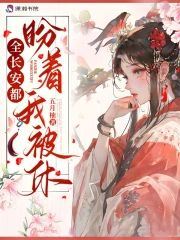
All of Chang’an is Waiting for Me to be Divorced
Novel Info

Summary

... Read More

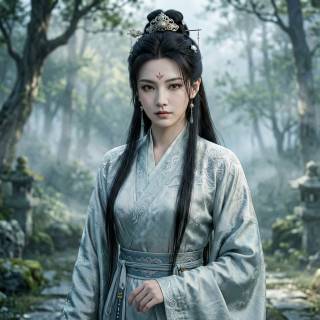
Yun Xiangye, the orphaned daughter of a modest embroidery shop owner, has been married for three years to Gu Yan, a man she met after he saved her from drowning. Their union was arranged out of necessity when Gu Yan fell critically ill and a Taoist priest advised a marriage for good luck. Yun Xiangye traveled from Jiangnan to the capital, Chang’an, with her two-year-old daughter, Nuonuo, to meet her husband’s parents for the first time. She harbors deep insecurities about her humble background and fears rejection, a fear exacerbated by a nightmare in which Gu Yan divorces her due to her lowly origins. Upon arrival, she is shocked to discover that Gu Yan is not merely the son of wealthy merchants but the heir to Prince Ning, the Left Chancellor, and Princess Shengzhao, the Emperor’s sister. Gu Yan had concealed his true identity from her for three years, claiming it did not matter, which Yun Xiangye interprets as a profound lack of care and respect.

The arrival in Chang’an reveals a stark contrast between Yun Xiangye’s expectations and reality. While Princess Shengzhao appears welcoming and assigns Yun Xiangye managerial duties for family businesses, the household staff, particularly the maids, display open contempt. They mock Yun Xiangye’s appearance and background, whispering that she is merely a temporary convenience and that Gu Yan will soon divorce her to marry one of the five noblewomen who had previously vied for his hand. These noblewomen, including the daughters of high-ranking officials and dukes, have remained unmarried for three years, waiting for Gu Yan’s return. Yun Xiangye’s distress deepens when she learns that Gu Yan maintains a separate residence and that his maids discuss the possibility of him taking concubines in the future. She firmly states that she will not share her husband and threatens divorce if he proceeds with such arrangements.

A significant turning point occurs when Yun Xiangye uses her connection to the Crown Prince, Zhao Cheng, to search for her cousin, Ye Wanhe, a palace maid who has been serving in the Eastern Palace for thirteen years. Yun Xiangye hopes to secure her cousin’s release from the palace before her twenty-fifth birthday, allowing them to reunite with family in Jiangnan. However, she discovers that Ye Wanhe is the Crown Prince’s most trusted senior palace maid and is effectively held against her will. Zhao Cheng refuses to release her, revealing a manipulative and possessive nature. Yun Xiangye is left with the bitter realization that her attempt to help her family has failed, and her cousin remains trapped in the palace hierarchy.

The narrative further complicates the social landscape as Yun Xiangye navigates the intricate politics of the noble household. She encounters Gu Yan’s younger sister, Jingru, and other relatives, while also facing the lingering presence of Wei Nian, a cousin who openly mocks her. Despite the hostility from certain family members and servants, Princess Shengzhao treats Yun Xiangye with kindness, offering advice and assigning her responsibilities that acknowledge her capabilities. Gu Yan attempts to reassure Yun Xiangye of his fidelity and intentions, but the trust between them remains fragile. The story highlights Yun Xiangye’s internal struggle to find her place in a world of immense wealth and power, her determination to protect her daughter, and her growing awareness of the political and personal alliances that define her new life in the capital.

Novel Items

More
Document
A dreamed-about document in Yun Xiangye's nightmare where her parents-in-law demanded Gu Yan divorce her due to her lowly background. In reality, this did not happen, but the dream reflected her deep insecurities about her status.
Materials
Yun Xiangye's entire savings, which she carefully sewed into her clothing before meeting her in-laws. These five hundred taels represented her financial safety net, intended so she could return to Yongxing City and reopen her embroidery workshop if things went badly in Chang'an.
Item
An elegant coat worn by Wei Nian when she greeted the arriving family at the Chang'an dock. It reflected her noble status and wealthy background.
Item
A gleaming bronze mirror that Leng Yaoda sat before after her afternoon nap, gazing at her unfamiliar yet stunningly beautiful transmigrated face.
Item
Yun Xiangye's small business in Yongxing City. Her annual earnings were just enough to keep her and her sister fed and clothed. She considered returning to reopen this workshop if her life in Chang'an became unbearable.
Treasure
Two hefty-looking gold bracelets given by Wu Liu to An Ruoyan as a wedding gift. In this era, such valuable items could bring trouble if discovered.
Latest Release
DateGroupRelease
2026-08-11shanghai fantasy c4
2026-08-11shanghai fantasy c3
2026-08-11shanghai fantasy c2
2026-08-11shanghai fantasy c1

Community Reviews

Rating(4.3 / 5.0, 8votes)
5 stars
4(50%)
4 stars
2(25%)
3 stars
2(25%)
2 stars
0(0%)
1 stars
0(0%)

Popular reviews

... Read More
I need to talk about Gu Yan because WOW. This chapter completely recontextualizes everything we thought we knew about him. Up until now, I think most readers (including me) assumed he was the wronged party — the noble heir who got tricked into marrying a commoner. But this chapter flips the script HARD. His own thoughts reveal that he KNEW he was deceiving her. He concealed his identity. He agreed to the marriage for 'good luck' because his family was superstitious. And yet he acted like SHE was the one being unreasonable for bringing it up. The most revealing moment for me was when he said: 'Even if you were forced to marry me, you are still my wife now.' Like... bro. You literally married her because you needed a lucky charm, not because you wanted her. And now you're mad she's treating you coldly? The audacity is unreal. Yun Xiangye, on the other hand, is a whole mood. She's been playing the perfect wife for three years — brewing medicine, raising his child, managing his household — while internally knowing she was never truly chosen. And when she finally snaps? It's not hysterical or chaotic. It's cold, precise, and devastating. 'I lost my mother at fourteen, my father at fifteen, and single-handedly took over the embroidery workshop. What hardship haven't I faced? At worst, he'll just drive me out.' That line gave me chills. She's not afraid of losing him because she never really had him to begin with. And Wei Nian? Pure venom wrapped in silk. Calling Yun Xiangye 'Miss Yun' instead of 'cousin-in-law' while simultaneously suggesting she be demoted to concubine? That's not just petty — that's calculated manipulation.
... Read More
The pacing in these chapters is deliberate and effective. The author doesn't rush the revelation — instead, they drip-feed Yun Xiangye's discoveries like a slow poison. First, the gold bracelets. Then the mention of a sister she never knew existed. Then the cousin's contemptuous stare. Each moment adds a new layer of discomfort, and by the time they reach the princess's residence, Yun Xiangye is already overwhelmed. The carriage ride back is particularly well-handled: it's a confined space where Yun Xiangye and Gu Yan are forced to confront the gap between them, but neither can fully articulate what's wrong. The structure then shifts to Wei Nian's perspective, which is a smart narrative choice — it gives us an outside view of Yun Xiangye's situation and establishes the antagonist before we even meet her face to face. The arrival at the residence is where the pacing really accelerates: the grandmother's kindness, the sister's rudeness, the maid's warning about the plum trees, the revelation about concubines. It's almost too much information, too many shocks in too short a time, and that's exactly the point — Yun Xiangye is drowning. The chapter ends on a cliffhanger with Yun Xiangye finding Gu Yan surrounded by noble young men who are openly appraising her. The author knows how to build tension and doesn't waste a single scene.
... Read More
This chapter is basically a thesis statement on the theme of marriage as economic and social transaction versus genuine emotional connection. Let me break it down. The entire premise of Yun Xiangye and Gu Yan's marriage is built on a lie — literally a 'marriage for good luck.' He needed her for superstition, she needed him out of gratitude and survival. Neither entered this union as an equal partner. And the novel doesn't shy away from showing how that foundational inequality poisons everything that follows. The symbolism of the window is interesting too. Gu Yan climbing in through the window like a 'cat burglar' in his own home — he doesn't truly belong there either. He's performing the role of husband while secretly resenting the arrangement. Yun Xiangye shutting the door on him is her reclaiming physical and emotional space. Then there's Nuonuo herself as a symbol. She's the only 'legitimate' product of this union — the one thing that makes their marriage real in the eyes of society. But even she becomes a bargaining chip, a reason Yun Xiangye must stay, a reason she can't simply walk away. The child represents both the bond that ties them together and the cage that traps her. The embroidery workshop is another layer — Yun Xiangye's independence, her skill, her ability to survive without a man. She gave that up (or set it aside) for this marriage, and Gu Yan never once acknowledged the sacrifice. When she says 'I had already established a household under my own name and vowed never to marry in this lifetime,' she's not just stating a fact — she's mourning the woman she was before she became 'wife' and 'mother.' The novel is asking: what happens when a marriage built on convenience and deception finally runs out of excuses? And the answer, apparently, is a lot of slaps.
... Read More
Yun Xiangye's internal journey in these chapters is devastating to watch. She thought she understood her husband — a merchant who chose her despite her humble background. But the revelation that he is the heir to Princess Shengzhao, and that he concealed this for three years, completely upends her sense of reality. What hurts her most isn't the wealth or the status; it's the deception. Gu Yan's attempt to comfort her by sharing his mother's own merchant origins feels almost performative, as if he's reading from a script about how a good husband should behave. The relationship between Yun Xiangye and Gu Yan is now fundamentally broken, even if neither has said it aloud. Her decision to seek divorce if he takes concubines is a line in the sand — she would rather return to poverty than share him. Meanwhile, the maids' conversation about the Chancellor Lin's daughter and Wei Nian being the 'proper' match for the heir adds a romantic rivalry dimension that hasn't fully emerged yet. Yun Xiangye overhearing them and choosing to swallow her anger rather than confront it shows her growth, but also her isolation. She has no allies in this household — not even her daughter is safe from the subtle power plays. The scene where she refuses to hand Nuonuo to Gu Yan, clutching her daughter tightly instead, is one of the most powerful moments in the entire text. It's a physical manifestation of her fear: if she lets go, even for a moment, she might lose everything.
... Read More
Can we just take a moment for Nuonuo? Because this child is the emotional anchor of the entire scene and I am HERE for it. Every time Yun Xiangye and Gu Yan start arguing, the narrative cuts to Nuonuo. 'Nuonuo, nestled in Gu Yan's arms, watched her parents arguing again, her round eyes filled with panic.' And then later, 'Mother...' — that one little word from the waking child absolutely destroyed me. This is what makes the emotional stakes so much higher than just a marital spat. There's a TWO-YEAR-OLD witnessing her mother being treated like garbage and having no power to stop it. Yun Xiangye's entire motivation for staying becomes heartbreakingly clear: it's not love, it's not hope, it's literally just her daughter. 'The only reason she continued to endure was for Nuonuo's sake.' Oof. And then there's the scene where Yun Xiangye bites Gu Yan's hand until she tastes blood. Not a slap this time — a bite. Like an animal defending its young. That's not a wife angry at her husband. That's someone who has been backed into a corner with nothing left to lose. The most heartbreaking part? Gu Yan genuinely doesn't understand why she's changed. 'Xiangye, you weren't like this before. Why have you become so unreasonable these past two days?' Two DAYS. He has no idea that three years of being treated as an afterthought, of knowing she was married for convenience, of watching his family look down on her — it all accumulated to this breaking point. And he thinks two days of bad behavior is the problem. I'm not crying, you're crying.
... Read More
The dialogue in these chapters is absolutely razor-sharp. Let me just highlight a few lines that I've been quoting to my friends nonstop. Wei Nian's proposal is delivered with this fake sweetness that makes my skin crawl: 'Yun Xiangye is three years older than Cousin Yan, and her appearance is plain and unremarkable. In Chang'an, she can barely be considered a beauty. Her background and demeanor are both common and vulgar. How is she fit to be the Gu family's daughter-in-law?' This is the kind of dialogue where the author lets the villain shoot themselves in the foot while pretending to be polite. Every word is calculated to wound, and Wei Nian doesn't even realize Yun Xiangye is listening outside the door. Then Yun Xiangye's response — oh, it's perfect. She deliberately uses the word 'husband' in front of Wei Nian for the first time in public. Just one word, and it completely shifts the power dynamic. 'It's all thanks to my husband's guidance. Nuonuo has been raised under his care.' Wei Nian's eyes flash with hatred. Done. Executed. And Gu Yan's dialogue is equally revealing of his character. 'You married me only because you felt indebted to me for saving your life?' — the way he repeats her words back like they're a revelation shows he's genuinely processing this for the first time. He thought their marriage was mutual convenience, but hearing her say it out loud hits different. The line 'So you know how it feels to be angry too' after he kisses her aggressively? That's the kind of dialogue that makes you slam the book shut and stare at the ceiling. One sentence, perfect timing, devastating impact.
See all reviews

Characters

See all characters

Custom lists

Oops…There is nothing here.