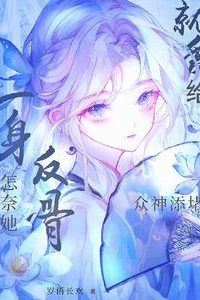
Alas, She's Naturally Rebellious and Loves to Annoy the Gods
Novel Info

Summary

... Read More

Shen Fuxing is a sixteen-year-old girl from the mortal realm whose life unravels when her grandfather dies of terminal liver cancer. Devastated and suffering from bipolar disorder, she attempts suicide by slitting her wrists, only to be intercepted by underworld envoys. Yama, the ruler of the underworld, is in the midst of a massive recruitment drive to fill a quota of one hundred thousand new souls for the Heavenly Court, a demand imposed by the Jade Emperor. Upon discovering Shen Fuxing’s unusual nature as a neither-human-nor-ghost entity, Yama initially considers keeping her for study but ultimately yields to pressure from Taibai Jinxing, a celestial diplomat who transports her to the Heavenly Court. Taibai Jinxing manipulates the situation by telling Shen Fuxing that her grandfather may have ascended to the heavens, giving her a reason to survive and proceed with her new afterlife.

Upon arrival at the Southern Heavenly Gate, Shen Fuxing is assigned as a personal attendant to the Third Prince, Nezha, a fearsome deity known for rejecting and expelling all previous subordinates. The divine officials attempt to discard her, but Shen Fuxing desperately claims to be his biggest fan, a statement that surprisingly secures her position. When Nezha tests her by throwing his six-thousand-jin Fire-Tipped Spear at her, she catches it with one hand, revealing supernatural strength that baffles the onlookers. Nezha, intrigued and unable to explain her abilities, decides to keep her despite his initial disdain. Shen Fuxing’s primary motivation in the Heavenly Court is to locate her grandfather, Shen Yuanling, who she believes is also present among the newly ascended souls.

Shen Fuxing’s tenure in the Heavenly Court is marked by chaotic events and entrepreneurial schemes. She encounters Giant Spirit God, a towering deity whose foul breath is a source of ridicule. Recognizing his potential, she partners with him to create the Giant Spirit Anti-Wolf Spray, a weaponized perfume that incapacitates targets with its odor. The product becomes an instant hit, disrupting the Heavenly Court’s peace and drawing the ire of Heavenly King Li, who is knocked unconscious by the spray during a military drill. Shen Fuxing manipulates the situation to frame Giant Spirit God, but when the Jade Emperor investigates, she negotiates a deal: she offers a refined, more powerful version of the weapon, the Dusk of the Dung Beetle, in exchange for information about her grandfather’s whereabouts.

The Jade Emperor accepts the trade, granting Shen Fuxing a reward of merit and pardoning Giant Spirit God, though he remains unaware that Shen Fuxing is the true mastermind. Meanwhile, Nezha grows increasingly suspicious of Shen Fuxing’s absences and her mysterious activities. When she returns to Yunlou Palace, he confronts her with lethal intent, but she deflects his anger by volunteering to care for the recovering Heavenly King Li, who holds a grudge against her. Shen Fuxing proceeds to torment Li Jing by feeding him foul-tasting medicine and administering intravenous treatments laced with hallucinogenic powders, leading to a public scandal when Li Jing accuses her of harassment before the Jade Emperor.

As the story progresses, Shen Fuxing’s actions continue to destabilize the rigid hierarchy of the Heavenly Court. She navigates complex political dynamics, leveraging her unique strengths and cunning to protect herself and achieve her goals. The narrative explores the bureaucratic and commercial aspects of the celestial realm, contrasting the divine authority with the mundane struggles of its inhabitants. Shen Fuxing’s search for her grandfather remains an unresolved thread, driving her decisions and interactions with key figures like Nezha, the Jade Emperor, and Giant Spirit God. Her presence introduces an element of unpredictability and chaos, challenging the established order and forcing the deities to adapt to her unconventional methods.

The central conflict revolves around Shen Fuxing’s struggle to find belonging and purpose in a realm that views her as an anomaly. Her relationship with Nezha evolves from hostility to a tentative alliance, as he begins to rely on her for tasks that require her specific skills. The story highlights themes of power, bureaucracy, and the search for identity, set against a backdrop of mythological figures reimagined in a modern, bureaucratic context. Shen Fuxing’s journey is one of survival and subversion, as she uses her wits and supernatural abilities to carve out a place for herself in the Heavenly Court, all while pursuing the personal goal of reuniting with her grandfather.

Novel Items

More
Manuals
Yama's tool for recording lives and deaths, operated on a computer. It was used to randomly select 300,000 individuals and mark them for cancer or car accidents. Shen Fuxing was noted as not being controlled by this book, being more ghostly than a ghost.
Weapons
Nezha's personally bestowed weapon from Taiyi Zhenren, weighing six thousand jin. It could crush any demon with less than a thousand years of cultivation to death on the spot. Nezha tossed it at Shen Fuxing to scare her away, but she caught it with one hand despite having no cultivation. It was described as cold and gleaming.
Arcane Treasures
A divine artifact shaped like a fiery dragon with rippling light, wrapped around Nezha's arm. It glowed with intense red light and swirled around Nezha's body when he was displeased. It was mentioned as the weapon that could throw people out of Yunlou Palace.
Arcane Treasures
A divine artifact hanging around Nezha's neck. It was one of his signature possessions visible when he sat on his throne.
Other
Taibai Jinxing's mode of transportation, which he arrived on and departed on. It was used to carry him and Shen Fuxing from the underworld to the Heavenly Court in the blink of an eye. Taibai Jinxing raised a barrier around it to prevent high-altitude object throwing accidents.
Documents
The document or record that Shen Fuxing obtained upon entering the Heavenly Court, marking her as a newly promoted low-level immortal.
Latest Release
DateGroupRelease
2026-08-11shanghai fantasy c12
2026-08-11shanghai fantasy c11
2026-08-11shanghai fantasy c10
2026-08-11shanghai fantasy c9
2026-08-11shanghai fantasy c8
2026-08-11shanghai fantasy c7
2026-08-11shanghai fantasy c6
2026-08-11shanghai fantasy c5
2026-08-11shanghai fantasy c4
2026-08-11shanghai fantasy c3
2026-08-11shanghai fantasy c2
2026-08-11shanghai fantasy c1

Community Reviews

Rating(4 / 5.0, 10votes)
5 stars
2(20%)
4 stars
6(60%)
3 stars
2(20%)
2 stars
0(0%)
1 stars
0(0%)

Popular reviews

... Read More
There's a scene that I just can't get out of my head. When Shen Fuxing returns to Yunlou Palace, the description is SO vivid: 'The dazzling red light surrounding him—whether it was the Sky-Mixing Silk sensing its master's anger and growing restless, or the Samadhi True Fire already condensed into a blazing, tangible flame—was unclear.' I love how the author doesn't even know which one is causing the red glow. It's both. The weapon itself is reacting to his emotion, and the fire is so intense it's become physical. This is a world where your tools literally feel what you feel. And then contrast this with Lingxiao Palace — cold, calculating, political. The Jade Emperor sitting on his throne, fingers twitching as he imagines Tathagata's face turning 'shades of green and white.' The visual of the Emperor practically drooling over a weapon that could humble the Buddha? That's worldbuilding through humor and pettiness, which is honestly more impressive than any elaborate description. But the scene that really stuck with me was Giant Spirit God's residence. All these female immortals waiting for him with handmade sachets and snacks, and his 'blue face gradually turned red.' After everything that happened — the arrest, the trial, the political maneuvering — he walks into a room full of genuine warmth. It's such a soft, human moment in a story that's otherwise all about power and schemes.
... Read More
Let me just lay out the stakes because this girl is playing on HARD MODE. Shen Fuxing skipped work for DAYS. In a place where the Jade Emperor literally sentences people to Celestial Prison, skipping work isn't a minor infraction — it's a death sentence waiting to happen. And she did it because her grandfather just ascended and she couldn't find him. That's the emotional core: a sixteen-year-old girl alone in a cosmic bureaucracy, trying to find family. But then she goes and confronts the Jade Emperor ALONE. No backup, no protection, just her wits and a weapon she made in a lab. The text says: 'For someone so young to face the Emperor alone, undaunted by the majesty of the Heavenly Court, showed remarkable courage.' But it wasn't just courage — it was calculation. She knew exactly what buttons to push: cost savings, extra revenue, political leverage against Spirit Mountain. And the stakes keep rising. She wins the Jade Emperor over, gets Giant Spirit God pardoned, secures a favor... and then walks back into Yunlou Palace where Nezha has literally thrown a spear at her face. The conflict isn't resolved — it's just paused. She's bought herself time to find her grandfather, but at what cost? How long can she keep dodging the Great God of the Third Altar's wrath? Every scene feels like walking a tightrope. I couldn't look away.
... Read More
What struck me most about this story isn't the magic or the gods—it's the darkly comic treatment of death as a bureaucratic quota system. Yama isn't some solemn judge of souls; he's a stressed executive clicking through a spreadsheet, marking three hundred thousand people for cancer or car accidents to meet a headcount target. The Book of Life and Death runs on a computer. Ghost messengers deliver reports. This is the afterlife as a soul-crushing corporation, and honestly? It feels uncomfortably familiar. Shen Fuxing's grandfather died of liver cancer, and the story makes it clear that Yama has been using cancer as a recruitment tool for years. The line between natural death and manufactured death blurs until it disappears entirely. But beneath the satire, there's something genuinely tender happening. Taibai Jinxing lies to this grieving sixteen-year-old girl and tells her she might see her grandfather in the Heavenly Court, not because he knows it's true, but because "the priority was to give this child something to live for." Even in a system this cold and absurd, there are moments of genuine compassion. The Fire-Tipped Spear itself is symbolic too—it's a weapon of destruction, but Shen Fuxing catches it and immediately offers to clean it. She transforms a tool of violence into something domestic, something manageable. That's her throughout the story: taking chaos and making it work for her. The story asks a simple question in a world where death is just another HR problem—what does it mean to find purpose when the system treats your life as a number?
... Read More
I need to talk about this opening chapter because honestly, the premise had me wheezing. Yama is basically a middle-manager drowning in corporate quotas, and the fact that he's just mass-producing deaths through cancer and car accidents like it's a spreadsheet problem? Genius. The whole Heavenly Court operates like a dysfunctional HR department, and Shen Fuxing gets caught in the crossfire as one of three hundred thousand random victims. But here's what actually hooked me—she doesn't just die, she commits suicide before the underworld can collect her. That's the kind of rebellious energy that makes a protagonist worth following. And then Taibai Jinxing swoops in and basically steals her for the Heavenly Court, using the excuse of "child labor" because apparently the Third Prince is also child labor and nobody bats an eye. The plot moves fast, almost too fast, but that's part of the charm. It's a fish-out-of-water story wrapped in a bureaucratic satire wrapped in a xianxia setting, and I'm already invested. How does a girl who just killed herself end up as a servant to the most feared deity in the Six Realms? That's the question I need answered.
... Read More
I need to talk about Nezha because OH MY GOD. The scene where he hurls his Fire-Tipped Spear at her face the moment she walks through the door? That is some next-level passive-aggressive energy. And Shen Fuxing's reaction? She doesn't flinch. She doesn't even look scared. She just picks up the spear, hands it back to him, and stands there like a tiny immortal statue. The text says: 'In the face of his threats, Shen Fuxing always seemed to have only this one reaction.' And I keep coming back to this — what IS that reaction? Is it fearlessness? Is it manipulation? Or is she genuinely so focused on finding her grandfather that Nezha's anger is background noise? But then she does this thing where she looks up at him with 'misty and red-rimmed' eyes and says 'punish me,' and Nezha is completely thrown off. The narration is perfect: 'Hitting her wasn't right, but not hitting her wasn't right either.' He's so frustrated! He WANTS to be mad at her, but she keeps disarming him. I think what's fascinating is that their dynamic is shifting. She's his subordinate, technically, but she just outsmarted the entire Heavenly Court bureaucracy and he couldn't even find her for days. There's a power imbalance here that's constantly flipping, and I am HERE for it.
... Read More
"Standing before you is Third Prince's number one fan! My greatest wish in life is to serve him tirelessly, to be his dog!" I literally screamed at my phone reading this. Shen Fuxing's voice is absolutely unhinged and I love her for it. She's dead, she's grieving, she's got bipolar disorder, and yet here she is on a table in front of terrified divine officials, aggressively volunteering to be someone's pet. The dialogue in this book is sharp, funny, and full of personality. Every character has a distinct way of speaking. Taibai Jinxing is smooth and glib-tongued, using phrases like "I'll put in a good word for you" while clearly manipulating the situation. The divine officials speak in panicked stutters and bureaucratic panic. And Nezha? He barely says anything, which makes every word hit harder. "Where did this little brat come from?" is delivered with such casual disdain that it's perfect. The narrative voice itself is also a character—snarky, observant, occasionally breaking the fourth wall with comments like "Truly, there are more bad people in the world~" The humor lands because the author trusts the reader to get the jokes without over-explaining them. And that final exchange where Shen Fuxing catches the spear and asks "Do you want me to wipe it for you? Or should I put it away?"—the casual domesticity of that line after almost getting crushed by a six-thousand-jin weapon is comedy gold.
See all reviews

Characters

See all characters

Custom lists

Oops…There is nothing here.