Summary

... Read More

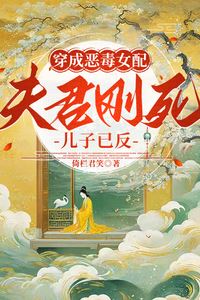
Gu Jiuniang is the shrewd proprietress of Junmeng Garden, the most exclusive and mysterious entertainment house in the capital. Operating under strict rules that forbid private encounters, she cultivates her girls with ruthless precision, viewing them as investments to secure power and wealth in a world where women without protection live on the edge of a cliff. Her prized possession is Tang Wu, a stunningly beautiful courtesan Gu Jiuniang has raised for four years from a humble, trafficked girl into a pearl of unmatched value. Gu Jiuniang plans to sell Tang Wu to the highest bidder, specifically targeting the powerful Count of Cheng’an, whose persistent interest and generous gifts indicate a serious intent to take the girl as a concubine.

Tang Wu, however, harbors secret longings for Xu Duo, an honest shopkeeper who once tried to buy her freedom but was brutally rejected by Gu Jiuniang. Despite her emotional attachment, Tang Wu understands her reality: she is property, and her body is not her own. Her fear intensifies when rumors spread that the Count of Cheng’an has recently lost a beloved beauty who died under mysterious and gruesome circumstances within his estate. Terrified of meeting the same fate, Tang Wu’s resistance grows, and she begins to sabotage her own performances, hoping to deter her fate. Her despair peaks during a clandestine encounter arranged with the Count, where she is forced to expose her feet through a screen for his pleasure, a humiliation that leaves her trembling and traumatized.

The plot takes a dramatic turn when a royal token arrives, summoning Gu Jiuniang to serve two unexpected high-status guests: Emperor Jiaxuan and his younger brother, Prince Ying. The Emperor, concerned about his cold and reclusive brother who has shunned all romantic entanglements, has brought Prince Ying to this pleasure district to find a suitable woman. While Lian Shiyin, a jealous rival courtesan, attempts to seduce the Prince, Tang Wu is called forth. Her raw, unpolished beauty and genuine vulnerability captivate Prince Ying, breaking his stoic demeanor. In a bold gamble, Tang Wu serves wine directly to him, creating an intense moment of connection that neither the Emperor nor the Prince can ignore. Prince Ying leaves a token, selecting both Tang Wu and Lian Shiyin for his mansion.

Transported to the Prince of Ying’s grand residence, Tang Wu and Lian Shiyin enter a world of strict hierarchy and dangerous politics. They are placed under the care of Side Consort Chu, a calculating woman who sees Tang Wu’s presence as a direct threat to her own status. Side Consort Chu manipulates the situation by falsely accusing Tang Wu of using a forbidden "secret fragrance"—a substance rumored to make men addicted while sterilizing women and harming their health. This accusation is designed to isolate Tang Wu and provide grounds for her expulsion or punishment. Lian Shiyin, driven by envy and a desire to eliminate her rival, supports the accusation, revealing a prior attempted poisoning plot against the Prince.

During the confrontation, Physician Xu examines Tang Wu and confirms she is clean, disproving the charge of the secret fragrance. However, Side Consort Chu pivots, suggesting Tang Wu may have used expensive "ginger flower" medicine, implying a hidden past. Prince Ying, initially cold, intervenes to protect Tang Wu, sensing the conspiracy. He privately questions Tang Wu, who confesses her traumatic experience with the Count of Cheng’an and reveals a "gecko cinnabar" mark on her arm, proving her virginity and innocence regarding the Count’s advances. This act of vulnerability disarms Prince Ying, who realizes she is not merely a seductress but a victim of circumstance. His interest shifts from suspicion to possessive curiosity, setting the stage for a complex dynamic where Tang Wu must navigate the treacherous waters of the royal harem while protected by a prince who sees her as both a puzzle and a prize.

Latest Release
DateGroupRelease
2026-09-25knoxt c18
2026-09-25knoxt c17
2026-09-25knoxt c16
2026-09-25knoxt c15
2026-09-25knoxt c14
2026-09-25knoxt c13
2026-09-25knoxt c12
2026-09-25knoxt c11
2026-09-25knoxt c10
2026-09-25knoxt c9
2026-09-25knoxt c8
2026-09-25knoxt c7

Community Reviews

Rating(3.9 / 5.0, 36votes)
5 stars
10(28%)
4 stars
14(39%)
3 stars
12(33%)
2 stars
0(0%)
1 stars
0(0%)

Popular reviews

... Read More
The pacing in these chapters is relentless and I have zero complaints. We open mid-confrontation—Side Consort Chu watching, Lian Shiyin accusing, Prince Ying frozen—and the tension is already at eleven. Then instead of resolving it, the author pulls us into the private chamber and suddenly everything slows down. The walk there, Tang Wu's fake limp, the tea pouring, the kneeling confession. It's like the story inhales after holding its breath for three chapters. What's genius is how the structure mirrors the power dynamics: public scenes are fast, sharp, full of dialogue and movement. Private scenes are slower, heavier, loaded with unspoken meaning. And then—BAM—the Count of Cheng'an mention shatters the quiet like a stone through glass. From there the pacing accelerates again but in a different way: emotional acceleration instead of plot acceleration. Each line Tang Wu speaks strips another layer. The confession about the feet, the tears, the gecko cinnabar reveal—it's almost too much, too fast, and yet I couldn't look away. The chapter ends on that note of darkness in Prince Ying's eyes and I was immediately clicking to the next one. No mercy, no breathing room. Perfect.
... Read More
Can we just take a moment to appreciate how the author builds atmosphere without saying a single word about danger until it's too late? Let me walk through this scene because it's masterful. You walk into the east antechamber and what do you see? A Dongyang wood-carved screen — pine trees on the front, koi fish on the back. Think about that. Pine trees symbolize endurance, longevity, resilience. Koi — transformation, struggle against the current, the legend of the carp becoming a dragon. These aren't random decorative choices; they're framing the entire story of these women. Then the Eight Immortals table. Square, four sides, two people per side. You sit across from your predator and call it hospitality. The jasmine soap, the slow rubbing of hands, the deliberate silence while water is prepared — every sensory detail pulls you deeper into this suffocating elegance. Side Consort Chu herself is described as 'not top-tier beautiful,' which immediately makes her dangerous. In this world, beauty is currency, and if she doesn't have that, what does she have instead? Power, connections, patience. The author never tells us 'this place is threatening.' We feel it in the weight of the furniture, the controlled movements, the unspoken hierarchy of who speaks first and who waits. It's environmental storytelling at its finest.
... Read More
So here's what's wild about this passage — the author spends five entire days of real-time story before the first meal even happens. Five days of Lian Shiyin waiting by the door. Five days of spreading rumors. Five days of servants going from curious to contemptuous. Any lesser writer would've summarized this in two sentences and moved on. But no — the author makes us LIVE in that tension. We feel the weight of those five days pressing down, and when Nanny Ling finally shows up with the invitation, the release of energy is palpable. Then the meal itself? Slow. Deliberate. Every action measured — the water basin, the soap, the permission to sit, the chest-patting sympathy. The author stretches each moment out like taffy, and you can feel Side Consort Chu milking every second of control. And then the fragrance revelation hits like a truck, and suddenly the entire meal recontextualizes. Everything before that point — the hospitality, the questioning, the fake concern — it all becomes a trap snapping shut. The cliffhanger ending? Perfect. Tang Wu stumbles back, realizes the truth, and the scene cuts before we get resolution. This is how you maintain momentum across chapters.
... Read More
Here's the thing that's been bothering me since I finished this chapter — nobody actually had the secret fragrance. Tang Wu was accused of it, but Physician Xu clears her. So what was the whole confrontation really about? It's about accusation as a weapon. The secret fragrance is this mythical drug that reduces women to "tools for a man's pleasure, with no dignity left." It's worth a hundred taels per gram — so expensive that Tang Wu, with her poor background, literally couldn't afford it. The accusation isn't just about framing her; it's about marking her as something subhuman, something used. Once you're labeled that way in this world, your word means nothing. But the real symbol here is fragrance itself. Chu Yan uses the THREAT of fragrance to destroy Tang Wu, while Tang Wu herself actually exudes a natural fragrance that makes her dangerous. Two kinds of scent, two kinds of power. One is manufactured poison, the other is biological reality. Both can kill a woman's reputation faster than anything else. And then there's the ginger flower detail — one hundred taels per gram. The author keeps circling back to price, to cost, to who can and cannot afford things. In this world, everything has a price tag, including a woman's body and a woman's innocence. Tang Wu's poverty is what saves her from the accusation but also what makes her vulnerable to it in the first place. That's not subtle storytelling — that's the whole point.
... Read More
'Against skin as fair as snow, a vibrant red mole stood out, like a red plum blossom in a field of pristine white.' I need to just sit with that image for a second because the author absolutely destroyed me with that line. The whole chapter is soaked in this atmosphere of gilded oppression—you've got the east antechamber with its performative politeness, Side Consort Chu watching from the back like a spider, Lian Shiyin's bleeding forehead against the floor. But then you shift to the private chamber and suddenly it's all intimacy and shadows and that single dazzling detail of red on pale skin. The sensory world here is so rich: the faint scent of ink on Prince Ying's sleeve, the warmth of his thumb, the way Tang Wu's breathing becomes audible. It feels lived-in, not just described. The palace isn't just a backdrop—it's a character that presses in on every scene, dictating who can speak, who must kneel, what truths can be spoken aloud versus whispered. And that mark—the gecko cinnabar—it's simultaneously beautiful and grotesque, a virgin's seal that's also a commodity. The visual contrast of all of it stays with me like a film frame I can't escape.
... Read More
This chapter is a masterclass in political tension wrapped in silk and music. The Emperor bringing the Prince along to a pleasure house under the guise of 'important matter' is absolutely brilliant storytelling. On the surface it's a night of entertainment, but underneath, every conversation is a chess move. The mention of 'our mother' as a weapon? That's not just emotional manipulation—that's the kind of calculated strike that only royal siblings can deliver. And Gu Jiuniang, ever the survivor, reads the room instantly. 'Heart was in her throat'—she knows this isn't a routine visit from local officials. The real plot twist hits when Tang Wu locks eyes with the Prince. What was supposed to be a controlled arrangement suddenly becomes unpredictable. The Emperor thinks he's orchestrating everything, but one glance between a dancer and a prince might unravel the whole plan. The chapter ends mid-sentence with Tang Wu kneeling forward, and honestly, that cliffhanger is exactly why I couldn't stop re-reading it. The story keeps you guessing: is this a trap, a setup, or something neither of them anticipated? That uncertainty is what makes the plot so addictive.
See all reviews

Custom lists

See all custom Lists