Against the Orchid (Rebirth)
+Add to Custom List
Genres:
Novel Info

Summary

... Read More

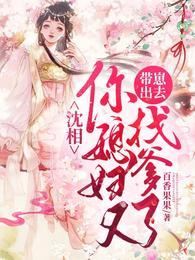
Lu Lanyi, the daughter of a wealthy landowner, married Yang Wenxu, an ambitious but poor scholar, using her substantial dowry to fund his education. Over eight years, she supported him as he rose from a Successful Candidate to a Hanlin Academician. Despite her sacrifices, she remained childless due to health issues, while Yang Wenxu’s concubine, Consort Jiang, bore him three children. As Lanyi’s health declined, she became bedridden and eventually died, only to discover she had become a ghost. For years, she watched from beyond the grave as Yang Wenxu prospered, remarrying into nobility and erasing her memory. Consumed by hatred, she longed for vengeance but found herself reborn on the day before her death.

Upon waking, Lanyi realized she had been given a second chance. She immediately began dismantling the structures that had enabled Yang Wenxu’s rise. When news arrived that her mother-in-law had died, she ensured the information was made public immediately, preventing Yang Wenxu from concealing the death to secure a crucial promotion. This act marked the first crack in his carefully constructed career path. Lanyi also arranged for her private savings to be left to her loyal maid, Cui Cui, ensuring her wealth would not benefit the Yang family after her death.

The family returned to their hometown in Qingzhou for the funeral. During the journey, they encountered Prince Yi, a powerful feudal prince, and his unruly son. This encounter would have normally led to Yang Wenxu being appointed as a tutor to the prince’s son, a position that would have catapulted him to higher office. Lanyi, aware of this future, sought to sever the connection between her husband and the prince’s residence. She faced opposition from her own family, who hoped to leverage Yang Wenxu’s rising status for their own gain, but she remained unmoved by their pleas.

Back in the Yang household, tensions rose between Consort Jiang and Aunt Zhou, a pregnant concubine of Lanyi’s father-in-law. Lanyi observed these conflicts with detachment, understanding the power dynamics better than anyone else. She refused to take on household management duties, citing her poor health, and allowed Aunt Zhou to handle domestic affairs. This decision further isolated her from the family’s internal politics while she focused on her primary goal: preventing Yang Wenxu from gaining the patronage of Prince Yi.

Yang Wenxu, noticing Lanyi’s changed demeanor, attempted to reconnect with her, offering to let her raise one of Consort Jiang’s children. Lanyi coldly refused, signaling a complete shift in their relationship. She no longer sought his approval or validation. As she navigated this new life, Lanyi remained determined to ensure that Yang Wenxu would never achieve the heights of power he had reached in her previous life, even if it meant sacrificing her own well-being in the process.

Latest Release
DateGroupRelease
2026-08-11shanghai fantasy c17
2026-08-11shanghai fantasy c16
2026-08-11shanghai fantasy c15
2026-08-11shanghai fantasy c14
2026-08-11shanghai fantasy c13
2026-08-11shanghai fantasy c12
2026-08-11shanghai fantasy c11
2026-08-11shanghai fantasy c10
2026-08-11shanghai fantasy c9
2026-08-11shanghai fantasy c8
2026-08-11shanghai fantasy c7
2026-08-11shanghai fantasy c6

Community Reviews

Rating(3.6 / 5.0, 11votes)
5 stars
1(9%)
4 stars
5(45%)
3 stars
5(45%)
2 stars
0(0%)
1 stars
0(0%)

Popular reviews

... Read More
I need to talk about Lan Yi because this woman is doing something remarkable. She's been reborn into a body that everyone pities—sickly, barren, weak—and instead of fighting it with the same desperation she probably had in her first life, she's just... done. She's done with performing gratitude, done with trying to earn love from people who would rather see her suffer. When she says 'I yield it without regret' about being a Yang family wife, that's not defeat. That's liberation. The dynamic with Yang Wen Xu is fascinating because he's clearly furious but also confused. He locks her in, demands the key, scans her from head to toe like he's looking for proof of something—and she just sits there, calm, meeting his gaze. The power has shifted. He thinks he's the one in control, but she's already mentally checked out. That's such a rich relationship arc to watch unfold. And then there's Aunt Zhou, who is absolutely not to be trusted. She's pregnant, she's scheming, she 'happened' to be at the corner gate at the exact wrong time, and she's feeding Lan Yi information that serves her own purposes. Her offer to help feels like a trap wrapped in a gift. But Lan Yi sees through it—she refuses to follow Aunt Zhou's suggested path of contacting Prince Yi. Why? Because their relationship isn't what Aunt Zhou imagines. They 'went their separate ways after descending the mountain.' That's a line I need to sit with. There's history there, and it's complicated. Cui Cui is my favorite loyal servant energy. She's furious, she's protective, she's the emotional barometer of the scene. And Ling Zi—sweet, observant Ling Zi—she's the one who actually uncovers the crucial evidence. The author keeps giving us these layers of loyalty and betrayal, and I'm just trying to keep track of who's playing who.
... Read More
I keep coming back to how the atmosphere in this book just sits on your chest. The Reverence Heaven Temple isn't just a location—it's this suffocating, sealed-off space where people vanish and no one knows why. And then there's the Yang household, which feels like its own ecosystem of whispers and half-seen bruises. Lan Yi vomiting after eating for the first time in a day and a half—her body literally rejecting the world because it's been starved of everything. The detail about the torn collar and the bruises on her shoulder and wrist, hidden by Cui Cui who folds them away like evidence... that's worldbuilding through absence, you know? What's NOT said lives in those folded clothes. The rain keeps coming back too. Heavy rain on the way back from the temple, rain that might have masked whatever happened between Lan Yi and Prince Yi. It's not just weather—it's a cover, a mood, a narrative device all at once. And the city gates being closed, the curfew, the fact that prominent families all had members detained—that paints this whole city as a cage. Everyone's trapped in something, even the ones who walked out. Then there's Aunt Zhou arriving pregnant and heavy, sitting down slowly, her posture described as "weary yet languid." The visual of her unfolding that bolt of snow-white satin while her voice drops to a whisper right into Lan Yi's ear—pure cinematic. You can see the lighting, the fabric, the tension. The author doesn't over-describe, but every detail chosen lands like a brushstroke.
... Read More
The dialogue in this chapter is razor-sharp, and what I love most is how each character's voice is instantly recognizable. Aunt Zhou speaks in layers—every sentence has a surface meaning and a hidden agenda. 'I just want to give birth safely and live peacefully afterward' sounds innocent but it's clearly a bargaining chip. Her voice is that of someone who has learned to survive by being useful and being watched. Cui Cui is pure emotion in dialogue form. 'You'll go to hell—the Hell of Tongue Removal!' is the kind of line that makes you laugh out loud because it's so vividly, characteristically her. She doesn't filter herself. She's the id of this household, and I love her for it. Lan Yi's dialogue is the most interesting because it's deliberately sparse. She says very little, and when she does, it cuts deep. 'No explanation is needed.' 'I yield it without regret.' 'After I'm gone, the master will naturally find a good match.' These aren't defensive statements—they're declarations. Her voice has shifted from someone who used to explain herself to someone who no longer feels the need to. And Yang Wen Xu—his dialogue is all action disguised as speech. 'Either unlock it now, or take the key and leave the Yang family.' That's not a request. That's a man who's used to getting what he wants and is suddenly encountering someone who doesn't play by his rules. The narrative voice itself is worth praising too. It's restrained, observant, and occasionally drops lines like 'His words lingered in the air like a curse' that elevate the prose without feeling pretentious. The author knows when to let the dialogue carry the scene and when to step back and let the atmosphere do the work.
... Read More
The stakes in this passage are layered like an onion made of glass—every layer cuts you. On the surface, Aunt Zhou wants 300 taels back and a favor. But dig deeper and it's about survival: her sister in the brothel, her position in the household, the child in her womb that she's already swearing oaths on. Lan Yi's stakes are even higher and quieter—she's trying to stay alive after deliberately pushing herself to the edge, and now she's being blackmailed by a concubine who knows about her bruises. But the real conflict that got me is the one between Lan Yi and her own past self. She's thinking about whether this happened in her previous life, whether she just didn't notice because she was too busy wandering the house like a ghost. The realgar wine scent still hanging around the estate—that's from her past life trauma bleeding into the present. She's not just navigating a new situation, she's navigating the fact that her memories might be wrong, that time might have shifted, that nothing is what she remembered. And Yang Wen Xu—he's out there entertaining guests, playing the perfect husband and official, while his wife is lying half-dead upstairs and his concubines are maneuvering for position. The assassination attempt on Prince Yi is this giant looming threat that connects everything, but nobody knows who did it or why. Lan Yi knows, of course, and that's the most dangerous position to be in.
... Read More
This section is a masterclass in controlled pacing. Lan Yi wakes up—apparently dead, apparently done—and the very first thing that happens is she's hungry. Not dramatic, not heroic, just... hungry. And then she eats and vomits and almost dies again. The author could have made this a huge emotional moment but instead treats it with this brutal matter-of-factness that's way more powerful. She smiles silently to herself. She let her consciousness sink into the darkness willingly. And then—she wakes up again. Why? The question hangs there and the chapter just moves on, which is somehow more unsettling than any cliffhanger. Then comes the Yang Wen Xu guest scene, which feels almost casual—just Aunt Zhou reporting what happened in the front courtyard—but it's actually laying groundwork for the real bomb: Aunt Zhou herself showing up. The transition from political intrigue to domestic blackmail is seamless because both are forms of power struggle in this world. And that ending—"If you lie, you'll never have the chance"—the sentence literally cuts off mid-oath. I had to go back and reread it. The pacing here is like a knife being drawn slowly across a table, and you know exactly when it's going to stab.
... Read More
Let me just say this: the author knows exactly how to pace a scene. The funeral chapter opens with a simple factual statement — 'The Yang family had set the funeral for the first day of the fourth month' — and then immediately establishes the stakes. Lan Yi isn't going. She's too ill. And the text makes it crystal clear why: 'If they had forced her to go, she might have ended up buried right beside Madam Yang.' Dark. Efficient. One sentence does so much work. It tells us she's fragile, it tells us the journey nearly killed her, and it tells us that Madam Yang's death was somehow connected to her decline. No exposition dump. Just a cold, hard implication that hangs in the air. Then the author shifts to Aunt Zhou's entrance — and this is where the pacing really shines. Aunt Zhou comes to visit, and on the surface, everything seems polite. She's being nice. She's offering help. She's praising Lan Yi. But the reader — the reader who has been paying attention — knows that every word is a calculated move. And the author lets us sit in that tension. We watch Aunt Zhou pretend to be concerned about Lan Yi's medicine, and we know Lan Yi sees right through it. The scene where Aunt Zhou rushes off to find the physician? That's not kindness. That's ambition. She wants to be seen as the one who helps. And Lan Yi lets her have that moment. The author doesn't need to spell it out. The pacing is deliberate — slow enough to let the power dynamics breathe, fast enough to keep us turning pages. Then, less than ten days later, Consort Jiang explodes over the allowance issue. Boom. Conflict. The author doesn't waste time with a long buildup — we get the trigger, the confrontation, the resolution, and then Lan Yi's quiet analysis of what it all means. 'You've got it backward,' she tells Cui Cui. And then she doesn't even explain. She just shakes her head and moves on. That's confident writing. The author trusts us to figure it out.
See all reviews

Characters

See all characters

Custom lists

See all custom Lists