Summary

... Read More

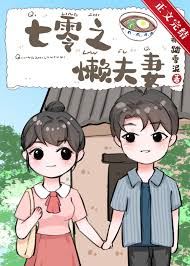
Luo Ge was a modern-day food blogger who lived alone after growing up in an orphanage. Her ordinary life ended when she was involved in a car accident while buying ingredients at a market. Upon waking, she found herself transmigrated into the body of a starving refugee girl during a severe famine in an alternate historical world. With no identity papers and facing threats from men who viewed her as prey, she used her instinctive ability to discern good from evil to identify Gu Jinchen, a stern-looking man who was purchasing servants. She approached him, claiming she could cook, wash clothes, and be a good wife, and he agreed to take her, sensing no malice in her presence.

Gu Jinchen, a former soldier currently living as a farmer, was the guardian of his two young nephews, Da Bao and Er Bao, after his elder brother and sister-in-law died in childbirth and their parents subsequently passed away. The village had labeled the children as ominous jinxes, leading to social isolation, but Gu Jinchen refused to abandon them. He brought Luo Ge to his humble farmhouse on the outskirts of the village. Upon arrival, the weakened Luo Ge collapsed from starvation. While she recovered, a matchmaker named Old Lady Wang attempted to persuade Gu Jinchen to send the children away so he could marry a wealthy, older widow who offered a substantial dowry. Gu Jinchen firmly rejected the proposal, stating that the children were his elder brother’s blood and he would never discard them, causing Old Lady Wang to flee in fear.

Once Luo Ge regained her strength, she discovered she had acquired a spatial ability linked to a red mole on her hand. This space mirrored her modern countryside property, containing a well with restorative water, chickens, ducks, and crops that replenished automatically. The passage of time within the space was four times faster than the outside world, allowing her to prepare food and resources efficiently. She used these advantages to improve the family’s diet, surprising Gu Jinchen and the children with delicious meals like vegetable pancakes and dumplings, which stood in stark contrast to the burnt and inedible food Gu Jinchen had been cooking due to his lack of domestic experience.

The couple’s relationship developed through shared domestic routines. Gu Jinchen, though taciturn and socially awkward, demonstrated his care by registering their marriage officially, buying her new clothes and jewelry, and constructing a wooden bathtub for her. Luo Ge, in turn, managed the household and bonded with the children, helping them overcome their fear of intimacy caused by village rumors. Their first night as a married couple was marked by mutual nervousness, but Luo Ge fell asleep clinging to him, a habit that continued nightly. Gu Jinchen, though physically strained by the restraint, grew accustomed to her presence and deepened his affection for her.

As the wedding date approached, Luo Ge integrated into village life, interacting with neighbors like Auntie Wang and the village chief’s wife. She learned that Gu Jinchen hunted regularly to provide for the family. During one instance where Gu Jinchen returned home late, Luo Ge mistook his silhouette for a thief and attacked him with a hoe, only to realize her error once he identified himself. Rather than anger, Gu Jinchen was amused and relieved that she could defend herself. The story culminates with the preparations for their Qixi Festival wedding, where Gu Jinchen gifts Luo Ge a solid silver hairpin and butterfly earrings, expressing his desire to support and cherish her. The narrative establishes a slice-of-life trajectory focused on building a harmonious family, improving their economic status through Luo Ge’s cooking and spatial resources, and raising the two children in a loving environment, free from court politics or abuse.

Latest Release
DateGroupRelease
2026-09-26akknovel c161
2026-09-26akknovel c160
2026-09-26akknovel c159
2026-09-26akknovel c158
2026-09-26akknovel c157
2026-09-26akknovel c156
2026-09-26akknovel c155
2026-09-26akknovel c154
2026-09-26akknovel c153
2026-09-26akknovel c152
2026-09-26akknovel c151
2026-09-26akknovel c150

Community Reviews

Rating(4.2 / 5.0, 45votes)
5 stars
19(42%)
4 stars
16(36%)
3 stars
9(20%)
2 stars
1(2%)
1 stars
0(0%)

Popular reviews

... Read More
The pacing here is a bit uneven and I'm not sure if that's a first-draft issue or an intentional 'dump the info fast' strategy. Chapter one moves at a real clip - we get her backstory (food blogger, car accident, time travel), her survival strategy, the approach to Gu Jinchen, the walk home, meeting the kids, passing out. That's a LOT of narrative ground covered before she even gets a proper bed. It works because the tone is urgent, she's starving, she's being chased, every paragraph is pushing forward. 'There was no escape.' Three words, period, and you're moving on. Then chapter two slows to a crawl because it's basically Old Lady Wang monologuing for like four paragraphs straight. I get it - you need the village gossip ecosystem established - but I found myself speed-reading that section. The 'Qian family girl' backstory (twenty-eight, two hundred catties, spoiled, bringing five taels dowry) felt like an info-dump that could've been compressed to half the length. Then Gu Jinchen's response is perfect: 'I already have a wife.' Four words. And the whole scene recontextualizes. So the pacing problem is really in the exposition scenes versus the character-action scenes. The action beats hit like drum taps, the dialogue-heavy expository parts drag. My advice if this were my own novel: cut the Qian girl description in half, let the reader fill in 'middle-aged, overweight, difficult' on their own. But the overall structure - market to home to village introduction to domestic conflict - is solid. You get your world rules in chapter one, your social complications in chapter two, and I bet chapter three is the 'let's cook something and make the kids happy' establishing shot. The cliffhanger at the end of chapter one (she collapses) is a little cheap, like a TV show commercial break, but effective. I would've preferred if the collapse happened mid-sentence instead of as a clean beat. 'Just as she was about to bend down and pat their heads' - see, THAT's a better collapse point. You're mid-action, mid-emotion, and then black. Instead we get the full sequence of her collapsing, the boys crying, the man catching her, and THEN the author's note breaks the spell. The author's note is a pacing killer. It sits there telling you 'this is relaxed, no court politics, no abuse' and just... drains all the adrenaline I was feeling from the collapse scene. Would work better as a preface on the title page, not dumped after the first chapter hook. Am I being too picky? Probably. But I care about that rhythm.
... Read More
'Many had died of starvation on the escape here. Now silver and full bellies were all that mattered.' I kept thinking about that line while reading the rest of chapter two and it hits differently than it should for a 'lighthearted, sweet' story. The stakes in this book aren't dramatic in the 'will they die in battle' sense, but they are brutally specific and immediate. Luo Ge literally cannot eat. She passed out within thirty feet of reaching the farmhouse. Gu Jinchen is a peasant who hasn't used half a liang of silver in six months - meaning his household is running on nearly nothing, and he just took on a fifth mouth to feed. The two boys are dependent on him for protection, and the village social pressure (Old Lady Wang, the Qian family matchmaking attempt) is actively trying to destabilize his household. The conflict isn't one big boss fight, it's a thousand small pressure points: can he afford grain? Will the village accept this woman in his house? Will she wake up or is she actually dead? Old Lady Wang's suggestion to 'send the little ones away' reframes everything - it's not just a matchmaking scene, it's an attack on the family structure. And the two little boys feeling that attack in their bodies, going pale, clinging harder - that's where the real tension lives. Not the Qian girl, not Old Lady Wang. Those little hands on Gu Jinchen's pants. The suspense in these first chapters is maintained not through action but through the question 'does she survive?' which is honestly the most basic, animal-level question you can ask a reader. Every scene after her collapse is filtered through 'is she going to live?' And then layered on top: 'is she going to be accepted?' 'is the household going to hold?' 'can the village gossip be shut down?' The author's note says 'no abuse' and 'no court politics' and I trust it, but the absence of those big conflicts means ALL the drama has to come from domestic negotiation, resource scarcity, and social positioning. That's a much harder thing to sustain tension across than, say, a villain. You're asking the reader to care about whether a village matchmaker successfully arranges a bad marriage. The fact that it works in these first chapters is because the stakes are physical - starvation, vulnerability, children's safety - not abstract. I think the 'get rich' arc is going to be the relief valve that lets the tension breathe. Because right now, everyone is just... barely surviving. And that's actually more gripping than I expected for a book labeled 'relaxed.'
... Read More
I was honestly going to say 'this batch is a rest' for conflict, because the Old Lady Wang scene resolves in like four paragraphs of her fleeing toward the courtyard gate, and the marriage announcement is just an errand. Boring, low-stakes, 'tell the neighbors so they stop coming.' I was ready to put the phone down. Then the thorn pricks her tiger's mouth, the blood from the red mole flows into it, she thinks 'micro toxicity, I will go find something to treat it,' and she walks into the room and the world swaps. Now I am back on the edge of my seat because that blood detail is NOT random. The mole, the pricking, the blood bead 'flowing into that red mole instantly' while she is laughing at the kids, that is a trigger mechanism. She did not choose to enter the space. Her body did it for her. The text says 'she actually returned' which implies a loss of agency, and that is a fundamentally different setup than 'I recited a word and teleported.' If the space activates through injury or a specific physical condition, the stakes are no longer 'convenient magic backpack.' They are 'what happens if the trigger cannot be controlled.' She is a woman in a farming village with a secret that rewrites the local economy, and the entry mechanism might not be opt-in. The Old Lady Wang resolution also nags me. She backs down, feels guilty, and leaves. Done. The matchmaking threat evaporates in a scene. For a story that has built village gossip as a recurring pressure, that is an anticlimax. I would want to see at least one more social friction before the elders' announcement fully neutralizes the threat. Gu Jinchen walking into the clan house to declare the marriage is good, but it is a single action. The real ongoing conflict is the asymmetry of knowledge. She now has an infinite resource space. He does not. The kids do not. The Wangs next door do not. Every interaction from here is filtered through what she can and cannot show. A basket of amaranth is fine. A crate of modern-era canned food is not fine, and if she uses the space's auto-replenishment to pull out something that cannot be explained, the village social contract that the Wangs and Gu family have maintained for generations is at risk. The stakes quietly jumped from 'will the aunties keep showing up?' to 'can I sustain a secret that makes me either a miracle or a witch in this community?' And I still do not know what the fridge thing was, because the text literally cuts off mid-sentence on 'the fridge was not p.' I am irrationally angry about that. Fine.
... Read More
There's no villain in this batch. No army at the gates. No scheming aunt. The conflict is... she's hungry. She's in a new century. She was unconscious for two days and doesn't know if she can walk properly. And a man who's been alone with two kids since his wife died is now supposed to navigate being a husband without a manual. The stakes are: can she stand? Can she cook? Does she owe him? Does he owe her? Are the kids going to bond with her or reject her? It's small. Domestic. But the smallness is the point. 'What's wrong?' Seeing him keep staring at herself, Luo Ge felt a little uncomfortable and her little face turned slightly red. She starts inspecting herself. Looking for something wrong. Something inappropriate. Because in her head, she's still the object that was examined at a market, weighed, poked at, and bought. The physical vulnerability of undressing in front of the man who legally owns your marriage is doing real tension work here. And then the kids just... hand her eggs. And the threat evaporates. I keep thinking about the 'refugee pile' line. 'When he saw her outside the city, in that refugee pile.' She was in a pile. Of refugees. During a famine. And he picked her out of that pile because her skin was 'fair and delicate' and looked different. The staking here isn't 'will they survive the war.' It's 'will she survive being seen as an object in a world that sorted women by price per rice unit.' And every small kindness he does is a small stake lowered. The question that's really burning me: what happens when he realizes she's not the quiet peasant girl he assumed? When she starts cooking? When she starts talking about 'my contract farm' or 'my street stall'? Does the power dynamic hold? Because right now she's playing small on purpose and he's playing nice on purpose and neither one is being real. And that's the tension. Not external. Just two people performing roles they both secretly resent while two kids run around with eggs in their pockets.
... Read More
Gu Jinchen's dialogue is so painfully clipped and formal it makes me want to hug him. 'The water is boiling. I brought you the wooden bathtub I made for Older Baby and Second Baby earlier. I just made it not long ago and they haven't used it yet. It's a bit small, just make do with it for a few days. I'll make a new one for you later.' That's four sentences. No contractions in his actual speech, just information transfer. He's explaining his carpentry logic to his wife the same way he'd explain it to a customer. Then 'You can do it yourself, right?' with that 'somewhat embarrassed after much hesitation' tag. The man has been a widower, raised kids, run a household solo, and now he's flustered by a bath. I'm SO here for that. And then compare that to the kids: 'For you auntie.' 'Roast them, they're tasty.' Five words each. Pure child-speak. And Luo Ge? Her dialogue is basically 'Okay, no problem, I'm not picky' and 'I can.' She's being deliberately small, deliberate. She's the transwoman in a man's house and she's calibrating her volume. The narrative voice in her head is completely different though. She's got this modern, slightly snarky, practical interior monologue. 'Scrub, scrub, scrub, wash herself clean.' Just three verbs, no adjectives, and you can feel the relief. The author lets her think in fragments and quick associations while Gu Jinchen exists in slow, careful, full sentences. The contrast is doing so much work. Also the one line that made me laugh out loud: when she's panicking about whether he saw something inappropriate, the narrator drops in '(just her hands and face, don't think too much).' Like the author literally winking at the reader. 'Relax, it's fine.' I love that little stage direction in parentheses. Feels very, very specific to this book's voice. Not literary. Not fancy. Just... a friend saying 'don't worry, I checked.'
... Read More
'Although simple, it had decided her life. As an unwed woman, she had crossed over and became a married woman all of a sudden.' I came back to this sentence. A piece of paper. Congratulations, names, a stamp. That's it. And it erased everything she was. Not just her marriageability, not just her freedom. Her entire identity. She was a food blogger. She ran a small farm. She earned her own money street-vending out of an orphanage. And now she's a wife in a famine village, and the word that describes her transaction is 'bought.' 'It should be known that she was just a daughter-in-law he bought, equivalent to the kind that could be exchanged for a small bag of rice.' A small bag of rice. That's her. That's what she was on the market. And then Gu Jinchen gives her sugar cubes and a cloth and a set of clothes and a wooden basin and the kids give her bird eggs and suddenly the economics of her worth shift. Not because he's rich. Because he treats the transaction like it's something other than a transaction. The marriage certificate is the symbol that keeps circling. She hands it back because 'this kind of thing should naturally be kept by him.' She already knows her place. Already knows who owns the paper. But the way he squeezes it in his hand while looking at her, the way it's just a flat object in his palm while it's holding up an entire life... it's so heavy for how small it is. And the bigger theme under all of this: consent. She crossed over 'all of a sudden.' She didn't cross. She was dropped into a coma and woke up married. The certificate was signed without her really understanding what it meant in this context. Every act of kindness he does after is him quietly, without saying it, rebuilding whatever consent the system tried to skip. 'I'll make a new one for you later.' 'Call me if you need anything.' 'You can do it yourself, right?' Each one is a tiny question. Am I allowed? Do you want this? Are you okay? It's not grand thematic statement stuff. It's just... a man asking before he acts. In a world where she was literally bought. And that's the whole thing, isn't it. The contrast between a bag of rice and a question. What do you think, does the author actually intend that reading or am I overthinking a bath scene?
See all reviews

Custom lists

See all custom Lists