After Transmigrating, the Cute Little Zombie Is Spoiled by a Bigshot - Reviews

After Transmigrating, the Cute Little Zombie Is Spoiled by a Bigshot
+Add to Custom List
Sort
Add review
... Read More
Okay so let me just say this author really knows how to set up a premise and then completely flip it on its head. We start with what seems like a standard arranged marriage trope, right? Qin Zelin is all serious and cold, Cen Miao is this weird little creature who doesn't understand human customs. Classic setup. But then you realize—Cen Miao is literally a zombie who transmigrated into a human body. And the funniest part? He thinks HE is the wife. Like, he genuinely believes he married a woman because he's so clueless about human gender dynamics. Meanwhile Cheng Cheng is on the other end of the phone going absolutely feral trying to figure out what the hell is happening. The plot moves at this perfect pace where every chapter drops a new reveal—first it's the zombie thing, then it's the misunderstanding about who's on top (literally and figuratively), then Qin Zelin starts developing feelings and trying to maintain boundaries. The tension between what Cen Miao thinks is happening versus what's actually happening is comedy gold. And the part where Qin Zelin catches him taking selfies of himself? That's when the plot really shifts from pure comedy into something with actual romantic stakes. I'm hooked.
... Read More
I need to talk about how the pacing works in these first seven chapters because honestly it's really well done. The author knows exactly when to compress time and when to stretch it out. Chapter 1 moves FAST—meeting, marriage proposal, signing, getting in the car. It's basically a blur of information and comedic beats, and that's exactly right because we're being introduced to a completely bizarre premise (zombie transmigrates into human body, gets contract married). If the author had slowed down here, the novelty would've worn off. But then Chapter 2 and 3 deliberately slow down. The car ride becomes this long, awkward, tender sequence where Cen Miao keeps trying to smell Qin Zelin and getting rejected, and it's funny but also genuinely sweet. The marriage registration office scene gets expanded with all the staff's dramatic fantasies, which is a great comedic breather. And the packing scene at the apartment—this is where the pacing really shines. It's slow, almost mundane, but every small detail (the slippers, the easel, the scooter) builds this sense of intimacy between the two leads without either of them realizing it. The chapter endings are also doing smart work. Chapter 1 ends with Qin Zelin thinking Cen Miao is too naive to be a problem. Chapter 2 ends with Cen Miao handing over his phone and Qin Zelin misreading it as a rejection. Chapter 3 ends mid-sentence with Cen Miao about to complain that the car is ugly. These aren't traditional cliffhangers—they're comedic beats that make you want to keep going. The author isn't relying on suspense or danger to hook you; it's the relationship dynamics and the humor. And it works.
... Read More
Can we just talk about Qin Zelin for a second? This man is trying SO HARD to keep his boundaries and he is failing spectacularly. Like, he literally has to remind himself multiple times that this is only an arranged marriage, right? And then Cen Miao goes and does something like licking milk off his lip and Qin Zelin's entire composure just—crumbles. The author writes this scene where Qin Zelin's Adam's apple rolls and his gaze darkens and I was SCREAMING. But what I love most is how he handles it. He doesn't yell, he doesn't get mean. He just says 'Use a napkin if your mouth is dirty' and internally loses his entire mind. That's such a specific type of character—the one who is strict on the outside but completely soft on the inside. And Cen Miao? Oh my god. He's this adorable little zombie who has no concept of human social norms but somehow manages to be genuinely sweet. The scene where he refuses the bank card because he wants to earn his own money to buy jerky meat? That's when I knew he was the main character I'd follow anywhere. Their dynamic is everything—Qin Zelin trying to be the responsible adult while Cen Miao just exists in pure chaotic zombie energy. The way Cen Miao sticks all the lint off his shirt and then drags Qin Zelin to lunch? Iconic. I need more of these two immediately.
... Read More
I need to talk about the worldbuilding in this story because it's genuinely brilliant in how it's done. The author doesn't info-dump at all—instead we learn about the zombie world through Cen Miao's reactions to everyday human things. The first time he tries strawberry jam on bread and it caves in because he's never experienced human food? That's worldbuilding through comedy. The heat pack Auntie Wang sticks on him after he rides the electric bike? That's showing us that zombies have different body temperatures in this human form. The way he notices the fluff on Qin Zelin's cashmere loungewear and just starts peeling it off like he's collecting something? These tiny details build this entire alternate reality without ever feeling forced. And the villa setting itself—the maid Xiao Li, the driver, the study where Qin Zelin works, the dining room where all the comedy happens—every location feels lived-in and specific. The scene where Cen Miao is riding the electric bike in circles in the yard and the sunlight falls on his face while Qin Zelin watches from the window? That's pure cinematic worldbuilding. You can SEE it. The author has this gift for making the mundane feel magical through a zombie's eyes. Every human object becomes an adventure—phone charging, breakfast, bank cards, escape room jobs. The world feels so real because we're experiencing it through someone who's genuinely discovering it for the first time.
... Read More
Okay I need to talk about the absolute chaos that is Cheng Cheng calling the police because his best friend bought dog slippers. Like. WHAT. Cen Miao says 'my shoes weren't broken but I bought new ones—dog slippers' and Cheng Cheng's brain just short-circuits into emergency mode. The man literally rides over to the residential area, gets no answer, calls the police, and then the police show up at Qin Zelin's VILLA at night because apparently that's a thing that happens in this universe. The plot twist here isn't some dramatic revelation—it's the sheer absurdity of the misunderstanding. Cen Miao half-asleep, hugging a pillow, looks at Qin Zelin and goes 'I'm Cen Miao, and he's the one I... married.' And the Bodyguard's entire worldview EXPLODES. I literally screamed reading that scene. The mental image he has of their aloof boss being the 'little wife' while Cen Miao is the dominant one? 'Baby~ you smell so good~' I am dead. Absolutely deceased. But beneath the comedy, the plot is doing something clever—it's establishing a contractual marriage that's supposed to be cold and transactional, but every single interaction keeps undermining that premise. Qin Zelin buying ALL the beef jerky instead of just one bag, forcing Cen Miao to eat vegetables then secretly ordering more cheese, the whole 'sharing a blanket, sooner or later' chapter title that Old Lin thinks is romantic destiny when it's literally just about plumbing being broken. The plot builds this slow-burn tension where everyone—including the readers—can see where this is going even though the characters themselves are completely oblivious. And that ending with Cen Miao loosening his collar and Qin Zelin's strained 'what are you doing?'—the plot is absolutely ratcheting up the romantic tension while pretending nothing is happening. It's delicious.
... Read More
I've been thinking about this text and the role food plays in it, and honestly, it's way deeper than I expected going in. Every major emotional beat in these chapters revolves around food. Cen Miao eating the strawberry cake with cream around his lips like a child who's never experienced sweetness. The beef jerky negotiation where his knees basically spell out "I want more." The scalding meat he swallows whole rather than give up, because to him, food isn't just sustenance—it's something to be seized and held onto. And Qin Zelin's relationship with feeding him? That's where the real symbolism lives. He cuts the cake in half not because he's stingy but because he's terrified—"Qin Zelin worried that Cen Miao would eat too much and end up in the hospital again." Food is how he expresses care because he can't always figure out the words. The daily lunch reports, the car pickup for meals, the VIP room with the personal chef—all of this is a man building a world where the person he loves will never go hungry or be unsafe. There's also the darker undertone: Cen Miao's fear of being sent "home" and how food becomes the leverage. "Beef jerky will go bad too!" is both a genuine concern and a subtle plea for more. He's learned that showing appreciation for food earns him more food. It's a survival mechanism dressed up as gratitude. The sweet potatoes from the night market, the cake, the beef—all of these moments trace the arc of someone learning that they can receive good things without having to earn them through performance. That's the theme hiding in plain sight: the transition from scarcity mindset to being allowed to just... receive.
... Read More
Okay, the hot meat scene. Let me just say this: I physically leaned forward while reading it. The stakes in this moment are deceptively simple—Cen Miao is eating something too hot and Qin Zelin is trying to stop him—but the emotional tension is through the roof because we understand what's at risk on both sides. For Cen Miao, this isn't just about a piece of beef. It's about not giving up something he already has. The text makes it clear: "Who was this human to snatch his meat?! No way he was giving up the meat that was already in his mouth!" This is a person who has likely experienced scarcity, who has learned that if you don't grab what's yours, it disappears. So he endures the burning. He swallows the scalding piece whole rather than lose it. That is a survival response, not just hunger. For Qin Zelin, the stakes are equally high but inverted. He's not worried about the meat going to waste—he's terrified of losing Cen Miao to an injury he could have prevented. When he covers Cen Miao's mouth and says "Spit it out immediately," the urgency in his voice isn't about cleanliness or manners. It's the panic of someone who has already lost this person to hospitalization once and refuses to go through it again. The aftermath is where the real conflict lives. Qin Zelin threatening to take him home—which for Cen Miao is a genuine punishment, not a trivial consequence—creates this beautiful power dynamic where love and fear are intertwined. Qin Zelin holds the power to send him away, and Cen Miao knows it, which is why the sleeve tug works so devastatingly well. The stakes aren't just about this meal. They're about whether Cen Miao will always have somewhere safe to go, and whether Qin Zelin will always be there to catch him before he burns himself.
... Read More
Let's talk about Qin Zelin because this man is absolutely cooked and he doesn't even know it yet. On the surface, he's the cold, composed CEO type—tells people to go home first, stops at a supermarket, frowns at snacks. But the text keeps peeling back layers. When Cen Miao looks at him with those 'big, innocent eyes, so much like the dog on the slippers,' Qin Zelin's voice softens 'unconsciously.' He grabs ALL the jerky off the shelf. He secretly tells the maid to give Cen Miao another portion of cheese after forcing him to eat vegetables. These are not the actions of a man who sees this marriage as purely contractual. And Cen Miao—oh my god, Cen Miao. The fact that he's apparently a zombie who transmigrated into this body and is still processing everything is genius. His internal monologue is 'Unlike humans, zombies didn't eat vegetables.' He thinks Qin Zelin is 'Daddy' because in his previous life someone called that. He genuinely doesn't understand why his chest is flat now. The relationship develops through these adorable misunderstandings where Cen Miao has no idea he's being romantic while Qin Zelin is over here having full-on internal crises every time Cen Miao walks out of the bathroom. The Bodyguard is my favorite secondary character now. His mental image of Qin Zelin being the 'receiver' in this relationship? 'Such a big guy... could it be a big tree hanging a tiny chili??' I cannot stop laughing. Even Old Lin is in on it—'Sharing a blanket, sooner or later' while secretly reporting to the Old Master like some kind of romantic wingman general. The dynamic between Qin Zelin and Cen Miao is built on this gorgeous asymmetry—one of them is slowly falling while the other is just trying to figure out if 'register' means get married or something else entirely.
... Read More
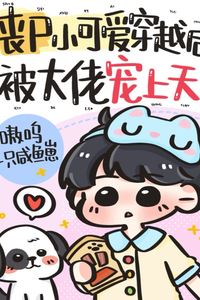
There's something deeply symbolic about the dog slippers that I can't stop thinking about. Cen Miao sees the black-and-white dog slippers and they 'look just like his Mao Mao!' He hugs them to his chest like a treasure. Qin Zelin notices this and later hands them to him at the villa entrance with 'Put them on.' These slippers become the first tangible symbol of their relationship—not grand romantic gestures, but someone noticing what you like and giving it to you. The dog motif also mirrors Cen Miao's own behavior: he follows Qin Zelin 'like a little tail,' his 'eyes fixed on the snacks like a puppy spotting a bone,' and Qin Zelin literally thinks of him as 'a small puppy wagging its tail.' The beef jerky is another symbol worth examining. It represents Cen Miao's transmigration—he's a zombie in a new world, and this simple pleasure food is one of the few constants he has. The fact that he eats an entire bag in one sitting and then immediately worries about 'earning money' to compensate shows his core character: he's adaptable, grateful for small things, and deeply considerate of others even when he's struggling himself. Qin Zelin buying ALL the jerky isn't just a cute moment—it's him saying 'you don't need to earn money here, you can just have things.' The vegetables versus cheese dynamic is perhaps the most thematically rich symbol. Cen Miao, a zombie, doesn't eat vegetables. Qin Zelin enforces this 'rule' but then secretly ensures he gets more cheese. It's about acceptance—Qin Zelin isn't trying to change Cen Miao fundamentally, he's just trying to help him navigate human customs while still indulging his true nature. The line 'Unlike humans, zombies didn't eat vegetables' is funny on the surface but also speaks to the broader theme: what does it mean to belong in a world that isn't yours? And the cold shower scene—Qin Zelin trying to 'wash away' his desires—speaks to the tension between duty and desire that runs through the entire narrative. He told himself this was a contractual marriage, a favor to his grandfather, but his body has other ideas.
... Read More
Okay so I was going to write something casual about this book but honestly the thematic depth here is surprising. On the surface it's a comedy about a zombie in an arranged marriage, but underneath there's this really interesting exploration of identity and what it means to belong. Cen Miao is literally between two worlds—he's a zombie in a human body, trying to navigate human customs while holding onto his zombie nature. The meat jerky obsession isn't just comedy, it's symbolic of his connection to his true self. Every time he eats human food and enjoys it, there's this tension between who he was and who he's becoming. And Qin Zelin? He's the anchor to this human world, but he's also learning to accept something completely outside his understanding. The arranged marriage setup becomes a metaphor for any relationship where two fundamentally different people have to find common ground. The bank card scene is particularly rich—Cen Miao refuses charity because he wants to earn his own way, which speaks to his dignity and self-worth despite being in this bizarre situation. And the selfie scene? That's about self-image and identity. Cen Miao is documenting his new life, capturing moments of this human world he's entering. The recurring motif of food—cheese, meat, strawberry jam, beef ribs—these aren't just plot devices, they're symbols of connection, comfort, and the bridge between worlds. The author is doing something really smart here: using comedy to explore genuine questions about identity, belonging, and what makes a relationship work across fundamental differences.

Leave a comment

You must be logged in to leave comments. or