Summary

... Read More
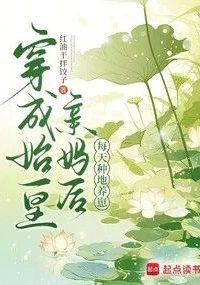
Zhao Yuanxi, a modern agricultural specialist, transmigrates into the body of Zhao Ji, the Queen Dowager of Qin during the ninth year of King Zheng's reign. She arrives immediately after the suppression of the Lao Ai rebellion, a period when the original Zhao Ji was executed and her two children died. Zhao Yuanxi finds herself under perpetual house arrest in Yongcheng, separated from her nominal son, Ying Zheng, who harbors deep hatred for her due to her past treason and betrayal. The palace guards treat her with cold indifference, reflecting Ying Zheng's own desire to see her dead, though he refrains from execution only to avoid the stigma of filial impiety. Upon settling into her new role, Zhao Yuanxi discovers a farming system bound to her soul. The system presents a critical mission: cultivate 100 mu of fertile land and harvest over 100,000 jin of grain within four months. The reward is a pill that grants immense physical strength, but the system also offers an alternative path—if she can raise Ying Zheng's favorability to 100, she will be freed from the task restrictions. Recognizing the dire political situation and her lack of historical knowledge regarding the Qin dynasty's collapse, Zhao Yuanxi chooses to accept the farming mission as her primary means of survival while seeking a way to repair her relationship with the King. Using seeds provided by the system, Zhao Yuanxi begins cultivating corn on the vast estates granted to her in Yongcheng. She introduces advanced agricultural techniques, including composting manure and refining wheat flour, which astonish the local villagers and her assigned attendants, Gao Sheng and Changjin. Her practical approach and willingness to interact with commoners, such as the village chief Chu and his family, earn her unexpected respect and loyalty. During this time, she also encounters Ziying, the young son of her late brother-in-law Chengjiao. Recognizing the child as the future last ruler of Qin, she takes him under her wing, teaching him basic manners and sharing modern-style foods like tofu and soybean milk, thereby forming a close bond with her grandson. The narrative takes a sharp turn when Zhao Yuanxi is ambushed by assassins led by Yu Nuo, a retainer of the former Chang'an King. The attackers intend to kidnap both Zhao Yuanxi and Ziying to use them as leverage against Ying Zheng. In the ensuing battle, her guards fight valiantly, but one is killed and others are severely wounded. Zhao Yuanxi herself sustains a serious injury to her shoulder while protecting Ziying. After the attack, Ying Zheng's forces move to arrest the surviving guards for their failure to protect her. Demonstrating unexpected courage and authority, Zhao Yuanxi physically blocks the soldiers, threatening suicide if they take the guards, and demands that Ying Zheng intervene directly. This act shocks the court and forces Ying Zheng to reconsider his stance, as he learns that the assassination plot was orchestrated by remnants of the rebel faction seeking to install Ziying as a puppet ruler. The incident marks a pivotal shift in the power dynamic between mother and son, setting the stage for Zhao Yuanxi to navigate the treacherous political landscape of the Qin court while building her agricultural empire.

Latest Release
DateGroupRelease
2026-08-11shanghai fantasy c200
2026-08-11shanghai fantasy c199
2026-08-11shanghai fantasy c198
2026-08-11shanghai fantasy c197
2026-08-11shanghai fantasy c196
2026-08-11shanghai fantasy c195
2026-08-11shanghai fantasy c194
2026-08-11shanghai fantasy c193
2026-08-11shanghai fantasy c192
2026-08-11shanghai fantasy c191
2026-08-11shanghai fantasy c190
2026-08-11shanghai fantasy c189

Community Reviews

Rating(3.8 / 5.0, 5votes)
5 stars
2(40%)
4 stars
0(0%)
3 stars
3(60%)
2 stars
0(0%)
1 stars
0(0%)

Popular reviews

... Read More
There's something deeply symbolic about the entire suturing scene that I can't stop thinking about. Zhao Yuanxi takes an embroidery needle — a tool of women's domestic work — and transforms it into a life-saving surgical instrument. She literally redefines what a needle can do. And her explanation to Physician Yu? "When Zheng'er was young and mischievous, I would mend all his torn clothes. Just now, when I saw this man's wound split open, I thought it was similar to torn clothing — it just needed to be sewn up." That's not just a clever cover story. That's the author telling us something fundamental about this character: she sees the world differently. Where others see impossibility, she sees a problem that just needs the right frame of reference. The needle becomes a metaphor for her entire approach to ruling — taking what seems ordinary and making it extraordinary. The disinfection explanation is equally loaded. She compares invisible dirt to what physicians call "wind evil" — taking ancient medical concepts and expanding them. She's not just saving one life; she's planting the seeds of medical revolution. The text explicitly says: "If surgical techniques could be promoted now, perhaps fewer people would die from untreated trauma." This is history being rewritten, one suture at a time. And then there's the hair. Oh god, the hair. She's dreading her daily half-hour hair-styling routine, wishing she could chop it all off. Hair in historical contexts is always about power, identity, femininity. The fact that she resents it while her maid You is devoted to it creates this beautiful tension — one woman bound by tradition, the other chafing against it. The beauty shop idea she floats with You? That's not just a passing thought. It's her imagining a world where her skills have value outside the palace walls, where she's not just Empress Dowager but someone who can create and earn independently. It's a tiny, almost accidental glimpse of her deeper desire for autonomy in a life where she has almost none.
... Read More
Let me just be honest — the nightmare sequence is the most frightening thing in these chapters, and it has nothing to do with assassins or wounds. "She dreamed of a man chasing her, someone snatching Ziying away, and even her cheap son, high on drugs, shouting and trying to kill her." Three separate threats, all happening in her sleep. The man chasing her — is that from her past life? The person snatching Ziying — her deepest fear as a guardian. And Zhao Ji, her supposed ally, become her assassin. That last one is genuinely horrifying because it means she doesn't trust the people she's closest to. But here's what makes the stakes so high: throughout all of this, she never shows it. When Zhang Han is nearly having a breakdown over A Ji, she's the one who has to comfort HIM. When Wang Ben is staring at her with that complex expression, she's the one making dry jokes. She's carrying the entire emotional weight of every situation while privately falling apart. The physical stakes are real too — she's wounded, bleeding from her back shoulder, and she refuses to show it. "Painful as it was, she couldn't lose face." That's not just stubbornness, that's the desperate calculation of a ruler who knows that showing weakness could get everyone killed. Every injury she hides is another potential vulnerability. And the A Ji subplot raises the stakes in a really interesting way. He's seventeen or eighteen, from her hometown, and she went to extraordinary lengths to save him. Why? Because in a palace full of people who want her dead, someone who owes her life and actually knows where she's from is incredibly valuable. But it's also deeply personal — she sees herself in this young guard, someone who just wants to do their duty and survive. The author keeps raising the temperature without ever letting us forget: this woman is one bad night away from completely losing it. And we're left wondering — what happens when the nightmares stop being dreams?
... Read More
I need to talk about Zhang Han because THIS CHARACTER. Like, the author just drops his name casually — "Zhang as in 'song's end,' Han as in Handan?" — and suddenly Zhao Yuanxi is looking at him like he's some rare specimen. And I KNOW why. Zhang Han goes on to become Qin's final renowned commander. The author is basically telling us right here: THIS is the guy. This young guard who's about to lose his mind because his fellow townsman might die — THIS is the future legend. And the moment where she basically claims him: "I saved your lives, so from now on your lives belong to me! If you think about leaving, I won't allow it!" CHILLS. Absolute chills. She's not being cruel or possessive in a creepy way — she's being a leader who understands that loyalty is a two-way street. She saved them, so they're hers, and she's theirs. It's almost tribal. Then there's Wang Ben, and oh man, the dynamic here is so interesting. He came in ready to kill, and now he's sitting there having an existential crisis about his own troops. The text says: "As a general who had led troops in battle, he understood better than anyone how crucial — and difficult — it was to win soldiers' loyalty. Yet the Empress Dowager had accomplished it effortlessly." This is the author doing something really clever — using Wang Ben as a mirror. Through his eyes, we see how extraordinary Zhao Yuanxi's leadership is, without her having to say anything about it. And then he thinks: "if the Empress Dowager ever ordered a rebellion, these men would likely dare raise their swords against the King himself." That line alone tells us everything about the power she's building, one loyal guard at a time. And the Ziying situation! His teacher comes to take him away in the middle of the night, and she just... accepts it. No drama, no begging. But then she has nightmares about someone snatching him away. The contrast between her composed exterior and her terrified interior — that's character depth right there. She's a widow, a regent, and this kid is literally all she has left, and she's too busy surviving assassination attempts to even be a proper mother figure.
... Read More
Okay so let me just say this — the whole suturing scene is absolutely brilliant plot work. Think about it. Zhao Yuanxi has to save a guard with a split-open wound, no antibiotics, no proper medical equipment, and she literally uses an embroidery needle heated over a flame. That's not just a cool moment, that's a PLOT DEUS EX MACHINA that she herself is controlling. She's playing 4D chess while everyone else is stuck on checkers. But here's what really got me — the way the author handles the aftermath. A Ji wakes up, sees her, and thinks she's some kind of celestial being. The text literally says: "Zhao Yuanxi walked in against the light, making him momentarily believe he was seeing a celestial being." That's not just romantic tension building, that's the author setting up an entire loyalty arc in ONE scene. This guard was supposed to be disposable background character number one, and now he's emotionally invested in her survival. And Zhang Han! The guy kowtowing three times, nearly beating his head against the ground — the author uses him as this emotional barometer for the whole situation. When Zhao Yuanxi sees he's gone too far and awkwardly rubs her nose to lighten the mood? That's plot characterisation at its finest. She's not just a strategic mastermind, she's someone who actually notices when she's scared her people. The subplot with Wang Ben is also doing a lot of heavy lifting. He starts as this hostile figure ready to kill her guard, and by the end he's internally sighing about how he can't earn the same loyalty from his own troops. That's not just comic relief — that's the author showing us the contrast between a real leader and everyone else, without saying a single word about it. One thing I want to talk about though — the dream sequence at the end. Nightmares about being chased, about someone taking Ziying, about her cheap son high on drugs trying to kill her. This is the first time we get a peek inside her head and it's TERRIFYING. The plot has been all external conflict — assassins, wounds, political maneuvering — and suddenly we're inside her trauma. It raises the stakes from "will she survive this assassination attempt" to "is she even psychologically prepared to rule?" That's some next-level plot layering right there.
... Read More
The pacing in these chapters is actually really sneaky good. Let me walk through it. It starts HIGH TENSION — armed guard with a split wound, no painkillers, suturing by fire-heated needle. You're leaning forward, heart rate up. Then it drops to this almost domestic moment where Zhao Yuanxi is fussing over whether the stitches look crooked and sniffing back tears. That's a brilliant tonal shift — the author lets you breathe for a second. Then BOOM, back to political tension with Wang Ben showing up all aggressive. But instead of keeping it at full throttle, the author deflates it with humor — Wang Ben laughing at Zhang Han's crying face, Zhao Yuanxi snapping at him. You're smiling now, right? The tension has completely dissipated. And then the chapter transitions to her bedchamber, You doing her hair, talking about opening a beauty shop. This is the kind of scene that could feel like filler in a lesser book, but it works here because it's giving us character moments — Zhao Yuanxi's hidden desire for financial independence, her plan to build a seed resource team, her reluctance to involve her son because of Lü Buwei complications. Every little conversation is doing double or triple duty. The dream sequence at the end is where the pacing really shows its teeth. After all that lighter material, we get: nightmares, terror, sweat, the word "terrified" literally in the text. It's a structural gut-punch. The author spent the whole chapter making us feel safe and then yanks the rug out. What I love most is how the chapter ends — not on a cliffhanger, but on a quiet, almost tender note with A Ji calling her "celestial being." It's a soft landing after the emotional rollercoaster. The author knows exactly when to speed up and when to slow down, and that dream sequence is proof they're not afraid to disrupt the rhythm if it serves the story.
See all reviews

Characters

See all characters

Custom lists

See all custom Lists