Summary

... Read More

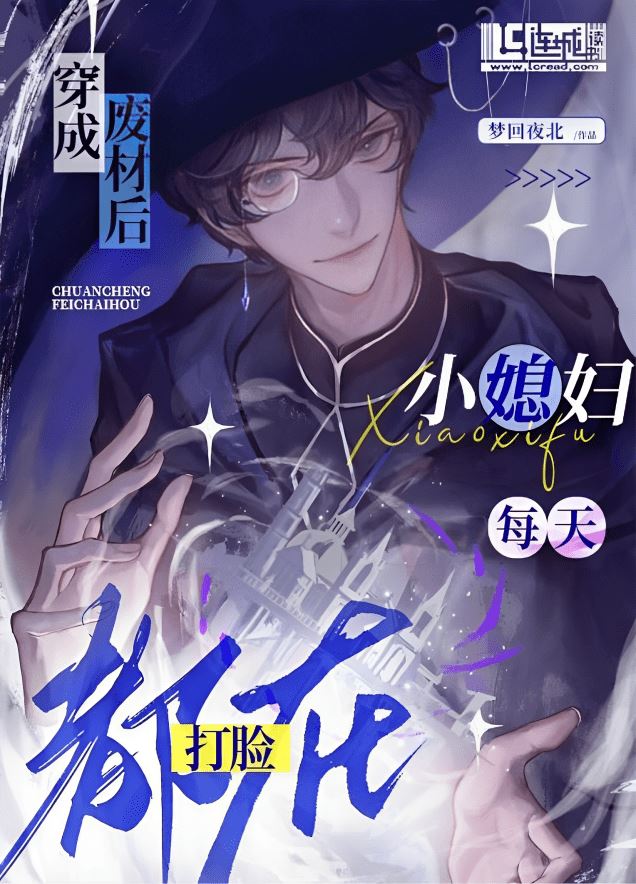
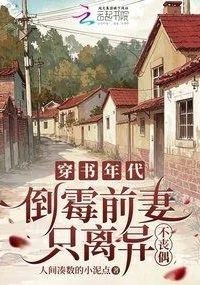
Cheng Yin wakes up in an unfamiliar body, having transmigrated from his previous life into the world of Guangming Mainland. He finds himself in the Ten Thousand Beasts Forest, where a massive tiger attacks him. Although his spiritual power has dropped to level zero, his combat instincts remain sharp. He fights the tiger with a stone until a middle-aged mage in purple robes intervenes, casting a Fireball Spell to save him. The mage and a young woman named Cheng Ran, who is revealed to be his stepsister, express concern that he wanders into dangerous areas without self-defense capabilities. Cheng Yin realizes he has crossed over with both body and soul and now possesses the memories of the original Cheng Yin, a boy who was considered talentless because he could not cultivate Dou Qi.

Returning to the Cheng family mansion, Cheng Yin prepares for the final test of magic and summoner talent. The Cheng Family Head, his father, is visibly angry at his presence and attempts to dismiss him. Cheng Ran feigns kindness but secretly harbors jealousy, as Cheng Yin is the only legitimate heir. During the elemental test, Cheng Yin’s crystal ball glows with a faint green light, identifying him as a wood-element magician. Though the guest secretary, Elder Ye, displays open contempt due to the weak manifestation, Cheng Yin accepts the result. He then queues for the summoner test, seeking an additional cultivation path despite Cheng Ran’s mockery about the difficulty involved.

At the summoning site, Cheng Yin recites the incantation he heard from the family’s only summoner. A white light envelops him, and he summons a tiny, winged humanoid creature with sky-blue eyes. The creature introduces itself as Wei Xi, a member of the Yulan Phantom Orchid Clan. Cheng Ran and other disciples ridicule the summon, claiming the beast has no offensive power and is merely an ornamental pet. Elder Ye declares that no summoned beast can be changed and refuses to participate further in the family competitions due to this outcome. The Cheng Family Head is furious and orders a month-long confinement for the attendees, unable to bear the embarrassment.

Back in his humble courtyard, Cheng Yin bonds with Wei Xi, who is fiercely loyal and addresses him as "Xianggong," meaning husband or mate. When Cheng Ran sneaks into his courtyard to taunt him about his past humiliation at the clan competition, Wei Xi confronts her. Cheng Ran attempts to cast a fireball spell, but Cheng Yin anticipates her move. He kicks her before she can finish chanting, causing her pain without leaving visible marks. He denies the attack when she accuses him, exploiting the lack of witnesses. Cheng Ran leaves in rage, vowing revenge, while Wei Xi admires Cheng Yin’s strength.

Cheng Yin begins intense cultivation. Within three days, he reaches one-star magician level, a speed far surpassing Cheng Ran’s seven-year progression to two stars. He attributes this to his previous world’s superior understanding of spiritual mechanics. Realizing he has no money, he ventures into the city streets. There, he encounters Zhuang Qing, Cheng Ran’s admirer, who mocks Cheng Yin’s poverty. Zhuang Qing orders his followers to beat Cheng Yin. Cheng Yin disarms and defeats the attackers efficiently, then confronts Zhuang Qing. He threatens the man until Zhuang Qing hands over a bag of gold coins. Cheng Yin uses his second special ability, duplicating the gold coins with a touch, creating lighter copies to increase his wealth secretly. He returns home with Wei Xi, planning to continue his low-profile cultivation while navigating the hostile family dynamics.

The narrative establishes Cheng Yin as a transmigrator adapting to a magic-based society where elements like ice, fire, water, earth, wood, wind, light, and darkness are harnessed through various professions such as magicians, summoners, warriors, and apothecaries. His unique advantage lies in his prior life’s knowledge and his dual talents in magic and summoning, despite the initial perception that his summoned beast is useless. The core conflict revolves around his struggle for survival and status within a family that despises him, particularly from Cheng Ran, who sees him as an obstacle to her ambitions. Key turning points include his successful summoning of Wei Xi, his physical dominance over his bullies, and his discovery of his duplication ability, which provides him with the resources needed to advance. The story moves toward Cheng Yin’s growth as he prepares for the upcoming clan competitions, utilizing his secret advantages while maintaining a facade of mediocrity.

Latest Release
DateGroupRelease
2026-09-26knoxt c8
2026-09-26knoxt c7
2026-09-26knoxt c6
2026-09-26knoxt c5
2026-09-26knoxt c4
2026-09-26knoxt c3
2026-09-26knoxt c2
2026-09-26knoxt c1

Community Reviews

Rating(3.8 / 5.0, 22votes)
5 stars
6(27%)
4 stars
6(27%)
3 stars
9(41%)
2 stars
1(5%)
1 stars
0(0%)

Popular reviews

... Read More
Okay so the worldbuilding in this text is doing SO much heavy lifting and I appreciate it. Let's start with the cultivation system itself — magicians have to chant incantations, and the bigger the spell, the longer the chant. Cheng Yin is puzzled by this: 'Can't you just cast it directly?' This single observation tells us so much about how this world operates differently from his original one. It's not just 'magic exists'; it's magic has RULES, and those rules create weaknesses that smart protagonists can exploit. Then there's the magic city hierarchy — three-star magic cities are the LOWEST tier, which explains why the 'geniuses' here seem underwhelming to Cheng Yin. He compares Cheng Ran's seven years of cultivation to become a two-star magician with his own three months to reach level one psychic in his last world. The implication hits hard: this world's power system is either slower or this family's standards are pathetically low. And the scene descriptions are surprisingly vivid. His courtyard is in a REMOTE place with people rarely coming over — that isolation matters because it's what allows him to execute that kick without witnesses. The sparsely decorated room with just a bed, table, and chairs tells us about Cheng Yin's actual economic status despite being part of the Cheng family. Then the bustling streets scene where vendors sell all sorts of things — immediately we get the sense of a living, breathing marketplace. The visual of Wei Xi circling the grilled fish with his little face covered in dirt is cinematic. I can SEE it. And the white robe description of Zhuang Qing — fat flesh holding up the white robe until it was deformed — this is grotesque character design that tells us everything about his personality without a single line of internal monologue.
... Read More
Okay, I need to talk about this opening chapter because it absolutely wrecked me in the best way. Cheng Yin just transmigrates into this new body and already he's assessing his situation like a damn chess master. The crystal ball test? Classic setup, but the author subverts it immediately by making him secretly triumphant while everyone else sees failure. That green glow that nearly disappears? Perfect metaphor for how the world perceives him. And then the summoning scene—oh my god. Five people step into the array and literally zero others succeed except him. ZERO. The guest secretary himself had to leave because of it. This isn't just a protagonist flex; this is the author laying down a challenge to every expectation in the genre. But here's what really got me: the Yulan Clan reveal. You'd think Cheng Yin summoned a worthless beast and that's the end, right? Wrong. Wei Xi calls him Xianggong—husband. Not master. Not summoner. Husband. There's something ancient and unknowable in that tiny blue-eyed creature, and I'm convinced the Yulan Clan isn't ornamental at all. It's either sealed, disguised, or operates on a power system we haven't seen yet. The fact that the guest secretary refuses to participate further in competitions after seeing Cheng Yin's result tells me this world's authorities are deeply unsettled by what they witnessed. The plot is moving at a terrifying pace—transmigration, talent awakening, summoning, family conflict, secret power systems—all in what amounts to a prologue. And yet it doesn't feel rushed. Every scene earns its place.
... Read More
The worldbuilding in these chapters is deceptively rich. Let me walk through what makes it work. First, the magic system has clear visual language: the crystal ball glows green for wood elementals, faint and flickering like it's barely holding on. The guest secretary's contempt physically intensifies—the author doesn't just tell us he's disappointed, he shows us the expression changing. Then we get the summoning array: white circles of light with stars at the center, five people standing inside simultaneously, incantations spoken carefully by a weary summoner. This isn't generic fantasy filler; every detail serves the atmosphere. The courtyard scene hit me hardest. Cheng Yin follows memories to his own home, and the description is devastating in its simplicity: 'a main house, a kitchen, and vegetables planted in front.' Wei Xi, perched on his shoulder, surveys this shabby estate and his temper flares. 'Are they bullying you?!' The fact that a being of unknown power reacts to a vegetable garden with protective anger says everything about Cheng Yin's status. He's not just poor—he's been reduced to growing his own food in a house so small it's barely worth mentioning. What's remarkable is how the author contrasts the grand ceremony of the summoning—with light arrays, incantations, gathered disciples, and the guest secretary presiding like a judge—with the quiet devastation of Cheng Yin returning to his courtyard. One scene shouts power; the other whispers poverty. And Wei Xi flying around that tiny garden, getting angry on behalf of a man who can barely afford sunlight... that's the most beautiful worldbuilding I've read in years. The setting doesn't just exist; it judges the characters.
... Read More
There's so much happening beneath the surface in this text and I keep finding new layers. Let me start with the star imagery — it's everywhere and it's NOT accidental. Cheng Yin becomes a ONE-STAR magician, marked by a magic formation with a white star. Cheng Ran is a TWO-STAR magician. The Cheng family lives in a THREE-STAR magic city, which is the lowest tier. These stars aren't just power levels; they're social hierarchies made visible. The whole cultivation system represents a world where worth is quantified, measured, ranked. But Cheng Yin sees through this. He thinks the family's standard must be too low because he reached level one psychic in three months in his previous world. The implication is that this entire system is arbitrary — a construct designed to maintain power structures, not a genuine measure of ability. Then there's the fish bone scene, which I think is deeply symbolic. Cheng Yin gives Wei Xi the SMALLEST fish and tells him to be careful of the bones. This is about care and protection, yes, but it's also about scarcity. They don't have much. Cheng Yin has no possessions, no money, no status in this world. Yet he still finds a way to nourish someone else. The white handkerchief detail is fascinating too — Wei Xi pulls out a CLEAN white handkerchief to wipe his dirty face. In a world that values purity and rank, Wei Xi maintains his dignity through small acts of self-respect. And the repeated imagery of chanting — the longer the spell, the more time you're vulnerable — this is a metaphor for any system that requires performative effort over genuine ability. The whole text is about someone who understands that the game is rigged and is quietly learning how to win anyway.
... Read More
Let me be honest—this pacing is a wild ride. The chapter opens with a tiger attack, which could be generic action, but it's handled with this breathless urgency that works. Cheng Yin is half-dead, wakes up, fights a beast, realizes he's in another world—all before the first major scene transition. I found myself reading faster because the author doesn't give you a break. “Roar! A loud roar woke up the unconscious Cheng Yin.” BAM. You're in the scene immediately. The structure is clever though. We get three distinct mini-acts: the tiger fight (action), the family dynamics (character), and the testing ceremony (plot). Each transitions smoothly without dragging. The author uses physical space to control pacing—the forest fight is chaotic, the mansion is stiff, the testing hall is clinical. You feel the shift from wilderness to civilization to bureaucracy. What really works is the tension building. The tiger scene establishes Cheng Yin's competence, the family entrance sets up his low status, and the testing ceremony creates anticipation. The author controls reader engagement perfectly—every scene ends with a question or revelation that pulls you forward. “Cheng Yin was sure that he had somehow traveled to another world.” That's the hook. You keep reading because you want to know what happens next. Some parts rush though. The tiger fight could have lingered more on Cheng Yin's internal state—he's fighting for his life and we barely get his thoughts. The family dynamics section is stronger emotionally but moves quickly through several characters. The testing ceremony at the end is perfect—just enough setup, not enough resolution to leave you wanting more. The author knows when to cut and when to stretch. Overall, this pacing style keeps you engaged without exhausting you.
... Read More
I need to be honest—I got genuinely emotional during the Wei Xi scenes, and I'm not even sure why. Let me explain. This little being appears from thin air, looks at Cheng Yin with those sky-blue eyes full of curiosity, and asks the most devastatingly simple question in the entire text: 'Are you my husband?' Not 'master.' Not 'servant.' Husband. In a world where summoned beasts are typically tools, where Cheng Ran dismisses Wei Xi as 'just a Yulan Clan with no attack power,' this creature chooses love. It chooses commitment. It chooses to belong to someone the entire clan has already written off as a failure. And then—the moment where Wei Xi tries to fly at Cheng Ran in a fury, and Cheng Yin catches him and says, 'It's alright, I'll raise you'—in that gentle voice. Wei Xi hears the words and becomes happy, looks up at Cheng Yin... and sees detachment in his eyes. The text says his wings 'aggrievedly fluttered with reduced frequency.' Aggrieved. That word destroyed me. Wei Xi knows. This tiny, presumably ancient being knows that Cheng Yin is playing a role, that his gentleness is calculated, and yet Wei Xi still chose to love him anyway. That's not naive attachment—that's conscious devotion. Later, when Cheng Yin tells Wei Xi, 'They won't be able to bully me anymore from now on,' and Wei Xi responds with absolute conviction—'If anyone dares to bully you, I'll beat them to death!'—you can feel the sincerity radiating off the page. This is the foundation of something extraordinary. A boy who has spent his life being underestimated, finding someone small enough to protect yet vast enough to change everything. I'm already invested beyond reason.
See all reviews

Custom lists

See all custom Lists