After Transmigrating into a Novel, I Became the Campus Heartthrob's Stepmother
Novel Info

Summary

... Read More

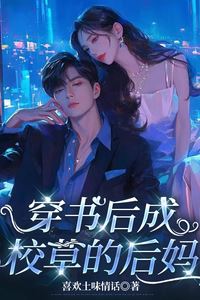
Ruan Bai is a twenty-six-year-old woman who has endured a difficult life with a greedy stepfather and no family support. After finishing a campus romance novel on a whim, she is struck by a falling billboard and transmigrates into the story. She awakens in the luxurious bed of Qi Mu, a wealthy and mature tycoon who is the father of the novel’s male lead, Qi Zhi. Ruan Bai discovers she has inhabited the body of Qi Mu’s second wife, a character who was merely mentioned by name in the book with no developed backstory. Initially shocked and disoriented, she quickly assesses her new reality: she is now a wealthy stepmother living in a mansion in the Imperial Capital, with a life of comfort and luxury that contrasts sharply with her previous struggles.

The core of the narrative revolves around Ruan Bai’s adaptation to this new identity and her evolving relationships with the two men in her life. Qi Zhi, the sixteen-year-old campus heartthrob and academic underachiever, is initially skeptical of his new stepmother but finds her to be more approachable and fun than his distant father. Ruan Bai leverages her knowledge of the plot to guide Qi Zhi, convincing him to hire tutors and improve his grades before high school begins. Her intervention shifts Qi Zhi from a lazy student to a motivated one, altering the trajectory of his character development. Meanwhile, her relationship with Qi Mu transforms from cold indifference to genuine affection. Qi Mu, who had previously ignored his wife, becomes attentive and supportive, facilitating her desire to open a nail salon and even purchasing the shop for her as a gift.

Key turning points include Ruan Bai’s decision to assert herself in the household rather than passively accepting the role assigned to her by the original story. She negotiates with Qi Mu to open a business, secures a prime location near Rongzhi Mall, and handles the legal transfer of the property with confidence. Her interactions with Qi Zhi’s former classmate, Zhou Rong, further highlight her new status; Zhou Rong spreads rumors about Ruan Bai marrying an older man for money, but Ruan Bai remains indifferent, focusing instead on her own happiness and the well-being of her stepson. The narrative also explores the domestic dynamics of the Qi family, showing how Ruan Bai’s presence brings warmth and cohesion to a household that was previously fragmented.

As the story progresses, Ruan Bai embraces her role as a rich madam while maintaining her own identity. She enjoys the material comforts of her new life, from high-end skincare to luxury shopping, but also seeks personal fulfillment through her nail salon project. Her bond with Qi Mu deepens through shared meals, intimate moments, and mutual respect, while her relationship with Qi Zhi evolves into a supportive stepmother-stepson dynamic. The narrative concludes with Ruan Bai fully integrated into the Qi family, having altered the original plot by ensuring Qi Zhi’s academic success and fostering a loving environment with Qi Mu. Her journey from a bewildered transmigrator to a confident matriarch illustrates her ability to navigate and reshape her destiny within the fictional world.

Latest Release
DateGroupRelease
2026-08-11shanghai fantasy c70
2026-08-11shanghai fantasy c69
2026-08-11shanghai fantasy c68
2026-08-11shanghai fantasy c67
2026-08-11shanghai fantasy c66
2026-08-11shanghai fantasy c65
2026-08-11shanghai fantasy c64
2026-08-11shanghai fantasy c63
2026-08-11shanghai fantasy c62
2026-08-11shanghai fantasy c61
2026-08-11shanghai fantasy c60
2026-08-11shanghai fantasy c59

Community Reviews

Rating(4.2 / 5.0, 13votes)
5 stars
5(38%)
4 stars
5(38%)
3 stars
3(23%)
2 stars
0(0%)
1 stars
0(0%)

Popular reviews

... Read More
I'm not going to lie — the transmigration premise is super familiar, but the emotional beat that actually hit me was something I didn't expect. It's this moment where Ruan Bai is lying on the bed, having just realized she's somehow inside a novel she read over the weekend, and she starts thinking about her own life. In her original world, her parents died early, and her stepfather was this absolute monster who was "greedy, obsessed with her looks, and always plotting to sell her off to buy his son a house." She had no family. No real home. And then she wakes up in a seventy-eight square meter bedroom that's bigger than her entire apartment, surrounded by luxury, with a stepson who clearly likes her and a husband who — well, we don't know about yet. She says to herself: "At least I'm a rich Madam now, aren't I?" And it sounds like she's trying to convince herself, but there's this undercurrent of genuine relief. She's not just excited about the money. She's excited that for the first time, she might actually belong somewhere. That hit me harder than any romantic scene could have. Because the whole setup — the rich husband, the beautiful body, the mansion — it's all wish fulfillment on the surface, but the emotional core is this woman who finally has a place where nobody's trying to sell her. The romance with Qi Mu hasn't even started and already the book is asking: what does it mean to be chosen, to be kept, to be someone's wife in a world where you were previously nobody's? Also, the fact that the original Ruan Bai had zero friends? That's not just worldbuilding. That's the book telling us that wealth without connection is its own kind of loneliness. And I have a feeling our girl is about to fix both problems.
... Read More
Okay, hear me out — I think this book is about something deeper than it lets on, and the evidence is right there in the first three chapters. The most important object in this entire story is a phone. A phone with no password. A phone that unlocks with her face. A phone where she immediately changes all the passwords and the payment code so that "from top to bottom, the phone was completely hers." This is such a small detail but it's the thesis statement of the whole novel. The original Ruan Bai had no control over anything — her body, her marriage, her life. Our Ruan Bai's first act of autonomy is securing the one thing that connects her to this world: her phone. Then there's the name coincidence. She shares a name with the stepmother in the novel. The book called it "amusing" when she read it. Now it's her reality. The novel that was supposed to be entertainment has become her existence. What does that say about stories? About the worlds we escape into? About the lives we imagine for ourselves? And the stepfather — mentioned in a single paragraph but carrying so much weight. In her original world, she was a commodity. In this world, she's a wife, a madam, someone with status. But the book is also asking: at what cost? The original Ruan Bai had no friends. She was isolated, surrounded by wealth but empty. Our protagonist is about to discover that being chosen by a powerful man isn't the same as being chosen by people. The recurring image of mirrors — her seeing her reflection, the vanity, the face that's hers but not hers — it all points to the central question: who am I when everything around me has changed? And the answer, I think, is going to be more complicated than "rich and happy."
... Read More
I need to talk about Qi Zhi because this boy absolutely stole my heart in these chapters. Let's be real—when a kid who's spent his whole life in public school wearing mid-range Nike and Adidas suddenly gets trendy brand shoes from his stepmother and is holding them like they're the most precious thing in the world? That's not just a shopping trip. That's a character moment that reveals everything. The author writes: "Stepmother, you're really generous" and Qi Zhi is just standing there with six or seven bags, and you can literally see the internal shift happening. This is a boy who's used to being careful, used to not standing out, used to his father's controlled world. And then Ruan Bai just... buys him the shoes he'd been staring at in a magazine. Not because she has to. Not because the plot demands it. But because she noticed. She ACTUALLY noticed. And Qi Mu? Oh, Qi Mu is fascinating. He watches her buy the shoes and doesn't insist on paying. He notices she's caring for his son and says, "You really care about Qi Zhi." There's a vulnerability there that he rarely shows. He's the powerful CEO type, but in these quiet moments at home, he's just a dad trying to figure out if this woman is genuine or playing a role. The dynamic between all three of them has shifted so organically. Remember when Ruan Bai serves Qi Mu the spicy beef and he actually tries it? "Yes, it's really tasty," he says, and she gets so excited she looks like she won the lottery. That's not a transactional relationship—that's two people discovering each other. And the banter in the car? "Look at your son, holding the shoes like that. Doesn't he look like an idiot?" "Dad, I'm your biological son! If I'm an idiot, then what does that make you?" This is a FAMILY now. Not a arrangement. Not a performance. And that's what makes these chapters so good—the relationships feel earned, not forced.
... Read More
I'm not even going to pretend I'm surprised — the dialogue in this book is genuinely good, and it's almost entirely carried by Qi Zhi. This kid is sixteen and he has more personality in his pinky finger than most adult characters in these types of novels. His voice is immediate and distinct. When he says "Have some shame, Stepmother" after she calls him out for calling her Mom, it's perfect. It's playful, it's respectful but not subservient, and it tells us everything we need to know about their relationship in one line. And the WeChat exchanges between Ruan Bai and Qi Mu? Chef's kiss. The author doesn't need narration to tell us their marriage is cold — the dialogue does it for them. Her messages are full of question marks and concern. His are periods. End of story. But what I love most is how natural everything feels. There's no over-explaining, no "As you know, Bob" moments where characters tell each other things they already know just for the reader's benefit. When Qi Zhi asks Ruan Bai to talk to his dad, he doesn't explain why he doesn't want to go — he just says he has plans with his friends. We understand. The subtext does the work. Ruan Bai's internal monologue is also doing a lot of heavy lifting, and it's written in a voice that feels genuinely twenty-six, not twenty-two pretending to be mature. Her self-deprecating humor — "What a joke — she didn't even know what kind of relationship she and his father had!" — it's witty without trying too hard. The author clearly understands that dialogue isn't just about what people say. It's about what they don't say, and who's saying it.
... Read More
Okay, I need to talk about the Qi Mu situation because this is already the most interesting dynamic in the book and we haven't even gotten to the actual romance yet. Ruan Bai checks her WeChat history with Qi Mu and literally the entire thread is HER messages — "Are you coming home for dinner?" "Have you landed yet?" "Where are you now?" — and his replies are just "Coming." "Not coming." "Landed." That's it. That's the entire emotional history of their marriage condensed into three words. And you know what? It immediately made me curious. Not in a bad way — in a "tell me more" way. This isn't a toxic marriage, I don't think. This is a marriage that exists on paper but hasn't actually happened yet. They've been married for a year and she still doesn't know how to talk to him. Then there's Qi Zhi, who is honestly the best character so far. The kid is sixteen, just finished his entrance exam, and his first instinct is to ask his new stepmom to be his middleman because he's too scared to tell his dad no. And their dynamic is genuinely sweet — he calls her "Stepmom" but it's not disrespectful, it's almost playful. When she transfers him 5000 and then takes back 4500, his reaction is perfect: "I thought you'd been possessed by a demon." The original Ruan Bai and Qi Zhi clearly had a great relationship, and that's going to be so useful for our girl navigating this new world. But what really got me was the way Qi Mu acts. He notices she's acting weird — she pinches herself, she zones out, she asks questions she's never asked before — and his response is just... not addressing it. He says "You're awake so early today? Don't you usually sleep in until the sun's high in the sky?" like he's noticed something's off but is choosing to let it slide. That's either him being genuinely chill or him being dangerously observant. I can't tell which one scares me more.
... Read More
I need to talk about the closet scene because this is where the author really lets the worldbuilding breathe and it is SO good. Ruan Bai steps into the walk-in closet and the narrative just... stops. She's there for a full hour. An hour. Of a twenty-six-year-old woman who used to shop at Uniqlo and H&M, surrounded by Chanel, Hermès, Dior — items that in her previous life would have cost years of salary. The description isn't just listing brands for flex purposes. It's capturing this moment of cultural whiplash. She's not just rich now, she's in a completely different stratum of reality. And the detail about the unbranded skincare bottles? That's the kind of thing that makes me believe this world actually exists. The book mentions that "truly elite Madams used customized skincare products made by luxury brands specifically tailored to their skin." That's not exposition — that's worldbuilding through gossip, through the kind of thing people at her old job would have whispered about. It makes the wealth feel lived-in, not just decorative. The villa itself is described like a "European-style mansion in Shanghai" with a garden, a home theater, a three-story servant building. But what I love most is how the narrative treats all of this through Ruan Bai's eyes — she's not a native of this world, so everything is fresh and slightly absurd to her. When she sits in the garden and thinks, "If it had been one of those period dramas, I'd have been stuck in the 1960s — no phone, no TV. Now that would've been unbearable," that's the author winking at us. The world is luxurious but it's also modern, and that's what makes it feel accessible. The garden scene at dusk, her alone in the house, the servants already knowing her routines — it's cinematic in the best way. I could see this as a drama.
See all reviews

Characters

See all characters

Custom lists

See all custom Lists