Summary

... Read More

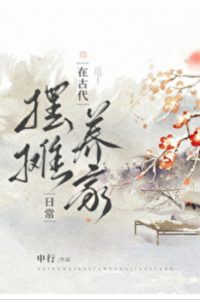
After a car accident, Su Yi'an awakens in the body of a young woman with the same name who was on the verge of death. The original Su Yi'an was an orphan raised by a cruel stepmother who stole her childhood betrothal contract and forced her into a marriage meant to bring good luck to the failing He family. Su Yi'an, now inhabiting this body, arrives at Yongyang Village for her wedding to He Yunhuai, a second young master who has been bedridden and unconscious for five days. The He family, once prominent scholars, has fallen into poverty and disgrace after being framed by powerful officials. The village is hostile, with neighbors coveting the family's land and mocking their misfortune. Despite the grim circumstances, Su Yi'an remains composed, having seen through the hypocrisy of her own family and the villagers.

Upon arrival, Su Yi'an faces immediate hostility from the villagers, including verbal abuse from a local bully named Gou Er. She asserts her authority by having her servant, Mama Li, slap the bully and publicly rebuking the crowd for their cruelty. Inside the He residence, she discovers a family in desperate straits: the eldest son is paralyzed, the second son is near death, and the women and children are starving. The debt collectors soon arrive, demanding payment for old debts. Su Yi'an reveals that her dowry chests contain only wood and stones, having swapped her meager belongings beforehand to protect them from seizure. This act frustrates the creditors but also signals her determination to survive on her own terms.

As night falls, Su Yi'an learns the full extent of the He family's tragedy. The patriarch was imprisoned due to a fabricated charge, leading to the loss of their property and status. His sons suffered physical harm while trying to protect the family. Su Yi'an decides to stay, not out of love, but because she recognizes that leaving the family would likely result in their demise, and she intends to secure her own future. The next morning, she sells her wedding dress in town to buy medicine and food. During this trip, she encounters Mama Li, who reveals that the Su family orchestrated the marriage to get rid of her, having originally planned to sell Su Yi'an as a concubine to a high official. Su Yi'an realizes she has been used as a pawn but finds solace in her newfound independence.

Back in the village, Su Yi'an faces further antagonism from relatives who seek to seize the He family's remaining six acres of fertile land. She outmaneuvers them by pretending to sell the land at an exorbitant price, driving them away with greed and anger. Meanwhile, she begins to care for the bedridden He Yunhuai, feeding him medicine and ensuring he receives basic care. The youngest members of the family, He Xingchen and He Ningwen, begin to warm to her, seeing her as a protector against the hostile village. Su Yi'an also discovers a small amount of silver hidden by Mama Li, which she uses to buy more supplies. She plans to start a business, observing the local market in Huai'an Town to find a viable trade. The story follows her efforts to stabilize the He family's finances and protect them from external threats while navigating the complex social dynamics of the village.

As winter approaches, the He family faces the dual threats of starvation and cold. Su Yi'an takes charge of household management, rationing food and finding ways to generate income. She befriends a local woman who helps her sell goods, gradually building a small network of support. The villagers' attitude begins to shift from mockery to cautious respect as they see Su Yi'an's competence and resilience. However, the shadow of the He family's past enemies looms large, and Su Yi'an remains vigilant against potential threats. She discovers that He Yunhuai's condition is deteriorating, and the family's hope rests on whether he will survive the winter. The narrative focuses on Su Yi'an's strategic maneuvers to secure her place in this new life, balancing her desire for autonomy with the practical necessities of survival in a hostile environment.

Latest Release
DateGroupRelease
2026-08-11shanghai fantasy c178
2026-08-11shanghai fantasy c177
2026-08-11shanghai fantasy c176
2026-08-11shanghai fantasy c175
2026-08-11shanghai fantasy c174
2026-08-11shanghai fantasy c173
2026-08-11shanghai fantasy c172
2026-08-11shanghai fantasy c171
2026-08-11shanghai fantasy c170
2026-08-11shanghai fantasy c169
2026-08-11shanghai fantasy c168
2026-08-11shanghai fantasy c167

Community Reviews

Rating(3.8 / 5.0, 5votes)
5 stars
1(20%)
4 stars
2(40%)
3 stars
2(40%)
2 stars
0(0%)
1 stars
0(0%)

Popular reviews

... Read More
Okay so the debt collectors knocking at the door when they literally just got the bride in? That is some next-level timing from the author. Like, you'd think the wedding would give them a moment of peace, right? Wrong. No. The moment Su Yi'an is inside, the creditors come kicking the door. It's almost comically cruel how the universe keeps piling on. But here's what really got me—when Su Yi'an steps up and says 'the He family's debts have nothing to do with me,' and then challenges them on whether anyone even witnessed a proper ceremony? That is a power move. She's not just sitting there being a victim bride. She's actually fighting back with her brain. And the fact that she HESITATED before they opened the chests, letting them find wood and stone... that was calculated. She wanted them to think the dowry was a sham so they'd leave. It worked. The stakes throughout this whole section are so high because you can feel how trapped the He family is. They have no male head, no money, a bedridden son, and creditors who will literally take their land. Every scene crams in another problem. I was genuinely worried for them. And that ending where Mother He wakes up and asks Wan Xu 'did I make a mistake?' hits so hard. She gambled everything on this marriage and her daughter-in-law's dowry was basically empty. What was she supposed to do, let her son die? That question at the end isn't just about the dowry—it's about whether any of this was worth it.
... Read More
I need to talk about how the author describes the He family home because honestly it paints such a vivid picture of poverty without being preachy about it. 'The only wooden table was missing half a leg, propped up by stones. The two chairs had uneven legs, threatening to wobble if anyone sat on them. There wasn't a single cabinet, making the small room feel strangely empty.' That's it. That's the whole description and I can SEE it. The missing table leg, the wobbly chairs, the emptiness from having no furniture. It's not a single overwrought sentence—it's just matter-of-fact observations that somehow hit harder than any dramatic description could. And the medicine smell! 'She lifted the curtain and was immediately enveloped in the pungent aroma of traditional Chinese medicine, her brow furrowing slightly.' You can practically smell it through the text. That room with the two sick men, the thin quilt, the draft coming through the cracks in the door... it's a whole atmosphere of desperation and endurance. The kang beds are mentioned multiple times and they keep appearing in different rooms, each one smaller and more worn than the last. It's a recurring visual anchor that tells you everything about this family's status without anyone having to say 'we're poor.' The author trusts the reader to connect the dots. I also loved the detail about Mama Li glancing at the thin quilt and 'quickly averting her eyes.' That tiny gesture says so much—she's from the Su family, she's seen better, but she's also trying not to make the He family feel worse about their situation. That kind of environmental storytelling is what makes this world feel alive.
... Read More
Let me just say this: Su Yi'an's dialogue is the kind of dialogue I live for. She doesn't waste words and every line has purpose. When the debt collectors demand her dowry and she says 'the He family's debts have nothing to do with me,' that's not just a line—that's a boundary being drawn in stone. And then she follows it up with 'Was there a bridal procession or ceremony? Did any villagers witness it?' That's her flipping the script and making them question their own assumption that she's part of this family. And Zhuang Shan's line to Gou Er earlier: 'Go home and wash up immediately. Look at you, getting your hands dirty again.' That's such a casual, domestic line in the middle of what could have been a dramatic confrontation. It immediately establishes their relationship without any exposition. She's his wife, she's scolding him like a spouse would, and suddenly we understand so much about them in one line. The He Ningwen's dialogue is all hesitant—'Auntie, there's no room on the kang in the inner room. Grandma can't lie down'—and it perfectly captures her timid, nervous personality. You can hear her speaking in her head. Every character has a distinct voice here, which is honestly rare. Even Mother He's dialogue shifts from desperate and commanding to vulnerable and questioning, especially at the end when she asks Wan Xu 'did I make a mistake?' The author's narrative voice is also really clean—mostly straightforward, occasional dry observations like 'She hadn't expected her first day to be this troublesome.' It doesn't get in the way of the story. Sometimes the best writing is just invisible.
... Read More
Okay I need to process what just happened with Mother He because this scene wrecked me in the best way. She fainted when she saw Su Yi'an. Not from shock or fear of the debt collectors—from guilt. She dragged this young woman into her family knowing full well it was a terrible situation. 'She had pushed for this marriage. Seeing Su Yi'an's bold demeanor earlier, she had thought the girl was cherished at home—thus the confidence. Now, looking back, she realized Su Yi'an's confidence had been defiance—a protest against the marriage.' That realization hits like a truck. Mother He misread everything. She thought Su Yi'an was confident because she was well-loved and secure, when really Su Yi'an was confident because she'd already decided she was going to survive this no matter what. And Mother He knows it now. She knows she brought someone into a burning house. But then Su Yi'an feeds the medicine. She doesn't have to. She could have walked away the moment the debt collectors left. Instead she goes into the inner room, deals with the awful smell, and spoon-feeds a dying man who isn't even her husband yet. And she gives Mama Li half a tael of silver. These are small acts but they carry so much weight because we know exactly what Su Yi'an is giving up to do them. The ending where Mother He lies awake asking 'did I make a mistake?' and Wan Xu says 'as a young woman, she couldn't condone it. But as a mother, she would've done the same'—that line stays with me. It's the whole story in one sentence.
... Read More
I've been thinking about those two dowry chests ever since I finished this section, and I can't shake the symbolism. On the surface, they're just props in a debt collector scene—but they represent SO much more. The chests are empty inside but still look impressive from the outside. That's basically the He family's entire situation. They look like they have a daughter-in-law from a good family, a wedding ceremony, a bride with dowry—but underneath, there's nothing. No money, no men to protect them, no future. The wood and stone inside are literally worthless, just like the dowry the Su family sent was deliberately minimized. But here's the thing—Su Yi'an swapped her real dowry for wood and stone on PURPOSE. She knew the He family was poor, she knew her husband was sick, and she prepared for the worst. The empty chests become a shield. They're a lie that protects everyone. The debt collectors leave because they think there's nothing worth taking. The He family doesn't have to face the humiliation of having real dowry confiscated. It's a brilliant, heartbreaking kind of survival. The medicine is another symbol I can't stop thinking about. 'Every possible measure had already been taken.' The herbal decoction, the 'auspicious marriage' ritual to bring luck, the desperate hope that a bride could somehow save a dying man—it's all about how far people will go when they're backed into a corner. The story seems to be asking: what does a person sacrifice when survival is on the line? And who gets to decide what's worth saving?
See all reviews

Characters

See all characters

Custom lists

See all custom Lists