Summary

... Read More
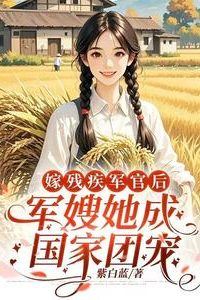
Chen Shuilian, a woman in her forties living in Lulin Village during the Great Qing Dynasty, lies dying in a dilapidated woodshed, neglected by her family and left to suffer in the cold. Her final moments are visited only by Da Ya, the young daughter of her deceased second son, whom Chen Shuilian had previously mistreated. In a last act of remorse, she gives Da Ya a hidden silver ingot and urges her to flee, before passing away in regret over her lifelong favoritism toward her eldest son and neglect of her other children. Upon death, Chen Shuilian’s consciousness shifts, and she awakens in her younger body, thirty-five years old, just as a chaotic family dispute erupts in her bedroom. She realizes she has been reborn to the past, before the tragedies that destroyed her family. The scene unfolding before her involves her eldest son, Zhao Jiagu, who has returned home with a pregnant mistress, Liu Hong, demanding that he divorce his loyal wife, Wang Miaomiao, to marry the newcomer. In her previous life, Chen Shuilian’s blind favoritism toward Zhao Jiagu led her to support this divorce, resulting in the expulsion of Wang Miaomiao, the eventual death of her second son and daughter-in-law, and her own miserable end. Now, armed with knowledge of the future, Chen Shuilian rejects Zhao Jiagu’s demands. She violently drives him and Liu Hong out of the house, refusing to allow the divorce or the intrusion of the mistress into the family. Her sudden change in behavior shocks her remaining sons, Zhao Maizhou and Zhao Fengtian, as well as Wang Miaomiao, who is bewildered by her mother-in-law’s unexpected defense. Zhao Jiagu, unwilling to accept the loss of his mother’s support and the potential scandal, attempts to negotiate. He insists on taking half of the family’s assets, including the ten taels of silver Chen Shuilian had previously sold their land to fund his tavern job. Chen Shuilian, determined to sever ties completely, calls upon the village chief to mediate a formal family division. She demands that Zhao Jiagu leave with nothing but an IOU for the silver he received, which he must repay within a year. After intense negotiation and pressure from Liu Hong, who reveals her own family wealth, Zhao Jiagu reluctantly agrees to the terms to avoid further conflict and potential legal trouble. With the family division document signed and sealed, Zhao Jiagu and Liu Hong are expelled from the household. Zhao Jiagu, bitter and resentful, demands a divorce from Wang Miaomiao before leaving, attempting to force her out as well. Chen Shuilian intervenes, slapping Zhao Jiagu for bullying his wife and declaring that Wang Miaomiao will remain in the house. She instructs Wang Miaomiao to continue her duties, maintaining her fierce exterior to avoid suspicion while subtly protecting the woman who suffered so much in the past life. The story concludes with Chen Shuilian beginning to rebuild her family dynamics, determined to correct the mistakes of her previous existence by supporting her hardworking younger sons and protecting Wang Miaomiao from the fate that befell her before.

Latest Release
DateGroupRelease
2026-08-11shanghai fantasy c51
2026-08-11shanghai fantasy c50
2026-08-11shanghai fantasy c49
2026-08-11shanghai fantasy c48
2026-08-11shanghai fantasy c47
2026-08-11shanghai fantasy c46
2026-08-11shanghai fantasy c45
2026-08-11shanghai fantasy c44
2026-08-11shanghai fantasy c43
2026-08-11shanghai fantasy c42
2026-08-11shanghai fantasy c41
2026-08-11shanghai fantasy c40

Community Reviews

Rating(3.4 / 5.0, 25votes)
5 stars
6(24%)
4 stars
5(20%)
3 stars
8(32%)
2 stars
6(24%)
1 stars
0(0%)

Popular reviews

... Read More
The author really knows how to paint a scene. Right after all the tension of the breakfast and the family dynamics, we get this moment where Chen Shuilian and Maizhou are walking up the mountain after the rain, and the description just... transports you. The young shoots on the trees are dripping with rainwater. The air is crisp and refreshing. A deep breath of the fragrance of grass and trees feels like it instantly cleanses the soul. I could literally smell that mountain air through the page. And it's not just pretty scenery — the environment matters. The rain made the paths slippery, which is why Maizhou is worried about his mother's health. The muddy ground makes walking a challenge. Later, the mountain is eerily quiet because almost no villagers come up here anymore, so the only sounds are rustling trees and occasional bird chirps. That silence makes the sudden footsteps even more jarring. The world feels lived-in and real. The Big Green Mountain being shared territory between Green Forest Village and Big Stone Village, the history of conflict over it, the magistrate's clever words that basically opened it up to everyone — all of this gives the setting depth beyond just a backdrop. This isn't a generic fantasy mountain. It has politics, history, and ecological consequences.
... Read More
Okay so let me just say this plot twist had me like... wow. Chen Shuilian is clearly planning something she's not telling her son about, and the way the author slowly reveals it is *chef's kiss*. First we see her cutting bamboo and telling Maizhou to dig holes — she's got this excuse about trapping wild rabbits and pheasants, which Maizhou immediately knows is BS because, well, they're already hunted out around here. But then we get to the chapter title: The Head-Slapping Kill. And suddenly it clicks — she's not trapping rabbits at all. She's waiting for that wild boar. The guy from her past life who got gored to death near the giant pine tree. She remembered the timeline, she remembered the location, and she's literally setting a trap for a boar that's supposed to kill someone. That's not just clever plotting — that's the kind of thing that makes you put the book down and just stare at the wall for a minute. The fact that she also brings along her son but keeps him relatively in the dark about the real plan adds this layer of tension too. She's playing a dangerous game and she's doing it with a kid nearby. And then — plot within a plot — some random guy comes running through the woods being chased by that same boar, and Chen Shuilian has to decide whether to warn him or not. The narrative structure here is really tight. Every scene builds on the last, and the author doesn't waste a single moment.
... Read More
The tension in these chapters is absolutely relentless and I need to talk about why. On the surface, it's a mother and son going into the mountains, right? Seems peaceful. But Chen Shuilian is walking into a situation where one wrong move means death. She's setting traps for a wild boar that could kill her, her son, and possibly an innocent bystander. She knows the timeline from her past life — someone was gored to death near that giant pine tree — and she's literally trying to intercept fate. The stakes are enormous because she's not just hunting an animal. She's trying to change something that already happened. And then the boar shows up, chasing some random guy through the woods, and suddenly the trap isn't just a trap anymore — it's a life-or-death situation for three people. Chen Shuilian's internal calculation is brutal and honest: if the danger is too extreme, she'll let that guy die so she and her son can escape. She's already the wicked woman of the village — one more bad reputation won't matter. What matters is keeping her child alive. But then she still yells the warning anyway. That's the conflict that gets me — she's this cold, calculating person who's willing to sacrifice strangers, but she can't just stand by and watch someone die. The stakes keep escalating and the author never lets up. One moment you're worried about the boar, the next you're worried about Maizhou's safety, and then you're worried about the guy running for his life. Perfect pacing.
... Read More
I keep thinking about the pancakes. They're such a small detail but they carry so much weight throughout these chapters. At breakfast, the leftover pancakes are treated like a luxury — the two brothers are salivating at the sight of them, and Chen Shuilian divides them out. But here's the thing: the half pancake Maizhou gets, and especially the head pat that comes with it later, represents something bigger than food. It's about belonging. It's about being chosen. The older brother gets the special treatment — the head pats, the extra portions, the trust. Maizhou has always been the one who watches from the sidelines, hoping for even a crumb of that affection. So when his mother pats his head, it's not just a gesture — it's a fundamental shift in the family dynamic. And the bread he eats without realizing it? That's symbolism right there. He consumes the affection so greedily, so mindlessly, because he's never had it before. He doesn't even register what's happening because it's so foreign to him. The mountain itself is also symbolic — it's this contested space between two villages, something both sides claim but neither fully controls. Chen Shuilian going up there alone with her son, setting traps, claiming a piece of it for herself and her family... it's about taking what you need from a world that has always given you scraps.
... Read More
The dialogue in this section is genuinely hilarious, especially the back-and-forth between Chen Shuilian and Maizhou about the traps. Maizhou's internal monologue is where it's at though — the guy is so honest and so terrified of his mother that every thought he has is just pure comedic gold. When she tells him to dig holes, he just... does it. Because she said so. And when she casually mentions trapping wild rabbits and pheasants, his reaction is just... silence. Multiple instances of literal silence. Zhao Maizhou: "……" The author uses this running gag perfectly. Every time Chen Shuilian says something questionable, Maizhou just gives us the silent treatment internally while outwardly complying. And then there's the bread scene where he's so flustered after the head pat that he mechanically eats the whole thing like a puppet on strings, and his internal dialogue goes from "Mother just patted my head" to "WAIT WHERE'S THE BREAD" to "I should have saved half" to back to "SHE PATTED MY HEAD." The voice is so distinct here — Maizhou sounds like a completely different character from his brother, and that's all through internal narration rather than dialogue. Chen Shuilian's lines are sharp and authoritative but with this underlying warmth that she rarely shows. The contrast between her calm exterior and Maizhou's chaotic inner life is what makes these scenes work.
... Read More
I need to just... I need a moment. The head patting scene. Let me just say it: Zhao Maizhou got his mother to pat his head. HIS HEAD. And the way the author writes it — I literally had to reread that passage three times because it hit me so hard. This is a boy who has NEVER been treated this way since his father left. The older brother gets the head pats, the affection, the special treatment. And Maizhou? He's just been scraping by, being honest and obedient and hoping his mother doesn't get mad at him. So when she casually reaches out and pats his head, his entire brain just... shuts down. He becomes a vegetable. He eats the entire pancake without even realizing it because he was so distracted by the fact that his mother touched his head. The internal monologue is absolutely devastating in the best way: Ahhhh — A groundhog-style scream!!! Mother just patted his head~~~ He goes back and forth between frustration (he ate the whole bread he was supposed to save for her!) and pure euphoria (SHE PATTED MY HEAD). And the author makes us watch this whole emotional whiplash unfold while Chen Shuilian just... picks mushrooms nearby and laughs to herself. What a mother-son moment. What a boy. I'm not crying, you're crying.
See all reviews

Characters

See all characters

Custom lists

See all custom Lists