Summary

... Read More

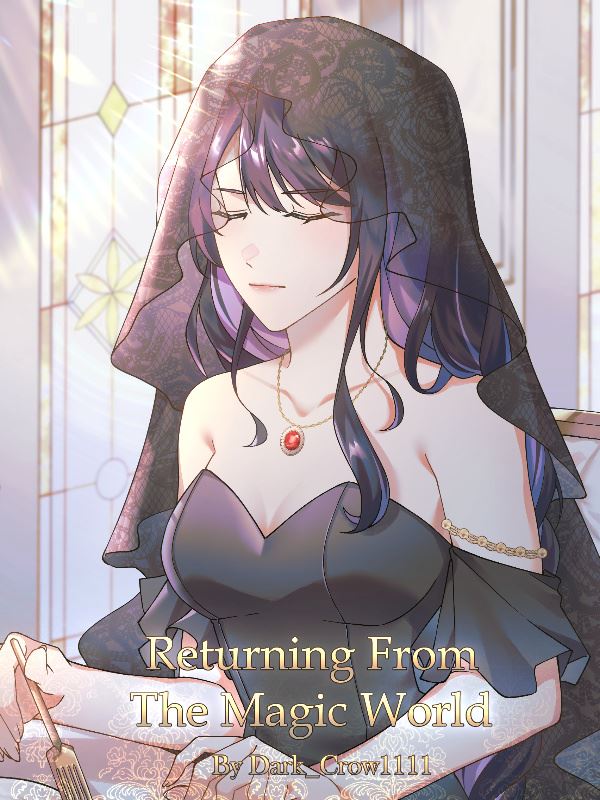
Liu Yun is the daughter of Liu Shiwen, a diligent but low-ranking fifth-rank official in the Ministry of Works, and his wife Zhang Yuhua. Living a modest life in Yanjing, she is known for her gentle temperament and exceptional snow-white skin, though she considers herself ordinary compared to the noble ladies of the capital. She maintains a secret identity as Feiyun, a popular and successful author of romantic fiction, a passion she pursues with her trusted maid Jin He and childhood friend Chen Wei. Her life is characterized by quiet contentment, close family bonds, and a desire to avoid the treacherous politics of the imperial court.

The narrative shifts during the Spring Outing on the third day of the third lunar month. While attending the event by the Wei River, Liu Yun encounters Crown Prince Xiao Heng, a figure of immense power and intimidating authority. After she accidentally ruins his hunting prize, a goose, by picking flowers nearby, the Crown Prince unexpectedly offers her a white jade dragon jue as compensation. This act of generosity, however, draws the wrath of County Princess Rong’an, the arrogant grandniece of the Empress Dowager. Rong’an, who harbors an unrequited obsession with the Crown Prince, publicly humiliates Liu Yun, mocking her low status and declaring her unworthy of the royal gift. The incident leaves Liu Yun distressed and fearful, prompting her father to seek an audience with the Crown Prince to return the jade, fearing the political repercussions of possessing such a valuable item from the heir apparent.

Contrary to Liu Shiwen’s fears, Xiao Heng refuses to take back the gift, signaling a growing interest in the quiet official’s daughter. Meanwhile, the Crown Prince disciplines County Princess Rong’an for her cruelty toward a palace maid, placing her under house arrest and diminishing her social standing. Liu Yun’s mood improves, but her interactions with the royal family continue to be fraught with tension. When she visits the Imperial Academy to see her younger brother, Liu Ying, the Crown Prince appears and commandeers Liu Ying as a guide, disrupting the family reunion. During this encounter, Xiao Heng attempts to offer Liu Ying a promotion to the prestigious Guozixue, but the boy politely declines, further piquing the Crown Prince’s curiosity about the Liu siblings’ reserved nature.

Later, during the Bathing of the Buddha Festival, Liu Yun attends a polo match with Chen Wei. There, she meets Young Marquis Ye Qingliu, a charismatic and carefree nobleman who captivates her attention. While watching him play, Liu Yun finds inspiration for her next novel. In a brief interaction, Ye Qingliu drops a brocade pouch, which Liu Yun catches and returns to him. This moment is observed by Crown Prince Xiao Heng, whose competitive spirit flares as he challenges Ye Qingliu to a match. Xiao Heng dominates the game, his aggression mirroring his jealousy, before he turns his attention back to Liu Yun, who remains oblivious to the intense rivalry brewing between the two men. The story establishes a complex dynamic where Liu Yun’s ordinary life is increasingly entangled with the high-stakes emotions and political maneuvers of the imperial court, setting the stage for future conflicts involving her secret literary career, her family’s status, and the competing affections of the Crown Prince and the Young Marquis.

Novel Items

More
Item
A newly commissioned hairpin crafted by Baofu Pavilion. The body is made of warm fine white jade, and the head is a spring apricot carved from hibiscus stone. The pink stone is tender and translucent under sunlight. Liu Yun designed it herself and slept clutching it all night after it was delivered. She shows it to Chen Wei during the spring outing.
Item
A chilled drink packed by Zhang Yuhua for Liu Yun's outing. Despite its name, it contains no real lychees, which are too precious for a fifth-rank official's family. It is brewed from smoked plums, cinnamon, ginger, cloves, and rock sugar to imitate the flavor of lychee. Liu Yun first tasted a real lychee at Princess Changyang's birthday banquet at age fifteen.
Item
A decorative forehead ornament applied by Jin He to Liu Yun's face as part of her makeup routine for the spring outing. It is the final touch after drawing crescent moon eyebrows and applying vermilion lip rouge.
Item
The highest-specification carriage for an heir apparent, guarded by the Jinwu Guard. Normally used only for the investiture of a prince, the marriage of a primary consort, or attendance at a Grand Court Assembly. The Crown Prince used it on this occasion, which surprised everyone as no major event was known to warrant it.
Item
Medicine packed by Zhang Yuhua for Liu Yun to use if accidentally bitten by insects in the wild during the spring outing. She instructs Liu Yun to apply it immediately if needed.
Event
The annual spring outing held on the third day of the third lunar month. Young ladies and gentlemen from noble families gather at the Wei River for recreation, including swinging and flower gathering. The Crown Prince unexpectedly attends with a grand entourage, causing a stir among the attendees.
Latest Release
DateGroupRelease
2026-08-11shanghai fantasy c10
2026-08-11shanghai fantasy c9
2026-08-11shanghai fantasy c8
2026-08-11shanghai fantasy c7
2026-08-11shanghai fantasy c6
2026-08-11shanghai fantasy c5
2026-08-11shanghai fantasy c4
2026-08-11shanghai fantasy c3
2026-08-11shanghai fantasy c2
2026-08-11shanghai fantasy c1

Community Reviews

Rating(4.1 / 5.0, 16votes)
5 stars
6(38%)
4 stars
5(31%)
3 stars
5(31%)
2 stars
0(0%)
1 stars
0(0%)

Popular reviews

... Read More
Can we talk about that goose scene for a second? Because I was NOT prepared for that. Liu Yun is just out there picking flowers, having a nice spring day, and this goose gets shot out of the sky and lands on her milk vetch. Blood on green grass. She's staring at it, processing the death of something she's never even seen alive before. The author writes: "It was jarring. Not only did it ruin the spring ambiance, but it also forced her to witness the passing of a life." And then immediately after this moment of quiet horror, the Crown Prince rides in like a storm. The contrast is insane. One moment she's mourning a dead goose, the next she's on her knees before the most powerful man in the empire. But what really got me was the scene where Liu Yun goes home and breaks down in front of her mother. She held it together through the entire humiliation at the spring outing—through County Princess Rong'an's mockery, through the staring eyes of every noble lady in Yanjing—but the moment she sees her mother, she crumbles. "Sobbing intermittently, she told her mother about how County Princess Rong'an had ridiculed her." And then the reversal—she wipes her tears and puts on her usual sweet smile to comfort HER mother. That detail killed me. She was the one who was humiliated, but she still goes back to taking care of everyone else's feelings. That's who Liu Yun is. She's not some plucky heroine who fights back immediately. She's a girl who endures, who absorbs the pain, who smiles through it. The romantic tension here is... not what you'd expect. There's no fluttering heart, no blushing, no accidental hand touches. There's a jade piece thrown like a coin and a girl who dreams about running away from it. And somehow that's MORE romantic in its own weird, unsettling way. Because the Crown Prince has no idea what he's done to this girl, and she has no idea what he's capable of.
... Read More
I need to address the pacing because this author is a menace in the best possible way. Chapter 7 starts with something that feels almost like a slice-of-life scene—girls picking flowers, making swings, having a nice spring day. Very cozy. Very low stakes. And then a goose gets shot and dies on page two. The tonal whiplash is incredible. You go from "let's pick flowers" to "oh god there's blood on the grass" to "the CROWN PRINCE is here and he's looking at you" in the span of a few paragraphs. Then Chapter 8 continues the spring outing scene but pivots hard into social hierarchy drama with County Princess Rong'an's entrance. The humiliation scene is brutal but short—just enough to make you furious, then the chapter ends with Liu Yun going home. No drawn-out revenge fantasy, no immediate resolution. Just... she goes home and cries. Chapter 3 (which seems to be a later chapter that loops back) picks up with the Liu parents' conversation and then jumps to the next day's court session. The transition from the intimate family scene to the grand court scene is seamless but jarring in its own way. You're in a bedroom with a mother comforting her daughter, and then suddenly you're in Tianyuan Hall watching the Crown Prince navigate politics. What I love about this pacing is that the author never lets you get comfortable. One moment you're in a personal, emotional scene, and the next you're thrust into the wider political world. The chapters are short enough that you want to keep reading, but each one ends on a note that makes you stop and process what just happened. Also—the dream sequence! Liu Yun dreaming about the Crown Prince watching her run while County Princess Rong'an tries to hit her? That's not just a cute romantic dream. That's her subconscious processing the power dynamics she experienced that day. And it's placed right after the humiliation scene, which makes it hit even harder.
... Read More
Okay so let me just say this first—Xiao Heng is one of the most interesting Crown Princes I've ever read. Not because he's some swoony romance lead, but because the author keeps him completely unreadable. He gives Liu Yun a dragon-patterned jade jue as COMPENSATION for crushed milk vetch. Like. A single, priceless imperial jade piece worth more than her entire family's annual income, tossed at her like it's nothing. And then he just rides off. No explanation, no lingering gaze, no dramatic moment. Just... gone. And Liu Yun's reaction? She's terrified. Not flustered, not blushing, actually scared. She thinks he's going to punish her. Her dream that night is literally her running away from County Princess Rong'an while the Crown Prince watches with a mocking smile. That's not a girl who's secretly thrilled— that's a girl who thinks she's in danger. Then there's He Xiang. Ugh, she's the kind of character who makes you want to throw the book across the room. The way she looks at that jade jue—not because she cares about Liu Yun, but because SHE doesn't have anything of the Crown Prince's. That line hit me hard: "She didn't have any of her Crown Prince cousin's things!" It's not even really about love. It's about possession. About status. About being the one who gets what the other person casually discards. The Liu parents are also surprisingly layered. They're not just "worried commoner parents"—they've spent eighteen years surviving in Yanjing where "nobles were as common as dogs." Liu Shiwen's moment where he hesitates and asks "Do you think the Crown Prince might have feelings for our daughter?"—that's not naive hope. That's a father trying to understand why his family is suddenly in the crosshairs of someone that powerful. And his wife's response? Brutally practical. She shuts it down not because she doesn't want that for her daughter, but because she knows the world they live in. I'm already obsessed with how these relationships are set up. The power dynamics alone are enough to make this a thousand chapters long.
... Read More
I've been thinking about this novel for hours after reading these chapters, and the symbolism is SO rich I can barely contain myself. The milk vetch. This ordinary wildflower that Liu Yun spends time finding, only to have it crushed beneath a dead goose. It's such a perfect symbol for her entire existence in this world—common, beautiful in its simplicity, and instantly destroyed by forces she can't control. The Crown Prince doesn't even notice he's crushing her flowers. He just rides through and everything beneath him is ruined. And the jade jue he gives her as compensation? That's the ultimate irony. He gives her something priceless to replace something worthless, but the gift itself becomes the source of her suffering. The jade is a symbol of the very system that oppresses her. County Princess Rong'an doesn't hate Liu Yun for being poor—she hates her for HAVING something precious that she herself doesn't possess. The jade becomes a mirror that reflects everyone's desires and resentments. The goose itself is also significant. The text explicitly calls it "a symbol of loyalty." A loyal creature, shot dead in spring, its blood staining the green grass. There's something deeply unsettling about this image—loyalty destroyed, beauty marred, life cut short. It feels like a preview of what's to come in this story. And then there's the theme of worthiness. County Princess Rong'an keeps emphasizing that Liu Yun is "unworthy" of the jade, of the Crown Prince's attention, of existing in the same space as nobility. But Liu Yun's parents tell her she's "perfect in every way." Who is right? The novel seems to be asking: what makes someone worthy? Is it bloodline? Is it status? Or is it something the nobles can't even recognize because they've never had to earn it? The dream sequence at the end is the most powerful symbol of all. Liu Yun isn't dreaming about romance—she's dreaming about being hunted. The Crown Prince isn't a prince in her dream; he's an observer, watching her suffer with a mocking smile. This suggests that beneath all the political maneuvering and social hierarchy, this story is really about power—and how the powerful watch the powerless struggle without ever understanding why.
... Read More
The jade jue. That little piece of warm, translucent white jade. It shows up once and then it's EVERYWHERE in my head. On the surface, it's just a gift. Xiao Heng gives it to Liu Shiwen, Liu Shiwen tries to return it, Xiao Heng refuses, and then... takes it back when Liu Shiwen blocks his path. Simple transaction, right? But nothing about this court is simple, and the jade is the perfect symbol for everything that's wrong and right about this world. The jade represents favor. In this society, a gift from the Crown Prince isn't a kind gesture—it's an obligation. It's a hook. Liu Shiwen understands this viscerally: "The Liu family is humble and of low standing. Even the flowers and plants casually discarded by Your Highness would be a hot potato for the Liu family." A hot potato. That's the perfect phrase. The jade is something you can't hold and you can't drop. And the fact that it's a dragon jue—dragon being the imperial symbol—makes it even more charged. This isn't jewelry. This is a piece of the emperor's authority, temporarily loaned to a fifth-rank official. What does that mean? It means Liu Shiwen is now connected to the highest power in the land, whether he wants to be or not. Xiao Heng's refusal to take it back initially is fascinating. "What I have given, I do not take back." This is a statement about power. When you're this powerful, you don't retract your gifts. It would look weak. But then he DOES take it back when Liu Shiwen insists. Why? Because he's reading the situation. He sees that this man is genuinely terrified, not scheming. And in taking the jade back, Xiao Heng is making a choice: he's choosing not to bind this family to him. Or maybe he's choosing to bind them in a different way. The jade also connects to the theme of visibility. Liu Shiwen wants to return it because he wants to be invisible. He wants his family to live quietly. But the moment Xiao Heng gives him the jade, he becomes visible—to enemies, to rivals, to anyone who wants to climb the ladder by stepping on the Liu family. The jade is a target. There's also the contrast between the jade and the cherry biluo. One is cold, hard, valuable, dangerous. The other is sweet, perishable, simple, shared between siblings. The jade represents the political world—transactional, threatening, inescapable. The cherry biluo represents the personal world—warm, generous, chosen. Liu Yun carries the cherry biluo like a secret treasure all the way to the Imperial College, resisting the temptation to eat it. That's love. That's not obligation. That's something you give because you want to, not because you have to. And then there's County Princess Rong'an, who is defined entirely by her visibility. Her status, her connections, her arrogance—all of it makes her a target. And when Xiao Heng reprimands her publicly, he's stripping away that visibility. "Being chastised by the one she admired was the most heart-wrenching blow of all." The public nature of her punishment is what destroys her. In a world where reputation is everything, being publicly shamed by the Crown Prince is social death. I keep thinking about how the jade jue mirrors the entire structure of this story. It's beautiful but heavy. It's valuable but dangerous. It's a gift that feels like a burden. And Xiao Heng, who gives and takes back, who is both terrifying and strangely protective—he's like the jade himself. Valuable, cold, sharp-edged, and impossible to hold onto. The author never says any of this outright. There's no narrator moralizing about the symbolism. It just... accumulates. The jade appears, disappears, reappears, and by the time you're done with the chapter, you realize it's been the emotional center of every interaction. This is what good symbolism does. It doesn't announce itself. It just sits there, glowing faintly, until you notice it's been there the whole time.
... Read More
I'm still thinking about how this opening section paces itself. It's like a slow exhale for six chapters and then — WHAM — Chapter 1 ends with a horse almost trampling your protagonist's peace of mind. The first three chapters are basically a single continuous morning-to-afternoon timeline. Chapter 1: waking up, getting dressed, saying goodbye to mom, the carriage ride, the encounter. Chapter 2: arriving at the Wei River, meeting Zhenzhen, the swing, the hairpin. Chapter 3 starts to expand the world a bit more. There's no rushing, no info-dumping, no forced drama. The author just lets Liu Yun LIVE her day and we get absorbed in it. But here's what's genius — the Crown Prince isn't just a random encounter. He's mentioned in the first chapter as someone Liu Yun has seen at banquets before, and the text explicitly tells us "This was just that this time it was too close; she couldn't handle it." The author is laying groundwork. This isn't a surprise appearance, it's a RETURN of something already established. And the pacing of that reveal — the procession stops, the eunuch speaks, Liu Yun hesitates, THEN the horse appears — it's deliberate. Every beat lands. I stayed up way too late reading this. Not because of cliffhangers, but because the prose is so comfortable it feels like falling asleep and the story won't let you stop.
See all reviews

Characters

See all characters

Custom lists

Oops…There is nothing here.