After the Marriage Swap, the Rough Husband Dotes on His Wife
Novel Info

Summary

... Read More

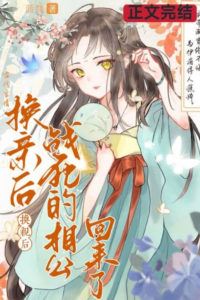
Ning Yuchan, an adopted daughter of Old Man Ning, is betrothed to Scholar Liang Yunxian, a promising young man who recently passed the county-level examination. Her elder sister, Ning Yuqiao, is betrothed to Huo Jingye, a strong farmer who joined the army five years prior. Rumors spread that Huo Jingye died on the battlefield, yet his parents refuse to believe it and insist the marriage proceed. Desperate to marry the talented Scholar Liang, Ning Yuqiao coerces Ning Yuchan into swapping places. Under threat of having her rebel ancestry exposed, which would lead to execution, Ning Yuchan reluctantly agrees. She boards the Huo family sedan chair, unaware that Huo Jingye is actually alive.

On the wedding day, a mix-up causes the brides to enter the wrong households. Ning Yuchan ends up in the Huo home, where a rooster stands in for the absent groom during the ceremony. When the veil is lifted, the Huo family discovers the error. However, Ning Yuchan claims she chose to marry Huo Jingye out of admiration and vows to keep watch over him whether he returns or not. Moved by her apparent devotion and facing the completed ritual, the Huo parents accept her. Meanwhile, Ning Yuqiao enters the Liang household as Scholar Liang’s wife. Scholar Liang, though initially disappointed to find his fiancée swapped, accepts the situation due to social propriety and his own ambitions.

Life in the Huo household is difficult. The family is impoverished, burdened by debt from the wedding banquet, and divided by a hostile matriarch who controls the family’s former wealth. Father Huo is injured, and the family struggles to survive. Ning Yuchan integrates herself into the household, showing kindness to her mother-in-law and younger sister-in-law, Taohua. She attempts to improve their livelihood by suggesting they start a small business, but her father-in-law is reluctant. Tensions rise when Scholar Liang visits, revealing his lingering interest in Ning Yuchan and his dissatisfaction with his marriage to Yuqiao. He warns Ning Yuchan that their secret connection will not remain hidden.

A crisis occurs when Father Huo severely injures his leg, rendering him unable to work during the critical spring plowing season. The family lacks the funds for proper medical care, and the matriarch refuses to help. Desperate, Ning Yuchan suggests reviving the family’s ancestral trade of making dog-skin medicinal plasters, which once brought great wealth. Although the prescription was thought to be lost, Father Huo recalls that an old book containing recipes exists. Ning Yuchan discovers the book and realizes she can read the ancient characters. She finds a prescription for a plaster that could heal Father Huo’s injury and potentially restore the family’s fortune. This discovery marks a turning point, as Ning Yuchan decides to take charge of the family’s future by mastering the plaster-making craft, aiming to lift her in-laws out of poverty while navigating the dangerous political and romantic entanglements surrounding her true identity.

Novel Items

More
Wedding Prop
A large, plump rooster with beautiful feathers and a comb standing tall like a blazing flame. It was used as a substitute groom in the wedding ceremony, bowing with the bride. The rooster became extremely docile in Ning Yuchan's arms despite struggling earlier. Mother Huo took it away after the ceremony, worried it might defecate and dirty the bridal chamber.
Wedding Prop
The bridal sedan chair used to transport the brides. Ning Yuchan resolutely boarded the Huo family's bridal sedan chair after being threatened by her sister, despite not wanting to marry into the Huo family.
Furniture
A heated brick bed where Xie Chen rests and recovers. Jiang Tian cleans it and spreads double bedding for him.
Daily Necessity
Placed by the door of the bridal chamber on the wedding night, as instructed by Mother Huo for Ning Yuchan's use during the night.
Weapon
Weapon used by Ye Wuyou to threaten Ye Dagen, thrown near his head.
Container
A basket used by Ah Li to carry fruits from the cave. Also sold at the beastman market for two yuan each.
Latest Release
DateGroupRelease
2026-08-11shanghai fantasy c31
2026-08-11shanghai fantasy c30
2026-08-11shanghai fantasy c29
2026-08-11shanghai fantasy c28
2026-08-11shanghai fantasy c27
2026-08-11shanghai fantasy c26
2026-08-11shanghai fantasy c25
2026-08-11shanghai fantasy c24
2026-08-11shanghai fantasy c23
2026-08-11shanghai fantasy c22
2026-08-11shanghai fantasy c21
2026-08-11shanghai fantasy c20

Community Reviews

Rating(3.7 / 5.0, 26votes)
5 stars
4(15%)
4 stars
11(42%)
3 stars
11(42%)
2 stars
0(0%)
1 stars
0(0%)

Popular reviews

... Read More
The contrast between the two households in this chapter is absolutely devastating and I think the author did it deliberately without even trying. Father Huo's place: two thatched huts at the village entrance, bought the plot next to Old Lady Huo later. Three rooms main house, three east, three west. A little over one mu of land. They're struggling to even cook meals right now. The eldest branch: five rooms in every direction. Decorated richly and magnificently, comparable to houses in the city. At least three times the size. Old Lady Huo specially cleared out a room for Huo Mingqian as a study. And then there's the study itself — the evening sunlight shining through the window onto a large redwood desk, books neatly placed, the whole atmosphere warm and elegant. Ning Yuchan's reaction broke me: she grew up with a desk that was gnawed apart by rats and then burned as firewood by her father. She'd never even seen a usable writing brush. The text says she sighed inwardly that someday she'd get a residence this large. ONE MU OF LAND and a desk that rats ate and now she's standing in someone else's study imagining flowers on a windowsill. The village itself feels so alive too — the gossiping aunties, the matchmakers who "nearly wore down the threshold" of Huo Mingqian's door, the way everyone knows everyone's business. This world breathes.
... Read More
Okay so this whole sequence is genuinely clever plotting. Let me walk through it because the author really stacked the conflict layers here. It starts with Eldest Aunt Huo accusing Ning Yuchan of stealing — classic in-law bullying trope, right? But then Huo Mingqian steps in and lends her the books and writing supplies. On the surface this is a sweet gesture. But then Ning Yuchan flips it back on him with two lines that cut deep: "I can't afford to use your things" and "I thought a scholar could support a household. It seems it's nothing more than this." And here's the thing — she's not wrong, but she's also weaponizing his own generosity against him. She forces him into a corner where if he doesn't act, he proves her point. And he does act. He confronts his eldest sister-in-law, he gets Father Huo's injury story, he brings thirty taels of silver, he arranges the spring plowing. Every single thing Ning Yuchan set in motion, he ends up completing. The plot twist I loved most? Ning Yuchan apologizes immediately after. Not because she feels bad — but because she's already won. She got what she wanted (the books, the face-saving, the silver flowing to her family) and now she's smoothing things over. The author wrote: "Ning Yuchan's initiative to apologize caught Huo Mingqian off guard. He had thought he would need to coax her properly." She's young but she's sharp. And the best part — the author makes it clear she's not some naive girl. "The girl was not very old, yet her scheming mind was quite deep." That line alone tells you everything about where this story is heading. Then there's the Father Huo subplot — the leg injury, the cover-up, Changfu hitting him and walking away. This isn't just filler. It's setting up the next conflict wave. The spring plowing crisis, the money problem, the family fractures — all of it is interconnected. The author isn't dropping loose threads; they're weaving a net. One thing I'm curious about though — Ning Yuchan is studying a bone-setting prescription. She's copying out eighteen medicinal ingredients, none of which they have at home. Tiger bone? Danggui? This is expensive stuff. What's her endgame here? Is she trying to treat Father Huo herself? Or is there a bigger plan involving these herbs? I need to keep reading to find out.
... Read More
I need everyone to slow down because the subtext between Huo Mingqian and Ning Yuchan is SO loud and I am here for it. Let me paint the scene for you: She's boiling medicine, sleeves probably rolled up, hands stirring that pot. He walks in carrying a basket of eggs and pastries — which by the way is a very thoughtful uncle move — and then he just... stops. The text says: "Huo Mingqian only felt as if something brighter than light flashed before his eyes." BRIGHTER THAN LIGHT. This man is a xiucai, he reads books for fun, and he still can't find the words to describe how fair her fingers are? He literally says his breathing became strained and blood surged. NING YUCHAN BORROWED INK AND SHE MADE THIS MAN HAVE A PHYSICAL REACTION. And then she asks to borrow paper and brushes because they're too poor to buy any, and he lets her read his entire book collection. That is not just kindness, that is a man who is already completely smitten and trying very hard to hide it behind scholarly generosity. The worst part — the absolute worst — is that she held her wedding ceremony with a BIG ROOSTER. A rooster. And she's already treating her father-in-law like her own father, boiling expensive medicine, worrying about the plaster formula. Meanwhile Huo Mingqian is watching her and thinking she's filial and respectable and he's trying not to stare. I'm actually screaming into a pillow.
... Read More
The journey to the city in these chapters is one of the most vividly rendered sequences I've read, and I want to break down why it works so well. First, the village atmosphere. We get Eldest Aunt Huo described in one sweeping portrait — "broad-shouldered and thick-waisted, with a face full of coarse flesh. She looked fierce, and her tongue was just as fierce." That's it. Two sentences and I can see this woman. I can hear her cursing. The author doesn't need paragraphs of description; a few sharp strokes create a living, breathing character in the space. Then the household interior — Father Huo's home. No decent cups. A large porcelain bowl with blue patterns. The kang where Huo Mingqian sits. The wardrobe that doubles as a desk for Ning Yuchan's studies. These details ground the story in a specific material reality. This isn't a vague historical backdrop; it's a home with real objects, real poverty, real texture. But the city scene is where the author really shines. The gate guard Liu Hansheng — "squatting under the city wall with several soldiers, eating steamed buns" — this is such a casual, lived-in detail. He offers Ning Yuchan a bun. They banter about her father's pastries. It's a moment of normalcy, of warmth, of human connection that contrasts sharply with the family drama back home. And then the snack street. Oh man, the snack street. "The rich aromas of wontons, dumplings, buns, and all kinds of foods rushed straight into their noses. Taohua's stomach growled loudly." I could literally smell this street. The author makes you feel Taohua's hunger, Tian Fengying's restraint ("the number of copper coins in her pouch was limited"), and Ning Yuchan's quiet nostalgia when she thinks about her father's pastries. The contrast between the village and the city is also doing thematic work. The village is where the family conflict happens — where Eldest Aunt Huo curses, where Father Huo's leg is injured, where money is tight and reputations matter. The city is where possibility exists — where medicine can be bought, where pastries are made, where Liu Hansheng is just a friendly gate guard and not part of any family drama. But the city also introduces new tensions. Tian Fengying's paranoia about Ning Yuchan and Huo Mingqian starts here. The class boundaries become more visible. The world opens up, and with it, new complications. The author is building a world that feels real — not just in its physical details but in its social ones. Every location has its own rules, its own dangers, its own possibilities.
... Read More
I need to talk about how this chapter controls its pacing because honestly, the author is a menace in the best way. Let me trace the architecture of it because it's genuinely impressive. We open mid-conflict — Eldest Aunt Huo offering candy like she's feeding a dog, Tian Fengying immediately counter-attacking. No warm-up, no setup, just drops you into the deep end. That's a bold structural choice and it works because by chapter 60, we already know these characters. The author doesn't waste time establishing who's who; she assumes you've been paying attention and goes straight for the jugular. Then comes the Liang family arrival, which could have been a boring exposition dump about family history and social status. But instead, it's filtered through Ning Yuqiao's perspective — her judgmental tour of the west courtyard, her failed attempt to matchmake her sister with Third Uncle. The exposition is wrapped inside character action, which keeps the momentum moving. The birthday banquet itself is where the pacing really shines. We get the grand description — firecrackers, hundred taels of silver, morning-to-night feast — and then immediately undercut it with Tian Fengying's bitter observation about Father Huo's meager gifts being ignored. The contrast between the external spectacle and the internal reality creates this delicious dramatic irony. The reader knows more than Old Lady Huo does, and that gap is where the tension lives. Father Huo's drunken tears scene is the emotional peak, and notice how it's positioned — right after the banquet's external success, when everyone's tired and defenses are down. The alcohol loosens his tongue and suddenly the carefully maintained family facade cracks. This isn't random emotional manipulation; it's structurally earned. The celebration sets up the vulnerability. Then — and this is where I almost gasped — the chapter pivots to Ning Yuchan's practical problem (the plaster irritating Father Huo's skin) and sends her on a quest to Dayang Village. We go from high drama to quiet problem-solving, and it works because the emotional release of Father Huo's tears needed a decompression valve. If the chapter had stayed at maximum intensity the whole time, it would have been exhausting. The Ning Yuqiao following Ning Yuchan subplot is brilliant pacing too. It creates parallel action — while Ning Yuchan is at Doctor Yang's, her sister is suspicious and tracking her. This adds a layer of suspense without slowing down the main narrative. And the chapter ends on that almost-cut-off moment with Brother Liu, which is a classic hook that makes you immediately want to turn the page. The structure is essentially: conflict escalation → family gathering (tension under politeness) → emotional breakthrough → practical quest → parallel suspense thread → cliffhanger. That's a lot of movement for one chapter, and almost none of it feels rushed. The author knows exactly when to accelerate and when to let a scene breathe. The dumpling-making sequence in particular is a deliberate slowdown — sensory, domestic, almost meditative — right before the chapter pivots again toward whatever mystery Brother Liu is about to reveal. This is how you write a chapter that feels both expansive and tightly controlled. The pacing isn't just about speed; it's about rhythm, and this chapter has a rhythm that's almost musical in how it builds and releases tension.
... Read More
I need to talk about the bowl of water scene because the author wrote something so simple and it hit me right in the chest. Ning Yuchan invites Huo Mingqian inside for water. There are no decent cups in Father Huo's household — she uses the large porcelain bowl they eat from, picks one without a chipped rim, pours more than half a bowl of cooled boiled water. The text specifically notes: "The outer wall of the porcelain bowl had a ring of blue patterns." That detail. That's not accidental. The author is telling us this is a precious bowl in a poor household, and Ning Yuchan chose the best one for her guest. She's showing respect without saying a word. And Huo Mingqian — he wanted to leave but "could not quite bring himself to do so." He stays. He drinks the water. He sits on the edge of the kang and asks about Father Huo's injury. This is a man who is genuinely touched by the gesture, even if he can't quite name why. But the emotional complexity here is what gets me. Ning Yuchan isn't being sweet for no reason. She needs those books. She needs the relationship with Huo Mingqian to work out. But at the same time — and this is what makes it real — she's also genuinely grateful. She's a young woman in a terrible situation, and someone just handed her the tools to change her family's circumstances. Of course she's warm to him. Of course she apologizes. Of course she pours him water. The text says: "He still did not know how angry the girl had become, or whether she would still use these two books and the brush, ink, paper, and inkstone. If she did not use them, then he would not be able to save face." He's worried about her using the books. She's worried about everything else. Two people carrying different weights, meeting over a bowl of water. And then there's Taohua — the young servant girl who runs into the house crying because she's so angry. Ning Yuchan comforts her: "When our family's life gets better, we'll move to the city and stay far away from them." And Taohua believes her completely: "Right. When our family has money, we'll move to the city and make them die of jealousy." A child thinking revenge is just... wow. This family is hurting. They're poor, they're bullied, they're desperate. And Ning Yuchan is carrying all of it on her shoulders while also trying to study medicine and navigate a complicated relationship with her brother-in-law. The emotional density in these chapters is insane. Every interaction has layers. Every gesture means three things at once.
See all reviews

Characters

See all characters

Custom lists

Oops…There is nothing here.