After the Marriage Alliance, President Xi Took It Seriously - Reviews

After the Marriage Alliance, President Xi Took It Seriously
+Add to Custom List
Sort
Add review
... Read More
The stakes in these chapters are layered and I love how the author keeps raising them. On the surface, there's the scandal — Wen Yining photographed leaving a hotel with Xi Yu, the story is trending, both families are involved. But the real conflict is underneath everything. Xi Yu's internal conflict: he thinks he's been manipulated by a woman who used a drugged drink to trap him. His father abandoned him, his mother left, and now apparently a stranger tried to compromise him. His response is to build the wall higher — "Don't ever appear before me again." But The Old Master sees through it and challenges him to face what he's been running from. Wen Yining's conflict is even more complicated. She's guilty because her mother put something in that juice. She's trapped because she can't tell the truth without incriminating herself and her family. She's terrified of Xi Yu's hatred. And yet she's also genuinely afraid — not just of consequences, but of what this means for her future. When she thinks "losing her virginity was one thing, but if he really had to take responsibility, she would be sacrificing her entire life" — that's not just drama, that's a real girl realizing her life has been used as a pawn. The external conflict with the Wen family is looming. Mother Wen orchestrated this. The Old Master clearly knows it. But who else is involved? What are the Wen family's actual motives? And Han Yan — who is he really working for, and what does he know? The stakes keep climbing because nobody has the full picture, and everyone is making decisions based on incomplete information. That's when things get dangerous.
... Read More
I have to appreciate the sensory world-building in these chapters because the author really knows how to paint a scene. The Xi family old mansion is NOT your typical opulent billionaire estate. It's a traditional Chinese courtyard with blue-gray bricks, dark tiles, upturned eaves, and this massive ginkgo tree that takes two people to encircle. The main hall has rosewood furniture, calligraphy screens, and sandalwood incense. It feels lived-in, historical, heavy with generations of family history. This isn't a cold modern palace — it's a home that has witnessed decades of family drama, and that matters. Then contrast that with the hotel scene. The revolving door, the camera flashes like "a flock of noisy birds," the blinding white haze. Wen Yining trapped, trembling, unable to breathe. The author makes you FEEL her panic through the sensory overload — the shutter sounds like rain, the flashes blinding her, the questions firing like a rapid volley. It's chaotic and claustrophobic and I genuinely felt for her. The parking garage scene with Han Yan is also great — the black Maybach with tinted windows, the quiet corridor leading to it, the way Han Yan's demeanor is described as "a cup of lukewarm water, revealing no emotion." Even the supporting characters have atmospheric presence. And that final image of Wen Yining standing in the main hall, wind moving the gauze curtains, sandalwood smoke dispersing, as The Old Master asks the question that changes everything? Cinematic. Absolutely cinematic.
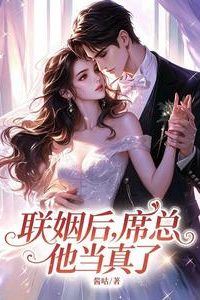
... Read More
I need to talk about Xi Yu because this man is a whole psychological case study and I love him for it. The scene with his grandfather is where everything clicks into place. When The Old Master asks him directly: "Are you afraid she'll love you for your wealth and power, not for who you are?" — Xi Yu's pupils CONTRACT. That's not a reaction to the accusation, that's a reaction to being SEEN. The author drops this backstory about his mother leaving when he was three, and suddenly his entire cold, dismissive attitude makes devastating sense. He doesn't trust anyone's motives because the two people who were supposed to love him unconditionally proved otherwise. And then there's Wen Yining. The moment she wakes up — pupils unfocused, unable to speak, genuinely confused — Xi Yu notices it. The text says her eyes were "truly empty, as if she couldn't remember anything" and he recognizes that this didn't look fake. He's seen too many people perform innocence. But her was different. That's the first crack in his armor, and I'm convinced the author is setting us up for a moment where Xi Yu realizes he misjudged her completely. Their dynamic right now is pure poison — he sees her as a schemer, she has no idea how to defend herself, and the truth is being weaponized against both of them. This is going to hurt so good.
... Read More
Okay so let me just say this: the Mother Wen reveal is peak manipulation and I am SHOOK. Wen Yining genuinely had no idea what happened. She remembers the juice, then blackness. That's it. And Mother Wen's text message — "Saw the news. Well done. Leave the rest to us." — that is COLD. Like, genuinely chilling. She's been grooming this girl since childhood for a marriage alliance and then DRUGGED her to force the outcome. The plot thickens and honestly I'm just sitting here fuming on Wen Yining's behalf. And then Xi Yu's side of things? The boardroom scene where they're losing twelve billion because of a scandal? Chef's kiss for raising the stakes. It's not just a romantic entanglement anymore — it's capitalism colliding with personal drama, and the author is playing 4D chess here. The Old Master showing up at the end demanding Xi Yu propose? That's a plot bomb. Xi Yu's refusal — "I will never marry her" — sets up this entire conflict engine for the rest of the story. I can already tell this is going to be a slow-burn enemies-to-lovers situation where everyone is lying to everyone, and I am HERE for it.
... Read More
The pacing in these chapters is absolutely ruthless and I respect it. Chapter 3 opens with Wen Yining waking up — immediate disorientation, immediate horror, immediate scandal. No warm-up, no gentle transition. You're dropped into the aftermath like a bucket of ice water. Then within the same chapter you get the news headlines, the social media comments (which are genuinely awful and made me physically angry), Mother Wen's text, and then Xi Yu's assistant delivering clothes like some twisted gesture of care. The chapter doesn't let you breathe. Then Chapter 4 pivots to Xi Yu's perspective and the boardroom scene hits like a freight train. "Within an hour, the market value evaporated by twelve billion." Twelve. Billion. The author uses this financial stake to transform what could have been a simple scandal romance into something with real consequences. The meeting is short — Xi Yu says four words and it's over — but the tension is suffocating because everyone in that room knows the stakes and he doesn't seem to care at all. The chapter ends with The Old Master's demand and Xi Yu's refusal, which is basically a narrative cliffhanger wrapped in a family confrontation. The transition from the boardroom to the private residence feels seamless, and the grandfather clock ticking once before Xi Yu speaks — that's the author's way of saying "the next line changes everything." Masterful control of rhythm.
... Read More
Let me just say — this author knows how to pace a chapter and I am HERE for it. Chapter 14 opens with Xi Yu's backstory, which could have been an info-dump, but instead it's delivered through a conversation with The Old Master that feels organic. We learn about his mother leaving, his father never wanting him, the servants' whispers, the grandfather's own emotional limitations. It's woven into the present moment rather than dumped on us. The pacing here is deliberate — short paragraphs, sparse dialogue, lots of silence and internal processing. Xi Yu drinking whiskey alone while his phone stays face-down and silent? That's pacing through action, not exposition. Then Chapter 15 pivots hard to Wen Yining's POV and the hotel scene. The transition is jarring in the best way — we go from quiet introspection to chaotic media frenzy. The author uses short, punchy sentences during the paparazzi scene ("Click. Click, click.") which mimics the rapid-fire nature of the moment. Then Han Yan appears and the pace slows again, giving us breathing room before the next wave of tension. The arrival at the Xi mansion and the conversation with The Old Master is where the pacing really shines. Every beat is measured — the teacup being picked up and set down, the cane tapping, the pauses between dialogue. The author controls the rhythm like a conductor. And that ending question — "would you be willing to marry my grandson?" — is a perfect cliffhanger. Not a cheap one, but one that makes you immediately want to turn the page. The structure moves from isolation (Xi Yu alone) to chaos (Wen Yining surrounded) to confrontation (the meeting with The Old Master). Each section escalates the emotional stakes while giving the reader space to process.
... Read More
'Irrelevant.' That word just... hit me. Xi Yu uses it to describe everything about Wen Yining's life outside their contract, but the narration immediately clarifies: it wasn't stubbornness, it was genuine indifference. That's the thing that gets me. If he was being stubborn about it, there'd still be something there—jealousy, pride, some messy emotion he's fighting. But he's genuinely indifferent. Or so he tells himself. And yet. And YET. His eyes keep drifting back to the bar. He watches Zhao Mingyuan grab her wrist again and what does he do? Takes another sip of whiskey. The gap between his stated feelings and his actual behavior is where the whole relationship lives, you know? I keep waiting for him to snap out of it. Meanwhile, Zhao Mingyuan is this pathetic, suffocating presence. He's clinging to Wen Yining like she owes him something, and the worst part is he frames it as love. "Tangtang listens to you the most. If you speak up for me, she'll definitely forgive me." Like he's the victim here. Like HE's the one who's been wronged. Wen Yining's reaction is so telling—she's not even mad at first, she's just trying to de-escalate. "Let go first. I'll go find her." She's negotiating with someone who doesn't want to be let go. And then there's the floral shirt guy. Who even is he? He shows up out of nowhere, says some ridiculous line about knowing Zhao's dad, and throws a punch. Is he a hero? A menace? Both? I need to know more about him because his energy is so different from everyone else in this scene.

Leave a comment

You must be logged in to leave comments. or
