After the Ill-Fated Relationship Had Ended
+Add to Custom List
Genres:
Novel Info
  • Author:
  • Status:Ongoing

Summary

... Read More

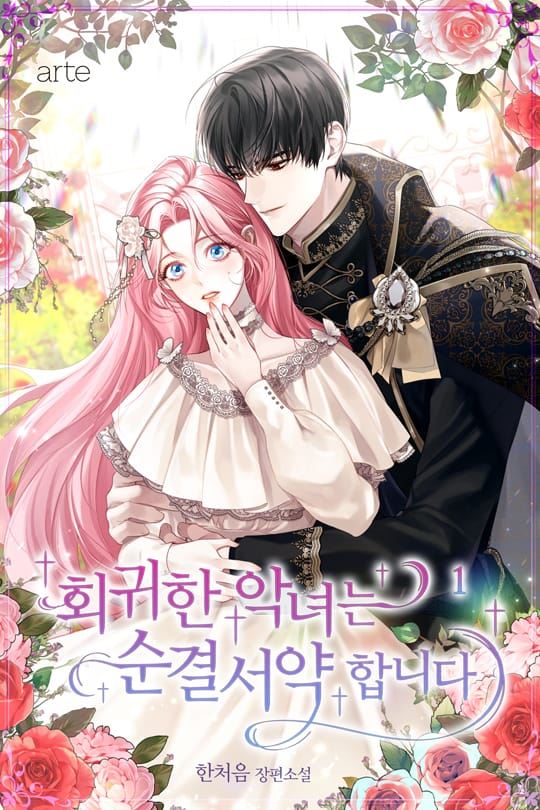
Diana Schuettmann, the daughter of Duke Henry Schuettmann, entered a political marriage with Licht, the Crown Prince of the Harzen Empire, after four years of engagement. Despite the arrangement being rooted in duty, Diana and Licht shared a foundation of trust and affection during their courtship. However, her life unraveled two months into her marriage when Enoch, Licht’s younger brother, confessed his romantic feelings to her during a banquet. Moments later, Enoch abducted Diana, claiming that a rebellion against the throne was imminent and that she would be safer under his protection. During her three-month captivity in the rebel camp, Diana discovered she was pregnant with Licht’s child. The rebellion was eventually crushed by imperial forces, and Enoch was killed by Licht’s own hand. Diana was returned to the palace, but her life had irrevocably changed. Rumors circulated that she had been unfaithful with Enoch, casting doubt on the paternity of her unborn child. Her father, Henry, pressured her to bear a son to secure the family’s standing, while her elder brother Wilhelm was secretly implicated in the rebellion.

The tension between Diana and Licht reached a breaking point when Diana suffered a miscarriage due to the stress and suspicion. In a moment of despair, she begged Licht to kill her or divorce her, overwhelmed by guilt and shame. Licht, however, revealed the depth of his obsession and protection. He admitted that he had killed his brother and suppressed noble dissent solely to keep her and their potential child safe. He declared that he would raise the child even if it were not his, for he had wanted that child more than anyone. In the aftermath, Licht began visiting Diana every night, offering comfort and stability. Over the course of a year, their relationship slowly repaired, and the court’s hostility toward Diana faded. Yet, Diana remained haunted by trauma and guilt, particularly regarding her family’s involvement in the rebellion. Her father, Henry, fell into destitution and addiction, borrowing money by leveraging Diana’s status as Empress.

The narrative takes a drastic turn when Diana wakes up one month before the original timeline’s abduction. She realizes she has returned to the past, retaining all memories of her tragic future. In this previous life, her father had beaten her to death with a chair during an angry confrontation in the palace. Determined to prevent this catastrophe and stop the rebellion from occurring, Diana resolves to change her fate. She understands that the Schuettmann family’s corruption and Wilhelm’s secret investments in weapons trading were central to the uprising. By severing ties with her natal family and asserting her own power, she hopes to dismantle the rebellion before it begins. She approaches Licht with a bold proposal: she wishes to inherit the Duchy of Schuettmann, effectively betraying her family to secure her position and protect the empire from within.

Licht is initially wary of Diana’s ambition, suspecting ulterior motives, but ultimately agrees to consider the arrangement. He warns her that pursuing a ducal title will drag her into a corrupt political game, but he is also intrigued by her declaration of loyalty to him rather than her birth family. As Diana navigates this new timeline, she encounters significant obstacles. Licht imposes strict protective measures, isolating Diana in the palace and forbidding her from meeting with outsiders, including Enoch. This isolation frustrates Diana, who needs information about Wilhelm’s secrets to prevent the rebellion. Despite Licht’s jealousy and possessiveness, their bond deepens. He reveals his insecurity regarding Diana’s close childhood friendship with Enoch, highlighting the complex emotional dynamics between the three characters. Diana must balance her desire to save Enoch from his fateful path with Licht’s intense demands for her exclusive devotion, all while racing against time to expose her brother’s treason and save her life from her father.

Latest Release
DateGroupRelease
2026-10-03dusk blossoms c92
2026-10-03dusk blossoms c91
2026-10-03dusk blossoms c90
2026-10-03dusk blossoms c89
2026-10-03dusk blossoms c88
2026-10-03dusk blossoms c87
2026-10-03dusk blossoms c86
2026-10-03dusk blossoms c85
2026-10-03dusk blossoms c84
2026-10-03dusk blossoms c83
2026-10-03dusk blossoms c82
2026-10-03dusk blossoms c81

Community Reviews

Rating(0 / 5.0, 28votes)
5 stars
0(0%)
4 stars
0(0%)
3 stars
0(0%)
2 stars
0(0%)
1 stars
0(0%)

Popular reviews

... Read More
This text is absolutely obsessed with the idea of children as objects, and it never lets up. Let me just list the instances because they hit like a pattern recognition earthquake: 1. Henry demanding Diana bear a son as her "lifeline" 2. Henry revealing he mortgaged her unborn child's name to borrow money 3. Maria suggesting "another imperial grandchild" will come to fix everything 4. Diana's dead child in the future timeline—still referenced, still mourned 5. Licht and Diana hoping to "meet their child again" someday Every adult in this story treats reproduction like a transaction. The child is currency, leverage, political capital, emotional security. But Diana—she's the one who experiences the full horror of this logic because she's both the mother AND the product. Her body is the site where all these competing claims collide. The recurring image of the child who hasn't been born yet is haunting. In the first timeline, that child dies. In the current timeline, that child is a bargaining chip in Henry's drunken ramblings. Diana's quest isn't just about survival—it's about reclaiming the right to motherhood on her own terms. And Licht's nightmares about killing his brother—there's a parallel there about how power corrupts family bonds. The brother-killing echoes the father-violence. Both are men destroying those closest to them in the name of power or desperation. The empire itself seems built on this pathology. What gives me hope is that Diana is seeing all of this clearly now. Awareness is the first step toward breaking the cycle.
... Read More
The structural architecture of this chapter deserves special praise for how it controls information flow and emotional temperature. The chapter opens in medias res with Licht and Enoch already in confrontation—no gentle preamble, just the sharp crack of political authority. Licht immediately establishes dominance: “Do you think I dismissed them because of you?” This opening line does triple duty: it characterizes Licht as calculating, establishes Enoch as suspect, and signals that the dismissal was intentional and strategic. The chapter then executes a brilliant structural pivot. We cut from the audience chamber to Diana in the guest room, physically separated but somehow connected to the conversation. The text explains: “She was not present in that room, yet she could imagine how heavy the air beyond the wall must be. The sensation made her feel stifled enough that she absently touched her throat.” This sensory bridge between spaces is masterful pacing—we feel Diana's connection to the events without violating the physical logic of the scene. The corridor encounter with Wilhelm and Enoch serves as a pressure valve, releasing some tension while raising new questions. Wilhelm's aggression—“If you remain so indifferent to family matters, Father will be deeply disappointed”—creates a mini-climax before the chapter transitions to the quieter audience chamber scene. The shift from formal audience to intimate injury care to garden tea is handled with seamless transitions. Each setting change marks a tonal shift: from political theater to personal care to reflective conversation. The chapter ends not with a cliffhanger but with an emotional revelation—Licht admitting he was “rather worn down” by rumors. This is a softer landing that rewards the reader's investment without creating anxiety for the next chapter. The pacing choices consistently serve character development over plot mechanics. Every structural decision—where to place Diana, when to reveal information, how to transition between scenes—prioritizes emotional truth over narrative convenience.
... Read More
'At the far edge of the capital, Enoch's private residence, larger than most noble estates, had been in turmoil since early morning.' I love how the author establishes location before character. We're in the periphery first—the edges, the shadows—before we cut to the heart of the palace. The contrast between the two houses of power (the imperial palace vs. Enoch's estate) tells us everything about where each brother stands in relation to the throne. But the real masterpiece is the reception room. 'Licht set his teacup down with deliberate force. The sharp sound of porcelain striking its saucer cut through the reception room.' That sound—Clink—is more powerful than any shout. The entire court freezes. Even the reader flinches. And then Licht's words, cold as winter: 'However, if I set such a precedent, it may sow disorder in the next imperial generation, or the one after that.' The setting becomes a weapon. The tea ceremony—a symbol of hospitality, of peace—turns into a battlefield. 'Henry quickly regained his composure and lifted his teacup. He let out a long sigh and put on the mask of a father worried about his child.' While Diana watches, analyzing every micro-expression, every calculated move. The room is full of people playing parts, and the reader sees through it all. 'Licht wrapped an arm around her waist and helped her down from the table. A silence heavy with meaning lingered between them.' That silence after passion, before duty calls—that's where the real story lives.
... Read More
The central symbol of this chapter is the ankle—specifically, the act of examining and bandaging it. On the surface, this is a medical concern. But the ankle carries enormous symbolic weight. It represents Diana's vulnerability, her journey through dangerous political terrain, and Licht's willingness to literally and figuratively kneel to support her. The bandages themselves are deeply symbolic. Licht “swiftly removed her shoe and unraveled the bandages” and discovered “It's swollen.” The swollen ankle is a physical manifestation of the swelling tensions in their marriage—pressure building beneath composed surfaces. When he rewraps them “as firmly as the physician had,” this is not merely medical care; it is Licht asserting his role as her protector, her anchor, the one who will hold her together when the world tries to pull her apart. The young tree Diana stares at in the garden is another potent symbol. “At the end of her unfocused stare stood a young tree.” This tree—not yet fully grown, still establishing its roots—mirrors Diana's own position as Empress. She is in a formative phase of her role, learning to navigate a world where she previously had no authority. The tree also echoes Licht's statement that “every decision had to be mine alone. And because the woman who will become a duke must remain untarnished.” Both Diana and Licht are protecting something young and developing from the harsh elements. The champagne glass Diana tightens her grip around during the Wilhelm discussion is a subtle symbol of her internal tension—holding onto composure while feeling the pressure build. And the tea and sweets served in the audience chamber, “fare more fitting for dessert than a formal audience,” symbolize Licht's preference for cutting through ceremony to reach genuine human connection. The recurring motif of hearing and not hearing structures the entire chapter. Diana overhears a conversation she was not meant to hear, Licht admits he let her overhear deliberately, and both are haunted by things heard in previous lives. Sound and silence become metaphors for power, trust, and intimacy.
... Read More
"More comforting than any spoken sentence was the warmth of that embrace." I've read this sentence four times. FOUR. It's so simple and yet it carries so much weight. Diana—broken, weeping, after everything she's been through—and Licht doesn't try to fix her with words. He just holds her. For a hundred days. Two hundred. A year. That's not a romantic gesture, that's devotion carved into daily action. And then you flip back to see how it all begins, and it DESTROYS me. Because we see Diana in the past, sitting across from Enoch and Wilhelm, pretending everything is fine, while inside she's screaming. She looks at Wilhelm's red eyes and instead of fear, she feels... nothing. Just a hollow space where that relationship should have been. The tragedy isn't just what happened to her—it's that she had to die to realize what she was worth. The line about Licht's nightmares haunts me too. "Licht, who had been plagued by nightmares of killing his own brother, was finally able to sleep peacefully as well." Two people, broken in different ways, finding peace only when they hold each other. That's the core of this story, isn't it? Not the politics or the rebellion—two wounded souls learning that safety is possible. But then—then her father walks in drunk and everything collapses again. The contrast between Licht's gentle embrace and Henry's violence had me absolutely sobbing. One man holds her to heal her, the other grabs her hair to break her. Same hands, completely different intentions.
... Read More
'Your Majesty... I know. I know.' The ellipsis after Diana's whispered title. That blank space between 'Majesty' and his response—that's where the entire chapter hangs. The author has this incredible talent for using silence as punctuation, letting the reader's imagination fill the gap. And then: 'Enough. Please, enough.' The shift from title to plea, from public to private, happens in three words. The transition from bedroom to dining room to study to reception hall—it's a journey through different levels of power and intimacy. Each location demands different performances from each character. Licht goes from restrained lover to cold emperor in one sentence. Diana goes from breathless wife to calculated politician. Enoch goes from angry brother to broken man. 'The moment Diana's gaze passed Wilhelm and landed on Henry, tension ran down her spine and settled heavily across her back.' The structural pivot here—when the narrative focus shifts from brother to father, from friend to monster—is devastating. All the backstory of abuse and murder from another life crashes into the present moment in one heartbeat. And Wilhelm's exit! 'He let out an audible breath, his face openly shocked, an act bordering on insolence.' The pacing accelerates here, almost too fast, like the chapter itself is breathless. Wilhelm leaves, Licht ignores him, Henry covers for him—and Diana is left sitting in the wreckage of a negotiation that never happened. The chapter ends not with resolution but with the ghost of what might have been, and the certainty that nothing will ever be simple again.
See all reviews

Custom lists

See all custom Lists