Summary

... Read More

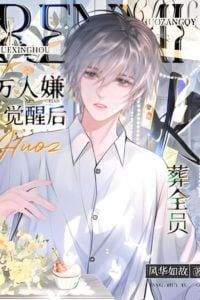
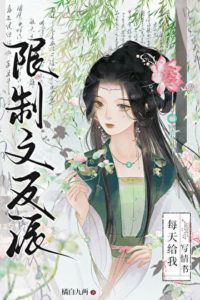
Su Xingyao was a man born with striking beauty and a sincere nature, yet he spent his entire life despised and misunderstood. After being reunited with his biological family, the Shen family, he found no warmth in their embrace. His parents, Wen Ningzhu and Shen Liangyu, directed all their affection toward their adopted son, Shen Huaixi, treating Su Xingyao as an unwelcome outsider. His fiancé, Qin Mingchuan, and his celebrity friend, Chu Zian, similarly favored Shen Huaixi, allowing the adopted son to bully and smear Su Xingyao without consequence. Netizens joined in the condemnation, branding Su Xingyao as petty and cruel despite his innocence. The abuse culminated when Chu Zian pushed him off a cliff, leaving him to die in the mountains. As Su Xingyao lay bleeding and alone, he realized he was merely a foil character in a novel, destined to suffer so that the protagonist, Shen Huaixi, could shine.

Upon dying, Su Xingyao was reborn a month later, awakening in a luxurious villa under the care of a kind woman named Aunt Zhang. He discovered that his savior was Lu Jiuxiu, the novel’s most feared villain and a ruthless business tycoon. Unlike his biological family, Lu Jiuxiu offered Su Xingyao safety and respect. During his recovery, Su Xingyao formed a bond with Lu Jiuxiu and his pet dog, Sunset, finding a peace he had never known in the Shen household. When Su Xingyao returned to the Shen family to retrieve his documents, he severed all ties, blocking his family and fiancé on every platform. He left behind a painting titled The Girl in the Sunlight as a final gift to his mother, but when Wen Ningzhu attempted to contact him, she found herself blocked, realizing too late that her son had truly left.

With his past severed, Su Xingyao focused on rebuilding his life. He decided to terminate his contract with Xingxing Entertainment, the company owned by his ex-fiancé Qin Mingchuan, despite warnings that his career was ruined by negative public opinion. His agent, Liang Yifan, attempted to coerce him into staying by assigning him a villainous role in an S-level drama, Falling Flowers and Glass. However, Su Xingyao approached the role of the Demon Lord Bai Xu with a new perspective, determined to portray the character with depth and soul rather than as a one-dimensional antagonist. His performance on set impressed the crew, and his stunning appearance in costume began to shift public perception, earning him attention and respect from colleagues who had previously ignored him.

Simultaneously, Su Xingyao’s life took an unexpected turn when he participated in a music competition show called Voice of Heaven. Adopting the persona of a mysterious singer who wore an animal mask, he captivated audiences with his extraordinary talent and infectious voice. The public’s curiosity grew as he refused to reveal his identity, but the climax arrived during the finals when a live stream accidentally captured him in his dressing room. The footage revealed Su Xingyao, the man everyone hated, standing beside Lu Jiuxiu, the feared tycoon. The revelation sent shockwaves through the internet, exposing the close relationship between the two men and forcing the public to confront their prejudice against Su Xingyao.

As the truth about Su Xingyao’s character and his treatment by the Shen family came to light, the narrative of the novel world began to unravel. Those who had wronged him, including his indifferent parents and his regretful ex-fiancé, were forced to face the consequences of their actions. Qin Mingchuan attempted to reconcile, kneeling in the rain with a wedding ring, but was rebuffed not by Su Xingyao, but by Lu Jiuxiu, who revealed himself as Su Xingyao’s partner. The story follows Su Xingyao’s journey from a despised scapegoat to a celebrated artist, supported by the unwavering devotion of Lu Jiuxiu. Together, they navigate the entertainment industry and the lingering shadows of the past, as Su Xingyao finally claims the life and love he was always denied.

Latest Release
DateGroupRelease
2026-08-11shanghai fantasy c106
2026-08-11shanghai fantasy c105
2026-08-11shanghai fantasy c104
2026-08-11shanghai fantasy c103
2026-08-11shanghai fantasy c102
2026-08-11shanghai fantasy c101
2026-08-11shanghai fantasy c100
2026-08-11shanghai fantasy c99
2026-08-11shanghai fantasy c98
2026-08-11shanghai fantasy c97
2026-08-11shanghai fantasy c96
2026-08-11shanghai fantasy c95

Community Reviews

Rating(3.9 / 5.0, 34votes)
5 stars
13(38%)
4 stars
9(26%)
3 stars
7(21%)
2 stars
5(15%)
1 stars
0(0%)

Popular reviews

... Read More
Let me just start by saying: Su Xingyao's dialogue in this batch is a masterclass in saying everything by saying almost nothing. The assistant reads out loud the trending topic "why has Su Xingyao…" and immediately panics, bending down to apologize. Su Xingyao's response? "You've done nothing wrong, so why apologize?" That's it. Four seconds of dialogue, and the entire power dynamic in the scene flips. The assistant is left speechless, blushing, unable to meet his gaze. The text describes Su Xingyao's eyes as "innocent and clear" but with an "inexplicable sharpness"—like he's been watching this little performance and decided not to interrupt it until the right moment. That single line of dialogue does so much work. It's polite on the surface but carries an undercurrent that says: I know exactly what you're doing, and I'm choosing not to engage. Compare that to Jiang Zihang's dialogue, which is all noise and intention. "Xingyao, you start." Said with a smile, but the smile is a weapon. His lines are performative—he's always performing, always trying to set something up. Even his silence after being subtly criticized by the director is telling: he "remained silent and quickly tucked his phone away, starting to twirl his pen." That's guilt manifest as physical fidgeting. Yu Sisi's voice is also distinct—she's the observer, the one who comments on the dynamics without being fully in them. Her internal narration about how "that's how the entertainment industry worked—there were always conflicts, always people subtly competing against each other" feels like the narrative voice of someone who's seen this movie too many times and is just watching it play out again. The screenwriter and director's conversation at the end is another highlight. Their dialogue is efficient, professional, but layered with subtext. The screenwriter says "I think Su Xingyao might be okay" and the director's cautious response about waiting to see actual performance on set tells us everything we need to know about the industry's skepticism. Every character has a distinct verbal fingerprint. That's rare and I appreciate it.
... Read More
The stakes in these chapters are layered in a way that's making my heart race. On the surface, Su Xingyao just needs to recover from life-threatening injuries. But the deeper conflict is what happens when someone who knows they're destined to die in the original story suddenly has a second chance—and the person who saved them is the villain who's supposed to kill everyone. Su Xingyao's internal conflict is devastating. He has trauma from his past—his dog's death, his family's cruelty, Shen Huaixi's role in it all. And now he's in the same house as Lu Jiuxu, the man who in the original timeline becomes responsible for almost everyone's destruction. Can he trust this savior? Should he? The text makes it clear that Su Xingyao feels an inexplicable warmth toward Lu Jiuxu, almost like familiarity, but he also knows this man's reputation. That tension is electric. The external stakes are building too. Shen Huaixi—the fake-apologizing, dog-killing, manipulative protagonist of the original story—hasn't even appeared yet, but the reader knows what this character is capable of. Su Xingyao is vulnerable, recovering, and surrounded by people who are NOT in the original novel's script. Every interaction with Lu Jiuxu carries the weight of knowing how this story is supposed to end. And here's what keeps me up: Su Xingyao has no memory of being rescued. He doesn't know WHY Lu Jiuxu saved him. That gap in knowledge is where all the suspense lives. What does Lu Jiuxu want? And more importantly—does he know that Su Xingyao is a reborn person who remembers the original plot? The answer to that question will determine everything.
... Read More
The title of this drama within the story is Falling Flowers and Glass, and I can't stop thinking about what that imagery means in context. Glass is fragile but sharp. It reflects. It can be beautiful and it can cut you. Flowers fall—beauty that doesn't last, things that are admired and then discarded. And then there's Su Xingyao, who has been treated like both: discarded by the industry ("I thought he was driven out last time") but also something people can't look away from. The trending topic #WhyHasSuXingyaoNotGoneYet is basically the public's way of trying to throw glass at him and watch him break. The comments are vicious: "thicker skin than a city wall," "ruin this drama," "get lost." But the irony is that he hasn't broken at all. He's sitting there marking his script while the world tears him apart online. The glass hasn't shattered him—it's just reflected his calm back at them. Then there's the heat imagery on the filming set. 35°C, a giant furnace, dizziness, dry throat. Heat as pressure. Heat as something that makes people's true colors show. Ji Linghe gets irritable and sloppy. Jiang Zihang can't focus and ends up exposing his own inadequacy. But Su Xingyao brings coolness—literally, with that lemon soda, and figuratively, with his composed presence. He's the antidote to the heat. The lemon soda itself is worth sitting with. It's described with almost painterly detail—transparent crystal glass, lemon slices, square ice cubes, bubbles rising, a blue straw, fresh mint leaves. This is a character who notices these things. Who prepares them. Who remembers someone else's preferences without being asked. In a story about people performing for cameras and audiences, Su Xingyao's quiet attentiveness is almost radical. And then the screenwriter's comment about the character Bai Xu—"intentionally kept the portrayal simple" but Su Xingyao's suggestions made him "more well-rounded." That's the theme right there. The story is about people who are simplified by public narrative, reduced to tropes and rumors, and then revealed to be more complex than anyone expected. Just like the drama's title suggests: beneath the falling flowers and the glass, there's something real and layered.
... Read More
I need to talk about Lu Jiuxu's dialogue because it is SO minimal and that's exactly what makes it work. This man says things like "You're awake" and "Does it still hurt?" and "Get lost" to his doctor. That's it. He's not performing warmth. He's not giving speeches. And yet, when Su Xingyao gets triggered talking about his dead dog and starts having that flashback to the rainy day, to Shen Huaixi's fake apology, to his family's cruelty—it's Lu Jiuxu who says "Sorry." Just sorry. Not "I'm sorry you're upset" or some elaborate comfort. Just a flat, low-voiced sorry that somehow carries more weight than any dramatic monologue could. That's the kind of dialogue writing that makes you put the book down and stare at the wall. Su Xingyao's voice is also really distinct. He's polite to a fault—"Thank you... just some water will be fine"—but underneath that courtesy, you can feel him constantly assessing, constantly trying to understand the situation. His internal monologue contrasts sharply with his outward calm. When he tells Lu Jiuxu about Dan Huang, the dialogue is halting and painful: "Because Dan Huang... has been gone for six years. Because of an accident... on a rainy day... it was hit by a car." Those ellipses aren't just punctuation—they're the sound of someone forcing themselves to speak through trauma. And Lin Chengyi! Thank god for that guy. His banter with Lu Jiuxu and his nickname for Su Xingyao gives the whole thing a lighter texture. Without him, this chapter might have been too heavy to breathe through.
... Read More
There's this one moment that keeps playing in my head like a film scene. The sky has darkened, a breeze blows through the garden, and Su Xingyao coughs slightly from the wind. Lu Jiuxu just hangs up his phone and tells his brother to go inside. That's it. That's the whole scene. But it's everything. The Lu family home operates as a completely different world from the entertainment industry set. It has its own weather, its own social codes, its own rhythm. The garden with its sunset glow, the casual game-playing in the evening, Lin Chengyi coming to check wounds like this is just a normal Tuesday. It feels lived-in, not staged. Even the pets have their own dynamics—Sunset the dog immediately warming up to Su Xingyao while Coral the cat climbs aboard for a ride. The author doesn't over-describe any of this but you can SEE it. Then you cut to Su Xingyao scrolling through his Weibo at night, alone in a bed that isn't his, and the contrast hits you like a wall. His public account is a war zone—thousands of harassment messages, people checking in at fixed times like it's a ritual. But his old creative account? Quiet, warm, full of real people asking about creative blocks and sending genuine messages. The two screens represent two entirely different worlds he inhabits. And the set itself—Xiao Yu's red eyes, the assistants throwing her clothes on the floor, the mocking conversation about the swimming event. The author paints these scenes with such economy that every detail lands. The set isn't just a location, it's a ecosystem of power and cruelty, and Su Xingyao stepping back into it feels like walking into cold water after weeks in a warm bath.
... Read More
Okay so I just read through these chapters and I am STILL not over the reveal that Lu Jiuxu—the actual VILLAIN of the original novel—was the one who found Su Xingyao after he fell off that cliff. Like. Think about that for a second. In the source material, Lu Jiuxu is described as cold, violent, sinister, and malicious. He's the guy who later launches indiscriminate attacks and nearly wipes out the protagonist group. And yet here he is, setting up professional medical equipment in his own mansion, nursing a stranger back to health for an entire month, and barely mentioning it. That is some next-level plot subversion right there. The author also drops this really clever twist with the dog. Sunset, the little yellow-furred dog with the nick on its right ear, looks IDENTICAL to Su Xingyao's dead dog Dan Huang. I literally gasped when I read that part. The timing is perfect—Su Xingyao has just woken up, disoriented and vulnerable, and the first emotional trigger he encounters is this dog that looks like his dead companion. It's a masterful use of coincidence that also feels thematically loaded. And then there's the peony reveal. The Sunset Coral peonies in Lu Jiuxu's garden—watermelon-red petals that gradually shift to salmon pink, the exact same variety Su Xingyao used to admire as a child. This isn't random decoration. The author is planting something here. Lu Jiuxu didn't just happen to have these flowers. He chose them. For whom? That question alone is keeping me up at night.
See all reviews

Characters

See all characters

Custom lists

See all custom Lists