Summary

... Read More

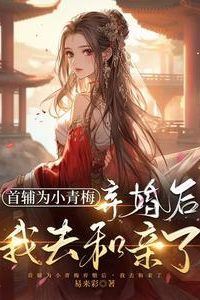
Shen Zhaoli, the Grand Princess of Dajing, has spent three years devotedly pursuing Xie Yuheng, the youngest Prime Minister in the nation's history. Despite her royal status and deep affection, Xie Yuheng consistently prioritizes Su Qingxi, his frail childhood friend whom he rescued and raised. The central conflict ignites on Shen Zhaoli’s birthday, which coincides with their engagement banquet. As the court and nobility gather to witness the imperial marriage decree, a servant reports that Su Qingxi is heartbroken over the death of her pet dog. Xie Yuheng abandons Shen Zhaoli without hesitation, rushing back to comfort Su Qingxi and leaving the Princess humiliated before the entire court. This public betrayal serves as the final straw for Shen Zhaoli, who realizes that her devotion has been met with indifference and that she is treated as an afterthought compared to Su Qingxi.

Following the banquet, Shen Zhaoli enters the imperial palace and makes a decisive choice that alters the course of her life. The Emperor Shen Zhijin is facing a diplomatic crisis with the Kingdom of Beiliang, whose King, Chu Yunzheng, demands a political marriage alliance. Although the Emperor is furious and initially refuses to sacrifice his beloved sister, Shen Zhaoli volunteers to go. She declares that as the Grand Princess, her duty to the nation supersedes her personal romantic disappointments. Her brother is stunned but ultimately grants her the imperial edict, warning her that she can return if she regrets the decision. Shen Zhaoli accepts the edict with a calm resolve, signaling the end of her emotional attachment to Xie Yuheng. She understands that the man she loved has never truly seen her value, recalling how he once dismissed her grief when her own pet dog was killed by Su Qingxi’s new pet, treating her pain as trivial while coddling Su Qingxi’s slightest discomfort.

Upon returning to the Princess’s Mansion, Shen Zhaoli begins to dismantle the life she built around Xie Yuheng. She discovers that she has been secretly subsidizing the Prime Minister’s Mansion for years, covering his mother’s medical expenses, paying the staff’s wages, and funding daily operations to maintain his dignified appearance. Now that she is leaving for Beiliang, she cuts off all financial support. The Prime Minister’s Mansion, which appeared prosperous, is revealed to be in severe debt. When Xie Yuheng attempts to apologize by sending pastries, he unknowingly sends chestnut cakes, an ingredient Shen Zhaoli is allergic to, highlighting his complete ignorance of her preferences. He remains oblivious, planning to exchange them for Su Qingxi. Shen Zhaoli orders the removal of all items related to him, including burning the numerous portraits she painted of him, and sells the rest to charity, symbolizing her clean break from the past.

The narrative shifts to the Spring Radiance Banquet, hosted by Shen Zhaoli’s aunt, Grand Princess Shen Shuangyu. Shen Zhaoli attends in regal splendor, her beauty and dignity commanding the attention of all present. Xie Yuheng arrives with Su Qingxi, intending for Shen Zhaoli to welcome and care for her childhood friend. However, Shen Zhaoli treats Su Qingxi with polite detachment, refusing to indulge the dynamic of the past. The situation escalates when Kuang Lianyue, the Regent’s adopted daughter and a longtime rival, publicly mocks Shen Zhaoli for being abandoned. Instead of shrinking away as she would have three years prior, Shen Zhaoli slaps Kuang Lianyue three times, asserting her authority and dignity. She warns that any further disrespect will be met with severe consequences, shocking the attendees who are unaccustomed to seeing the submissive princess stand up for herself. This act marks a significant turning point, demonstrating that Shen Zhaoli has reclaimed her self-worth and is no longer willing to tolerate abuse for the sake of a man who does not cherish her.

Meanwhile, the collapse of the Princess’s financial support causes chaos in the Prime Minister’s Mansion. Old Madam Xie, Xie Yuheng’s mother, blames Shen Zhaoli for the sudden decline in service quality and accuses the servants of theft. The servants, who were loyal to Shen Zhaoli’s fair treatment, resign en masse, leaving the mansion in disarray. Xie Yuheng is forced to sell off family assets to pay debts, a stark contrast to the luxurious life he maintained. Su Qingxi, sensing the tension, offers her own jewelry to help, but Xie Yuheng dismisses her gesture, focused on his own distress. As Shen Zhaoli prepares for her departure to Beiliang, she reconnects with her sworn sister Zhou Qingyun, reaffirming her commitment to her duties and her charitable works. The story concludes with Shen Zhaoli poised to leave Yujing, leaving behind a regretful but oblivious Xie Yuheng and stepping into an uncertain future with the ruthless King of Beiliang, while Xie Yuheng begins to realize the magnitude of what he has lost.

Novel Items

More
Pet
A small pure white dog from the Western Regions, gifted to Shen Zhaoli by her Imperial Brother. It was a rare tribute breed that never grew large. It was mauled to death by Su Qingxi's Chow Chow at last year's Shangyuan Festival Banquet. Shen Zhaoli personally buried its mangled body.
Item
Shen Zhaoli's personal carriage used to travel to and from the imperial palace.
Treasure
A top-grade pearl tribute from the South Sea, seen once in a hundred years. It is embedded at the crown's top of Shen Zhaoli's new golden phoenix headdress, held in the phoenix's beak.
Treasure
A small jade pendant carved into the shape of a phoenix, warm and smooth to the touch. Sent by the Regent (Imperial Uncle) to Shen Zhaoli to help nourish her health and ease her icy hands and feet caused by past dungeon exposure.
Treasure
A pure gold headdress inlaid with countless gemstones, crafted by the Imperial Jewelry Bureau. At its center is a phoenix with wings spread holding the Eastern Pearl in its beak. Made as a birthday gift from Emperor Shen Zhijin.
Item
An exquisitely luxurious ceremonial robe made of fine silk by the Imperial Wardrobe Bureau, with pearls adorning the collar and cuffs. Created to match the phoenix headdress as a birthday gift from the Emperor.
Latest Release
DateGroupRelease
2026-08-11shanghai fantasy c11
2026-08-11shanghai fantasy c10
2026-08-11shanghai fantasy c9
2026-08-11shanghai fantasy c8
2026-08-11shanghai fantasy c7
2026-08-11shanghai fantasy c6
2026-08-11shanghai fantasy c5
2026-08-11shanghai fantasy c4
2026-08-11shanghai fantasy c3
2026-08-11shanghai fantasy c2
2026-08-11shanghai fantasy c1

Community Reviews

Rating(3.7 / 5.0, 15votes)
5 stars
3(20%)
4 stars
5(33%)
3 stars
7(47%)
2 stars
0(0%)
1 stars
0(0%)

Popular reviews

... Read More
The Spring Radiance Banquet scene is so vividly described I could practically see it. Let me paint it for you — noble ladies in fine silk, the high platform where only the most important people can sit, the garden full of flowers, everyone composing poetry. It feels like a real historical setting, not some generic palace backdrop. The author really nails the atmosphere with details like the incense smoke curling from the burner in the great hall, the sound of Wu Yu grinding ink, the palace attendants standing with their heads bowed. These sensory details make the imperial palace feel alive and imposing. And then you have the contrast between the fancy banquet and Sanhuai Alley — a quiet residential area separated from the palace by just two streets but feeling like a completely different world. Zhou Qingyun stepping out of a small sedan chair and knocking on a wooden door at the end of an alley, meeting a woman in a peach-colored cotton dress — it's such a grounded, intimate scene compared to the grandeur of the palace. The worldbuilding here is excellent because it doesn't just give us pretty descriptions, it uses the settings to reflect character dynamics. The high platform at the banquet literally shows who has power and who doesn't, and Shen Zhaoli's casual decision to let Su Qingxi sit beside her is both generous and subtly dominant.
... Read More
This section is structured in a really interesting way because it jumps between three completely different storylines and each one ends on a hook. First we have the banquet scene with Su Qingxi trying to one-up everyone — that's the social intrigue thread. Then it cuts to Xie Yuheng kneeling in the imperial study, which is the political romance thread. And finally we get Zhou Qingyun discovering her father's secret, which is the family drama thread. The transition between these scenes is sharp but effective. The author doesn't waste time with long explanations — we just drop into each new scene and start following the action. What I love about the pacing here is how the tension builds differently in each thread. The banquet scene has that slow burn of social tension where Su Qingxi keeps making moves and everyone is watching her. The imperial study scene has a different kind of tension — it's about power dynamics and the long silence when Xie Yuheng makes his request. And then Zhou Qingyun's scene is more of a quiet reveal that sets up future conflict. The chapter doesn't drag at all because each section serves a different purpose and they all push the story forward. I especially appreciated how the author uses the poetry composition moment at the banquet as a brief pause before shifting to the heavier political scene — it gives the reader a breath without losing momentum.
... Read More
Okay, I need to talk about Xie Yuheng and Su Qingxi because honestly this dynamic had me feeling SO many things. The way he drapes a cloak over her shoulders and says "You forget the pain once the wound heals" — that line hit me like a truck. It's so tender and so layered. He's been neglecting his wife, the Princess Changle, for days because this sickly girl needs him, and yet he still finds the energy to be gentle with her. Meanwhile Shen Zhaoli is out there handling state affairs, making tough political calls about Beiliang, and nobody's draping cloaks over HER shoulders. But here's what really got me — Su Qingxi's little performance when she starts massaging Old Madam Xie's shoulders and says she'll personally cook. She's playing the helpless orphan card like a pro, and Xie Yuheng falls for it every time. His pity for her is palpable: "What nonsense are you talking? Master Su was immensely kind to me. No matter what, I would never abandon you." Bro, you're married to a princess and you're making promises like this to a concubine-level figure? The emotional manipulation is REAL. And Old Madam Xie — don't get me started. She's so blinded by her favoritism that she can't see Su Qingxi for what she is. When Su Qingxi cries, Old Madam Xie is right there with a handkerchief. When Shen Zhaoli's people cut corners on food? That's a personal insult. The favoritism is so obvious it hurts. Meanwhile Shen Zhaoli, who actually runs the empire alongside her brother, gets absolutely zero emotional credit in this household. The reunion at the end with Zhou Qingyun gave me chills though. Shen Zhaoli's eyes reddening when she sees the visiting card — after being abandoned by her sworn sister because she "lost her dignity" chasing Xie Yuheng? That friendship was clearly meaningful to her. I just hope this reunion starts Shen Zhaoli reclaiming herself. She deserves it.
... Read More
There's this recurring theme about who holds power and who gets to make decisions about their own lives, and it shows up in so many ways in this section. The marriage edict itself is a powerful symbol — it represents the emperor's authority to grant or deny a union, but also Shen Zhaoli's autonomy. The fact that the emperor already gave her the edict long ago is significant. It means she has the power to choose, but Xie Yuheng is too blind to realize that. He thinks he needs the emperor's permission to marry her, when really she already has the authority. There's also the symbolism of the high platform at the banquet — it's not just a physical elevation, it represents social hierarchy and who gets to sit where. Su Qingxi wanting to sit next to the princess is literally about wanting to climb higher than her station. And then there's the contrast between the imperial palace and Sanhuai Alley. The palace represents formal power and political maneuvering, while the alley represents hidden truths and personal discoveries. Zhou Qingyun going to that quiet house at the end of the alley to investigate her father's secret is symbolic of seeking truth in places where power doesn't reach. The pear blossom couch that Old Madam Xie remembers is another small but meaningful detail — it was a gift from Shen Zhaoli, representing kindness and care that was taken for granted until it was gone. These symbols all tie together to show that power isn't just about edicts and platforms, it's about who sees clearly and who chooses to look away.
... Read More
The pacing in these chapters is absolutely masterful and I need to unpack why. The author opens with HIGH STAKES — the Emperor losing his mind over Beiliang, troops potentially being raised, ministers sweating bullets. This is epic-scale political drama. And then what does the author do? They pivot to a Prime Minister's mansion dealing with... missing soup ingredients. On the surface this seems like a jarring shift, but it's actually genius storytelling. Think about it. The Beiliang situation creates a macro tension — will war break out? What does Chu Yunzheng really want? — and then the micro tension of the mansion's finances mirrors it perfectly. The household is running out of funds just like the nation is running out of patience. Both are about resources, both are about power dynamics, both are about people overstepping their bounds. The author is weaving these two narrative threads together without ever making it feel forced. The scene transitions are also incredibly smooth. We go from the Imperial Study's tension → Shen Zhaoli's calm decision → the Prime Minister's mansion drama → and then BAM, a completely new emotional beat with Zhou Qingyun's arrival. Each transition feels earned, not rushed. The author doesn't linger too long on any single scene either. The financial crisis revelation happens in about five exchanges and then we're already moving to the next plot point. What I love most is how the author controls the reader's emotional temperature. After the intense Emperor scene, we get Old Madam Xie's petty complaints — which are almost comedic in their absurdity. Then Su Qingxi's fragile tears bring the mood back to something heavier. Then the financial crisis drops and suddenly we're worried about Xie Yuheng's entire household. The emotional whiplash keeps me engaged because I never know what tone is coming next. The only slight drag I'd mention is the banquet discussion at the end — it felt like it came out of nowhere and I wanted more buildup. But overall, the pacing is tight and every scene serves the larger narrative.
... Read More
There's a symbol in this passage that I can't stop thinking about: the jade bracelet. Su Qingxi takes it off and offers it to be sold. It's the first concrete thing she's given that belongs to her—her own jewelry, her own value—and she's offering it up to plug a hole in a household that doesn't even know its own accounts. Xie Yuheng puts it back on her wrist and tells her to keep it, but the gesture has already been made. She would have sold it without hesitation. The account books themselves are a symbol. Black ink for expenses, red for income, and the red is losing. Every number on that page represents a choice someone made—a banquet hosted, a medicinal ingredient purchased, a servant's wage agreed to. The household isn't just in debt; it's been living a lie about its own stability. And then there's the Ciyouju, the orphanage. Shen Zhaoli built it with Zhou Qingyun, a place for abandoned children, and then abandoned it herself. The parallel is almost too on-the-nose, but that's the point. She neglected the vulnerable people who depended on her while chasing someone who wouldn't appreciate her. The children at Ciyouju are symbols of everything she threw away for Xie Yuheng. The marriage alliance to Beiliang is framed as duty, but it's also a kind of self-erasure. She's trading herself for peace the way she's been trading her time, her talent, her friendships—for Xie Yuheng, and now for a country she's never seen. The story keeps asking: what are you willing to sacrifice, and what will you lose in the process?
See all reviews

Characters

See all characters

Custom lists

Oops…There is nothing here.