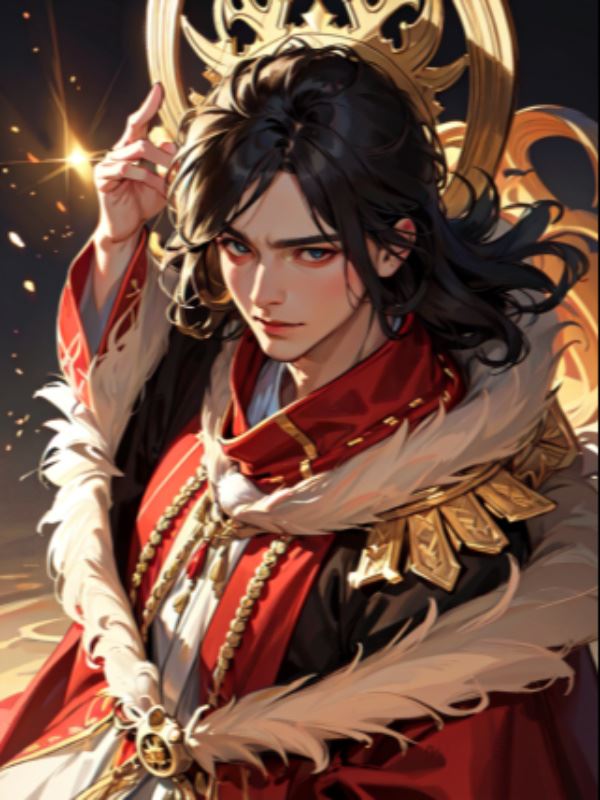
Shen Shixi, a woman reborn into the body of a rebellious noble daughter, enters the imperial palace during a conscripted selection. In her previous life, her elder sister, Consort Shu, died under mysterious circumstances after failing in the treacherous world of the harem. Shen Shixi, aware of the dangers, views her entry not as an ambition for power but as a necessary mission to survive and avenge her sister. The Emperor, Li Yuanke, is a young, handsome, and ruthless ruler who has recently consolidated his power. During the selection, an unprecedented event occurs: Li Yuanke discovers he can hear Shen Shixi’s inner thoughts. While she maintains a facade of obedience and beauty, her internal monologue is filled with sarcastic curses and complaints about his appearance and authority. This secret knowledge gives the Emperor a unique advantage, allowing him to see through the performative loyalty that characterizes court life.
Shen Shixi is appointed as a Baolin, the lowest rank among the selected consorts, and is assigned to Zhaoyang Palace, the former residence of her deceased sister. Rather than engaging in the typical palace intrigues or competing for the Emperor’s favor through traditional means, she focuses on transforming her quarters into a comfortable, self-sufficient space. She uproots ornamental flowers to plant vegetables, installs a small kitchen, and establishes a strict hierarchy among her servants based on loyalty and competence. Her primary goal is to live a quiet, comfortable life without drawing the lethal attention of higher-ranking consorts or the Emperor’s wrath.
However, her presence immediately disrupts the delicate balance of the harem. Li Yuanke, intrigued by her audacity and the novelty of hearing her true thoughts, summons her frequently. Their interactions are a blend of public performance and private tension. Shen Shixi uses her beauty and wit to navigate these encounters, often mocking the Emperor internally while maintaining a charming exterior. Li Yuanke, aware of her disdain, oscillates between anger and fascination. He promotes her rapidly to Cairen, granting her significant wealth and privileges, including a private kitchen, which further isolates her from the other consorts.
The core conflict arises from the jealousy and suspicion of the established harem. Consort Rong, a high-ranking favorite, feels threatened by Shen Shixi’s rapid rise and the Emperor’s unusual attention. Meanwhile, the Empress, Pei, maintains a facade of grace but views Shen Shixi as a political tool or a potential threat depending on the Emperor’s whims. Shen Shixi’s refusal to participate in the usual schemes and her blunt confrontation of insults during morning audiences make her a target. She retaliates not through subtle poison or slander, but through direct, sharp-tongued rebuttals that leave her accusers exposed.
As the story progresses, Shen Shixi uncovers more about her sister’s death, realizing it was tied to the political struggles involving the Grand Councilor Pei and the late Emperor’s succession plans. Her elder sister had been a pawn in these games, and Shen Shixi now finds herself in the same web. The Emperor’s ability to read her mind creates a complex dynamic; he knows her true intentions but cannot reveal his power without destabilizing his authority. Shen Shixi, in turn, begins to suspect that the Emperor knows more than he lets on, though she attributes his reactions to intuition rather than supernatural ability.
The narrative moves toward a deeper political entanglement as Shen Shixi’s family, the Shen clan, faces pressure from rival factions. Her grandfather’s political maneuvering to place Li Yuanke on the throne has made them enemies of the Pei clan. Shen Shixi must balance her desire for a peaceful life with the necessity of protecting her family and avenging her sister. The Emperor, initially viewing her as a amusing curiosity, begins to rely on her unique perspective and loyalty, recognizing that her lack of traditional ambition makes her a trustworthy ally in a court full of deceit. The tension between their personal desires and political obligations sets the stage for a struggle where survival depends on navigating both the Emperor’s unpredictable favor and the lethal schemes of the harem.