Summary

... Read More

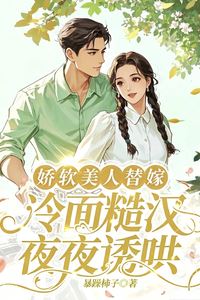
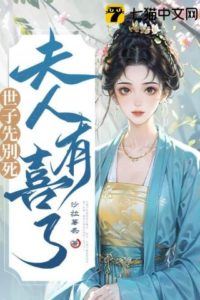
Jiang Rao, the youngest daughter of the Jiang family in Lushui Village, is renowned for her beauty but despised for her spoiled and lazy temperament. Her life is upended when she witnesses her half-sister, Jiang Yu, and her childhood fiancé, Song Dechao, engaging in an affair. Devastated and controlled by the narrative fate of being a cannon-fodder supporting character in a period novel, Jiang Rao attempts suicide by jumping into a river. She is rescued by Lu Shen, a poor but honest farmer from the neighboring Qingshan Village. Upon being saved, Jiang Rao’s consciousness awakens, and she perceives floating comments revealing her tragic future: she will marry Lu Shen, cheat on him repeatedly, and end up destitute and miserable. Determined to rewrite her destiny, she rejects her original role and chooses to embrace Lu Shen, recognizing him as a reliable man who will eventually become the richest person in the region.

Backed by her stepmother, Chen Cuihua, who seeks to punish Jiang Rao for her perceived arrogance, the village舆论 forces Lu Shen to take responsibility for touching Jiang Rao during the rescue. Chen Cuihua schemes to marry Jiang Rao to the impoverished Lu Shen, hoping he will suffer under the care of his exploitative parents. However, Jiang Rao, now fully aware of the plot, accepts the marriage on her own terms. She demands a substantial dowry from her father, Jiang Tianhua, using the threat of exposing her stepmother’s past seduction of her father and her half-sister’s adultery. Jiang Tianhua, guilt-ridden over his late wife and favoring Jiang Rao, agrees to the demands, providing cloth coupons, grain coupons, and cash that Chen Cuihua had saved for her own daughter.

Lu Shen, initially insecure about his poverty, is deeply moved by Jiang Rao’s acceptance of him. He carries her on his back for over an hour to return to his village, a gesture that solidifies their bond. Upon arriving at the Lu family home, they encounter Lu Shen’s parents, Lu Jianjun and Zhang Fengxia, and his younger brother, Tiewazi. The Lu family is depicted as greedy and biased, having exploited Lu Shen’s labor for years while favoring Tiewazi. Zhang Fengxia immediately attempts to seize Jiang Rao’s dowry, claiming it should be managed by the head of the household. Jiang Rao refuses, asserting her financial independence and demanding that Lu Shen’s future earnings be split between the couple and his parents.

Tensions escalate when Tiewazi insults Jiang Rao, calling her a bad woman. Jiang Rao retaliates by pulling his ear, leading Zhang Fengxia to attempt to strike her with a broom. Jiang Rao uses Tiewazi as a shield, resulting in the boy being slapped by his own mother. Lu Shen intervenes, protecting his wife and demanding an apology from his brother and parents. When his parents refuse and threaten to withhold food, Lu Shen stands firm, declaring his priority is his wife’s well-being. He reveals that he has been working for the family for years without fair compensation and decides to separate households. The confrontation draws neighbors and the production team leader, forcing the Lu family to publicly acknowledge their mistreatment. Lu Shen formally requests a household separation, promising to support his parents during festivals but refusing to hand over all his work points. The team leader approves the separation, marking a decisive break from the Lu family’s control and setting the stage for Jiang Rao and Lu Shen to build a new life together.

Novel Items

More
Supernatural Item
A translucent panel that appeared before Jiang Rao's eyes after she was rescued from the river, displaying countless lines of comments and barrage text about the story plot, characters' fates, and upcoming events. It allowed her to see the original novel's plot and commentary, enabling her to awaken and change her fate.
Item
Jiang Tianhua's jacket that he hurriedly took off and draped over Jiang Rao after she was pulled from the river, afraid that his daughter's body would be seen by others.
Materials
Expensive sweets in this era that Ye Wuyou craves. Ling Yu secretly bought a large supply and hides them so she won't eat too many and ruin her teeth. Each day he gives her a few pieces. They are highly valued and Ye Wuyou shared some with Ling Zixiao.
Event
Lin Xiao initiated the engagement discussion with Su Yundai, transferring a large sum of money as a gift. Wei Lin was not informed beforehand and reacted with shock and ambiguity when he discovered it. The engagement status remains unclear as Wei Lin brushed it off as being too busy.
Event
Lu Shen performing chest compressions on Jiang Rao to save her after she drowned in the river. This act led to Chen Cuihua's scheme to force Lu Shen to marry Jiang Rao by claiming he had ruined her reputation.
Betrothal Gifts
Traditional Chinese betrothal gifts including jewelry and other items. Song Dechao gave this set to Jiang Yu as part of his betrothal. Jiang Rao requested to keep this set for her living expenses after marriage. Lu Shen also promised to provide this set as part of his betrothal to Jiang Rao.
Latest Release
DateGroupRelease
2026-08-11shanghai fantasy c45
2026-08-11shanghai fantasy c44
2026-08-11shanghai fantasy c43
2026-08-11shanghai fantasy c42
2026-08-11shanghai fantasy c41
2026-08-11shanghai fantasy c40
2026-08-11shanghai fantasy c39
2026-08-11shanghai fantasy c38
2026-08-11shanghai fantasy c37
2026-08-11shanghai fantasy c36
2026-08-11shanghai fantasy c35
2026-08-11shanghai fantasy c34

Community Reviews

Rating(3.9 / 5.0, 15votes)
5 stars
5(33%)
4 stars
4(27%)
3 stars
6(40%)
2 stars
0(0%)
1 stars
0(0%)

Popular reviews

... Read More
This chapter is a masterclass in pacing control, and I want to break down exactly how the author does it. It opens at maximum volume. The villagers are shouting, the women's team leader is mediating, Tiewazi is crying, Zhang Fengxia is screaming, Lu Jianjun is beating his son with a shoe. It's chaotic, loud, almost unbearable. And then—sudden silence. Lu Shen and Jiang Rao walk away. The scene shifts to the thatched hut. The noise drops to a whisper. This contrast is deliberate and devastating. The first half of the chapter is pure conflict, and the second half is pure stillness. By placing them side by side, the author makes the silence feel earned. Every quiet moment in the hut—the sweeping, the sharpening of the sickle, the sleeping wife—carries the weight of everything that came before. But the pacing doesn't just slow down; it accelerates in a different way. Once Lu Shen leaves to hunt rabbits, he doesn't stop. He cuts weeds, weaves a grass mat, covers the roof, goes up the mountain, returns with bamboo, kills rabbits, starts a garden. The action is relentless but purposeful. There's no filler here—every task moves the story forward. The bullet comments are a clever pacing device too. They interrupt the narrative at key moments (when Jiang Rao asks for meat, when the villagers gossip) to give readers a breather while also adding information. It's like the author is saying: "Take a breath. Here's what you need to know. Now let's keep going." The chapter ends on a note of quiet anticipation—Lu Shen has left the materials on the ground, Jiang Rao is still sleeping, and tomorrow he has to go work in the production team. The reader is left wanting more, which is exactly where you want them to be at the end of a chapter.
... Read More
I've been thinking about this scene nonstop: Lu Shen building a rabbit pen in the courtyard. He carves wooden stakes, hammers them into the ground, and places one male and one female rabbit inside. He ties the mouths of the other two rabbits to prevent them from making noise when slaughtered. This is such a dense, loaded sequence, and I think it's the symbolic core of the entire chapter. The rabbit pen represents something bigger than just animal husbandry. It's about creating boundaries—physical, emotional, psychological. For the first time in his life, Lu Shen is building something that belongs entirely to him and his wife. The stakes he drives into the ground are the same stakes his parents tried to drive into him for years: you belong to this family, you work for this family, you suffer for this family. But now those stakes go his way. And the tied mouths of the slaughtered rabbits? That's the silence he's been living under his entire life. The noise his mother makes, the demands, the guilt-tripping, the public shaming—all of it has been tied shut, and now he gets to decide what makes sound and what doesn't. The fact that he chooses to raise the remaining two rabbits rather than kill them immediately is also significant. It's an act of hope. He's not just surviving today; he's planning for tomorrow. He's building a future where there's more than just the next meal. The thatched hut itself is a symbol too—crude, temporary, but theirs. Unlike the main house, which was always going to be taken away from him no matter how hard he worked, this hut is something he can build into something beautiful. It's small, yes. But it's the first thing in his life that he gets to call his own.
... Read More
"Ahhhh, this is so exciting! I can't believe I get to see this for free!" That's what the bullet comments say, and honestly, same energy from me as a reader. Let me break down why this chapter sequence works so well pacing-wise. The author opens with conflict — Tiewazi on the wall, demanding meat, being a terrible human being. Jiang Rao and Lu Shen team up against him. It's fast, it's sharp, it's satisfying. You want to shake this kid and also protect your newly married couple from him. Then — and this is the masterstroke — the author immediately pivots from the highest energy moment to the quietest moment in the book. Tiewazi leaves. Lu Shen apologizes to Jiang Rao. She makes him promise to spoil her. He agrees. And then she goes to lie down. The conflict is over and the chapter just... exhales. The wedding night scene is where the pacing really shows its teeth. It's slow. Deliberate. Every line is loaded with unspoken tension. The bullet comments try to spice things up with their wild speculation about Lu Shen's physique, but Jiang Rao shuts them down with her privacy concern, and they pixelate. The author uses the bullet comments themselves as a pacing device — they speed things up when the scene gets tense, then vanish when intimacy becomes real. Then morning comes. The rooster crows. Porridge simmers. Bird eggs. And just when you think it's all going to be soft and domestic, Jiang Rao drops the bomb: "Go up the mountain with me tonight. There are national relics there. Gold." Cliffhanger. Boom. Chapter ends on that note and I immediately opened the next one. The author knows exactly when to punch you with tension and when to let you breathe. The shift from domestic sweetness to adventure hook is seamless because Jiang Rao's character makes it inevitable — she's not just a wife who cooks and waits, she's someone who sees opportunities.
... Read More
The pacing in this chapter is absolutely relentless. We go from Jiang Rao's arrival to family separation negotiations to physical confrontation in what the narrative itself tells us is 'less than an hour.' That's extraordinary compression. The author structures this like a series of escalating blows. First the mother-in-law's fake sweetness about 'treating you like my own daughter.' Then the immediate pivot to 'hand over your money.' When that fails, the father-in-law joins the attack. When Lu Shen defends his wife, they threaten to starve her. When she agrees to cook separately, they refuse to provide ingredients. Each beat raises the temperature. What's remarkable is how the author uses silence and response patterns to control rhythm. Jiang Rao's repeated non-response to Zhang Fengxia's initial kindness creates tension - we're waiting for the other shoe to drop. When she finally speaks, it's like a door opening after pressure has built. The scene transitions are equally tight. We move from the confrontation in the main room to the private moment with Tiewazi almost seamlessly. The younger brother's entrance serves multiple purposes: it shows Zhang Fengxia's favoritism, it gives us comic relief, and it sets up the chapter's violent climax. The ending is perfectly timed - just when we think the conflict has resolved with the 50/50 work points agreement, Jiang Rao grabs Tiewazi's ear. The chapter doesn't fade out on a diplomatic note; it ends on a physical action that reminds us this family is still at war.
... Read More
The most fascinating character arc in this chapter is Lu Shen's transformation. For twenty-something years, he was the perfect filial son - working the fields, giving all his wages to his parents, eating wild greens while his brother ate eggs. The text tells us 'he never heard a single kind word in return' and he just... accepted it. That's not filial piety, that's conditioned submission. But something shifts the moment he sees his parents gang up on Jiang Rao. The text captures this perfectly: 'They could scheme against him, but they had better not even think about laying a finger on his wife.' This is the birth of a boundary. Lu Shen isn't becoming unfilial - he's becoming human. He's realizing that blind obedience isn't virtue when it enables abuse. Jiang Rao is equally compelling. On the surface, she's the delicate, fair-skinned city girl who's never done farm work. But her sharpness is immediate and instinctive. When Zhang Fengxia tries the emotional manipulation ('we're one family now'), Jiang Rao doesn't fall for it for a second. Her response about the marriage certificate being unfinished is legally precise and emotionally devastating. The relationship between Jiang Rao and Lu Shen is already showing perfect sync - 'As expected of husband and wife, their hearts were in perfect sync.' This isn't just romantic idealism; it's survival strategy. Two people who recognize each other as allies in a hostile environment. And Zhang Fengxia? She's not a cartoon villain. Her calculation is chillingly rational - she believes she's entitled to her son's labor and his wife's dowry. The fact that she can't comprehend Jiang Rao's resistance suggests she's never faced anyone who wouldn't play along.
... Read More
I keep coming back to the bird eggs. Three of them. Smooth and round, slightly larger than chicken eggs. Lu Shen risked his life climbing a dangerous tree on a steep slope — a slope where a child once fell and was paralyzed — just to get these eggs for his wife. Why eggs? Why not just buy some? Why not wait? I think the eggs are symbolic of everything about Lu Shen's character and everything about what this marriage represents. Eggs are potential. They're small, unassuming, but inside them is life. They're a promise of more — not just breakfast, but chickens, more eggs, sustainability. And Lu Shen explicitly connects the dots: "When they grow up, they'll lay eggs for you every day. Chickens lay eggs, and eggs produce more chickens." He's thinking generations ahead. He's not just solving today's problem, he's building a system. The bullet comments are another symbol I can't stop thinking about. They represent Jiang Rao's connection to another world, another consciousness. At first they're just entertainment — gossiping about her husband's body, speculating about the plot. But then they become something else: information. Knowledge. The mountain has relics. Gold. A way out of poverty. The bullet comments are her cheat code, but also her burden. She can't share them with Lu Shen directly — how do you explain that invisible voices in your head are giving you investment advice? She has to filter, translate, manipulate the information without revealing her secret. And then there's the Simmons bed. It's mentioned twice and never seen. It's a symbol of everything Jiang Rao wants and everything Lu Shen promises. It's not just a bed — it's comfort, security, a life different from the one she was born into. When she complains about the hard bed, she's not just talking about her back. She's talking about her entire existence. The marriage certificate they're going to get the next morning? That's the ultimate symbol too. Paper. Ink. A promise made legal. Lu Shen treats it like a religious vow — "his tone almost reverent." In a world where everything is handmade and fragile, that piece of paper is supposed to be permanent. But can paper hold this much weight?
See all reviews

Characters

See all characters

Custom lists

See all custom Lists