Summary

... Read More

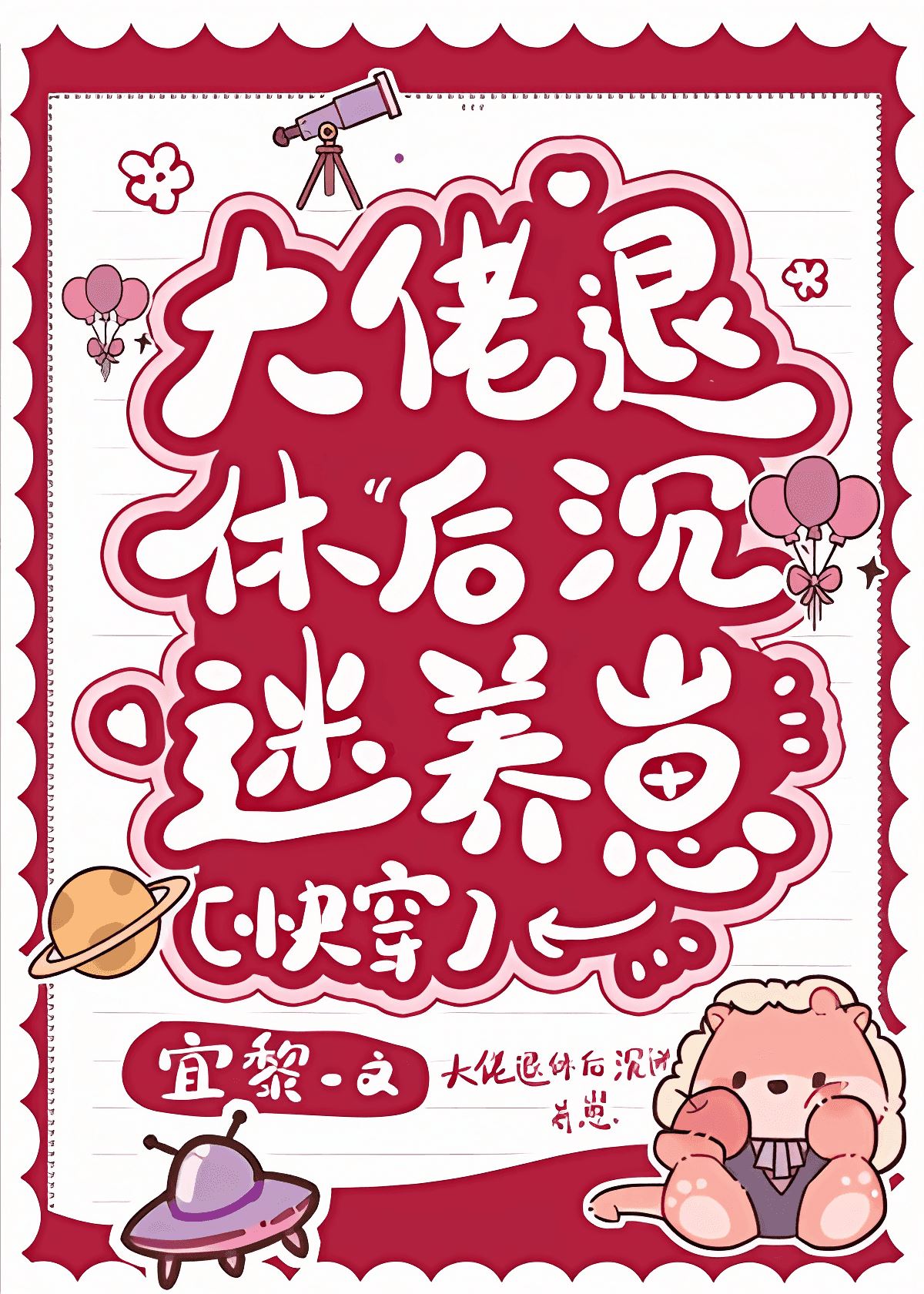
Xie Hui was a legendary system executor in the infinite realms, known for his efficiency in orchestrating comebacks for protagonists. However, his methods often involved eliminating the so-called Heaven's Chosen Ones so thoroughly that they became mere cannon fodder, disrupting the balance of the worlds he inhabited. His excessive interference eventually drew the wrath of the Lord God, who banished him from his high-level duties. Instead of a complete exile, Xie Hui was assigned a new mission by the exasperated deity: to become a father to children who had never been truly loved. The Lord God hoped that the innocence and affection of raising a child would cure Xie Hui’s chaotic soul and prevent him from destroying another world. Xie Hui accepted the task, entering the body of a workaholic film emperor who had died filled with regret over neglecting his son, Xie Ze, in favor of his career. The original host had left his three-year-old son in the care of a nanny, leading to the boy’s withdrawn and gloomy personality. Before his death, the original host realized his mistake only after Xie Ze drowned while trying to save another child, a tragedy that haunts the Bureau and prompted this specific assignment.

Upon arriving in the new world, Xie Hui found himself at his son’s daycare, where Xie Ze had just been involved in a fight because another child called him an orphan and said his father did not love him. Unlike the original host, who would have ignored the incident or blamed the child to maintain peace, Xie Hui firmly defended his son. He challenged the grandmother of the offending child with sharp wit and logic, refusing to let the boy be wronged. This incident marked the first shift in their relationship. Xie Ze, accustomed to being scolded or ignored by his absent father, was stunned by the gentle and protective response. Xie Hui, committed to performing his role perfectly, decided to overhaul their lives immediately. He withdrew Xie Ze from the inadequate daycare and chose to prioritize fatherhood over his rising entertainment career. He arranged to join a celebrity parenting reality show, a decision that surprised his manager, Jiang Ge, who had long tried to persuade his boss to spend more time with the boy.

The narrative follows Xie Hui’s gradual integration into daily parenting. He learns to cook, engage in play, and provide emotional support, replacing the cold distance of the past with warmth and attention. A key turning point occurs when he decides to bring Xie Ze on set to film a drama, showcasing his new philosophy that work should never again overshadow family. The reality show captures these interactions, revealing a stark contrast between Xie Hui’s careful, loving approach and the chaotic dynamics of other celebrity fathers featured in the program. Viewers are introduced to his son’s personality: a sensitive, well-behaved, yet deeply insecure child who yearns for validation. Xie Hui’s professional acting skills translate seamlessly into parenting, as he patiently guides Xie Ze through emotions, teaches him about boundaries, and ensures he feels secure and loved. The story also touches on the complexities of the entertainment industry, including potential rivals like Ke Ting, a disgraced former heartthrob who harbors grudges against those who succeeded while he fell.

As the filming progresses, Xie Hui balances his acting commitments with dedicated time spent with Xie Ze. They plant sunflowers together, go on supermarket trips, and navigate social interactions with other cast members and their children. These experiences help heal the psychological wounds inflicted by years of parental neglect. Xie Ze begins to blossom, showing confidence and joy that were previously suppressed. The core conflict remains internal and relational rather than action-oriented; it is the struggle to rebuild trust and reshape a child’s self-worth after significant abandonment. Xie Hui’s determination to be present is unwavering, driven by his understanding of the original host’s regrets and his own mission to succeed where the biological father failed. The story outlines a trajectory of healing, where the bond between father and son strengthens through shared experiences and consistent affection, setting the stage for Xie Ze’s future growth in a supportive environment.

The overarching direction of the tale is one of redemption and emotional repair. Xie Hui’s transformation from a detached universe-traveler to an engaged father serves as the central narrative arc. The text highlights how small, consistent acts of love—such as telling bedtime stories, defending the child against bullying, and simply being present—can alter a child’s developmental path. The reality show format provides a public lens through which this private healing is observed, challenging societal norms about career versus family. By the end of the initial chapters, the foundation has been laid for a lasting, positive relationship. Xie Ze no longer fears abandonment or believes he is unloved, and Xie Hui finds that the mission, though simple in description, requires a depth of emotional investment that surpasses his previous high-stakes interventions in other worlds. The story positions fatherhood not as a hindrance to his career, but as the most meaningful role he has yet to play, promising a future where his son grows up with confidence and security rather than trauma and regret.

Latest Release
DateGroupRelease
2026-10-03marinetl c238
2026-10-03marinetl c237
2026-10-03marinetl c236
2026-10-03marinetl c235
2026-10-03marinetl c234
2026-10-03marinetl c233
2026-10-03marinetl c232
2026-10-03marinetl c231
2026-10-03marinetl c230
2026-10-03marinetl c229
2026-10-03marinetl c228
2026-10-03marinetl c227

Community Reviews

Rating(0 / 5.0, 36votes)
5 stars
0(0%)
4 stars
0(0%)
3 stars
0(0%)
2 stars
0(0%)
1 stars
0(0%)

Popular reviews

... Read More
That Xuan paper-making scene was absolutely gorgeous in its details. The old man's courtyard, vegetable patches on both sides, lush and green—this wasn't some generic backdrop, it was a living, breathing space. I could practically smell the earth and feel the warmth of that afternoon sun. The writer took time to paint this world, and it paid off enormously. Xie Ze toddling up to the old man, asking 'How does tree bark turn into paper?'—that moment transformed the setting from mere location into something sacred. The old man's weathered hands, thin like dry twigs, marked by years of work. Those details made me feel like I was standing right there in that courtyard, witnessing something real and precious. And then Ke Zhen's 'Ew, why do his hands look so ugly?' shattered the moment like glass. The contrast between reverence and cruelty hit so hard. Later, the night scene under those 'exceptionally bright stars'—with Xie Ze leaning against the windowsill, insects buzzing in the summer air, his father sitting beside him. That image of quiet intimacy under vast skies, combined with the muffled crying echoing from next door? Unsettling and beautiful all at once. The author knew exactly how to use light and shadow, sound and silence, to create atmosphere. Even the morning livestream had its own visual poetry—golden light hitting Xie Hui's profile, pajamas and all, no filter, no pretense. It was raw and real, exactly what the moment demanded. Every setting in this batch served the emotional truth of the story.
... Read More
Let me be real with you—I picked this up casually because it's a parenting transmigration story and I've read enough of those to know the formula. But chapters 1 through 7 had me absolutely glued. Here's why the pacing works so well. The opening hooks you instantly. We start IN MEDIA RES with the Lord God yelling at Xie Hui, then pivot to Brother Jiang nagging him about his son, then we're dropped into Xie Ze's fifth daycare fight of the month—all within the first couple pages. The author doesn't waste time with exposition dumps. We learn about the original host's backstory through Xie Hui absorbing memories in the car, which is efficient and natural. By the time we understand why this mission matters—the child drowned trying to save someone, the father buried himself in work and died full of regret—we're already emotionally invested. Then the chapter transitions are clean. Each chapter ends on a moment that creates forward momentum: Xie Ze asking to come to work with his dad, the bedtime confession, the sunflower planting promise. There's no dragging. No filler scenes where characters just talk about feelings without doing anything. Even the conflict with the grandmother—while brief—serves dual purposes: it establishes Xie Hui's protective nature AND demonstrates to Xie Ze that his father will actually fight for him. The tension builds incrementally but never overstays its welcome. We get the daycare conflict in chapter 1, resolution by chapter 2, and by chapter 3 we're already into the softer domestic territory without losing narrative drive. The author knows when to punch and when to caress. And that ending with Xie Ze burrowing under the covers, staring at his dad with those bright eyes? That's a chapter close that makes you immediately want to turn the page. Whoever designed this pacing clearly understands reader psychology.
... Read More
The stakes in this batch went from low-key parenting differences to full-blown career catastrophe, and I was gripping the phone the entire time. Ke Ting posting that Weibo at midnight—calling Xie Ze mature while implying his own child wasn't the problem—was the kind of impulsive move that changes everything. Suddenly Xie Hui's secret marriage was trending, his son's existence was public, and bad-faith actors were ready to tear them apart. What made the tension so unbearable was knowing what was at stake for Xie Hui. He didn't care about attacks on himself, but the comments insulting his child? Those implied his son was hidden because of a disability. That's a parent's bottom line, and seeing Xie Hui's fury—even barely contained—made me understand exactly why he rushed into that livestream in his pajamas. Meanwhile, Ke Ting's personal drama played out in real-time: his daughter kicking crew members, declaring she wanted to hurt her mother, completely unaware that her behavior was destroying his carefully constructed image. The irony was suffocating. He couldn't reshoot everything, couldn't edit away the damage. The consequences were piling up faster than he could manage. Even the smaller conflicts carried weight—Ke Zhen calling the old man's hands ugly, Xie Ze's quiet rage, the awkward silence in the pavilion. Each moment added pressure, each reaction raised the stakes. By the time the livestream ended and the director proposed a Q&A, I knew this wasn't over. The conflicts were just finding new forms, and I needed to know what would happen next.
... Read More
OK so the scene where Xie Ze gets pecked by the rooster is PEAK. Let me explain why this works so well: First, you've got the rural setting established naturally — “elderly residents often keep a few free-range chickens,” “wooden pillar under the eaves,” “narrow countryside path.” It's not info-dumping, it's woven into action. The house stays in a local's home, not a hotel, which reinforces the “healing variety show” vibe they're going for. Then the rooster incident happens and instead of making it dramatic or scary, the author makes it tender. Xie Ze runs to his dad “eyes red and tears brimming,” and Xie Hui's reaction? He chuckles. Not mocks, not dismisses, just finds it genuinely funny because “who would have thought? The little guy had barely taken two steps before he was walking back toward the rooster.” That line alone is cinema. The wildflower scene earlier was also gorgeous — “Xie Ze holding out a small bouquet of wildflowers to him,” “his little face was lit up with a bright smile,” “eyes squinting from the joy.” These aren't just pretty descriptions, they're emotional anchors. Every time I read those, I feel something in my chest. The contrast between Xie Hui's peaceful father-son walk and Chen Heng carrying all the luggage like a “mere porter” is also such a vivid visual. It's almost comedic but it serves character development too.
... Read More
This batch had pacing that felt almost dangerous—starting slow with the arrival, the shade-seeking, the quiet observations, then building and building until everything erupted. TheKe Zhen tantrum sequence alone stretched across multiple scenes: first the refusal to walk, then the ground-rolling, then the promises and bribes, and finally the complaint about the old man's house. Each beat layered on the next, making us feel the mounting exhaustion of everyone involved—including the reader. But what I appreciated most was how the author used quiet moments to breathe. Xie Ze asking about the stars, Xie Hui ruffling his hair, those small exchanges between father and son—they gave us space to process the tension before the next wave hit. The midnight disruption leading to Xie Ze's philosophical musing about whether stars have worries? That's masterful pacing. It takes a chaotic, loud moment and then pivots into something contemplative and soft. Then comes the next morning—the Weibo post, the trending topic, the frantic planning. The pace quickens dramatically here, mirroring the panic of the situation. And that livestream scene? Perfectly structured. Short, direct, no-nonsense. Just enough to clarify, then end before it dragged. The Q&A setup at the end promised more conflict while keeping us eager for what comes next. The author knows exactly when to accelerate and when to linger. That's rare skill.
... Read More
I keep coming back to three objects in these chapters and I think they're doing more work than the author might even realize. The rooster. Xie Ze gets pecked by it and something changes. Before, he was well-behaved and independent. After, he's clinging to his father's leg like a kid who's just discovered the world is not safe. The rooster is just a rooster—but for Xie Ze, it's the first real threat he's faced without his mother there, and it rewires something. He goes from explorer to shadow. That's huge for a child his age. Then there's the umbrella—well, two umbrellas. Chen Heng carries them like armor. One for his son, one for his daughter. An umbrella is a shield against the sun, but in this context it's also about attention. Who gets shaded? Who gets left out in the open? When Ke Ting demands the pink one for his daughter, he's not asking for shade—he's demanding that someone else's child be exposed so his can be protected. And finally, the milk scent. Xie Ze insisted on the milk-scented body wash. It clings to him through the bath, through the pajamas, through the blanket. It's the smell of childhood—sweet, simple, unguarded. Xie Hui inhales it and smiles. That scent is the opposite of the rooster's threat. It's the smell of safety. Of a boy who, despite everything, still believes his dad is the center of his world. The story underneath is about what makes a child feel safe enough to be a child—and what happens when that safety is fragile.
See all reviews

Custom lists

See all custom Lists