Summary

... Read More

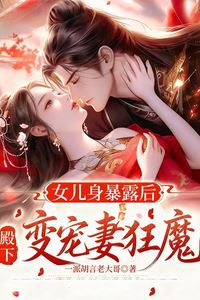
Dai Li, a modern woman, wakes up half-submerged in the pond of a luxurious estate after drowning in her own timeline following the tragic death of her young son, Zhou Zhou. Confused and disoriented, she quickly deduces she has traveled back in time to an ancient era resembling the Han Dynasty, where Hu dancers perform for nobles and commoners are treated with little value. With no memory of how she arrived but an overwhelming instinct that her son might also be here, she resolves to survive and find him. Dressed in modern clothing that marks her as an outsider, she improvises a disguise using a handkerchief and dirt, blending in as a servant or dancer while searching the vast mansion.

While exploring the estate to avoid detection and find her son, Dai Li accidentally trespasses into the quarters of Qin Shaozong, a powerful Marquis and military commander who has recently taken residence at the estate. Caught by Qin Shaozong, she lies about her identity, claiming to be his concubine named Feng Chun to avoid punishment. Impressed by her beauty and sharp wit, Qin Shaozong accepts her story but demands she serve him. However, Dai Li escapes his chambers, changes into authentic Han-era clothing borrowed from Hu dancers, and continues her search for Zhou Zhou in the servant quarters, only to find no trace of him.

Qin Shaozong, realizing he has been deceived by a woman with a fake name and contradictory stories, becomes both annoyed and intrigued. He orders a midnight search of the estate for the missing "Feng Chun." Dai Li, fearing capture, hides in the carriage area of the stable courtyard. Using her keen observation and understanding of human psychology, she anticipates the search patterns and attempts to evade capture, but Qin Shaozong discovers her hidden spot through subtle clues like a faint fragrance and the behavior of his horse. He captures her and brings her back to his chambers, confronting her about her deception.

Under pressure, Dai Li confesses that she is searching for her abducted son, using the emotional plea to garner sympathy and leverage Qin Shaozong's resources. She claims her intrusion was born of desperation and ignorance of the estate's layout. Qin Shaozong, though suspicious, agrees to help her find the child at dawn. That night, their interaction shifts from hostile to complexly intimate, as Dai Li navigates the dangers of her new reality while maintaining her primary goal: locating Zhou Zhou. The story establishes a dynamic where Dai Li must balance survival, deception, and maternal longing against the powerful and enigmatic Qin Shaozong, whose interests in her are just beginning to unfold.

The narrative sets the stage for a larger conflict involving political intrigue, as Qin Shaozong is investigating corruption and banditry linked to local officials like Prefect Jiang Chonghai. Dai Li's presence in his household draws her into this dangerous world. As she adjusts to life in the ancient era, she must conceal her modern knowledge and identity while uncovering clues about her son's whereabouts. The story explores themes of survival, maternal love, and the power dynamics between a strong-willed woman and a dominant lord in a harsh historical setting.

Latest Release
DateGroupRelease
2026-09-26akknovel c16
2026-09-26akknovel c15
2026-09-26akknovel c14
2026-09-26akknovel c13
2026-09-26akknovel c12
2026-09-26akknovel c11
2026-09-26akknovel c10
2026-09-26akknovel c9
2026-09-26akknovel c8
2026-09-26akknovel c7
2026-09-26akknovel c6
2026-09-26akknovel c5

Community Reviews

Rating(0 / 5.0, 44votes)
5 stars
0(0%)
4 stars
0(0%)
3 stars
0(0%)
2 stars
0(0%)
1 stars
0(0%)

Popular reviews

... Read More
"Her child wasn't here. Was he simply not in this building… or not in this estate at all? She dared not entertain the latter possibility." That's it. That's the entire emotional core of this chapter, sitting quietly between all the political intrigue and mysterious women and conspiracy theories. Dai Li is out here navigating a house full of liars and powerful men, listening at walls, piecing together fragments, and her entire motivation is this one unbearable question: is my child in this place or has he been taken from it entirely? The text never dramatizes it. No tears, no trembling, no internal monologue about maternal love. Just a woman standing in shadow, hearing servants gossip about a stranger who might hold answers, making a decision to act "while the trail was warm." She's not a queen or a warrior. She's a mother who has already accepted that she is invisible in this world and is using that invisibility as her only weapon. Meanwhile, Qin Shaozong sends men to retrieve a woman who may or may not be real, and his rage is almost comical in its intensity. But Dai Li—Dai Li has nowhere to direct her rage. Her anger has no target. It just sits inside her, heavy and hot, and she channels it into movement. Always movement. Always the next courtyard, the next ear pressed to the wall, the next whispered conversation she steals. The contrast between these two characters is devastating. One commands armies and searches estates with subordinates. The other commands nothing and searches the same estate alone, in the dark, pretending to be nobody. And yet I found myself watching Dai Li with more concern than anyone watching Qin Shaozong's schemes. Someone has my child. That sentence alone carries more weight than every conspiracy theory in this chapter combined.
... Read More
"Iron?" Qin Shaozong pressed a finger against them. Dai Li: "…" — That single ellipsis. Two characters. That's the entire emotional payload of the chapter for me. She's in the most vulnerable physical position possible, half-undressed, trapped in his bed, performing the role of a desperate mother, and a tiny metallic clasp on her undergarment just *annihilates* all of it. One word from him and the whole house of cards falls. And I think that's the thematic engine of the whole book, actually. Dai Li's entire existence in this world is a *construction*. She's wearing other people's clothes, other people's knowledge, a fabricated name, a fabricated backstory. Every layer is a performance. The robes, the undergarments, the "mother who lost her son" script — all of it is a costume, except the costume keeps getting thinner and the audience keeps getting closer to the seams. The iron clasp isn't just a plot device. It's the thing that represents *herself* stitched into the performance. You can't change your undergarments without changing the person underneath. She *could* have swapped them in the western pavilion. She chose not to. "She couldn't bring herself to wear someone else's intimate wear." And that tiny act of self-preservation is what nearly destroys her. The "Qin" surname angle hits different too. She names her son Qin Yanzhou, thinking it's a safe, random choice, and immediately the world pushes back. "Surely 'Qin' wasn't one such name here?" She doesn't know the political map. She's navigated by *instinct* and *luck* this whole time, and the name she picked for her kid just happened to be a loaded card. It's like reaching into a hat for a prop and pulling out the king when you needed a two. The theme of *imposter syndrome as survival mechanism* — she's so deep in the bit that she can't even make a safe choice without tripping over the era's specific power structures. She knows the Sun Clan of Jiangdong, the Lü Clan of Luoyang, from history class, but the *current* political moment? She's blind. And that blindness is terrifying because the people around her are not blind. They *know*. She's the only one walking around in fog. And the menstruation taboo at the end isn't just a comedic beat, is it? It's the only *real* thing she has that no amount of performance can override. Her body is the one unscripted element. She can fake a sob, fake a blush, fake a stutter. She can't fake biology. And she *uses* it. Weaponizes it. Turns her own vulnerability into the one move that no one in this era would press, because no one *could*. It's dark. It's also the most honest she's been since the whole thing started. And I don't know if that's comforting or just another layer of the mask. Either way I can't stop thinking about it.
... Read More
Okay so the plot structure here is honestly brilliant. It opens with two dancers casually discussing a dead body in a pond like it's weather gossip. 'Could she be one of them?' 'Probably not. I've seen a few Hu dancers from afar, and their hair wasn't pure black.' This is not a normal conversation and from the very first line I knew I was in trouble. The author basically throws us into a world where human life means nothing before we even know who our protagonist is, then BAM—Dai Li wakes up and becomes that corpse. The misdirection is perfect because we spend Chapter 1 thinking she might just be some poor servant girl who fell in, only to discover she's a MODERN WOMAN who died and crossed over. That reveal lands like a gut punch. Then within three chapters she's already piecing together her situation—modern shoes, unfamiliar clothes, ancient estate, dangerous era—and her entire motivation gets crystallized in one devastating sentence: 'If she could wake here, maybe her child could too.' That pivot from 'I'm surviving' to 'I HAVE TO FIND MY SON' changes the entire trajectory of the plot. It went from disorientation thriller to desperate mother quest in the span of a paragraph. The cliffhanger ending with approaching footsteps and her trapped in men's clothing is exactly the kind of tension that makes you immediately open the next chapter. Plot coherence so far? Solid. Every detail seems purposeful—the dried apricot handkerchief, the lack of women in the quarters, the fact that this estate is clearly preparing for someone important. Something big is coming and she's stuck in the middle of it. And I am HERE for it.
... Read More
"I know little of politics and your exact status, but I've heard even Prefect Jiang defers to you. You must be a man of immense influence. Finding a child would surely be a trivial matter for you. Might I trouble you for this small favor?" — And she says this while literally hooking her fingers onto his belt clasp. The *audacity*. I kept rereading that exchange because her dialogue is doing two jobs simultaneously: the words are deferential, sycophantic, performative nobility-speak, but the *delivery* is physical, invasive, sexualized. She's managing him with her mouth while managing the situation with her hands. It's so layered that I couldn't tell if she was actually flustered or if the whole performance was so calcified in her brain that "nervous" and "calculated" had merged into one state. I think it's both. That's what made it fun. Qin Shaozong, on the other hand, talks *so little*. His lines are: a low chuckle. "Finding a child is no trouble. At dawn, I'll have men see to it." "The surname Qin?" "Who is your husband?" "One night of spring is worth a thousand pieces of gold. As you wish, madam. Let us not squander this spring night." And then at the end, just: "My word is my bond." Four syllables. Done. He's basically a walking weather system. You feel the pressure but he barely says a word above a murmur. And I *love* that. It contrasts so hard with Dai Li who is in constant verbal motion, juggling excuses, pivoting topics, dropping sweet nothings. One of them is a river, the other is a dam. What made me grin was when he asks about her husband and her mind goes *blank*. "Countless lies sprang to mind, only to burst like bubbles." That's such a good internal line because it captures the specific panic of someone who's performing a character and just got a question they haven't prepped an answer for. She wasn't ready for the *Qin* name to mean anything. She thought it was just a common surname. The panic isn't dramatic or cinematic, it's this small, rapid fizzing. "H-He was just a commoner." The stutter is so *human*. She's a modern woman with no idea about this era's political family trees, and she's winging it while her arm is literally around his neck trying to guide him to the bed. The physical comedy of it — stammering an excuse while performing seduction — kept me grinning the whole time. One thing though. His line "One night of spring is worth a thousand pieces of gold" is a real classical poem reference (Liu Yong, Tang dynasty), and I appreciated that it's dropped in so casually, like it's just... a thing he says. Not explained, not footnoted. Just *his* language, naturally. Made the world feel like it had actual literary strata underneath. Did anyone else notice that?
... Read More
I've read three paragraphs of the West Garden chapter and I can already see the film playing in my head. Let me explain why this setting is doing SO much work. "The West Garden was silent, a stillness that stretched all the way to the courtyard entrance and the outer walkway. In the thick darkness of the night, it carried an eerie, unsettling quality." — This is not just atmosphere. This is DREAD. The silence isn't peaceful; it's pregnant with the knowledge that someone is being hunted. The author could have described this space physically — trees, pathways, buildings — but instead chooses to emphasize what you CAN'T see. The thick darkness. The unsettling stillness. That's commitment to mood over exposition. And then there's Dai Li's physical state. She's SUPPRESSING discomfort in her left ankle, LIMPING forward, muttering to herself about how climbing up is easy but climbing down is hard. The mundane reality of her situation contrasts perfectly with the life-or-death stakes. She's not a wuxia heroine gliding through the night — she's a girl who twisted her foot and is now regretting every life choice that led her here. The contrast between Dai Li's stealthy departure and Mo Yanyun's arrival is chef's kiss. She leaves like a shadow; he arrives 'like a tide,' waving a hand and flooding the courtyard with soldiers. The visual of all the Hu girls emerging from their rooms, huddling together 'like drenched sparrows, trembling' as armed men stride inside — I felt that. That's vulnerability made visual. And the inverted 品-shaped carriage area! Dai Li remembers passing by earlier, knows the inner archway has occasional traffic while the outer area is unguarded. She's using her prior reconnaissance as survival strategy. The world feels lived-in because she navigates it with spatial memory, not map-reading. That's how you build a setting — through a character's bodily relationship to it. "From the inner archway, one could see the horses without needing to step outside." This tiny detail. That's the difference between a real place and a backdrop.
... Read More
I'm going to be messy here because the pacing in this section is doing something I wasn't expecting. You start with Dai Li slipping out of the guest pavilion, heart pounding, choosing a new path home. Pure stealth-mission energy. "She was out—she'd made it!" Short punchy sentences. You're vibrating with her. Then she bumps the steward, borrows the clothes, chats with Mijia, asks about the nine-year-old servants, tucks her modern clothes behind a potted plant. The whole sequence is a single breath, one continuous forward motion, and I was flipping pages like I was trying to keep up with her footsteps. Good pacing. Tight. No waste. And then. The main hall. The golden sun dipping. The two tables. And just... BANG. Full geopolitical shift. We go from a woman tiptoeing around a courtyard to a lord dissecting a prefect's micro-expressions over wine. The tonal whiplash is *extreme* and I didn't hate it. I hate that I didn't hate it. Because if the author had eased into the banquet, if they'd done some kind of transition paragraph like "meanwhile, at the main hall," it would've felt lazy. Instead it just yanks the camera up and over and we're watching two men play four-dimensional chess while Dai Li was still wrapping her sandals in a robe behind a potted plant. The editing itself is telling you: these two threads are converging whether you like it or not. What's interesting is where they land the beat. Qin Shaozong asks for "Feng Chun." Not a general. Not a territory. A dancing girl. And Jiang Chonghai's internal monologue is the whole comedy: "so it was just a dancing girl he fancied? He had thought it was something far more serious." And then immediately he walks straight into the trap anyway because of course he does, because refusing a man who commands the northern armies and holds a noble title over a single performer is not an option that exists in his social reality. "Consider her yours, my lord." Done. Cup raised. Smiled. The threat was never the dancer. The dancer is the receipt. The proof of submission. And Yan San confirming from the corridor that the subordinates are "evasive" seals it: this banquet wasn't a social event, it was an audit. The pacing trick is that we get the full picture of the political game in maybe six hundred words, sandwiched between two very different kinds of tension (physical survival vs. institutional fear), and neither gets to breathe. I want to hate the author for not letting me sit in either scene longer, but the compression is what makes them resonate against each other. It's like the book is saying: your survival and his survival are happening in the same building at the same time and neither of you know the other is here. That's the hook. And I'm stuck on it. Also the "don't... forget me" line from Mijia hit right at the lowest-energy point of the chapter, when Dai Li was being most passive, just borrowing clothes and powder, and I think that's intentional. The quietest moment gets the most emotionally charged line. It sticks in your throat.
See all reviews

Custom lists

See all custom Lists