Summary

... Read More

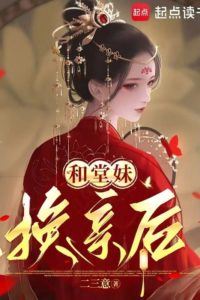
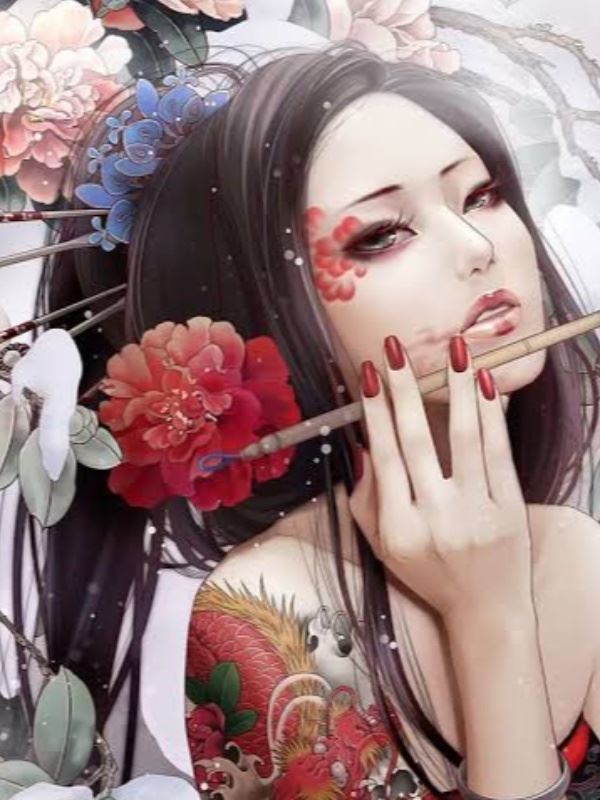
Chen Wanqing is the eldest daughter of Chen Song and Xu Suying, a family of modest means living in Zhao Family Village. Her father serves as a constable in the local yamen, while her mother manages a thriving incense shop that Wanqing helps run. Despite her beauty and capability, Wanqing faces significant marital difficulties. Her first engagement to Meng Jintang ended when he disappeared three years prior, presumed dead after an encounter with water bandits. The Meng family attempted to force a ghost marriage with Wanqing to bind him posthumously, an act that turned the two families into bitter enemies. Meng Jintang has since returned alive with a wife and children, having lost his memory and later regained it, but the Meng family now pressures him to annul his current marriage and wed Wanqing, creating a volatile social situation.

With Wanqing eighteen and unmarried, her mother Xu Suying seeks a new match, settling on Li Cun, a scholarly young man from a county town family. However, Xu Suying is wary of Li Cun’s formidable mother. Simultaneously, a crisis emerges within the extended Chen family. Chen Wanqing’s grandmother, Madam Fang, who lives with the third branch of the family, devises a scheme to swap marriages. She intends to marry her favored granddaughter, Chen Wanyue, to Li Cun, while replacing Wanyue’s existing engagement to Zhao Jing with Wanqing. Wanyue, who claims to have received prophetic dreams after a head injury, insists that Zhao Jing is cursed with bad luck and that Li Cun is destined for high examination success.

The grandmother manipulates both families to achieve her goal. She visits the Zhao family, presenting a forged temple document claiming Wanyue and Zhao Jing’s horoscopes are incompatible, causing great distress to Zhao Jing’s frail mother, Lady Zhao. She then proposes Wanqing as a substitute bride. Concurrently, she approaches the Li family, arguing that Wanyue’s gentle nature suits the strict Li household better than Wanqing’s independent spirit. Wanyue actively participates in this deception, driven by a desire to alter the trajectory of her past life, which she remembers vividly. She believes marrying Li Cun will secure her family’s prosperity and allow her to support her brothers.

Wanqing remains largely detached from the scheming, displaying a calm and pragmatic demeanor. She accepts her parents' decisions regarding her marriage but refuses to be a pawn in her grandmother’s games. When her mother probes her feelings about Zhao Jing, Wanqing maintains that fate cannot be forced and that she will accept whatever match is arranged. Meanwhile, Zhao Jing, a talented scholar currently in mourning for his father, grows closer to Wanqing through his friendship with her brother, Chen Dean. Their interactions reveal a mutual respect and quiet affection, contrasting with the manipulative plans being hatched around them.

The core conflict centers on the clash between the grandmother’s ruthless ambition and the genuine desires of the young people involved. Wanyue’s knowledge of future events gives her a strategic advantage, but her methods are morally compromised. Wanqing’s competence in the incense business provides her with financial independence, yet she remains bound by familial obligations. The story explores the tensions within a patriarchal society where women’s marriages are treated as commodities for family advancement. As the grandmother continues to press her plans, the potential for scandal and familial rupture increases, threatening to unravel the delicate social fabric of the village.

The narrative follows the intricate web of deceit as the grandmother attempts to finalize the swaps. Wanqing finds herself caught between her duty to her family and her own quiet resilience. The return of Meng Jintang adds another layer of complexity, as his presence disrupts the local social order and keeps the memory of Wanqing’s past trauma alive. The story moves toward a confrontation where the truth of Wanyue’s manipulations may come to light, forcing the characters to reckon with the consequences of their actions. Wanqing’s journey is one of navigating these pressures while maintaining her integrity, as the marriages she is supposed to accept or reject become symbols of her agency in a world that seeks to control her fate.

Novel Items

More
Event
A plan by Hu Sifeng to sell Zeng Yan's corpse after her death to be used in a ghost marriage, a traditional practice where a dead person is married to another deceased person.
Item
Homemade skin balm belonging to Xu Suying. She attempted to apply it to Chen Song's face in the morning, but he refused, saying that reeking of rouge and powder would be improper for someone who serves in the yamen chasing criminals.
Event
Madam Fang's plan to swap the engagements of Chen Wanqing and Wanyue. She wants Wanyue to marry Li Cun instead of Zhao Jing, and Wanqing to take Zhao Jing's place. She claims neither the Li family nor the Zhao family would have reason to object if discussed privately. Xu Suying firmly rejects this proposal, arguing it violates propriety and etiquette.
Event
Three years after being presumed dead, Meng Jintang returned to Qingshui County with his wife and two children (a son and a daughter). He had been saved by a woman after being stabbed and struck on the head by water bandits, spent a year recovering with amnesia, and regained his memories after falling from a roof onto a haystack a month ago.
Incense
An incense product made by Chen Wanqing that calms the mind and aids sleep, with miraculous effects for insomnia and frequent dreams. It has opened up the market in Yungui County and become a must-have gift for wealthy families visiting relatives. Ordered in large quantities as November approaches and the Child Scholar Examination nears.
Incense
An incense refined and produced by Chen Wanqing on nights with abundant moonlight. It is subtle and elegant, calming the mind and spirit while stimulating literary inspiration and bringing Divine Enlightenment. The name implies achieving top honors in imperial examinations, making it especially popular before exams and often in short supply.
Latest Release
DateGroupRelease
2026-08-11shanghai fantasy c10
2026-08-11shanghai fantasy c9
2026-08-11shanghai fantasy c8
2026-08-11shanghai fantasy c7
2026-08-11shanghai fantasy c6
2026-08-11shanghai fantasy c5
2026-08-11shanghai fantasy c4
2026-08-11shanghai fantasy c3
2026-08-11shanghai fantasy c2
2026-08-11shanghai fantasy c1

Community Reviews

Rating(4 / 5.0, 6votes)
5 stars
2(33%)
4 stars
2(33%)
3 stars
2(33%)
2 stars
0(0%)
1 stars
0(0%)

Popular reviews

... Read More
Okay so let me just say this: Old Madam is absolutely diabolical and I cannot stop thinking about it. The plot twist where she reveals the "Great Misfortune" fortune telling result is genuinely shocking. She just walks in with this yellow paper like it's some divine verdict, and Lady Zhao completely crumbles. But here's what got me—the reader knows this is probably fabricated. Old Madam is a shrewd woman who has been manipulating situations since the engagement was first arranged. The fact that she even considered breaking off the engagement and then pivoting to substitute Wanqing shows how quickly she adapts her schemes. What's interesting is the structure here. The author builds this scene slowly—first the gossip from the village women outside, then the tense conversation inside, then the fortune paper reveal. It's like peeling an onion and each layer is more uncomfortable than the last. "Great Misfortune! Great Misfortune! Great Mis Fortune!" The repetition of this phrase is haunting. It echoes through Lady Zhao's mind like a death knell for her son's happiness. And then the real twist—Old Madam's proposal to swap Wanyue for Wanqing. This isn't just a plot device; it's a moral earthquake. The Chen family's daughter who was twice-betrothed and had engagements broken off becomes the backup plan? And Old Madam frames it as a kindness? The audacity is breathtaking. I'm also fascinated by how the narrative cuts between two locations—Zhao Family Village and the Li family in the county town. The Li family subplot with Li Cun studying for the Xiucai exam feels like it's setting up something bigger. Why is Old Madam visiting them? What's her connection to the Li family? The author is clearly planting seeds here. The pacing in these chapters is masterful. Every conversation has subtext, every polite exchange hides ulterior motives. I found myself re-reading passages because I kept missing details on the first pass.
... Read More
I've been turning over the symbolism in these chapters and there's so much to unpack. The "Eight Characters" (八字) are the most loaded symbol here. In Chinese tradition, matching eight characters determines whether two people are fated to be together. Old Madam takes this literally—she goes to Cien Temple, gets a fortune telling, and receives the verdict: "Great Misfortune." But the reader knows this is manufactured. The temple abbot's commentary becomes a tool of manipulation rather than divine wisdom. This raises the question: is fate real in this world, or is it just another instrument of power? Old Madam controls the narrative about fate because she controls the information. She decides what Lady Zhao sees, what she believes, how she reacts. The camphor tree is another symbol I can't stop thinking about. It represents scholarly tradition, endurance, the values of the Zhao family. Old Madam doesn't understand it—she only sees that it blocks sunlight. This isn't just about trees; it's about the fundamental incompatibility between the Chen and Zhao families. One values intellect and tradition; the other values practical advantage. Then there's the yellow paper itself—this physical object that carries so much weight. A piece of paper, written by a temple abbot, becomes the instrument that nearly destroys a marriage. The materiality of fate is striking. It's not abstract destiny; it's paper, ink, a transaction at a temple. The marriage arrangements themselves function as symbols of the broader social machinery. Women's lives are decided by calculations of prospect, family connection, and social advantage. Wanyue is rejected not because of who she is, but because of what she represents—a bad match on paper. Wanqing is proposed as replacement not because she's better, but because she's available and strategically useful. "If you want a husband with prospects, you must endure a strong-willed mother-in-law. If you only seek a peaceful life… then a man without wealth or influence…" This line from Old Madam's internal monologue is the thesis statement of the entire novel. Marriage is economics. Love is incidental.
... Read More
The stakes in these chapters are suffocating and I love it. On the surface, it's about a marriage arrangement. But underneath, it's about survival, reputation, family honor, and the precarious position of women in this society. Lady Zhao's entire world rests on her son's marriage to Wanyue. If that marriage fails, what happens to her? She's a widow with no husband to protect her, no son's wife to support her, no prospects of remarriage. Her social position is already fragile—"neither better nor worse" health, living in a house that was once comfortable but is now diminished. Old Madam understands this perfectly. She applies pressure at exactly the right points. The fortune telling result isn't just bad news—it's an existential threat. "If Jing-ge'er marries Wanyue, his life will be in danger!" This isn't a minor inconvenience; it's a matter of life and death. But here's what makes the conflict so tense: Lady Zhao has real reasons to resist. Breaking an engagement arranged by a dead husband is a moral catastrophe. It would shame her family, betray her husband's memory, and leave her son unmarried at a critical age. The stakes on both sides are genuinely high. And yet Old Madam keeps pushing. She whispers her substitution proposal, and Lady Zhao's reaction is physical—"trembling like a leaf in the wind." The horror on her face isn't just about the proposal; it's about the realization that she's being asked to sacrifice one daughter-in-law for another, to treat her son's marriage as interchangeable. The Li family subplot adds another layer of stakes. Old Madam's journey to the county town, her exhaustion, the closed door—this suggests she's running out of options. If the Li family won't help, what then? The tension builds because we sense that every door is closing. "What should we do? Old Madam, what should we do? Jing-ge'er is my only son. If anything happens to him, how will I explain it to my husband in the afterlife?" This question hangs over everything. How do you explain failure to the dead? How do you protect someone you love when the world keeps presenting you with impossible choices?
... Read More
I need to talk about Lady Zhao because this woman has my heart broken. She's described as frail, her face thin and gaunt, sallow complexion, needing to pause and catch her breath after speaking just a few words. The author makes it clear: she's not destined for a long life. And yet, her love for her son Zhao Jing is the one thing that gives her terrifying strength. When Old Madam suggests breaking off the engagement, Lady Zhao's reaction is visceral—she shakes her head frantically, her voice filled with genuine anguish about how she'll explain it to her dead husband. "If the engagement were broken off, how would she explain it to her husband in the afterlife?" This is the core of her character. She's not being stubborn for stubbornness's sake. She's a widow who made promises to her dying husband, and those promises are all she has left of him. Every decision she makes is filtered through this lens of wifely devotion and maternal protection. But here's what makes her truly tragic—she's being played. Old Madam knows exactly which buttons to push. She weaponizes the "life-saving favor" narrative, she invokes the dead husband, she preys on Lady Zhao's fear for her son's life. And Lady Zhao, despite her suspicion ("Wasn't it Old Madam who had insisted on the engagement back then?"), doesn't argue. She's too tired, too weak, too grateful for the rescue that may or may not have been as accidental as claimed. The dynamic between these two women is everything. Old Madam is sharp, calculating, physically robust. Lady Zhao is delicate, emotional, morally constrained. It's not just a power imbalance—it's a fundamental clash of worldviews. Old Madam sees marriage as a transaction. Lady Zhao sees it as a sacred bond. And Zhao Jing? He's barely present in these chapters, yet he's the center of everything. The object of desire, the subject of manipulation, the son whose fate is being decided by women who talk over his head.
... Read More
Let me just say this: the opening scene with the camphor tree is one of the most atmospheric passages I've read in a while. "The old lady knew nothing about camphor trees, nor did she understand the scholarly admiration for enduring vitality and unwavering resilience. She only felt that the tree's dense foliage blocked the warm sunlight, and even before approaching, the place felt gloomy and eerie." This is such a perfect character-revealing description. The camphor tree represents everything Scholar Zhao valued—endurance, resilience, scholarly tradition. Old Madam sees only what serves her practical purposes: shade, sunlight, atmosphere. The tree becomes a metaphor for the gap between these two families' values. And then there's the scene with the village women. The author paints this picture so vividly—women on stone benches, sewing shoe soles, basking in the sun, watching grandchildren. Miao Hua'er with her large eyes, thick lips, freckled face. The casual gossip that flows like water. This is a world where everyone knows everyone's business, where a grandmother-in-law visiting at an unusual time is immediately suspicious. "When your Ninth Uncle was still around, the old lady used to come to the house every day. After he passed, she hardly ever shows up for three or five months at a time." The gossip outside the door contrasts beautifully with the somber atmosphere inside. Light chatter versus heavy silence. Sun versus shadow. The Li family's courtyard in the county town is described with equal care—the tightly closed elmwood door, the neighbor who smells burning meat and flees, the sense of a family so devoted to scholarship that they shut out the world. "Mrs. Li is a formidable woman, especially strict about anything related to her son's studies." Every location in this novel feels inhabited, breathing, alive with social meaning.
... Read More
The dialogue in these chapters is absolutely razor-sharp. I love how every conversation operates on two levels—the surface politeness and the underneath violence. Take Old Madam's opening lines: "Jing-ge'er's mother… Old lady, why did you bring gifts when you came? As the elder, it should be us visiting you." On the surface, this is proper respect. But read it again—she's establishing hierarchy, reminding Lady Zhao who is the elder, who has the social advantage. And then immediately pivots to the real purpose: "What I brought isn't anything valuable anyway… Jing-ge'er's mother, I won't beat around the bush." The shift from polite fiction to blunt truth is jarring, and that's exactly the point. Old Madam doesn't need to maintain the pretense with Lady Zhao because she already has the upper hand. But the real masterpiece is how the author gives each character a distinct voice through their speech patterns. Old Madam's dialogue is direct, manipulative, peppered with calculated emotional appeals. Lady Zhao's speech is hesitant, deferential, full of self-doubt. Even the village women outside have different voices—Miao Hua'er is loud and careless, while the others are more measured. "What a fool, with no mind of her own!" Old Madam thinks, but she says something completely different to Lady Zhao's face. The gap between thought and speech is where the real drama lives. And the gossip scenes! The village women's conversation is natural, overlapping, full of assumptions and speculation. It reads exactly like real eavesdropping. "Is she here this time to discuss the marriage arrangement?" "Most likely she's here for that. Ah, doesn't that mean we'll be celebrating another wedding soon?" The author understands that dialogue isn't just about what characters say—it's about what they reveal without meaning to.
See all reviews

Characters

See all characters

Custom lists

Oops…There is nothing here.