After Splitting from the Family, The Wardrobe Became a Portal to Modern Times - Reviews

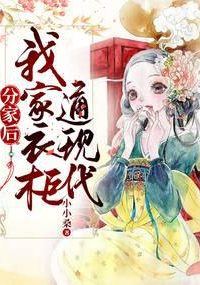
After Splitting from the Family, The Wardrobe Became a Portal to Modern Times
+Add to Custom List
Sort
Add review
... Read More
Let me just say—these eight chapters hit different. The pacing is relentless in the best way. You've got the Grandma Liu scene (warm, expository but not boring), the Aunt Wang confrontation (tension), the discovery of the shop deed (emotional payoff), the phone exploration (worldbuilding through curiosity), the cart ride with Xingxing (character development), and the tea stall cliffhanger (mystery). That's a lot of narrative ground to cover and the author never lets you breathe for too long or drag any scene past its expiration date. The transition from the emotional peak of finding the parents' hidden box straight into cooking hotpot and then immediately into the next morning's plan is smart. It doesn't linger in grief—it lets the siblings process briefly, then moves them forward. That's how real people work, and it keeps the story from becoming melodramatic. The Xingxing subplot is woven in perfectly. She doesn't appear out of nowhere—she's introduced on the cart, and her marriage situation unfolds naturally through conversation rather than exposition dumps. By the time they reach town and head to the tea stall, we already understand the full emotional weight of what she's facing. And that ending. The tea stall woman's reaction to Xiaoman's question about the Fang family—stiffened smile, glancing around, eyes sweeping over them like she's assessing a threat—that's a masterclass in cliffhanger construction. It raises three immediate questions: Does the woman know something? Is the Fang family connected to something bigger? And why would a wealthy grain shop owner need a rural bride? I opened the next chapter before I even finished this one. No regrets.
... Read More
The dialogue in this passage is remarkably natural, with each character having a distinct voice. Lin Xiaoman's speech is confident but not arrogant—she's businesslike with customers (“Uncle, what can we do for you?”) but warm with neighbors (“I hope you uncles and aunties will come and try it”). Her line “Uncle Jiao, just wait. I promise you'll never forget the taste!” has a playful confidence that feels earned, not boastful. The neighbors' dialogue is where the humor lives. The man who asks “What is ‘spicy'?” is perfectly naive. The skeptical woman's challenge—“Little girl, how old are you? Even if you started learning to cook in the cradle, could you really outdo a professional chef?”—is delivered with such arch skepticism that it's almost affectionate. These aren't mean-spirited characters; they're curious, doubtful, but ultimately willing to be won over. Shopkeeper Feng's dialogue reveals his businessman mindset. “If we can establish a long-term partnership, there's a proper way to go about it. If not, there are other arrangements.” He's negotiating, but he's also reading Lin Xiaoman. When she asks about pricing before he finishes explaining his three options, his “hint of disappointment” is shown through narrative, not dialogue—a smart choice that lets his words speak for themselves. The customers' reactions are pure comic gold: “It burns! This stuff stings the mouth!” followed immediately by “Meat is still better than vegetables!” The dialogue captures the universal experience of discovering something new and being simultaneously tortured and delighted by it.
... Read More
The stakes in this passage are deceptively simple—they need three taels of silver for iron pots—but the author makes us feel the pressure every step of the way. After the first day of clam oil sales, they're “only two hundred-odd jars away” from the goal. That proximity creates tension: it's close enough to touch, but the path there is uncertain. The panic when the wholesale stalls are sold out is a genuine conflict moment. What if the business dries up? What if they can't earn the money in time? Lin Xiaoman's quick thinking—ordering larger jars online—is a turning point, but the reader still wonders: will it be enough? The author doesn't let us relax. The financial stakes are compounded by the ongoing family conflict with Old Lady Lin. She's not just a nuisance; she's a threat to their stability. The fact that the siblings have to leave the county town before the city gates close adds a literal time pressure—they're racing against the clock every day. But the greatest conflict is internal: Lin Xiaoman's decision to pivot from clam oil to hotpot. It's a risk. She's investing time, money, and energy into a completely new venture. Will the neighbors believe in her? Will the food be good enough? Will people pay thirty to fifty wen for a meal they've never experienced? The skepticism of the crowd (“Don't be too confident!”) makes the eventual success—everyone eating, paying, asking for more—feel earned. The cold-faced young man ordering two chicken pots is the chapter's quiet climax. He doesn't react dramatically; he just acts. And in a world where everyone else is sneezing and fanning their mouths, his composure suggests he's either used to spice or too proud to show emotion. Either way, the stakes just got higher—because now someone important is eating at their shop, and the story is about to change.
... Read More
The supermarket scenes are genuinely fascinating and I keep coming back to them. This isn't just a convenience store — it's a window into a completely different civilization. Let me paint the picture: Lin Xiaoman and Lin Erhu are browsing aisles, trying to figure out what everything is. They buy instant noodles, eggs, steamed buns, chili peppers. The text describes them cooking two packs of spicy beef noodles with two eggs each, and the reaction is so vivid — "immediately choked by the spiciness and coughed for a while. But the intense, spicy flavor exploded in their mouths." I could literally taste those noodles. The way they alternate between exhaling to cool down and swiftly finishing the entire bowl? That's not writing, that's memory. Then the shrimp-flavored ones: "The first bite was so fresh it felt like their eyebrows might float away." My god, that's such a specific, weird, wonderful description. But the worldbuilding goes deeper than food. The text mentions Grandma Liu's "freezer" — which is actually a large cabinet from the supermarket used to store meat. "They were amazed that ordinary people here could afford such things. Back in their world, even wealthy families had to store ice from the previous winter just to have a little during the summer." That single comparison does SO much heavy lifting. It tells us about the technological gap, the economic disparity, the different level of development — all without a single info-dump paragraph. The hand-pulled noodle shop scene is also great worldbuilding. "Who would have thought that the bones they looked down on back home could be made so delicious?" This tiny observation reveals everything about their home world's food culture versus this world's. In their world, bones are cheap and unwanted. Here, they're a delicacy. The economic and cultural inversion is subtle but powerful. And the spiky fruit forests — over four hundred sacks, each weighing over a hundred jin, distributed among three hundred villagers. The scale of this resource is almost mythical. A mountain full of edible fruit that can sustain people for months. It gives the setting this almost fairy-tale quality while remaining grounded in survival reality.
... Read More
There's a lot happening beneath the surface of this passage, and I think the author is building a quiet but powerful commentary on value, sacrifice, and what it means to inherit — both materially and emotionally. Let's start with the most obvious symbol: the clam oil. It's a product from the modern world that solves a problem in the ancient one. But it's not just a plot device — it represents the siblings' unique position. They're between two worlds, and that in-betweenness is their advantage. The Clam Oil works because it's simple, effective, and affordable. It's not fancy glass cups (which Lin Xiaoman admires but wisely doesn't buy). It's not luxury goods. It's something that actually helps people. That's a thematic statement about what truly has value. Then there's the glass cups — the "colored glaze" that's worth more than gold in their world. Lin Xiaoman gets them for free, but she also recognizes they're too valuable to sell openly. They become a private treasure, a secret wealth that exists outside the economy. This is such a rich symbol for the siblings' entire situation: they have access to resources the people around them can't imagine, but using them recklessly would be dangerous. And the dowry. When Lin Xiaoman and Lin Erhu learn that their mother pawned part of her dowry to buy the shop — meaning some of it survived — it's a small detail that carries enormous emotional weight. The dowry represents their mother's autonomy, her family's investment in her future, and ultimately her sacrifice for her children. The fact that not all of it was taken by the grandparents is described almost reverently: "That was wonderful!" It's not about money. It's about the mother's love persisting even after death, reaching across time to provide for her children. The shop itself is another symbol — abandoned, locked, in the worst location, yet still standing. It's a metaphor for their parents' dream: neglected but not destroyed, waiting to be reclaimed. And the siblings' determination to restore it isn't just business; it's an act of love and defiance against a world that wants them to fail.
... Read More
I need to take a moment for Fourth Grandma. This woman is the heart of these chapters and I am not okay. Lin Xiaoman and Erhu have literally zero copper coins after the family division. They can't pay for labor. So when they go to Fourth Grandma — who lost her son and her husband's leg to the earthquake, who's barely surviving on wild vegetable porridge — Xiaoman doesn't just ask for help. She insists on paying. And when Fourth Grandma refuses the payment, Xiaoman doesn't push it into an awkward thing. She just quietly decides to give her winter clothes and quilts instead. The text says: "Winter would soon arrive. Hedong Village was in the bitter cold of the north... Every winter, people froze to death if they weren't careful." This isn't just worldbuilding, this is genuine survival stakes. And Xiaoman remembers the quilts she saw at the supermarket and thinks — I need to get some for Fourth Grandma too. That's it. That's the moment that got me. A girl who just transmigrated into this world, who barely knows how anything works, immediately thinking about whether an elderly woman she barely knows will freeze to death and making plans to fix it. And Fourth Grandma's reaction? She breaks into a smile. "What's this about paying me? Your Fourth Grandma and Uncle Er Lai can't do much else." She's so used to being a burden that someone treating her with dignity actually moves her. The salt trade itself is also deeply touching on a practical level. One jar of salt for one basket of mushrooms — Xiaoman knows she's losing money on the trade but she does it anyway because she needs Fourth Grandma involved, because she needs the village to stop bothering them. It's strategic kindness, and I love that about her. I also can't ignore the sibling bond. Lin Erhu swaying his head proudly after Xiaoman agrees to let him pick the daily food, the way they work together at the market lifting those heavy baskets... these two are each other's whole world and it's so sweet.
... Read More
The relationship between Lin Xiaoman and Lin Erhu is the emotional backbone of this passage, and it's rendered with such natural warmth. They're a team—not just business partners but actual siblings who complement each other. Lin Xiaoman is the strategist, the one pulling out her phone to research, making bold decisions about inventory and new ventures. Lin Erhu is the steady hands, the one pushing the cart, washing vegetables, bringing the clam oil to Shopkeeper Feng. Neither one overshadows the other; they're genuinely balanced. Old Lady Lin is a delightfully petty antagonist. The scene where the siblings deliberately ignore her on the road—just turning their heads and pushing past—is pure cinematic gold. And then Uncle Driver “accidentally” bolting the horse forward, sending her nearly flying off the cart? That's not just comedy; it's the narrative giving the underdogs a moment of justice. Lin Xiaoman and Lin Erhu exchanging smiles afterward tells us everything about their bond—they share private jokes, they're in on the same wavelength. Shopkeeper Feng is an interesting character study. He's clearly a businessman who wants the formula, but he's also pragmatic enough to accept a supply deal when the outright purchase falls through. His disappointment is visible but controlled. Lin Xiaoman's reading of him—“she was testing his sincerity”—shows her emotional intelligence. Uncle Jiao, the steamed bun shop owner, is a wonderful minor character. His backstory as a former trading vessel worker who's seen “barbarian peppers” abroad adds texture to the world and gives Lin Xiaoman a genuine connection in the town. The skeptical neighbor who challenges her cooking ability (“Even if you started learning to cook in the cradle”) is classic foil material—someone to prove wrong through action rather than words.
... Read More
I've been thinking about what these chapters are really about beneath the surface, and I keep coming back to salt. Salt is the central symbol here and it operates on at least three levels. First, it's literal survival — without salt, people weak out, can't work, can't survive the winter. Fourth Grandma's family has been surviving on wild vegetable porridge with no salt, and they have "no energy left." The text tells us a jar of this refined salt would cost dozens of wen in town. It's precious. Second, salt is currency and power. Lin Xiaoman controls the salt supply and by trading it for mushrooms, she's building an entire economic network. She's not just bartering — she's creating dependency, community, structure. The salt trade replaces the chaos of Yaojia Village's free-for-all harvesting with Hedong Village's organized system. But the deepest level is what salt represents as a symbol of trust and relationship. Xiaoman doesn't hoard the salt. She doesn't sell it at market price for maximum profit. She trades it generously with Fourth Grandma — "I'll make sure the jars are filled generously." She gives salt to the whole village through the trade system. Salt becomes a symbol of her philosophy: share what you have, build community, and everyone survives together. The spiky fruits work as a parallel symbol. In Hedong Village, they're organized and shared — one sack per person, extras stored in the ancestral hall for emergencies. In Yaojia Village, they're fought over with knives. The same resource, two different outcomes, determined entirely by leadership and community structure. And then there's the ginseng. Grandma Liu mentions that the ginseng root they gave away was worth ten thousand yuan. A root they didn't even know the value of, given freely to someone who needed it. This mirrors the salt trade perfectly — the siblings operate on generosity, not exploitation. They don't know the full value of what they have, but they share it anyway. The old lady's murder of the second aunt is the dark counterpoint to all of this. Where Xiaoman builds community through sharing, the old lady destroys it through fear and violence. The ancestral hall — supposed to be a place of family unity — is also where the grain is stored and where the old lady's power is exercised. Family institution as both sustenance and weapon. I keep thinking about that final image: the old lady sitting alone, feeling watched, turning to see her daughter-in-law dutifully busy. "Was she imagining things? Or was there an unseen pair of eyes fixed on her?" The unseen eyes could be the second aunt's spirit. Or it could be Yao's quiet, calculating gaze. Or it could be the reader's — watching, waiting, knowing what she's done.

Leave a comment

You must be logged in to leave comments. or