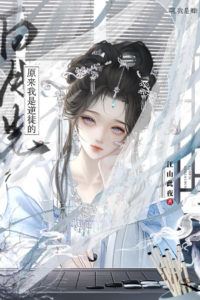
Summary

... Read More

Song Wenzhou is a composed and professional architect who recently ended a six-year romantic relationship with his partner, Mu Chi. After cohabiting for four years, Song Wenzhou has moved into a new apartment, yet he struggles to adapt to waking up alone. His routine is immediately disrupted when Mu Chi appears at his workplace parking lot, looking visibly exhausted and disheveled. Mu Chi attempts to rekindle their connection by returning a set of keys Song Wenzhou had left behind, but notably keeps a basketball-shaped keychain that Song Wenzhou had gifted him years ago. Despite the awkward tension and Song Wenzhou’s cold demeanor, Mu Chi persists, bringing him favorite fish fillet porridge and insisting on caring for him, revealing his deep reluctance to let go of the relationship.

The narrative shifts to their past, beginning in their second year of high school when Song Wenzhou transferred to a new school due to his parents' relocation. He is seated next to Mu Chi, a loud, energetic, and socially dominant student known for changing deskmates frequently. Contrary to the bets placed by their classmates that their pairing would last only days, Mu Chi declares his intention to keep Song Wenzhou as his deskmate for two years. Mu Chi becomes intensely attentive, interpreting Song Wenzhou’s quiet nature as loneliness and going to great lengths to include him, such as making a spare key for the dormitory and accompanying him everywhere. Their bond deepens through shared experiences, including a spicy hot pot incident where Mu Chi carries a sick Song Wenzhou to the hospital in the middle of the night, solidifying a connection that evolves into romance.

Ten years later, the power dynamic in their relationship has shifted. Mu Chi is now a successful and wealthy businessman who openly flaunts the basketball keychain as a symbol of their love, boasting to colleagues that it represents the beginning of their partnership. However, the relationship has deteriorated, leading to the recent breakup. Song Wenzhou attempts to maintain emotional distance, refusing to accept gifts or engage in familiar banter, yet he finds himself haunted by memories of their intimacy and Mu Chi’s devoted care. The core conflict centers on Mu Chi’s inability to accept the separation; he continues to invade Song Wenzhou’s personal space, renting the parking spot next to him and monitoring his well-being, while Song Wenzhou tries to rebuild an independent life without him.

Key objects serve as emotional anchors throughout the story. The basketball keychain, originally a simple ten-yuan gift from Song Wenzhou, becomes a prized possession for Mu Chi, who replaces the charm with silver to preserve it. Conversely, Song Wenzhou keeps a small black box containing a single button pried from Mu Chi’s shirt during their teenage years, a relic he has refused to discard for a decade. These items highlight the disparity in how they process the breakup: Mu Chi clings to symbols of their union, while Song Wenzhou silently preserves fragments of their history even as he tries to move on. The story explores the lingering attachment between two men who share a decade of intertwined lives, questioning whether Mu Chi’s persistent pursuit can bridge the gap that led to their separation or if Song Wenzhou’s resolve to remain independent will ultimately prevail.

As the story progresses, Song Wenzhou faces the challenge of balancing his professional responsibilities with the emotional intrusion of his ex-partner. His colleagues notice a shift in his mood, indicating that the breakup has affected him more than he admits. Meanwhile, Mu Chi’s behavior oscillates between desperate affection and playful teasing, refusing to acknowledge the finality of the split. The narrative suggests that their history, rooted in high school innocence and forged through years of mutual support, creates a complex web of dependency that neither is ready to fully untangle. The central tension remains unresolved, leaving the future of their relationship hanging in the balance as both men navigate the aftermath of a love that has transformed from youthful passion into a complicated, enduring bond.

Latest Release
DateGroupRelease
2026-08-11shanghai fantasy c39
2026-08-11shanghai fantasy c38
2026-08-11shanghai fantasy c37
2026-08-11shanghai fantasy c36
2026-08-11shanghai fantasy c35
2026-08-11shanghai fantasy c34
2026-08-11shanghai fantasy c33
2026-08-11shanghai fantasy c32
2026-08-11shanghai fantasy c31
2026-08-11shanghai fantasy c30
2026-08-11shanghai fantasy c29
2026-08-11shanghai fantasy c28

Community Reviews

Rating(3.8 / 5.0, 16votes)
5 stars
6(38%)
4 stars
3(19%)
3 stars
5(31%)
2 stars
2(13%)
1 stars
0(0%)

Popular reviews

... Read More
Okay so let me just say—the restaurant scene is absolutely peak storytelling. You have Song Wenzhou picking up Xu Chu after his dramatic airport entrance (the rainbow suitcase, the sunglasses, the whole vibe), then they go to this restaurant where Mu Chi just HAPPENS to be there. Xu Chu is totally right to be suspicious. This is not the first time Mu Chi has appeared to interrupt their time together, and the text literally says so. The manager even recognizes Song Wenzhou as a regular, which adds this layer of history and permanence to his relationship with Mu Chi that makes the whole situation feel even more suffocating. But the real plot masterstroke is the dish swap. Mu Chi literally takes away all the spicy food Song Wenzhou ordered and replaces it with things he 'should' eat instead. And Song Wenzhou's reaction? 'A hint of pleasure subtly rising in his heart.' The dishes Mu Chi brought back were all his favorites. This isn't just a love triangle—it's a power struggle played out through food, and it's brilliant. The author doesn't need dramatic confrontations or shouting matches. A man quietly removing chili peppers from someone's plate says more about control, care, and history than any dialogue ever could.
... Read More
The pacing in these chapters is genuinely impressive. It starts light and breezy with the airport pickup—Xu Chu's dramatic entrance, the playful banter about his hair, the awkward silence when he mentions his breakup quickie. Song Wenzhou's internal reaction ('He shouldn't have asked') is perfectly timed comedic relief. Then the scene shifts to the restaurant, and the tone immediately thickens. Mu Chi's appearance feels almost cinematic—the manager guides him directly to the table, his 'eyes lit up,' his 'swift step.' The author controls the tension like a director controlling a camera, zooming in on the right moments. But then—just when the restaurant confrontation is reaching its peak—the author drops a flashback. High school. Basketball court. A younger, softer Song Wenzhou. This structural choice does double duty: it provides emotional context for the present-day tension while also giving the reader a breath, a moment to process what's happening before the scene returns to the restaurant and the dish swap. The pacing never drags because the author keeps switching between external action and internal reflection. Every scene transition feels intentional, and the chapter ends on a note that's both tender and slightly unsettling—Song Wenzhou remembering Mu Chi carrying him, his chest pressed against Mu Chi's back.
... Read More
I cannot stop thinking about the flashback scene. The one where young Song Wenzhou goes back to the dorm after being sick, can't get in, and finds Mu Chi playing basketball. The text describes him in such a specific, almost reverent way—'a white sleeveless T-shirt that revealed his well-defined biceps,' 'his slightly curled hair was tousled by the wind,' 'a thin layer of sweat on his skin, giving him a very healthy complexion.' Song Wenzhou watches him and the narration slips into something almost sensual: 'Song Wenzhou couldn't help but recall that night when he was lying on Mu Chi's back, clearly feeling the tension and relaxation of Mu Chi's muscles as he moved.' This is where the emotional architecture of the whole story becomes visible. The high school memory isn't just backstory—it's the foundation. Mu Chi has been taking care of Song Wenzhou since before any of this was complicated. He carried Song Wenzhou to the hospital at night, he let him wear his jacket, he borrowed keys from the dorm aunt repeatedly. And now, years later, he's still doing the same thing—removing spicy food from Song Wenzhou's plate because he knows his stomach can't handle it. The care is consistent. The devotion is relentless. And Song Wenzhou, who feels a 'hint of pleasure' when Mu Chi does this, is trapped in the most温柔 kind of cage.
... Read More
The stakes in this story aren't about life or death—they're about something far more intimate and terrifying. Song Wenzhou is caught between two men who represent fundamentally different kinds of love, and the conflict isn't just external (Xu Chu vs. Mu Chi) but deeply internal. Every scene raises the question: what does Song Wenzhou actually want, and is he willing to lose everything to get it? With Xu Chu, the stakes feel more precarious. Xu Chu just broke up with someone, he's performing confidence he doesn't feel, he's claiming Song Wenzhou as 'borrowed' while clearly being terrified of losing him. The text notes that Song Wenzhou 'pretended not to notice the tension between the two'—he knows exactly what's happening, he just chooses not to address it. That's a choice. With Mu Chi, the stakes are different. Mu Chi has Song Wenzhou's loyalty, his gratitude, his secret pleasure. But the cost is autonomy. The young man who followed Mu Chi to the restaurant is silent, nervous, compliant. Is that the future Song Wenzhou is heading toward? The text doesn't tell us, and that's what makes the conflict so gripping. We're not waiting to find out who wins—we're waiting to find out which version of love Song Wenzhou can actually survive.
... Read More
I need to talk about Xu Chu because this character is layered in ways the text doesn't even fully spell out. He shows up with a 'breakup quickie' story, acting all nonchalant, but Song Wenzhou literally thinks to himself: 'If he had said that out loud, it would have been the end of him.' Xu Chu is performing. The sunglasses, the rainbow luggage, the dramatic pouting—it's all armor. And when Mu Chi shows up, Xu Chu's immediate reaction is to claim Song Wenzhou: 'I'm just borrowing your wife for one day.' That word choice is so specific. He's asserting ownership while simultaneously revealing how insecure he actually is about his position. Then there's Mu Chi, who operates on a completely different frequency. He doesn't need to make grand declarations or wear his emotions on his sleeve. He just... appears. He just... takes the spicy food away. The text describes him as 'actually a competent boyfriend' who 'remembered Song Wenzhou's likes and dislikes, but wouldn't ignore his health.' That's the Mu Chi paradox—his care is genuine, but it's also a form of control that Song Wenzhou clearly enjoys. And that's the most interesting part of their dynamic. Song Wenzhou isn't a passive victim here. He feels pleasure when Mu Chi removes the chili peppers. He's complicit in his own captivity.
... Read More
This is great, a bit late on update but still great... Love the story line???_ makes me wonder how the webtoon adaptation is going to be. I really want to support u. Hope this words of encouragement is enough, keep up the good work. Just know u have a fan in me                                                        XOXO,                                                      Sire_gram.?
See all reviews

Characters

See all characters

Custom lists

See all custom Lists