After Severing Ties, All My Summoned Beasts Are Dark Creatures - Reviews

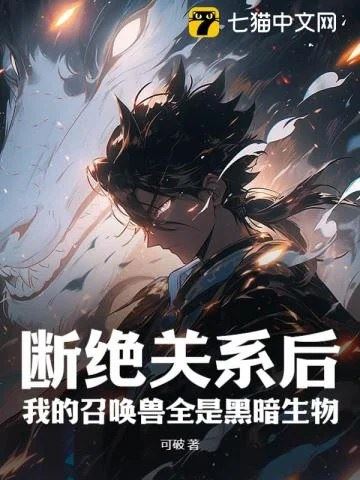
After Severing Ties, All My Summoned Beasts Are Dark Creatures
+Add to Custom List
Sort
Add review
... Read More
Okay so the fight scene in Chapter 47-48 is honestly one of the most tightly choreographed boss battles I've read in a while. The author gives us this clear breakdown of the Elite Guard's Steel Guard skill, then immediately undercuts it by having the Blood Clan Grand Duke shred through it in two shots. That's good combat design — you establish a powerful ability, show why it matters, then demonstrate that some opponents just bypass it entirely. It keeps the power system feeling alive rather than just a list of numbers. But what really nails the pacing is how the narrative threads converge. You've got Gu Chen's backstory about the Gu Family simmering in the background while he's literally leveling up mid-battle. The bloodline drop system works as both reward and tension engine. When he rolls a Descendant bloodline instead of King's Blood, it's not just a random disappointment — it creates a branching decision point. The author chooses to use it on the Nightmare Sovereign, which triggers Sweet Dreams Come True, and THAT ability then becomes the key to getting the entire party through the Gray Mist section. Every plot beat connects. The Level 9 Elite Guard at the end is a fantastic cliffhanger. You've got a monster that can nearly bisect the Blood Clan Grand Duke in one hit, and then the chapter cuts with the Duke roaring after drinking a Healing Potion. The stakes shift from 'can they win?' to 'how badly are they going to get wrecked?' Perfect drumbeat.
... Read More
The dialogue in this section is surprisingly sharp for a litRPG-style read, and Gu Chen's voice is the standout. His lines are minimal but each one carries weight because of HOW he says them. The best example has to be: "I am killing them." — said while pointing at his beast, after being directly asked where he is in the fight. Deadpan. Zero self-awareness. Absolute confidence. It's the kind of line that makes you snort-laugh. And then his follow-up when Su Ran presses him: "Isn't that how all Summoners do it?" Like, bro, you just spent the last five minutes sitting on a flowerbed watching your ghost vampire do ALL the work, and you're asking HER to confirm your laziness is a standard mechanic? The casual tone makes it infinitely funnier. Wu Ziyi's voice is also distinct — he's got that self-important, strategy-guide-following energy. "It's best not to engage it" comes out sounding like he's giving orders rather than expressing an opinion. And when he later says "Be confident—drop the 'probably'" — that's such a Wu Ziyi thing to say. He needs everyone to validate his perspective even when he was wrong. Lin Qingqing's dialogue is more subdued but effective. Her initial regret about joining the team, then the slight smile when Lin Yuan credits Gu Chen — it's all shown through action tags rather than spoken words, which actually makes it hit harder.
... Read More
Okay so I have to talk about the Black Robe Deacon fight because honestly the setup was BRILLIANT. The author basically tricks you into thinking this is just another boss encounter, right? You read the stats — Level 13 Elite, 35,000 HP, four hundred percent attribute debuff from the Gray Mist Curse — and you think, yeah, this is going to be a grinding battle. Then BAM, over fifty Fallen Guards spawn out of nowhere. Lin Yuan literally says it out loud: it's not a boss, it's a blood reservoir. Two hundred thousand health points across those guards alone. That line hit me so hard. But what I loved most was the resolution. Gu Chen doesn't brute-force it — he gets clever. Revives the corpses, turns them into Bloodline Guards, and then the real flex: the self-destruct tactic. Five, then eight Bloodline Guards charging the Deacon like kamikazes. Boom boom boom. Two thousand damage per explosion, straight through whatever skills the boss had. It was almost satisfyingly brutal. And the loot? A Summoner Skill Book dropping right when he needs one? Classic author move — give the protagonist exactly the tool for the next phase. Full Link skill sounds game-changing. Sharing buffs and splitting debuffs with summoned units basically makes his army infinitely more durable. Already imagining how this changes future fights. The cliffhanger at the end with those iron doors opening to the Sanctuary left me wanting more though. We just cleared one boss and now there's ANOTHER stage ahead? The Altar is apparently the main course. Something tells me this dungeon is way deeper than it first appeared.
... Read More
Okay so can we just talk about how absolutely perfect Gu Chen's character arc is here? Like, remember when everyone was sniffing their nose at him for being a Commoner Summoner, right? And now look at him - he just walks out of that plaza ignoring every single one of them. No fake smiles, no pretending he forgot who they are. He literally tells Lin Yuan "if I'm not as good as them, they'll step on me. If I surpass them, they'll be jealous of me." That's not petty, that's just reading the room correctly! And the Mage guy! Oh my god, I love this scene. This guy rushes up all proud like "I transferred to Mage, let's team up next time!" And Gu Chen just looks at him like he's watching someone try to pay with monopoly money. The disdain! The absolute disregard! "Not interested." Brush him off like a bug. Then the Mage gets all worked up and starts threatening him about never clearing higher-level Dungeons. Bro, you were literally useless five minutes ago and now you're playing power fantasy? Classic. But what really got me was how he explains it to Lin Yuan afterward - those people who came up fawning with their "hundred thousand yuan cards" and "lunch is on me"? He sees right through them. "In truth, every single one of them can't stand to see me doing well." He's not angry, he's just... done. He says once they lead the team to SSS-grade, these people will realize what they missed. Especially that Mage guy who thinks inviting him was an honor. The fact that Gu Chen isn't even mad about the past slights - he's just planning his future wins while watching the clowns perform. Lin Yuan's reaction too, defending him immediately. That's the kind of friendship that actually matters.
... Read More
Okay so can we just talk about Gu Chen for a sec? This guy is hilarious in the worst way. While literally everyone else is scrambling, sweating, climbing onto statues like panicked raccoons, Gu Chen just... sits on a flowerbed edge. Let his beast do all the work while he watches the EXP climb. "I am killing them" when Su Ran asks where HE is in the fight. Bro, you're sitting on a planter like you're at a goddamn zoo feeding tour. And the rest of the team? Lin Yuan's whole vibe is just... overwhelmed gratitude mixed with shock. He genuinely thought they were all going to die when that level 4 guard appeared. Wu Ziyi, on the other hand, immediately backpedals into pure coward mode — calling them "probably" not worth teaming up with, then trying to take credit when they survive. Classic. But the juiciest dynamic is between Lin Qingqing and Su Ran. They're both Actors, right? So they naturally step back from combat, but there's this whole unspoken tension where Lin Qingqing is like "I shouldn't have joined your team" and then immediately softens when Lin Yuan thanks Gu Chen. Her mouth curving up slightly — small detail but it tells you everything. And Su Ran? She's genuinely confused by Gu Chen's playstyle. "So you're just directing your Summoned Beast without joining the fight yourself?" as if that's a normal question. It is for a Summoner apparently, but coming from her it reads like she's trying to figure out if he's a coward or a genius.
... Read More
I need to talk about the money first, because it's weirdly poignant. Lin Qingqing, Su Ran, and Wu Ziyi scraped together three hundred thousand total—they borrowed two hundred thousand, sold items for another hundred—to give to Gu Chen. Why? Because they believe in him. That's not just plot convenience; that's real emotional investment. They're not his blood family, but they've chosen him. And when Gu Chen uses that money to bet half a million against Li Wenhui, it's not just a wager—it's a statement. He's putting their trust on the line, and he's willing to lose it all. That's heavy. Then there's Lin Yuan, who's all laughs but also fiercely protective. 'Who dares mess with the two of us?' feels like a promise, not a joke. The fear before entering the dungeon is palpable—'my whole body feels weak'—but it's shared fear, not panic. They're scared together. And Gu Chen? He's calm because he has no choice. He summons that Blood Clan Grand Duke, and the description hits differently: 'Evil Aura poured in all directions, sending chills down everyone's spine.' It's not just a summon; it's a release of pressure he's been holding. The chapter ends on that note of looming danger, but the emotional core is the quiet trust between these people. They're betting everything on a guy who might get them killed. And yet, they follow him into the Gray Mist anyway. That's loyalty. That's found family. I don't think I've read a novel where the party's bond feels this earned in just a few chapters.
... Read More
I need to talk about Gu Chen's father because this is the emotional core of the entire chapter and I'm still processing it. Here's this man — Gu Qingfeng — who's literally fought the Abyss invasion for eighteen years. He's the War King, the Holy Sword Berserker, everyone's hero. But when he looks at his own eldest son? All he sees is disappointment. And the worst part is I think he genuinely believes he's doing right. Not evil, just... tragically misguided. He spent half his life on the battlefield protecting the Empire and came back to find his son was a 'wretch' — not knowing that EVERYTHING that happened was because he abandoned him. The line that got me was when Gu Chen says: 'In eighteen years, you never showed me any of the kindness owed by a father who raises his child.' That's not anger — that's grief. He's not yelling, he's stating facts like a autopsy report. The coldness in his voice when he talks about severing ties isn't defiance, it's exhaustion. Eighteen years of being the forgotten son and now suddenly he's the problem? And then the Family Tree reveal hits like a truck. His father forgot to write his name down. FORGOT. Not malicious — just forgotten. That's somehow worse.
... Read More
Let me be honest — I went into this expecting the usual 'evil stepmother' trope but Qin Yun actually delivered something surprisingly layered. When she drops to her knees and starts crying 'You are the eldest legitimate son, the Northern Territory's future needs you to inherit it,' it took me three seconds to realize what was happening. This woman is playing 4D chess while everyone else is playing checkers. She's been manipulating Gu Qingfeng for eighteen years — feeding him the narrative that hardship 'tempers the eldest legitimate son's disposition' while secretly ensuring Gu Chen grows up in poverty, surrounded by bullies, without proper education or etiquette. Every bad habit Gu Chen picked up in the countryside? That was Qin Yun's doing. She needed him to be the ungrateful hooligan so her own son could be the golden heir. And Gu Chen seeing through it all in real time — when he says 'Who do you think you are?' about kneeling — that's the moment I knew he wasn't just some power-fantasy MC. He's actually observant. The way he dissects Qin Yun's manipulation while she's performing it? That's sharp writing. Also nobody talked about how tragic Gu Qingfeng is here — he genuinely believes he protected his son by sending him away. He thinks he's the hero of his own story.
... Read More
There's a visual parallel I couldn't stop thinking about after reading this section. The Red-robed Priest wears dark red robes that become vivid, blood-like red when it activates Life Sacrifice. Meanwhile, the Gray Mist Curse surrounds everything in a pallid, death-colored fog. Red and gray—blood and ash, life and its absence. The boss literally sacrifices itself to create light that fuels its rebirth, while the mist systematically drains the life of anyone who isn't Blood Clan. And then there's the Nightmare Sovereign, a creature of black mist, the mirror opposite of the gray mist. Where the gray mist weakens and corrupts, the black mist entangles and destroys. They're not the same thing—the Nightmare Sovereign's black mist is will and strategy and controlled violence, while the gray mist is passive erosion and environmental hostility. But they share a visual language, and that's not accidental. The Whisper of the Dead mechanic is the most thematically loaded element here. Every guard the Nightmare Sovereign kills adds a stack. The dead themselves become fuel. The skill literally feeds on death to grow stronger. This is a character who accumulates power through the destruction of enemies, and the text makes sure we notice: "By now, it had just reached 20 stacks — capped out." Capped out. There's a limit to how much death this particular mechanism can absorb, which raises an uncomfortable question about what happens after the cap. Gu Chen's decision to save the Dark Bloodline Talent for a future third contract is also telling. He's not spending his resources immediately. He's hoarding potential, building toward something bigger. The theme here seems to be accumulation—of power, of kills, of options—and the danger that comes with it. The boss itself embodies this: Life Sacrifice trades current health for future power, a literal Faustian bargain written into its skill set.
... Read More
This chapter is doing heavier thematic lifting than it initially appears to. The King's Bloodline decision isn't just resource management—it's a statement about how power should be deployed. Gu Chen choosing to hoard it rather than spend it immediately symbolizes patience as a form of strategic elitism. Meanwhile, Dracula becoming 'the undisputed ceiling of Combat Power' in the current dungeon is almost too on-the-nose thematically. We've got a creature literally named after a vampire bloodline archetype achieving dominance through accumulated kills and strategic enhancement. There's also the damage transfer mechanic functioning as a metaphor for burden-sharing and accountability. The boss can't take direct damage because it offloads consequences onto subordinate guards—until those guards are systematically eliminated. It's a perfect symbolic representation of how oppressive systems maintain themselves through displaced suffering, and how dismantling them requires removing the scaffolding piece by piece rather than attacking the center directly. The monetary negotiation subplot reinforces this too: Lin Qingqing borrowing money to secure a spot reflects how access to power structures requires capital investment, while Gu Chen's refusal to play with those who mocked him treats social capital as something earned rather than given. Even the 'faint, crisp crack' of the protective barrier shattering reads as symbolic rupture—the moment when accumulated pressure finds its release point. The chapter ends with a treasure chest reward and level-up notification, but the real thematic payoff is in how every mechanical detail mirrors larger systems of power, debt, and retribution.
... Read More
There's something really interesting happening with the symbolism of blood in this section, and I think it goes deeper than just 'cool vampire powers.' The Blood Clan Grand Duke operates on blood mechanics — healing through bloodline instinct, shooting with blood-red energy, carrying that formal attire stained dark red. Meanwhile, the Gray Mist represents everything that strips you down, that reduces your attributes, that makes the powerful weak and the weak unconscious. It's this great inversion where the dungeon's environmental force neutralizes physical prowess and forces adaptation instead. But here's what I find most compelling: Gu Chen himself is navigating between these two symbolic systems. His talent path leads to Dark Bloodlines — power drawn from something ancient, feral, tied to his heritage. Yet his approach to leadership and survival is almost clinical. He assesses loot values before emotions, calculates whether items are useful for him or for resale, plans the team's survival like a resource management puzzle. The Blood Clan Duke is all instinct and ferocity; Gu Chen is all calculation. And yet the Descendant bloodline he chose for the Nightmare Sovereign gives it a talent called Sweet Dreams Come True — comfort, rest, safety. There's a weird tenderness hiding inside this dark system. The Dreamscape itself is worth thinking about too. It's a space cut off from reality where the curse can't touch them, but also a space where connections are distorted — Su Ran running toward Lin Qingqing but getting farther away. Is the dreamscape true safety, or is it just a beautiful illusion masking the fact that they're still in mortal danger? The text says 'nothing that happened within the Dreamscape could affect the real world,' but that line always makes me wonder who's really dreaming here.

Leave a comment

You must be logged in to leave comments. or
