Summary

... Read More

Han Yun, a rising idol in the entertainment industry, faces total ruin after a failed public confession to fellow star Wei Chengxi. The rejection triggers an online firestorm, and Han Yun jumps from Wangxian Cliff, an act he claims was not suicide but a result of supernatural interference. Three months later, his career is destroyed, his agency has dropped him, and he is buried in debt. To survive, he marries Ming Hua, a mysterious man who possesses ancient powers and lives in a remote cat-themed inn. Han Yun had been saved by Ming Hua after the fall, and their marriage is a contractual arrangement mandated by Han Yun’s late grandfather to protect Han Yun from the misfortune caused by his spiritual sensitivity.

Desperate for income, Han Yun auditions for Walking Out of Science, a new paranormal variety show. The production team hopes to use his controversial reputation for ratings. During the audition, Han Yun demonstrates his ability to see spirits, correctly identifying items belonging to the living and a dog under porcelain bowls. He also saves a contestant, Jia Jia, from a falling light rig after detecting dark spiritual energy around her. His actions earn him a spot on the show, though he remains a target for ridicule from judge Huang Feng and rival contestant Master Hu.

As the show begins, the contestants are tasked with investigating a haunting at a film city. A wealthy investor, Ms. Lei, reports recurring nightmares of a ghostly woman in her home. The contestants split into teams. Han Yun’s team, consisting of fellow entertainers, follows clues that lead them to a sealed basement beneath the property. There, they discover walls covered in cinnabar talismans and a heavy iron door emitting black energy. Master Hu, attempting to prove his superiority, fails to locate the source of the haunting and is exposed as a fraud when Han Yun points out logical inconsistencies in his claims.

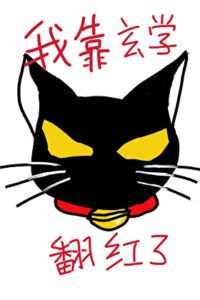
While exploring the basement, Han Yun encounters a female ghost who leads him to the sealed door. He also notices his cat, Xiao Hei, reacting strangely to the presence of a powerful entity. Unbeknownst to Han Yun, Xiao Hei is Ming Hua in disguise. Ming Hua has been observing Han Yun, seeking to extract the Eight Desolation Spirit Pearl hidden within Han Yun’s body, a divine artifact that could restore his full power. However, he cannot take it by force due to heavenly restrictions and must wait for Han Yun to offer it willingly.

The discovery of the basement causes the show to suspend filming. Huang Feng, angry about being replaced and humiliated, leaks photos of the basement to social media, accusing Han Yun of faking supernatural events to generate hype. The post goes viral, and Han Yun faces a new wave of online abuse. Despite the controversy, the production team decides to add live broadcasting and notaries to ensure transparency in future episodes. Han Yun returns to his life with Ming Hua, navigating the tension between his growing fame, his dangerous spiritual encounters, and his complicated relationship with his powerful husband.

Latest Release
DateGroupRelease
2026-08-11shanghai fantasy c1

Community Reviews

Rating(3.8 / 5.0, 6votes)
5 stars
2(33%)
4 stars
1(17%)
3 stars
3(50%)
2 stars
0(0%)
1 stars
0(0%)

Popular reviews

... Read More
This chapter is a masterclass in pacing, and I want to break down why it works so well. It opens with comedy—Feng Qing the perverted ghost trying to steal Han Yun's underwear. You're laughing. Then it pivots hard into tragedy when we learn why he's a ghost: disowned by his family, drowned himself after coming out. That tonal whiplash is intentional and effective. It grounds the supernatural in real human pain before we even get to the main plot. Then the chapter shifts to the competition, introduces Hua Qingxuan, and by the time they descend into the pit, the tension is already building. The crew fainting one by one, the red string snapping—each beat raises the stakes without feeling rushed. The author knows when to slow down (Han Yun talking to the workers, the quiet moment where Hua Qingxuan draws the talisman on his palm) and when to accelerate (the chaos below, people collapsing, filming stopping). But here's what I really appreciate: the chapter ends on a cliffhanger that's not just action-oriented but mystery-driven. The worker's father is being paid off, he won't talk, and we're left wondering what's really down there. The pacing never drags, never feels like it's padding to hit a word count. Every scene earns its place. I stayed up way too late reading this batch and I have nobody to blame but myself.
... Read More
"You're too weak." Four words. That's all Hua Qingxuan says to Han Yun when he catches him dizzy, and it completely defines this character. I am OBSESSED with how the author writes dialogue for him. He doesn't do warmth, he doesn't do pleasantries, and he absolutely does not explain himself. When he grabs Han Yun's hand, Han Yun panics about the camera filming it, and Hua Qingxuan's response is basically: I'm not disgusted by you, why are you the one acting weird? The dialogue between Han Yun and Hua Qingxuan is electric because they're speaking completely different languages. Han Yun is polite, apologetic, constantly aware of social consequences. Hua Qingxuan is blunt, authoritative, operates on a completely different frequency. Their exchange about the talisman is perfect: "What kind of talisman is this?" "It's my name. A mark. Any evil spirit who knows better won't dare approach." Han Yun internally: That's your surname, isn't it? But he doesn't say it. The gap between what they're thinking and what they're saying is where the humor lives. And then there's the Feng Qing scene, where Han Yun's patience and genuine compassion come through in dialogue that feels completely natural. "These days, even same-sex couples can marry. If you hadn't died, your parents might've come around eventually." That's not exposition—that's a character speaking from his values. Every character here has a distinct voice, and I can tell who's talking without seeing the name tag.
... Read More
I have to talk about the imagery in this chapter because some of it is genuinely cinematic. The foundation pit over ten meters deep, surrounded by layers of onlookers and workers, white mist curling up laced with faint red light—that's a visual I will not forget. The author describes it in a way that makes you feel the wrongness of it. It's not just spooky; it's beautiful and terrifying at the same time, like something out of a Chinese horror film. "White mist symbolized auspicious energy... But the red light was a sign of extreme malice. For both to appear together... Han Yun had never read about such a phenomenon in any book." That line gave me chills. The worldbuilding here is sophisticated because it's not just about ghosts and talismans—it's about feng shui, about reading land, about understanding that a place can have a soul and that soul can be corrupted. The Nuo Sect ritual with the copper coin and ancient Zangke chanting added another cultural texture I haven't seen in this genre before. And the construction site itself feels alive—workers whispering, cameras rolling, the lift descending into darkness. The author knows how to make a setting feel like a character. I kept imagining the lighting, the mist, the way the red glow would look reflected in Han Yun's eyes as he stared into that pit.
... Read More
Okay so this episode's plot is genuinely clever and I need to talk about it. The foundation at Deer Cry Mountain has white mist (auspicious) wrapped inside red light (malicious), and Hua Qingxuan immediately figures out that the land was originally good but someone artificially tainted it. That's not just a visual gimmick—it's a plot device that tells us someone with knowledge and resources is behind this. And then Han Yun connects it to the blood aura he saw on Fang Xueyu earlier. The pieces are starting to fit together like a puzzle, and the show hasn't even revealed the full picture yet. What really sold me was how the plot escalates. First you have the ghost subplot with Feng Qing—this sad, lonely spirit who was disowned by his family for being gay and literally drowned himself after coming out. That's not just filler; it establishes the show's willingness to tackle real emotional weight alongside the supernatural. Then you cut to the competition, the mysterious new contestant who turns out to be a prodigy, and suddenly the plot has multiple threads running at once. The workers being bought off, the father who's "doing fine" but won't talk, the red string snapping—every scene adds another layer. I love that the author doesn't just throw a monster at the protagonists and call it a day. The mystery has depth, and I'm already theorizing about what's actually down there.
... Read More
I need to talk about Feng Qing because this story keeps sneaking real human drama into what could easily be pure supernatural entertainment, and it's one of the reasons I keep coming back. Feng Qing is a ghost who died alone, disowned by his family for loving the wrong person, and he drowned himself in a river behind a hotel because he had nowhere else to go. Half a year later, he's still wandering, still too proud to beg his parents for a burial ritual, too lonely to let go. When Han Yun offers to find someone to perform rites for him, Feng Qing kowtows and calls him "Great Master Han Yun." The desperation in that moment hits hard. "A son who likes men, my parents couldn't wait to disown me. You think they'd bother to bury me?" This isn't just backstory for a minor ghost character. It's the story's way of asking: what makes a ghost? Is it death, or is it being refused a place in the world of the living? Feng Qing's tragedy mirrors the larger mystery at Deer Cry Mountain—something auspicious being corrupted from the outside, something pure being tainted by human malice. The red light wrapping around the white mist, the blood aura on Fang Xueyu, the workers being bought off—all of it points to the same theme: people will destroy what's beautiful if it doesn't serve them. And Han Yun, of all people, sees that. He doesn't destroy Feng Qing. He helps him. That's the moral center of this entire story, and it's woven into the dialogue so naturally you almost miss it until it hits you.
... Read More
The stakes in this chapter keep escalating and I am here for it. Let me count: crew members fainting, a red string snapping (which the text explicitly says signifies great misfortune), Rong Yin feeling unwell and having to suppress his energy, and whatever is down in that pit still completely unknown. The author is stacking threats on top of threats and I love it. But what really raises the stakes isn't just the supernatural danger—it's the human layer. The worker whose father was injured refuses Han Yun's help because he's been paid off. That's not just a plot obstacle; it's a statement about how money corrupts truth. The construction company knows something is wrong and they're covering it up. Fang Xueyu has blood aura on him. The foundation was artificially tainted. All of these threads are pulling toward a conflict that's bigger than any single ghost or ritual. And Han Yun is in the middle of it all. He's the weakest member of his team physically, Hua Qingxuan literally says so to his face. But he's also the one with spiritual sight, the one who notices things others miss. The tension between his vulnerability and his unique value is what makes every scene feel dangerous. When the cameraman collapses and filming stops, when Rong Yin's string snaps and he can barely stand—these aren't just action beats. They're reminders that the protagonists are not invincible. Whatever is down there in that pit, it's already hurting people, and we haven't even seen it yet. I'm genuinely worried for them. That's the mark of good conflict writing.
See all reviews

Characters

See all characters

Custom lists

See all custom Lists