Summary

... Read More

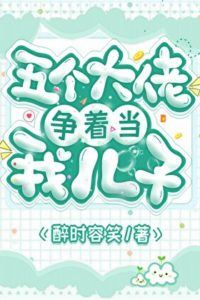
Jiang Sheng is a seven-year-old orphan who has survived for five years by scavenging for food and stealing scraps in a poverty-stricken town. Her life changes when she encounters Zheng Ruqian, a young master recently abandoned by his family after being expelled from a brothel. Drawing on her own experience of loss, Jiang Sheng shares her meager food with him and invites him to share her home, a dilapidated temple. Shortly after, they discover Xu Mo, a boy with broken legs lying wounded in the bushes. Jiang Sheng and Zheng Ruqian manage to transport him to a kind medical officer who treats him for free, despite the children having no money. The addition of a third mouth to feed strains their resources, but Xu Mo offers to copy books for income while the others support the household.

As the group grows, Jiang Sheng’s pragmatic nature shines through her desire to protect her new siblings. She takes on the role of the family provider, leading ventures into the mountains to pick mushrooms. Their luck turns when Fang Heng, a skilled fighter abandoned by his own family, joins them after defending Jiang Sheng from local bullies. The four children establish a routine: Xu Mo copies books, Fang Heng provides protection, Jiang Sheng manages their survival and earnings, and Zheng Ruqian assists wherever needed. Their cohesion is tested further when they find Wen Zhiyun, the terrified son of the medical officer, hiding in the clinic after his parents are arrested and executed by corrupt officials. Jiang Sheng takes him in, completing their family of five orphaned children.

With the medical officer gone, the children face a crisis when Xu Mo’s leg requires regular dressing changes that they can no longer afford. Wen Zhiyun, revealing his own medical training, steps up to treat his eldest brother. Simultaneously, Jiang Sheng identifies an economic opportunity in the mushroom trade. She persuades Zheng Ruqian to act as a buyer, purchasing dried mushrooms from villagers at market price, drying them further, and reselling them at a premium in the city. This business model generates their first significant profit. However, Jiang Sheng’s primary motivation remains her siblings' safety and well-being. Upon returning to the village, she discovers that Auntie Zhang, a neighbor who once showed her kindness, is being abused by her husband. Determined to stop the violence without directly harming him, she devises a trap.

The siblings work together to dig a concealed pit near the temple, lining it with rocks, sharp branches, and waste to incapacitate Zhou Zhiqiang. Jiang Sheng lures the drunkard into the trap, resulting in his severe injury and inability to continue his abuse. This incident solidifies the siblings' bond and establishes their ability to defend themselves against threats. As winter deepens, the family relies on Wen Zhiyun’s medical skills to treat villagers, earning modest fees that help sustain them. Despite their hardships, the group finds a sense of belonging and purpose. Jiang Sheng, who once slept hungry and alone, now has four brothers who depend on her. Her cunning and ruthlessness are balanced by a fierce loyalty to those she considers family. The narrative follows their struggle to navigate a harsh world where poverty and corruption are constant dangers, relying on their combined skills to survive and eventually thrive.

Latest Release
DateGroupRelease
2026-09-26akknovel c74
2026-09-26akknovel c73
2026-09-26akknovel c72
2026-09-26akknovel c71
2026-09-26akknovel c70
2026-09-26akknovel c69
2026-09-26akknovel c68
2026-09-26akknovel c67
2026-09-26akknovel c66
2026-09-26akknovel c65
2026-09-26akknovel c64
2026-09-26akknovel c63

Community Reviews

Rating(4.1 / 5.0, 40votes)
5 stars
13(33%)
4 stars
16(40%)
3 stars
11(28%)
2 stars
0(0%)
1 stars
0(0%)

Popular reviews

... Read More
The stakes in this chapter operate on three levels, and the author layers them so effectively that you feel all of them at once. On the surface, there's the medical emergency: Old Man Zhao is dying from dysentery. If Wen Zhiyun fails, someone dies. That's straightforward tension. But underneath that is the question of identity. These are children pretending to be doctors. Wen Zhiyun has read about pulse diagnosis in books. He has never touched a living patient. His hands are shaking. Jiang Sheng knows this—she holds his hand to steady him, and in that gesture she's admitting what she won't say aloud: we are not qualified for this, and if we fail, we fail together. The deepest layer is economic survival. The Zhao family has five wen. That's it. Wen Zhiyun's proper prescription would cost seven hundred. The gap between what the patient needs and what the family can pay is the real villain of this chapter. It's not dysentery. It's poverty. When Zhao Dazhu nearly kneels before Wen Zhiyun, that's the stakes laid bare. This isn't about a good diagnosis. This is about whether a grandfather lives or dies based on a price list. And then the folk remedy appears—not as a deus ex machina, but as the only possible resolution given the constraints. It saves the day, yes, but it also confirms the harsh reality: the proper solution was always out of reach. The children just got lucky that an ancient book happened to contain a cheap alternative. The five wen at the end is the final stake. It's not payment for a job well done. It's gratitude for not abandoning them. And Jiang Sheng returning three of those five wen? That's her saying: we see you. We know what five wen means to you. Take it back.
... Read More
One thing I genuinely appreciate about this text is how the dialogue actually sounds like SEVEN-YEAR-OLDS talking, not some author putting adult wisdom into child mouths. Jiang Sheng's lines are practical, direct, completely lacking in pretense. 'Of course, I'm going home.' 'Stop crying, I'll share my home with you.' No dramatic pauses, no philosophical monologues about fate or destiny. Just kids saying what they mean. The narrator's voice is also doing a lot of work here. It's third-person limited, staying close to Jiang Sheng's perspective, and it captures her particular way of seeing the world. When she observes the young master crying and thinks 'People who had never had parents didn't know how good parents could be, so they wouldn't miss them,' that's not childlike thinking. That's survival-thinking. That's someone who's had to rationalize loss to function. The narrative voice understands her without explaining it to death. Zheng Ruqian speaks even less, which is perfect for a traumatized kid. His dialogue is fragmented—'I can eat a little less,' 'Is it true?'—short, defensive, barely above a whisper. He's not performing for anyone. He's conserving energy, conserving words, because in his experience, speaking up gets you nowhere. The most impressive part? The author never lets the dialogue become heavy-handed. Even the emotional moments—the sharing of food, the offering of gold beans—are communicated through action and minimal speech. The subtext does the work.
... Read More
The pacing in these first four chapters is absolutely masterclass. Let me break it down because the author really knows how to weaponize tension. Chapter 1 opens with background—Jiang Sheng's history of survival, the dog food stealing, the beating at five—but it doesn't linger. Every detail serves the purpose of showing us WHO she is in one paragraph. Then bam, we're right into the action with her trying to sneak into Yi Hong Yuan. The transition from her crawling through the dog hole to finding the abandoned kid is seamless. No chapter break, no pause—just when you're settled in her perspective, the back door opens and everything changes. That's deliberate. The author wants us to experience the disruption the same way Jiang Sheng does. We don't know this kid is coming until he's already there. Then the escape sequence—the guards shouting, her dragging him through three alleys and four streets—that's where the pacing PICKS UP. Short sentences, quick actions, no time to breathe. You feel the urgency. And then they stop, panting in a secluded corner, and she immediately goes back to eating. That contrast between high tension and sudden mundane calm is brilliant. It tells us SO MUCH about her character without any exposition. The chapter ends on this quiet note—the dilapidated temple, dividing the chicken neck, the gold beans—and it's perfect because after all that running and shouting, we need that moment to land emotionally before moving forward.
... Read More
This chapter is a masterclass in economic storytelling. You have these four kids—orphans essentially, living in a ruined temple—and suddenly they are running a medical practice. The plot doesn't just happen to them; they make it happen through sheer hustle and social intelligence. Jiang Sheng is the one who spots the opportunity first. She sees Zhao Dazhu's desperation and packages Wen Zhiyun's knowledge as a service. That's not naive children playing house; that's survival instinct wearing a smile. The real twist though isn't that Wen Zhiyun can actually treat people. It's what happens when he can't afford to. He writes the proper prescription—white peony root, angelica, coptis, agarwood—and then stops. Not because he doesn't know the disease. Not because he's incompetent. But because the book is expensive and the family is poor. That moment when he closes his eyes and remembers this folk remedy from some ancient text? That's the author telling us this kid carries knowledge that doesn't belong to his time. Garlic and sugar. Common. Cheap. Effective. And he offers it without making them feel ashamed. The five wen consultation fee is the perfect closer. Wen Zhiyun gives it all to Jiang Sheng, who immediately returns three wen to the father. Two wen is the actual fee—deliberately low, deliberately strategic. She tells Zheng Ruqian it's about building reputation, about being accessible. But I wonder if part of it is guilt too. These kids are doing work that adults should be doing, and they know it. The plot wraps itself into a neat little bow here, but the tension underneath—the fact that they are children pretending to be something they're not—is what keeps it interesting.
... Read More
The stakes in this chapter escalated so violently that I genuinely forgot to breathe for a second. We start with what felt like a survival story - kids trying to eat, earn money, stay warm - and then suddenly the government is cracking down on doctors, arresting them in chains, kicking them while they're already down. The imperial doctor was their only link to medical care for Xu Mo's injured leg, and now he's in county prison or somewhere worse. But the real stakes aren't just about healthcare. Look at what happens to Wen Zhiyun's family. His parents were taken by 'a group of bad guys' - that's the author's euphemism, and it's terrifying because we don't know who 'bad guys' means. Officials? Rebels? Something else? And the captors' dialogue tells us everything: 'Come with me to the county prison, I'll see whether your mouths or the interrogators are harder!' This isn't just arrest, this is torture. The doctor's wife gets whipped for crying, threatened with being sold to a brothel. The cruelty is systemic and casual. And here's where it gets personal - Xu Mo knew the doctor. His leg is being treated by this man, and now the doctor is gone, imprisoned, possibly tortured for information. What happens if they reveal Xu Mo's connection to him? The fact that Xu Mo tells everyone 'head down, don't look' suggests he understands the danger perfectly. He's protecting them, but he's also hiding something - why does he know these people? Why is he so calm about this level of threat? Wen Zhiyun being trapped in the bed adds another layer. He's a child alone in a medicine hall, probably terrified, probably hungry, and now he's part of their problem. The author has stacked conflicts on top of each other like dominoes - winter, injury, poverty, political persecution, hidden children - and Jiang Sheng is just trying to keep her brothers fed and warm. The question isn't whether she can handle it anymore, it's whether any of them will survive what's coming.
... Read More
The author absolutely weaponized the season change in this chapter. We spend maybe half a chapter celebrating small victories - the money, the future dreams of becoming stewards, the warm laughter - and then BAM, 'but when she opened her eyes the next morning, Jiang Sheng could no longer smile.' That cold open with the frost cracking through the broken temple gates is such an effective structural pivot. It's not just weather, it's narrative punishment for letting ourselves get comfortable. And the pacing of the doctor scene? Masterful. You have them loading Xu Mo onto the cart, the two brothers taking turns pulling and pushing, panting for breath - all this buildup of physical effort and care - and then the cart slows down, the brothers are treading water, waiting. The emotional weight of what they're seeing is handled through silence mostly. Fang Heng's deliberate slowing, Zheng Ruqian's half-beat delay, the way Xu Mo cuts him off after just one sentence - 'Head down, don't look at them.' That's so much more powerful than if they'd had a long discussion about what to do. Then the bed reveal came at such the perfect moment. She's eating a steamed bun, enjoying the meaty aroma, completely relaxed after the tension of the previous scene - and suddenly wood scraping, a narrow slit opening, black eyes peering out. I literally jumped. The timing is so precise that the relief of the bun moment made the shock worse. But here's what I'm still sitting with: the chapter ends on 'his parents were taken away by a group of bad guys' and trails off mid-sentence. The narrative just... stops? That's not a cliffhanger, that's a gut punch. The author is playing with our patience in the best possible way.
See all reviews

Custom lists

See all custom Lists