Summary

... Read More

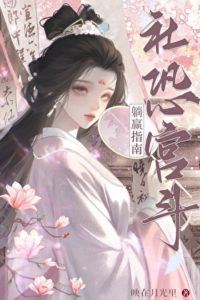
Jiang Ling transmigrated into a palace intrigue novel as a fifth-rank Cairen, a background character destined for obscurity. Suffering from severe social anxiety and lacking any political ambition, her primary survival strategy is to avoid conflict and remain invisible. She resides in the remote Xie Fang Pavilion, where she endures harsh conditions, including scorching summers with minimal ice and meager rations, while keeping her head down and avoiding the high-stakes games of the favored consorts. Her only concern is maintaining a quiet, comfortable existence until her natural death.

The status quo is disrupted when Su Yue, another low-ranking Cairen and fellow background character, suddenly gains the favor of the powerful Consort Zhao. Su Yue, who comes from a humble background and harbors deep resentment toward her neglectful family, manipulates her way into Consort Zhao’s inner circle. She uses Jiang Ling as a stepping stone, initially feigning friendship by sharing resources like ice and food, while subtly undermining Jiang Ling’s position. Su Yue’s ambition drives her to seize the main room of Xie Fang Pavilion, forcing Jiang Ling into the smaller west side courtyard. Despite the provocation, Jiang Ling refuses to engage in the expected rivalry, choosing instead to remain passive and detached.

Tensions escalate when Su Yue accuses Jiang Ling of destroying precious Ink Chrysanthemums gifted by Consort Zhao and rejecting tribute grapes. Su Yue intends to use these accusations to eliminate Jiang Ling as a rival or to test Consort Zhao’s loyalty. However, when Jiang Ling is summoned to Fu Ning Palace, Consort Zhao reveals Su Yue’s lies but ultimately dismisses the matter, treating Jiang Ling with a cold, calculated politeness. Consort Zhao views both women as insignificant pawns in her own struggle against the dominant Imperial Concubine Lin. She warns Jiang Ling to be cautious of malicious servants but offers no real protection, leaving Jiang Ling to navigate the dangerous court politics alone.

Back in Xie Fang Pavilion, Jiang Ling confronts her maids, A Ruo and Fang He, discovering they have been bribed by Su Yue with small favors like silver and cosmetics. Realizing her staff is compromised, Jiang Ling asserts her authority by threatening them with the Gong Zheng Si, the palace disciplinary bureau. She forces them to return the bribes and rejects Su Yue’s gifts, including the Ink Chrysanthemum, sending a clear message that she will not be manipulated. Su Yue, furious at being used and discarded by Consort Zhao, vows revenge, but Jiang Ling remains unmoved, viewing the entire conflict as a tedious distraction from her desire for a quiet life.

The story highlights the stark contrast between Jiang Ling’s desire for solitude and the ruthless ambition of those around her. While Su Yue and the high-ranking consorts engage in complex schemes for power and favor, Jiang Ling’s social anxiety and lack of ambition make her an unpredictable variable in the palace hierarchy. Her refusal to play by the established rules of intrigue confuses her enemies and earns her a fragile neutrality from the powerful factions. As the Mid-Autumn Festival approaches, the underlying tensions in the rear palace continue to simmer, with Jiang Ling caught in the crossfire of a war she never asked to join.

Consort Zhao’s indifference masks a deeper strategic calculation. She allows Su Yue’s rise and fall to proceed without intervention, using the lower-ranking concubines as distractions while she focuses on protecting her son, the Second Prince, from the machinations of Imperial Concubine Lin. Jiang Ling’s presence in the palace becomes a minor footnote in this larger conflict, yet her mere existence challenges the assumptions of those who believe every palace woman is driven by ambition. Her journey is one of survival through inaction, as she attempts to maintain her sanity and safety in an environment defined by betrayal and deceit.

The narrative explores the psychological toll of palace life on those who do not fit the mold of the ambitious schemer. Jiang Ling’s internal monologue reveals her deep longing for the simple, modern comforts she left behind, contrasting sharply with the rigid and dangerous world of the imperial harem. Her interactions with Su Yue and the other concubines serve to highlight the absurdity of their conflicts from an outsider’s perspective. As the story progresses, Jiang Ling’s passive resistance becomes a form of strength, allowing her to endure the shifting tides of favor and power without losing her sense of self.

Ultimately, the early chapters establish a world where survival is not about winning but about enduring. Jiang Ling’s lack of desire for power makes her invisible to those who seek it, yet this invisibility is her greatest asset. As she continues to navigate the treacherous waters of the palace, her unique position as an unambitious background character in a story of intense intrigue sets the stage for further complications and unexpected alliances.

Latest Release
DateGroupRelease
2026-08-11shanghai fantasy c131
2026-08-11shanghai fantasy c130
2026-08-11shanghai fantasy c129
2026-08-11shanghai fantasy c128
2026-08-11shanghai fantasy c127
2026-08-11shanghai fantasy c126
2026-08-11shanghai fantasy c125
2026-08-11shanghai fantasy c124
2026-08-11shanghai fantasy c123
2026-08-11shanghai fantasy c122
2026-08-11shanghai fantasy c121
2026-08-11shanghai fantasy c120

Community Reviews

Rating(3.8 / 5.0, 5votes)
5 stars
1(20%)
4 stars
2(40%)
3 stars
2(40%)
2 stars
0(0%)
1 stars
0(0%)

Popular reviews

... Read More
The dialogue in this book is absolutely razor-sharp and I'm obsessed with it. Let me just dump some of my favorite exchanges before I lose my mind. Fang He: "What's there to be afraid of? It's not like they can punish us!" ...immediately softens her movements. THIS is character voice right there. She's all bluster because she has to be, but her body knows better. That's not exposition—that's someone living in a system where survival depends on reading the room. And then Su Yue's entire conversation with Jiang Ling about birthday gifts. On the surface, it's polite palace chatter. Read between the lines and it's an interrogation. "Is Elder Sister Jiang planning to gift Consort De some needlework?" Sounds innocent. But then: "Sisters who are on good terms just exchange some birthday gifts and gather for a cup of wine." Wait, is Su Yue giving Jiang Ling advice or testing whether Jiang Ling knows the unwritten rules? And when Jiang Ling accidentally asks "According to the rules, what should be sent?"—the internal panic versus the external calm is comedy gold, but also genuinely tense. The narrative voice itself is a character. Jiang Ling's internal monologue is this perfect blend of modern sensibility and desperate survival instinct. She's thinking about stemmed glasses and ice tea while her body is literally sweating through three layers of silk. The humor never undercuts the stakes, which is the hardest balance to strike. And the author does it effortlessly.
... Read More
There's a reason this entire opening sequence takes place in oppressive summer heat, and it's not just atmospheric. The heat is the palace itself—relentless, inescapable, pressing down on everyone equally but affecting the powerless most. Jiang Ling's ice basin isn't just a comfort item. It's a symbol of everything she's trying to hold onto: coolness in a world designed to make you sweat, control in a space where you have none, a small personal boundary in an environment that demands total submission. The melting ice is the central metaphor of these chapters. It starts solid, it loses its shape, it becomes water, it's gone. Just like the women in Xie Fang Pavilion—eight down to three, their fates dissolving like ice in July. Jiang Ling wrapping it in a thin quilt and chanting fake mantras to slow the process? That's her entire approach to survival: performative resistance against inevitable change. She knows it won't last. She knows the ice will melt. But she's going to guard it anyway. And the powder on their faces—"as if a mask had been pasted onto [Jiang Ling's] face, hiding her true self behind it." The makeup as armor. The performances as protection. In a palace where everyone is watching and judging, authenticity is a luxury you can't afford. Jiang Ling's social anxiety isn't just a personality trait; it's a survival mechanism that the palace has amplified to pathological levels. The deeper theme here is about what it means to exist invisibly in a space designed to make you compete for visibility. Jiang Ling's wish—to lie around doing nothing—was her greatest desire in her past life and her only strategy in this one. The irony is almost unbearable.
... Read More
"I'm like a clown, with laughter and applause, and then a special emptiness and loneliness..." This line kept looping in Jiang Ling's head as she walked to Zhao De Fei's palace, and honestly? It wrecked me a little. Not because it's some grand romantic moment, but because it's SO specific to her situation. She's dressed up in three layers of clothing, her face plastered with powder like a mask, walking into a foreign palace to perform friendship with a woman she barely knows, all while her mind is just... empty. The loneliness isn't dramatic. It's not wailing and tearing at her clothes. It's this quiet, creeping realization that she's performing a role in someone else's story and nobody actually sees her. And the ice basin! I cannot stop thinking about the ice basin. Jiang Ling sitting there, guarding this one-third basin of ice, wrapping it in a thin quilt, chanting some fake mantra to keep it cool. This is her most precious treasure. Not love, not power, not freedom—just a bowl of melting ice in a stuffy room. She even regrets not having a stemmed glass. A STEMMED GLASS. The tragedy and the comedy are so perfectly blended that I don't even know how to process it. There's also this undercurrent of friendship-between-strangers that I found surprisingly moving. A Ruo making those silk socks without telling Jiang Ling. Fang He complaining about the greasy food but still serving it with care. Su Yue offering to walk together to the birthday celebration, which on the surface seems kind but underneath is clearly calculated. The emotional landscape here is so layered—I keep second-guessing who actually cares about whom.
... Read More
I need to talk about how this author handles pacing because it's genuinely impressive and I want to understand the mechanics of it. Chapter 1 starts with heat. Not just weather description—heat as a structural element. The bluestone shimmering, cicadas chirping, stuffy rooms, sweat, melting ice. This is a chapter about pressure building, and the pacing mirrors that perfectly. Everything moves slowly: the maid carrying food boxes, Jiang Ling sitting motionless, the ice melting. But underneath the slowness, there's this constant low-grade tension. We know Jiang Ling is in danger. We know the original book is full of palace intrigue masters. We know she has severe social anxiety. And yet the chapter unfolds like a summer afternoon—lazy, hot, almost drowsy. That contrast is what makes it work. Then Chapter 2 shifts. The journey to Fu Ning Palace introduces movement, physical discomfort, the powder running down faces. The pacing quickens slightly but never breaks into a run. It's the pacing of someone walking into a lion's den while trying to maintain composure. The author drops little details strategically—the pear trees with their sweet fragrance, the row of ice chests in Zhao De Fei's palace—and each one is a tiny emotional gut-punch for Jiang Ling (and the reader). The chapter ends right as Jiang Ling sees Zhao De Fei, and that's where the real tension begins. The author knows exactly when to stop. No cliffhanger screams, just the quiet dread of what comes next. This is masterful control of reader engagement.
... Read More
Okay, let me just say this upfront: Su Yue is NOT who she seems, and I am already on edge about her. The moment she appeared at Jiang Ling's doorway after the ice basin incident—curtsying gracefully, asking what happened with that sweet dimpled smile—I knew something was off. Palace intrigue novels don't introduce characters like Su Yue without a reason. And then she casually drops the question about Zhao De Fei's birthday gift like it's just friendly chat? Please. A Ruo saw right through it immediately, which honestly made me feel better about the palace maids actually having street smarts. But here's what really got me: the relationship between Jiang Ling and her own maids. A Ruo and Fang He are clearly frustrated—greasy food, no ice, dead-end postings—but they stay. They're making silk socks behind Su Yue's back. They're protecting their mistress even though Jiang Ling can barely function socially. There's a quiet loyalty there that hit me harder than I expected. Jiang Ling herself is this fascinating mess: severe social anxiety, transmigration survivor, whose entire strategy is to kneel and beg for mercy. She's not a schemer. She's not trying to play the game. She just wants to survive in peace, guarding her third-of-a-basin of ice like it's the Crown Jewels. And then there's Su Yue, who visits with a smile that doesn't reach the same place as her questions. The original text says she has a dimple on her left cheek that makes her look sweet and charming—but in this environment, charm is a weapon. I keep wondering: does Su Yue actually want to be Jiang Ling's friend, or is she just using her as cover to get closer to Zhao De Fei? The power dynamics in this pavilion are so quietly devastating. Eight women down to three, and the ones left are either dead, insane, or sent to temples. Jiang Ling isn't just avoiding palace intrigue—she's running from a graveyard.
See all reviews

Characters

See all characters

Custom lists

See all custom Lists