Summary

... Read More

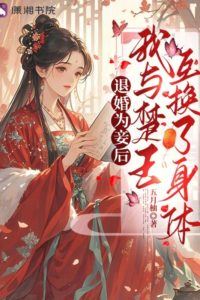
Xue Wanyao, the seventeen-year-old second daughter of a Hanlin Academy compiler, faces a catastrophic wedding day when her sedan chair is struck by lightning and she falls into a river. Gu Zhuo, the young and renowned Prince of Chu, dives in to save her. However, upon her arrival at the Marquis of Wuding’s manor, the family refuses to accept her as the bride for their eldest son, who is gravely ill. The Marchioness of Wuding claims that Xue Wanyao’s reputation is ruined because she was embraced by an unrelated man while drowning, deeming her unfit for the Xu family. Back at her own home, Xue Wanyao is further rejected by her legal mother, Madam Xue, who views her as a burden and suggests she either commit suicide to preserve family honor or become a nun in a temple. With no other options and desperate to survive, Xue Wanyao travels to the Prince of Chu’s manor and kneels before Gu Zhuo, offering herself as a concubine to repay the debt of her life.

Gu Zhuo initially refuses, viewing her offer as ingratitude, but his mother, Princess Changping, insists that he take a concubine to continue the Gu family line, which has suffered from a lack of heirs for three generations. Princess Changping forces Gu Zhuo to share a room with Xue Wanyao that night. The following morning, a mysterious event occurs: the two protagonists wake up to discover they have swapped bodies. Gu Zhuo finds himself trapped in the frail, female body of Xue Wanyao, while Xue Wanyao inhabits the robust, male body of the Prince of Chu. Panic ensues as they realize they cannot simply switch back on their own. They seek the help of the State Preceptor at Qingyun Temple, who informs them that this is the will of heaven and cannot be reversed by mortal means, though he suggests it might happen again during a thunderstorm.

Trapped in each other’s lives, the two must navigate their new realities. Xue Wanyao, now in Gu Zhuo’s body, enjoys the freedom and power she never had as a confined daughter, while Gu Zhuo suffers the physical limitations and social constraints of being a noblewoman. He struggles with the delicate nature of Xue Wanyao’s body, finding it weak and unsuited for his martial arts training. Meanwhile, Xue Wanyao must manage Gu Zhuo’s responsibilities, including his refusal to marry a princess consort, a duty his mother is eager to arrange. She learns that the Wuding Marquis’s family had originally sought her for a Joy-bringing Marriage, intending to use her to cure their dying heir, and that her own family had already removed her from the clan registry, replacing her with her third sister.

As they adjust to their swapped identities, a complex dynamic develops. Xue Wanyao, pragmatic and survival-oriented, begins to scheme to make the best of her situation, even considering how she might use Gu Zhuo’s body to secure a comfortable future. Gu Zhuo, initially hostile and dismissive, is forced to rely on her to navigate the dangers of being a woman in their society. They encounter mutual acquaintances, including Du Rouzhi and Princess Yuyue, whom Xue Wanyao must impersonate Gu Zhuo to interact with. The story highlights the stark contrast between their genders and social expectations, as Xue Wanyao experiences the fragility of female life, while Gu Zhuo discovers the burdens of male privilege and expectation. Their relationship evolves from mutual resentment to a reluctant partnership as they face the challenges of their swapped existence and the political machinations of the capital.

Novel Items

More
Jewelry
Heavy gold ornaments worn by Xue Wanyao on her wedding day. Their weight made her struggle desperately in the water, putting her life in peril. Later, Uncle Xue told her they could be exchanged for silver to support herself in a temple.
Clothing
A fine dress made of cloud-brocade fabric in lotus-root pink, provided by Princess Changping for Xue Wanyao after her bath. It fit her perfectly and replaced her soaked wedding dress.
Weapon
A sword encrusted with gems that hung by the bed in Gu Zhuo's bedroom. It reflected his identity as a young warrior-prince and was one of the few decorations in his otherwise sparsely furnished room.
Item
A bowl of spicy ginger soup sweetened with brown sugar that Ling Yu brought to Ye Wuyou to help her sweat out the cold after being soaked in rain.
Illustrations
Intimate spring drawings shown to Xue Wanyao by her concubine mother the day before her wedding. Xue Wanyao had originally thought such things would be unnecessary since the eldest son of the Marquis of Wuding was gravely ill. The drawings caused her face to flush when she thought of them in relation to Gu Zhuo.
Item
A silk handkerchief that Lu Zhaoying was playing with while leaning against the wall in the pavilion before the maidservant brought her the brocade box from Jiang Heng.
Latest Release
DateGroupRelease
2026-08-11shanghai fantasy c10
2026-08-11shanghai fantasy c9
2026-08-11shanghai fantasy c8
2026-08-11shanghai fantasy c7
2026-08-11shanghai fantasy c6
2026-08-11shanghai fantasy c5
2026-08-11shanghai fantasy c4
2026-08-11shanghai fantasy c3
2026-08-11shanghai fantasy c2
2026-08-11shanghai fantasy c1

Community Reviews

Rating(4.3 / 5.0, 14votes)
5 stars
5(36%)
4 stars
8(57%)
3 stars
1(7%)
2 stars
0(0%)
1 stars
0(0%)

Popular reviews

... Read More
Let's talk about what Xue Wanyao stands to lose, because it's everything. In Chapter 1 alone, she goes from being a bride on her wedding day to a woman with no family, no husband, no reputation, and two unacceptable options: suicide or a life of servitude in a temple. That's not a low point—that's rock bottom, and the author drops her there in the first seven thousand words. The external conflict is clear: society and her family are against her. The Xu family has rejected her. Her legal mother has cast her out. Her uncle has abandoned her. She has literally zero support system. But the more interesting conflict is internal—she has to make a decision with no good options. Every choice is terrible. Become a nun? Humiliating and brutal. Die? Cowardly and final. Marry a prince as a concubine? A desperate gamble with uncertain outcomes. What makes me care about the outcome is that the author has made us understand exactly what's at stake. We've seen the coldness of her family, the hypocrisy of the Xu manor, the brutal logic of a society that would rather a woman be dead than 'damaged.' When Xue Wanyao walks to Gu Zhuo's manor, we're not just wondering if she'll succeed—we're wondering if she'll survive this world at all. The tension is maintained through a series of escalating refusals. First the Xu manor rejects her. Then her family rejects her. Then Gu Zhuo himself rejects her proposal. Each rejection raises the stakes because it eliminates another escape route. By the time Princess Changping intervenes, we're relieved—but also anxious. Because a prince's concubine is still a woman with no power, in a house full of people who could destroy her. The stakes haven't decreased; they've just changed shape.
... Read More
Okay I need to talk about the stakes in this story because honestly they keep escalating and I can't stop reading. Let's start with the most immediate conflict: the body swap itself. Xue Wanyao and Gu Zhuo have swapped bodies, and neither of them knows how to reverse it. This is the central mystery that drives the entire narrative forward. Every scene is colored by this fundamental question—when will they switch back, and what will happen in the meantime? But the author doesn't just rely on this one conflict. She layers on additional stakes that make the situation even more complicated. First, there's the marriage. Xue Wanyao is now Gu Zhuo's concubine, and they're expected to consummate the marriage and produce heirs for the Gu family. But if they do consummate, what happens? Will the body swap reverse? Will they both end up in the wrong bodies permanently? The tension here is both comedic and genuinely stressful—I found myself holding my breath during the scene where Xue Wanyao suggests sharing a bed just to warm Gu Zhuo's feet. Then there's the political stakes. Princess Changping is already planning the Flower Festival where Gu Zhuo will choose a princess consort. If Gu Zhuo ends up marrying another woman, what happens to the body-swap situation? Xue Wanyao is trapped in Gu Zhuo's body, and if Gu Zhuo marries someone else, the complications multiply exponentially. This isn't just a personal problem anymore—it's a political one with real consequences. And then there's the martial arts angle. Gu Zhuo has spent five years training in the Yunying Art, a peerless divine skill that requires virginity to master. Now she's in a female body, and she's terrified that her training is wasted. The scene where she tries to practice and can barely throw a punch is heartbreaking in a way that catches you off guard. This isn't just about comedy anymore—this is about someone's identity, their purpose, their entire future being thrown into uncertainty. The external conflict with Qin Lang at the end adds another layer. He recognizes Xue Wanyao from the water incident, which means there's a risk of exposure. If anyone finds out that the Prince of Chu is actually Xue Wanyao in disguise, the consequences could be severe. The stakes have gone from personal discomfort to potential political disaster. What I love about how the author handles conflict is that she never lets the tension drop. Even in the funniest moments—like Gu Zhuo burying her head under the quilt like an ostrich—there's an undercurrent of genuine anxiety. The characters are fighting on multiple fronts: against their own bodies, against societal expectations, against the uncertainty of when (or if) they'll switch back. And the suspense is maintained through a series of escalating complications that make each chapter end on a note that demands the next one. I stayed up way too late reading this because I literally could not stop.
... Read More
"Though I'm not from some grand noble family, I am still the daughter of an official... You want his daughter to become a slave or a maid?" — this line absolutely wrecked me. Like, I was already feeling for Wanyao but then she drops that and I just... okay. The whole body-swap premise is wild, but what really got me is how she's not even asking for romance or love. She's asking for survival. She's asking not to be buried in a mass grave like a common servant. And Gu Zhuo, this arrogant prince who can barely climb a mountain in her body, ends up offering her exactly that — not because he's some softie, but because she basically laid out her options: death, a nunnery, or his concubine. And she chose the third one like it was the best deal she'd ever get. The moment where he wipes her tears with his own face — her face, technically — that's when it hit me. He finally sees himself through her eyes and it breaks something open. "I told you, don't use my face to make such an effeminate expression" but then he does it anyway and she cries and he has to comfort her using the face she's terrified of losing forever. The CP tension here isn't some slow-burn romance, it's two people who are literally living each other's lives and slowly realizing how little they understood the other's pain. And Wanyao's little moment in the carriage, smiling at her own sleeping face, thinking about having a child to rely on — that's not greed, that's a woman who's been told her whole value is her chastity and she's just trying to find any version of safety she can grab.
... Read More
The stakes in this section are deceptively simple on the surface — two people swapped bodies, they need to fix it — but underneath there's this whole layer of life-and-death pressure that the author never lets you forget. Wanyao's options, as she lays them out, are genuinely horrifying: suicide, a nunnery where she'd be abused and starved, or becoming a concubine to a man she barely knows. And the worst part? She sees the concubine option as the best of a terrible bunch because at least she'd be buried in the Gu family ancestral tomb instead of a mass grave. That's not drama, that's despair. The external conflict is clear — the Xue family and the Wuding Marquis's household are closing in on her. But the internal conflict is what keeps you hooked. Wanyao is simultaneously terrified and thrilled about this situation. She doesn't want to die, but she also doesn't trust Gu Zhuo. She's playing a long game, using his body to survive while figuring out how to get back to her own life — or at least a life worth living. Gu Zhuo's conflict is different but equally compelling. He's angry, confused, and physically suffering in a body that wasn't built for his lifestyle. But he's also the one who ends up making the promise that changes everything. "I'll give it to you. You won't be left with nowhere to turn." He's not a villain here, he's just a privileged young man who's being forced to confront consequences he never had to think about before. The tension between them isn't just romantic — it's moral. Who owes whom? Who saved whom? And what does that even mean when you're wearing someone else's skin?
... Read More
I need to talk about Gu Zhuo because this boy walked into Chapter 1 and immediately stole the show. He dives into freezing water to save a stranger, stands up to a marquis's family, calls out their hypocrisy about 'reputation'—and then he's genuinely confused when she offers herself to him instead of paying him back in silver. His line 'is repaying kindness with enmity' had me laughing out loud. This is a guy who is literally incapable of being a traditional arrogant prince, and I love it. But let's also talk about Xue Wanyao because she's not just a victim here. Yes, she gets dumped at every turn, but watch what she does: she doesn't cry and wait to be rescued. She figures out her options, rejects the two paths she doesn't want (death or temple), and actively goes to the Prince of Chu's manor to propose a solution. That takes guts. She's terrified, she's soaked, she's been humiliated by her entire family—and she still walks into a stranger's house and asks to marry him. That's not desperation, that's survival instinct at its sharpest. The dynamic between them is already so delicious. He doesn't want a concubine, she needs a lifeline, and Princess Changping is just over here playing matchmaker like it's a game. The mother-son dynamic is also great—Princess Changping is firm but not cruel, and she clearly dotes on her son. When she mentions his dead father, Gu Zhuo immediately caves. There's real emotional history there. And the Xue family—oh my god. The legal mother is pure venom. 'You have your third and fourth sisters at home. Their marriages cannot be affected by you.' This woman is willing to sacrifice one daughter to protect the family's marriage prospects. The uncle who 'limps' and can't save her is also fascinating—did he really have leg problems, or was that an excuse? Either way, the family dynamics here are rich with betrayal and cold calculation.
... Read More
I need to talk about the dialogue in this because honestly it's one of the things that made me keep reading. The way these characters speak feels so natural, like I'm eavesdropping on an actual conversation rather than reading something scripted. Let me start with Gu Zhuo—she's in Xue Wanyao's body but she still sounds like herself. When she says, "You're using my body and don't feel any pain at all. Do you know how sore your legs are? I wish I could chop both of them off!" — that's such a perfect line. It's angry, it's frustrated, and it's funny all at the same time. You can hear the exasperation in her voice. And then later when she's practicing martial arts and can barely throw a punch, she says, "I've practiced for five years. Will all my efforts go to waste now?" That's not just dialogue—that's character. That's someone who's genuinely terrified of losing something she's worked so hard for. Xue Wanyao's voice is different but equally distinct. She's more measured, more careful with her words. When she says, "Your Highness, since you have already granted me the status of your concubine during the day, it is not against the rules for us to share a bed..." — you can practically hear her stammering. The author writes her dialogue in a way that makes you feel her embarrassment and her genuine attempt to be logical about something that's clearly uncomfortable for both of them. And the humor! The scene where Xue Wanyao suggests Gu Zhuo share a bed with a maidservant to warm her feet, and Gu Zhuo says she should find a manservant instead, and Xue Wanyao jolts up and says "No!" — that's comedy gold. The author's voice here is sharp and observant, and the tone balances between genuine emotional moments and pure comedic relief without ever feeling forced. The narrative voice itself is interesting too. It's close third person, mostly following Xue Wanyao's perspective, but it dips into Gu Zhuo's thoughts as well. This gives us access to both sides of the body-swap situation, which is essential for the humor and the emotional depth. The author's style is accessible and engaging—never pretentious, never overwrought. It just feels like a story being told by someone who genuinely enjoys these characters.
See all reviews

Characters

See all characters

Custom lists

Oops…There is nothing here.