After He Asked for a Divorce
+Add to Custom List
Novel Info
  • Author:
  • Status:Ongoing

Summary

... Read More

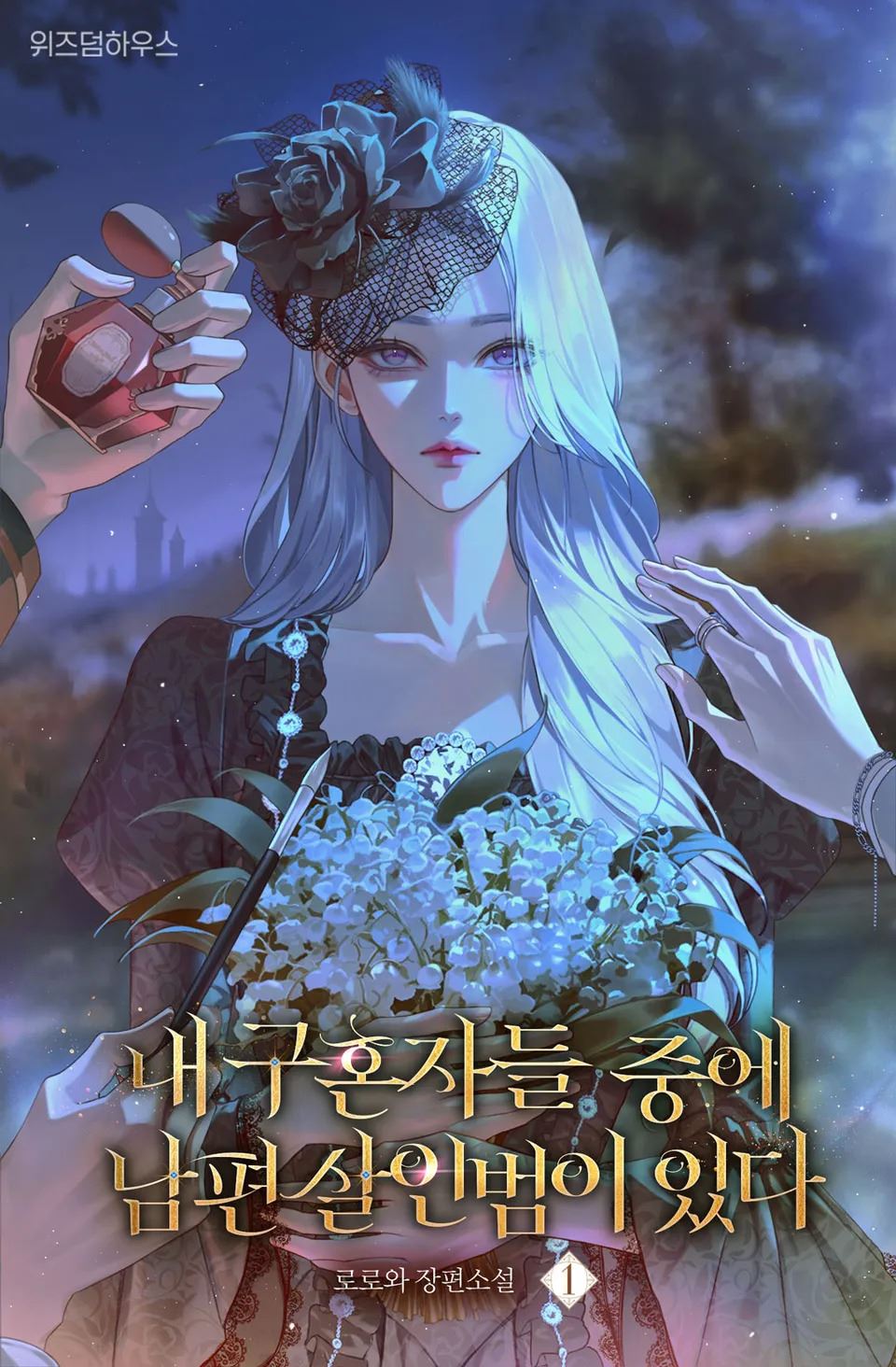
Olga de Primavera, the sole daughter of the declining Earl of Primavera, endured a lifetime of neglect and contempt from her father, who desired a son. Her life changed when she met Leod de Morvant, the Duke of Morvant, after falling into a lake. He rescued her with a gentle smile, sparking a romance that led to their marriage. For a time, Olga found happiness, but her life shattered the moment she revealed she was pregnant. Leod’s demeanor transformed instantly from loving to cold and indifferent. He denied her access to him, ignored her pleas, and eventually sent divorce papers through the head butler without ever speaking to her face. During this period of isolation, their daughter, Liet, was born. However, Liet fell ill shortly after birth, suffering from an unidentifiable ailment. With Leod absent at the front lines of a war he insisted on fighting, Olga was powerless to save her child. Liet died less than a day after receiving news of her father’s death in battle. Devastated and broken, Olga took her own life by drinking poison, vowing in her final moments to protect her daughter in the next life.

Olga awakened to find herself back in the past, precisely one month before the birth of Liet. She realized she had been reborn into a timeline where spring had suddenly arrived in the otherwise eternally cold Duchy of Morvant, a phenomenon that had never occurred in her previous life. Leod was alive, kind, and attentive, treating her with the warmth she had once cherished. However, Olga retained all her memories of his subsequent cruelty and the tragic loss of their child. Understanding that this return was a chance to alter her fate, she resolved to conceive Liet again but to avoid the suffering that followed. She knew that once Leod discovered her pregnancy, he would become cold and request a divorce. Her primary objective shifted from seeking love to securing her daughter’s survival and ensuring a favorable divorce settlement.

Olga began executing her plan with calculated precision. She recognized that Serina, her lady’s maid, had been complicit in Leod’s surveillance and neglect in her previous life, eventually leading to Serina’s demise in a southern accident. Determined to save her loyal servant, Olga offered Serina financial support to bring her family to the capital, securing her loyalty and altering Serina’s fate. Simultaneously, Olga sought out Edward, a childhood friend and lawyer, to assist her. She requested his help in preparing for a future divorce, aiming to secure substantial assets and legal protections that would ensure her and Liet’s independence. Leod, unaware of Olga’s hidden motives, interpreted her behaviors as signs of affection or surprise preparations, further deepening his confusion as her demeanor became subtly distant yet politely warm.

The narrative progressed toward New Year’s Day, designated by Olga’s mother-in-law, Meriline, as an auspicious date for conceiving a child. Meriline, who had treated Olga with genuine kindness in Olga’s past life, facilitated a ritual bath using holy water to purify Olga’s body. Olga participated in the rituals with outward compliance while internally steeling herself against the emotional torment of intimacy with Leod. She viewed Leod not as a husband but as a necessary instrument to bring Liet back into the world. Despite her resolve, Olga struggled with residual emotional responses, feeling disgust and sorrow whenever Leod displayed affection or concern.

On New Year’s Eve, Olga and Leod spent the night together in a chamber adorned with azaleas, flowers that symbolized both beauty and poison in Olga’s memory. Leod expressed his love and devotion, claiming their relationship was the great love story of the age. Olga reciprocated verbally to fulfill her duty, though her heart remained detached. She focused entirely on the hope that Liet would be born alive this time. After the encounter, Olga immediately began strategizing for the divorce, planning to present Leod with terms that included financial security for herself and a guarantee that he would not serve at the front lines for at least ten years to protect their daughter.

The story highlights the stark contrast between Olga’s past ignorance and her current calculated approach. She navigates social interactions with a mask of politeness, hiding her true intentions from Leod and Meriline. While Leod grows increasingly puzzled by Olga’s subtle changes and her decision to buy a gift for a male friend, he misinterprets these actions as romantic surprises. The arrival of spring in the duchy serves as a metaphor for the shifting timeline, offering Olga a glimmer of hope that her interventions might yield a different outcome. However, the underlying tension remains as Olga waits for the moment Leod will inevitably reveal his true nature upon learning of her pregnancy, forcing her to execute her escape plan while simultaneously safeguarding her child’s life.

Latest Release
DateGroupRelease
2026-10-03dusk blossoms c40
2026-10-03dusk blossoms c39
2026-10-03dusk blossoms c38
2026-10-03dusk blossoms c37
2026-10-03dusk blossoms c36
2026-10-03dusk blossoms c35
2026-10-03dusk blossoms c34
2026-10-03dusk blossoms c33
2026-10-03dusk blossoms c32
2026-10-03dusk blossoms c31
2026-10-03dusk blossoms c30
2026-10-03dusk blossoms c29

Community Reviews

Rating(0 / 5.0, 40votes)
5 stars
0(0%)
4 stars
0(0%)
3 stars
0(0%)
2 stars
0(0%)
1 stars
0(0%)

Popular reviews

... Read More
Can we just talk about how cinematic some of these scenes are? The author has a real gift for atmosphere and I want to marinate in it. The spring festival opening is just SO vivid. 'Cherry blossom petals look just like snow'—the idea that they literally scattered petals to mimic snowfall in a duchy that only ever had brutal winters is such a beautiful detail. It shows how much Leod has changed their world for Olga. He didn't just organize a party; he created an experience she'd never had, compensating for all those lonely past festivals. But the greenhouse fireworks scene is peak visual storytelling. A glass greenhouse at the ducal estate—this enclosed, fragile structure of glass and plants—illuminated from above by exploding colors in the night sky. The contrast between the delicate greenhouse and the thunderous 'tremendous boom' of fireworks is just masterful imagery. It feels like Olga's entire emotional state in that moment: fragile, exposed, bursting with light. And earlier, the moment Leod draping his jacket over her shoulders—'by then… Liet will be in our arms'—the warmth of that gesture against the brisk spring night breeze. You can FEEL the temperature shift. The author doesn't just describe settings; they make you feel the weather on your skin. That said, the greenhouse choice is loaded symbolism, which brings me to another thought. Why there? It's beautiful but also temporary—glass shatters. We'll get to that later.
... Read More
Let's talk about the structural genius of Rosaria appearing at the exact wrong moment. Olga and Leod are having this perfect, fragile little bubble of happiness -- she's fed him candy, they're walking arm in arm through the festival, he's about to kiss her in public -- and then 'Your Grace?' cuts through it like a knife. Red hair. Jewelry boutique. Someone from his past showing up uninvited and immediately inserting herself between them physically and emotionally. And Leod's reaction? He didn't even remember her at first -- 'Ah' -- and then when it comes back to him he dismisses her with such sharp anger that you know immediately he's trying to protect what he has in that moment. The fact that Olga immediately connects Rosaria's red hair to the annex women is the plot's way of saying: hey, we haven't forgotten either. The unresolved thread is still there. Meanwhile Edward is riding in the carriage behind them talking about the curse of Morvant like he has no idea he's sitting between a landmine and its detonator. The tension layering is relentless and I cannot breathe.
... Read More
Oh my god, this scene with Leod bringing her those red azaleas absolutely destroyed me. Like, on the surface it looks so tender — a duke picking flowers for his wife, climbing through her window, the whole romantic gesture. But Olga sees it for what it really is: a poisoned cup. The irony is brutal because the azaleas were probably part of the very thing that lured her into complacency before, and now she has to pretend to accept them while inside she's screaming. What killed me though was the moment Leod pressed his face against her shoulder and said 'To the people who hurt you.' In her past life, she probably melted at that. Now? Her skin crawls. One line — 'The person who hurt me most was you' — and boom, everything shifts. That is such a devastating internal monologue, the kind that hits you right in the chest because you can feel how much it costs her to swallow those words. And then the ending of the scene, where the tray crashes and he catches her... 'In the chaos, she had ended up fully caught in his arms.' I felt that so hard. He thinks this is romance. She feels like a prisoner being held. The physical closeness without any emotional connection — that dissonance is pure agony to read. His worry looks so genuine when he's checking if she's hurt, but she knows exactly what that face looks like because she's seen it on another woman. That specific memory — the annex, the smile — absolutely wrecked me. The fact that the same lips that once whispered to her could smile at someone else... chills. Real chills.
... Read More
The Primavera Festival. Named after her family name. And the text keeps returning to this image of spring arriving—the day after the wedding, essentially. 'Spring arrived the very day after the wedding, my lady. So of course everyone believes it came because of you.' The people think her presence brought spring to the duchy. But we, the readers, know that spring is not salvation here. Spring is ironic. Spring is the season in which everything begins to look beautiful on the surface while the rot underneath remains exactly the same. The cookies are another symbol I can't stop thinking about. Macadamia—her favorite. Leod bakes them himself, carefully, asking Serina about her preferences. They represent everything he thinks love looks like: attention to detail, sacrifice, the effort to please. But when Olga bites into one, the 'rich, savory scent turned her stomach.' Not because the cookie is bad. Because she's pregnant. Because her body is already changing, already betraying the old version of herself, and the very thing she loved can't stay inside her anymore. And then the red hair—the recurring motif of Leod's obsession. 'Cycling through a different woman every day. And yet—it was always a different woman. As though he had some particular fixation on red hair.' It's never about the individual. It's about a type, a fantasy, a ghost she can't quite see in the photograph. Red hair as symbol of everything Olga is not, everything she can never be, and everything that will eventually destroy her. Spring blooms. Cookies are baked. Red hair appears. Nothing changes.
... Read More
Okay so I need to talk about Leod because—ugh. I literally had to put the book down for a second. This guy, he comes in with a tray of not-too-sweet cookies, his hands shaking a little, saying 'I can't even begin to guess what it might be. But if you would tell me—I would change.' And like. He's genuinely trying. He's been through this before, or at least he's pleading like he's desperate. But here's the thing that gets me—the narration literally says: 'In the past she had lived through, Leod had never once pleaded with her like this. If anything, it had always been her doing the pleading.' That line alone destroyed me. The power dynamic has completely flipped, and he's finally in the position she used to occupy. And yet—he means it. You can feel it. But what gutted me the most was when he brought macadamia cookies, the ones she loves, and she takes a bite and suddenly feels nauseous. Because she knows. She knows Liet is back inside her. She sets the cookie down, looks at him, and asks for strawberry cake instead—something 'bright and fresh'—because spring has come. And Leod, sweet, clueless Leod, kisses her forehead and says 'There is nothing I wouldn't do for you.' And then EDWARD walks in with the worst possible news. I am literally screaming. The love in her heart is still stronger than the hate—that's what she thinks—and now this. Just when you let yourself hope for a moment, the floor drops out.
... Read More
The dialogue here operates on two levels constantly, and that's what makes it so sharp. Take Leod's line: 'May I come in?' On the surface, polite. But the narrator immediately undercuts it — 'The words caught her completely off guard.' Why? Because in their past, he wouldn't have asked. He would've just entered. The fact that he's performing courtesy is itself a threat, a reminder that everything between them is now mediated by pretense. And then his line 'What does dignity matter in front of one's own wife?' — delivered with a lazy shrug, like he's being charmingly irreverent. But Olga hears something else entirely. The author lets us hear both translations simultaneously, and that dual reading is where the tension lives. The conversation with Serina is where the dialogue style shifts completely. It's warmer, lighter, almost comedic — 'Count Primavera got completely drunk and had to be dragged off by his wife! It was absolutely hilarious.' This contrast is brilliant because it shows how different Olga's voice becomes when she's not performing for Leod. With Serina, she's strategic but also genuinely kind. The gold coin scene has this natural back-and-forth rhythm: offer, refusal, insistence, acceptance. Serina's dialogue feels like a real person — flustered, touched, awkwardly grateful. Her 'Thank you so much! Truly, truly thank you!' lands because we've earned it through the negotiation. But the real vocal masterpiece is Olga's internal monologue versus her spoken words. She says 'I'm still not feeling well' while thinking 'I won't be fooled by you again.' That gap — that constant translation between what she feels and what she says — defines her entire voice in this narrative. She's narrating her own survival in real time.
See all reviews

Custom lists

See all custom Lists