After Guarding an Empty Bed for Two and a Half Years I Seduced the Prince and Got Pregnant
Novel Info

Summary

... Read More

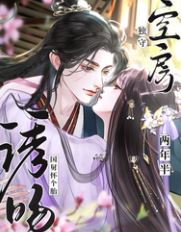
Liu Fuying is a noblewoman married to Shen Xiunian, a celebrated general who spends most of his time away at war. Their marriage is nominal; they live separately, and Shen Xiunian has previously told her she may take a lover as long as it remains secret. However, Liu Fuying faces a critical threat from her husband’s Second Uncle, who controls the family’s secondary branch and is waiting for Shen Xiunian to die so he can seize the family estate. Because Liu Fuying is a woman, she has no legal right to inherit the property, and without a child of her own to secure her position, she risks being disinherited and cast out. To protect her future and the assets promised to her by her husband, Liu Fuying decides she must bear a child, but since her husband is unavailable and unwilling, she seeks an alternative father.

Her plan centers on Pei Zhouwu, the Imperial Uncle and the Empress’s younger brother, who was imprisoned on Xiang Mountain six months prior on charges of treason. Once a powerful general, Pei Zhouwu is now a prisoner shackled in iron chains, living in isolation in a remote mountain temple. Liu Fuying first encounters him after falling from a cliff while praying at Changming Temple. Pei Zhouwu saves her, and during their time together, he examines her injuries and helps her escape through a secret underwater passage. The experience creates a complex dynamic between them; Liu Fuying is struck by his beauty and noble bearing, while Pei Zhouwu is confused by her presence and kindness. Liu Fuying realizes that Pei Zhouwu is the ideal candidate for her scheme: he is handsome, powerful, and imprisoned, meaning he poses no threat of future interference or scandal if she uses him to conceive.

Liu Fuying begins a calculated campaign to win Pei Zhouwu’s trust. She returns to the mountain under the guise of offering incense and praying for her mother-in-law’s health, secretly sneaking into Pei Zhouwu’s prison courtyard. She brings him medicines, food, and news of the capital, carefully crafting a false identity as a lowly maid named Su Yueying who fled an abusive master. She uses emotional manipulation, feigning concern for his loneliness and sharing fabricated stories of her own suffering to elicit sympathy. Pei Zhouwu, who has been isolated and despairing for months, gradually softens. He becomes intrigued by her sincerity and begins to hope for her return, though he remains suspicious of her true identity and status.

As Liu Fuying’s visits continue, the tension between her ulterior motives and her growing attraction to Pei Zhouwu intensifies. She engineers situations to increase physical intimacy, such as accidentally cutting his hand and sucking the wound to heal it, which leaves Pei Zhouwu flustered and emotionally affected. Meanwhile, Liu Fuying deals with internal family politics, exposing a spy from the Second Uncle’s branch and spreading rumors to isolate her enemies. She also maintains a facade of devotion to her mother-in-law, Old Madam Shen, who suffers from mental instability and mistakes Liu Fuying for a deceased girl named Xu Liangyin. Liu Fuying’s ultimate goal is to get pregnant by Pei Zhouwu and pass the child off as her husband’s, securing her inheritance. However, her interactions with the imprisoned general begin to challenge her cold calculation, as she finds herself genuinely drawn to his restrained and pure nature, complicating her plan to use him merely as a means to an end.

Latest Release
DateGroupRelease
2026-08-11shanghai fantasy c94
2026-08-11shanghai fantasy c93
2026-08-11shanghai fantasy c92
2026-08-11shanghai fantasy c91
2026-08-11shanghai fantasy c90
2026-08-11shanghai fantasy c89
2026-08-11shanghai fantasy c88
2026-08-11shanghai fantasy c87
2026-08-11shanghai fantasy c86
2026-08-11shanghai fantasy c85
2026-08-11shanghai fantasy c84
2026-08-11shanghai fantasy c83

Community Reviews

Rating(4.1 / 5.0, 8votes)
5 stars
2(25%)
4 stars
5(63%)
3 stars
1(13%)
2 stars
0(0%)
1 stars
0(0%)

Popular reviews

... Read More
There are so many layers to this story that I didn't even notice on the first read. Let me try to unpack some of it. The chains. Pei Zhouwu wears literal iron chains on his ankles. But Liu Fuying is also trapped—in her loveless marriage, in a society where women can't inherit property, in a body she has to use as a tool to survive. The chains are just more visible than hers. She even says to him: "I don't have a way to openly and honorably get you out of here." But she's not out either. They're both prisoners, just in different cages. Xiang Mountain itself is a symbol. It's where Pei Zhouwu is confined—cut off from the world, from power, from life. But it's also where Liu Fuying finds him. The mountain becomes a liminal space, a place between worlds where the rules don't quite apply. She descends through thick weeds, past a rotting door, through a pond—almost like a journey into the underworld to visit someone who's already half-dead. Water is everywhere in this text. Liu Fuying swims in the pond. She practices holding her breath in a basin. Water is danger, yes, but it's also transformation. When she emerges from the water, soaked and trembling, she's not the same woman who climbed the mountain. And Pei Zhouwu—the man who's been staring at cold tea and feeling nothing—literally comes back to life when he sees her. The name "Ah-Yin" is another symbol that haunts the whole story. Old Madam Shen calls Liu Fuying by another woman's name, and that ghost of Xu Liangyin is everywhere—in the mother's broken mind, in Shen Xiunian's lost love, in the inheritance battle that drives the plot. The dead girl is more present in this house than any living person. And the temple—Changming Temple—where Liu Fuying fulfills vows and where her birth mother's memorial tablet sits. It's a place of prayer and performance, of public piety hiding private ambition. She goes there to pray, but really she's going to see Pei Zhouwu. The sacred and the forbidden occupy the same space. What really struck me is how the story keeps coming back to the idea of things being half-alive. Pei Zhouwu is a living corpse. Liu Fuying's marriage is a shell. Old Madam Shen is mentally present but emotionally stuck in the past. The Shen family estate is thriving on paper but rotting from within. Everything in this world is somewhere between life and death, and the characters are all trying to find their way to full aliveness. Does anyone else feel like the title "A Life Like an Immortal" is deeply ironic?
... Read More
Okay so let's talk about Liu Fuying because THIS WOMAN is absolutely fascinating and I have so many thoughts. On the surface she's this young wife married to a man who barely acknowledges her, living like a widow in his house. But she's not some helpless victim sitting around pining. She's playing the LONG game. She negotiates for the inheritance, she cares for his mother (who keeps calling her by another woman's name, which is honestly heartbreaking), and she's plotting to get pregnant by another man just to secure her position. That is WILD energy. And then there's Pei Zhouwu. The man is literally chained in a courtyard like some kind of tragic prisoner. Liu Fuying goes to see him, swims across a pond in the middle of nowhere, and says something that completely disarms him: "Because I missed you." Like, what?! They barely know each other and she's already making moves. But then she plays it off as "repaying a debt" and suddenly he's the one who's flustered. The relationship between them is so tense. He's clearly been broken by isolation—she literally says he's "barely more than a living corpse"—and yet when she appears, there's this flicker of life in his eyes. She sees it. She knows it. And she uses it. But here's what gets me: Jinli. That scene where her maid says "In this world, I only have you. If anything had happened to you, I wouldn't want to live either" and Liu Fuying says "Even if just for your sake, I will fight"—I actually got chills. This woman has been abused her whole life, and the one person who stayed loyal was her servant. That's the real emotional core right there. Also the Old Madam Shen thing is so sad. She calls Liu Fuying "Ah-Yin" constantly, confusing her with some dead girl. But Liu Fuying plays along and actually makes her feel better. Is that manipulation or genuine care? Maybe both. The Shen Xiunian dynamic is the coldest relationship in the whole book. He won't even look at her during their negotiation about having another man's child. Just sits there writing. Silence as a weapon. And she's perfectly fine with that because she's already three steps ahead. What do you think—does Liu Fuying actually care about anyone, or is everything strategic?
... Read More
The stakes in this book are NO JOKE and I need to talk about why this kept me up at night reading. On the surface it's a story about a woman trying to secure her inheritance in a patriarchal society where she has zero legal rights. But the conflict operates on SO many levels simultaneously. First there's the legal/political stakes: if Shen Xiunian dies without an heir, everything goes to his Second Uncle's branch—the same people who drove his first love to her death. Liu Fuying is essentially fighting a war by indirect means. She can't challenge them directly, so she's going to create an heir who belongs to HER, not to them. Then there's the personal stakes with Pei Zhouwu. She's sneaking into a restricted area where an accused traitor is held under guard. If she's caught, it's not just her life on the line—she'd be accused of colluding with a treasonous imperial relative. The emperor already suspects Pei Zhouwu of threatening his power. Liu Fuying is literally risking execution by climbing a mountain in the middle of the night. And the internal conflict! Liu Fuying tells herself this is all strategic. She's using Pei Zhouwu. But then she says "I missed you" and you can't unhear it. Is she lying to him or to herself? The text keeps pulling in both directions and it's agonizing. The scene where she nearly drowns and then deliberately makes her breathing loud so he'll hear her—THAT is the kind of detail that raises the stakes from "she might get caught" to "she might actually die." She's not a skilled swimmer. She's injured. She's pushing her body past its limits. And she does it anyway because the alternative—handing everything to the Second Uncle's branch, losing everything her mother suffered for—is worse. What I love is how the author layers the suspense. Every time Liu Fuying goes to see Pei Zhouwu, there are multiple threats: the guards, the terrain, her own injured body, the risk of being discovered by anyone in the Shen household. And Pei Zhouwu himself is becoming a risk—his feelings are growing, his reactions are becoming unpredictable. A man who has nothing left to lose is dangerous, and he's losing his detachment. The line that haunts me: "If they find you here, it won't just end with your life being in danger." Not "you'll die"—"your life being in danger." The author is deliberately understating the threat, which makes it scarier. Because we know what happens to people who threaten the emperor's power. Also the Old Madam Shen subplot adds another layer of tension—what if her mental state deteriorates? What if she reveals something she shouldn't? The fragile mother-in-law is both Liu Fuying's greatest asset and her biggest vulnerability. I genuinely cannot wait to see what happens next. The tension is relentless.
... Read More
I need to talk about the pacing in these chapters because the author is a absolute menace when it comes to mood switching. You're just there, minding your own business, enjoying this sweet moment of Liu Fuying riding on Pei Zhouwu's back, admiring the hairpin she gave him, feeling all warm and fuzzy— and then BAM. "Seeing this, Liu Fuying immediately stopped talking. She heard voices—it was the guards." One second it's romance novel, next second it's survival thriller. I literally jumped. The way the author uses the guards as a hard cut from intimacy to danger is chef's kiss. And then the scene with Captain Yang—oh man. The tension builds so naturally. First it's just voices, then Pei Zhouwu blocking their path, then the sarcasm, then the sword clash. All from Liu Fuying's limited perspective behind a wall. She can only hear, not see. That restraint actually makes it MORE tense because we're experiencing it the same way she is. "A loud metallic clang suddenly rang out, snapping her head up. It sounded like a sword striking chains—clearly, a fight had broken out." And then the guards flee. Quick. Brutal. Efficient. No drawn-out battle scene, just enough to show Pei Zhouwu is still dangerous even in chains. The author knows exactly when to cut away too—right after the guards leave, Pei Zhouwu immediately sends her back. The rabbits abandoned on the ground, the whole day ruined. That ending note of loss? Devastating. And then we cut to Changming Temple and the old matriarch's courtyard, and suddenly we're in completely different emotional territory. The chapter transitions are so smooth yet so jarring in the best way.
... Read More
I've been thinking about the hairpin a lot. That little firefly-wood hairpin is probably the most loaded object in this entire novel and I need to unpack it. Liu Fuying made it herself—low-born craft, simple material—and she was too afraid he'd reject it to even tell him. Meanwhile, Pei Zhouwu, a man chained and imprisoned, chooses to wear it. Not because she asked him to, not because it's expected, but because he wanted to give her joy. "He had done it to comfort her—knowing she carried heavy worries in her heart." The hairpin becomes this tiny rebellion against everything the world tells them about worth and status. She keeps saying she's not worthy of him—"I'm just low-born"—and he keeps proving her wrong through actions she can't even see. The iron chains on his wrists are just long enough to support her legs. That detail struck me so hard. He's literally bound, imprisoned, yet his chains are sufficient to hold her. The constraints meant to weaken him become the very thing that lets him carry her. And then there's the water. The pond, the underwater tunnel, the bamboo hut beneath the deep pool—it's all this hidden world where the rules of the surface don't apply. Down there, he's not a prisoner. She's not low-born. They're just... together. But the surface world keeps intruding. The guards. Captain Yang. The old matriarch pushing for him to consummate the marriage. The theme here is so clear: their love exists in secret spaces, and every time they try to emerge, the world reminds them why they can't.
... Read More
I need to talk about how this author handles dialogue because it's actually really clever in ways I didn't expect at first. Let me start with the opening scene between Liu Fuying and Shen Xiunian. She's laying out her entire plan—about needing a child, about the inheritance, about finding another man—and he doesn't say a SINGLE WORD. Just sits there writing. The silence is SO loud. It's like the author is using absence of dialogue as a character trait. Shen Xiunian communicates through not communicating, and it's terrifying. Then Liu Fuying's dialogue is completely different. She's sharp, direct, almost theatrical. "Does the General understand what I mean?" She doesn't mince words. And when she's talking to Pei Zhouwu, she shifts again—playful, teasing, then suddenly vulnerable. "What can I want? I nearly drowned just to find you." The tone change is so natural, like you can hear her voice shifting in real time. The Pei Zhouwu dialogue is where it gets interesting. His lines are short, strained. "Why are you here?" "That's not funny." "What exactly do you want?" He sounds like someone who hasn't spoken to another person in months—or years. And then there's this one moment where she says "I missed you" and his response is just... nothing. He turns away. The author doesn't give him a single line of dialogue to show what he's feeling, and it's MORE powerful than any monologue could be. Jinli's voice is distinct too. She's nervous, loyal, a little clumsy with her words. "Miss—!" (then correcting herself to "Madam"). That one slip shows everything about their relationship—she's been with Liu Fuying so long she can't help it. And Old Madam Shen's dialogue is almost childlike. "That's good. That's good." Repeating herself, simple sentences, like a scared child. It's not over-written. The author trusts us to understand what's underneath. The line that got me the most was Liu Fuying saying to Pei Zhouwu: "If it weren't for Your Grace saving me that day, I might already be dead. But you—my savior—are left to endure endless suffering in this walled-off prison. How could I not be uneasy?" She's performing vulnerability, sure, but there's also something real in it. The dialogue walks that line perfectly. Honestly, I keep re-reading the exchanges between Liu Fuying and Pei Zhouwu because the subtext is doing so much heavy lifting. Every unsaid thing matters more than what's actually spoken.
See all reviews

Characters

See all characters

Custom lists

See all custom Lists