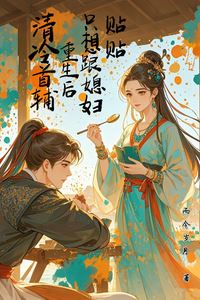
After Falling into a Novel, the Chancellor's First Wife Just Wants a Divorce
+Add to Custom List
Genres:
Novel Info

Summary

... Read More

Mo Sangsang, a researcher from an agricultural science institute and a food blogger in her past life, dies from a fish bone choking her while reading a novel. She transmigrates into the body of the novel's early-deceased original wife, who was sold to the Gu family for six silver taels by her greedy parents. The original owner jumped into a river out of despair after her mother-in-law passed away and her husband, Gu Jingci, remained in a vegetative state for over a year. Mo Sangsang wakes up among villagers who believe she attempted suicide, but she claims she slipped while gathering wild vegetables. She enters the Gu household to find a four-year-old boy, Gu Nian'an, caring for his unconscious father. Recognizing her status as a servant, she decides to stay and care for the father and son, hoping to earn her freedom deed once Gu Jingci recovers.

Using her knowledge of agriculture and cooking, Mo Sangsang immediately improves their living conditions. She forages for mushrooms and catches a rabbit, trading with neighbors to secure rice and other essentials. She meticulously cleans the home, treats Gu Jingci's bedsores with herbal poultices, and ensures the boy is fed and bathed. Her professional background allows her to identify that the village's agricultural crisis stems from soil depletion and improper planting techniques. She approaches the Village Chief and requests a plot of blighted land to demonstrate a solution. She burns dry vegetation to create ash fertilizer, tills the soil deeply, and creates raised ridges to manage moisture, successfully germinating wheat seeds that had previously failed to sprout.

Mo Sangsang's success revitalizes the village fields, earning her the gratitude and support of the locals. During a trip to the mountains with Gu Nian'an, she discovers a rare mother-and-child wild ginseng, which she sells to a reputable apothecary in town for sixty taels of silver. This windfall provides the capital to buy supplies, cloth, and educational materials. She begins teaching Gu Nian'an to read and write, using modern pedagogical methods to engage the withdrawn child. She also develops a mosquito repellent salve using mugwort, mint, and beeswax to protect the bedridden Gu Jingci during the humid summer.

The story introduces a hidden layer of intrigue when Mo Sangsang encounters a wounded man in the mountains who holds her at knifepoint to ask for medicinal herbs. She identifies the plant sanqi and leads him to it, unaware that he is a high-ranking general named Song Mo and his companion is the unconscious Gu Jingci, who has been hiding his identity. Back in town, Doctor Zhang, the apothecary owner, recognizes Mo Sangsang as the woman who saved the general. He visits the Gu household to examine Gu Jingci but finds no medical explanation for his coma, noting only that his pulse is stable. Impressed by Mo Sangsang's culinary skills and business acumen, Doctor Zhang proposes a partnership to mass-produce the mosquito repellent salve, offering her a share of the profits in exchange for the recipe.

As Mo Sangsang establishes this new income stream, she continues to nurture Gu Nian'an, helping him overcome his emotional trauma and social withdrawal. She maintains a routine of caring for Gu Jingci, chattering to him about daily life and her plans, while secretly preparing for the possibility that he may never wake up or may reclaim his former life and discard her. The narrative establishes a balance between domestic survival, agricultural development, and the underlying political mystery surrounding Gu Jingci's true identity and the circumstances of his condition.

Latest Release
DateGroupRelease
2026-08-11shanghai fantasy c40
2026-08-11shanghai fantasy c39
2026-08-11shanghai fantasy c38
2026-08-11shanghai fantasy c37
2026-08-11shanghai fantasy c36
2026-08-11shanghai fantasy c35
2026-08-11shanghai fantasy c34
2026-08-11shanghai fantasy c33
2026-08-11shanghai fantasy c32
2026-08-11shanghai fantasy c31
2026-08-11shanghai fantasy c30
2026-08-11shanghai fantasy c29

Community Reviews

Rating(4.1 / 5.0, 10votes)
5 stars
5(50%)
4 stars
1(10%)
3 stars
4(40%)
2 stars
0(0%)
1 stars
0(0%)

Popular reviews

... Read More
Okay so this whole arc is basically a masterclass in slow-burn tension and I need to talk about it. The plot here is doing something really clever — on the surface it looks like a domestic slice-of-life with house-building and parenting, but underneath every single scene is loaded with the ticking clock of Mo Sangsang's impending departure. She's been dropped into a novel she knows the ending of, and every warm moment with Gu Jingci is basically her digging herself deeper into emotional quicksand. The Wang Laizi scene at the beginning is a great example of how the plot layers threats. It's a minor conflict, sure, but it immediately establishes Gu Jingci's ruthless side and his absolute claim on Mo Sangsang. Then it pivots so smoothly into domestic stuff — the house, the kid, the sleeping arrangements — that you almost forget the stakes. But they're always there. The biggest plot twist in these chapters isn't some big revelation, it's the quiet one: Gu Nian'an has been secretly studying with Grandpa Li this whole time. The kid is basically a mini version of Gu Jingci — calculating, strategic, hiding his moves. And the scene where he tells his mom, "I thought you didn't like to learn" hit me like a truck. That's not a five-year-old being cute, that's a kid reading his environment like a seasoned politician. And then Gu Jingci's confrontation at her door — the way the plot circles back to his coma period, her caring for him, and then his predatory question about whether she's seen everything... the author is building this narrative spiral where past and present keep colliding. He left before dawn, made breakfast, told Li Qingfeng to watch over them, and Mo Sangsang is already scanning the town for shops to buy. She's planning her exit while he's planning his return. The dramatic irony is suffocating and I love it.
... Read More
天、地、人、和. Heaven, Earth, Humanity, Harmony. Gu Nian'an writes these four characters with such serious concentration and Old Man Li just nods and says 'not bad.' This scene hit me harder than I expected. Think about it—the story keeps coming back to these ideas. The harvest festival is literally about thanking heaven and earth for the harvest. The border conflict threatens the harmony of the whole village. Mo Sangsang is trying to create harmony in a world that keeps throwing chaos at her. And 'humanity'—well, that's everything. The way villagers share the boar meat, the Village Chief dragging the lonely old man out of his house, Li Qingfeng protecting them from thugs. Even the cave she prepares becomes this symbol of human resilience. I also can't stop thinking about the contrast between the festival (life, gratitude, community) and the war (death, fear, displacement). The author is setting up this tension between celebration and survival that I think is going to be really powerful when it resolves.
... Read More
The dialogue in these chapters is deceptively simple. On the surface it's everyday family conversation — who's sleeping with whom, what to eat, whether the kid should go to school. But every exchange is carrying subtext like a freight train. The strongest moment has to be the flavor conversation. Mo Sangsang asks Gu Jingci if he has a favorite taste, assumes he likes sweets because the novel's female lead used to make him pastries. And he says, deadpan: "I like things with a strong flavor." Then when she presses him on the sweetness thing, he asks: "Where did you hear that I like sweet things?" And the narration tells us: "In his past life, everyone thought he did, but he didn't!" This is such a small line but it's devastating. It means Mo Sangsang — the woman who's supposed to know him because she read about him — doesn't actually know him at all. She's projecting a fictional version onto a real man who has changed since his past life. And he knows it. The confusion on his face isn't just about dessert preferences, it's about realizing she sees him through a lens he didn't write. The kid's dialogue is also fantastic. "You're useless. You can't even get my mommy to stay. If Mommy wants to leave, I'll definitely go with her!" This is a five-year-old who understands emotional leverage better than most adults. And Gu Jingci's response — "Brat, I'm telling you, that day will never come!" — is equal parts threat and promise. Mo Sangsang's internal monologue is where the voice really shines. Things like "What kind of predatory words are these?!" and "Oh my god, is the male lead too deprived and wants to get a taste of her?" — she's using modern romance novel logic to process a situation that is genuinely dangerous and genuinely tender at the same time. The gap between her inner voice and her outer behavior is where all the comedy and tension lives.
... Read More
I came for the cozy village life and stayed for the impending disaster. This is such a masterclass in escalating stakes. We start with three thugs harassing a woman at a market—seems like a minor inconvenience. Then Li Qingfeng defeats them effortlessly. Then the butcher drops the bomb that their backer is the TOWN MAGISTRATE. Now we're talking about real consequences. And then—BAM—border conflict, military connections, potential refugees. The author doesn't let up. Every time I think the story is just about cooking and farming, something huge drops. Mo Sangsang's internal conflict is also fascinating. She's a modern agricultural researcher trapped in a historical setting, and she KNOWS this is a novel. She's trying to use her knowledge to survive, but the plot keeps throwing curveballs. The stakes keep rising and I am genuinely worried for this family. What happens when war reaches their village? What happens to Gu Jingci in his comatose state? What happens to Li Qingfeng's secret identity? I need the next chapter NOW.
... Read More
The stakes in these chapters operate on three levels simultaneously, and the author is brilliant about keeping all three in play. On the surface level, there's the Wang Laizi conflict — a rascal trying to cause trouble, Gu Jingci shutting him down with a threat about reporting him to the authorities. Low stakes, quick resolution, but it establishes that the world isn't safe and Gu Jingci is its protector. At the middle level, there's the family conflict — Mo Sangsang trying to maintain emotional distance from a husband who refuses to let her, a son who is simultaneously adorable and manipulative, and a domestic routine that keeps pulling her deeper into a life she's supposed to be preparing to leave. Every meal they share, every conversation, every moment of closeness raises the stakes because the longer she stays, the harder it will be to go. But the real stakes are at the deepest level: Mo Sangsang knows the plot. She knows what's coming. The text explicitly says she doesn't want to be "chased and killed by the female lead later on." This isn't a vague anxiety — it's a death sentence she's trying to outrun. And every day she spends with Gu Jingci, loving him, building a home with him, is a day she's postponing the inevitable. The tension isn't just romantic tension, it's existential terror wrapped in domestic warmth. The confrontation at her door is where all three levels converge. Gu Jingci is physically close, emotionally vulnerable, and asking the question that cuts to the core: "Why are you avoiding me?" Mo Sangsang can't tell him the truth. She can't say "I'm avoiding you because in six months I need to leave this town and in a year I might die." So she says "We shouldn't have too many entanglements in the first place" — which is both true and devastatingly incomplete. And then he leaves for three months. The stakes just got higher, not lower. Because now she's alone with the knowledge that he's gone, the house is hers, and the clock is still ticking.
... Read More
There's something deeply satisfying about the way these chapters depict the village rebuilding after the war. The author doesn't just tell us time passed — we see it through specific, tactile details that make the world feel lived-in. The image of Mo Sangsang airing out blankets she'd hidden in the cellar is one of those small moments that does so much work. It's domestic, it's practical, but it's also deeply symbolic — she's uncovering things she stored away for survival, letting them breathe in the open again. And then Gu Nian'an's demand to sleep with her instead of his dad? That's not just kid stuff, that's a child who's been sleeping in a cave and needs to feel safe. The new house itself is a character. Mo Sangsang decides to knock everything down and rebuild from scratch on the original foundation. She's planning to live there for a year, sure, but she's building something sturdy. Something that will last. The fact that she's investing in a place she plans to leave is quietly devastating. Then there's the osmanthus tree scene — "the large osmanthus tree that even the fire couldn't kill." The author chose that detail deliberately. An unkillable tree. A woman who can't be burned out. A love that survives comas and past lives and three-month separations. The setting isn't just backdrop, it's commentary. The town scenes are also noteworthy. Closed shops, grain stores still open, the war's economic aftermath visible in every shuttered storefront. Mo Sangsang walking through this half-dead commercial district and immediately thinking about buying property — that's a woman who sees opportunity where others see ruin. The world feels real because it has texture: the smell of cooking, the sound of a child crying on the doorstep, the warmth of a stove still hot in the morning.
See all reviews

Characters

See all characters

Custom lists

See all custom Lists