After Escaping the Silly Consort Relies on Her Spatial Abilities to Raise Adorable Babies
+Add to Custom List
Genres:
Novel Info
  • Author:
  • 锦岚
  • Status:Completed

Summary

... Read More

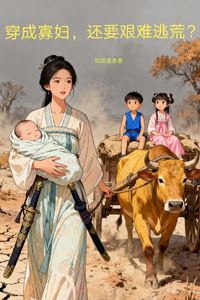
Lin Luoluo, a modern woman, is struck by a mysterious white light while being cheated on by her fiancé, causing her to transmigrate into the body of a sixteen-year-old girl with the same name. The original Lin Luoluo was the legitimate daughter of the Northern General, born with a mental disability. After her father died heroically defending the northern borders from a massive invasion, her mother died during childbirth, leaving Lin Luoluo to raise her three younger siblings. The Emperor granted her in marriage to Chu Chenyu, the Prince of Yu, ostensibly as a royal favor but actually as part of a political scheme. During the wedding night, the wine was tampered with, and Lin Luoluo woke up in the bridal chamber with Chu Chenyu, who suspected she was faking her disability to manipulate him.

Unlike the original owner, the transmigrated Lin Luoluo is intelligent and sharp-witted. She decides to maintain her foolish persona to survive in the dangerous royal court while secretly investigating her new reality. She discovers she has inherited a magical spatial dimension left by an ancient immortal cultivator, which contains a medicine cabinet, a spring of spiritual water, and martial arts manuals. This space becomes her greatest asset, allowing her to heal, store items, and cultivate strength away from prying eyes. Her relationship with Chu Chenyu is fraught with tension; he is cold and suspicious, often threatening her life to test her sanity, while she navigates his aggression with a mix of fear and defiance. Despite his harsh treatment, including forcing her to drink contraceptive soup, Lin Luoluo remains focused on her goal: protecting her siblings and securing her freedom.

The core conflict intensifies as Lin Luoluo learns of a conspiracy involving the Damo faction and the Third Prince. She retrieves a map fragment from her childhood home that completes a strategic map her father died protecting. When the Damo envoy arrives, a palace banquet is held, but it is ambushed by assassins. Lin Luoluo saves Chu Chenyu from a poisoned arrow, an act that visibly shakes him. Realizing her life is in constant danger and that Chu Chenyu will never let her leave willingly, she devises an escape plan. She fakes her death by taking a pill that induces a death-like state and is buried in the imperial mausoleum. Inside the coffin, she uses her spatial abilities and newly acquired martial arts strength to break out, retrieving burial artifacts and escaping the capital unnoticed.

Lin Luoluo reunites with her loyal siblings and servants in Yancheng, revealing her spatial powers to them after they swear secrecy. She discovers she is pregnant, a result of the spiritual spring water counteracting the contraceptive soup. As she prepares to travel south, the narrative shifts to Chu Chenyu in the capital. He is consumed by grief and rage over her death, having realized too late his feelings for her. Meanwhile, Murong Qingxue, Chu Chenyu’s former love interest, manipulates him by getting him drunk and pretending to be Lin Luoluo, leading to a complicated entanglement. The Emperor summons Chu Chenyu to lead troops to the western frontier due to a crisis involving the Kingdom of Fengxia. Chu Chenyu agrees to the command, partly to escape his pain and partly to fulfill his duty, leaving the political and romantic webs of the capital behind as Lin Luoluo continues her journey south with her growing family.

Latest Release
DateGroupRelease
2026-08-11shanghai fantasy c111
2026-08-11shanghai fantasy c110
2026-08-11shanghai fantasy c109
2026-08-11shanghai fantasy c108
2026-08-11shanghai fantasy c107
2026-08-11shanghai fantasy c106
2026-08-11shanghai fantasy c105
2026-08-11shanghai fantasy c104
2026-08-11shanghai fantasy c103
2026-08-11shanghai fantasy c102
2026-08-11shanghai fantasy c101
2026-08-11shanghai fantasy c100

Community Reviews

Rating(3.3 / 5.0, 26votes)
5 stars
6(23%)
4 stars
4(15%)
3 stars
9(35%)
2 stars
7(27%)
1 stars
0(0%)

Popular reviews

... Read More
Okay so this whole Tianyang Mansion sequence is actually really clever plotting. Lin Luoluo arrives, immediately assesses the situation, and within hours she's orchestrating a grain sale with the local government while simultaneously recruiting loyal kids from the City God Temple. That's not just competence porn, that's a character who moves fast and thinks three steps ahead. What I found most interesting is the timing of the magistrate showing up. He comes to the inn AFTER hearing reports of the grain being moved into the city — which means Lin Luoluo already has leverage. She's not just some random merchant with a cart; she's already demonstrated she can deliver. And the fact that she agreed to sell 30,000 jin on the spot, even though it left her with barely anything for the next day's street sales, says something about her priorities. She's playing the long game here — winning the governor's favor matters more than short-term profit. The subplot with Lin Da recruiting children is also smart narrative threading. The bold little girl who lost her parents, her five-year-old brother who wants to come too, Lin Da's warning about loyalty — this isn't just worldbuilding filler. These kids are going to matter later. I can feel it. The author is planting seeds. One thing that bugged me slightly though: the magistrate spotting Lin Luoluo's disguise immediately feels a little convenient. He's supposed to be a busy official, yet he notices she's a woman right away? Maybe that's intentional — maybe it's setting up that she's not as inconspicuous as she thinks, which could cause problems later. Either way, it worked for the scene.
... Read More
'Hello, my little darling!' 'Can you hear mommy?' 'Thank you for coming, and I will try my best to be a good mom.' I literally stopped reading and just sat with that for a second. That scene where Lin Luoluo talks to her baby after a bath — it's so quiet and intimate compared to everything else happening around her. She's running a grain operation, dealing with refugees, disguising herself as a man, negotiating with government officials... and then alone in her room, she's just a mother talking to her unborn child. The baby responds with actual movements, and she says 'Thank you for coming.' That hit me harder than any dramatic confession or battle scene would have. And then Chun Tao's reaction to her eating — the servant is just standing there, mouth open, because Lin Luoluo has an appetite for the first time in what seems like forever. It's such a small moment but it tells you everything. She's been carrying so much weight, literally and figuratively, and even her body is starting to relax because she's in a safer place now. The little girl at the temple who calls her 'big sister, big brother' because she can't figure out if Lin Luoluo is male or female — that made me laugh out loud. But it also made me think about how this whole disguise thing isolates her. She can't even have a normal human interaction without the confusion it creates. I wonder if there's going to be a moment where she just drops the act and lets someone see her properly.
... Read More
The dialogue in these chapters is deceptively simple. On the surface it reads pretty straightforward, but there's a lot of character being revealed through how people talk to each other. Lin Da's conversation with the young girl at the temple is a masterclass in understated authority. He doesn't lecture or threaten — he just says 'This is an opportunity to change your fate. As long as you're loyal, you'll have a good future.' Then the loyalty warning comes almost as an afterthought: 'If you betray us, your life will be worse than death.' It's casual cruelty that actually makes it more chilling. And the five-year-old echoing 'I can too' — that line does so much work. It's innocent, it's heartbreaking, it's funny, all at once. Lin Luoluo's internal voice is also distinct from her spoken voice. When she thinks 'Looks like this disguise isn't too successful after all! I was spotted immediately,' that's a totally different register from how she addresses the magistrate. She's performing competence and authority outwardly while internally she's just... tired and hungry and doing her best. The governor's dialogue is appropriately bureaucratic — all 'Please come to Yue Lai Inn for further discussion' and 'I'll return to discuss the matter with my subordinates.' He's a functionary, and his speech reflects that. Meanwhile Lin Zhong is all polite deferrals: 'Rest assured, my master is kind, and the price will be very fair.' You can tell these are experienced servants who know how to navigate power dynamics through language alone. The author's humor also shines through small moments. Lin Luoluo thinking 'What kind of greeting is this? She's calling me both 'big sister' and 'big brother.'' That's a very modern, very relatable internal reaction that makes the character feel alive.
... Read More
The atmosphere in this section is surprisingly rich for what is basically a transit chapter. You've got the refugees outside the city walls, the twice-daily porridge being reduced to once, the City God Temple overflowing with desperate people who paid for entry and are now scraping by. It's a world that feels lived-in and crumbling at the edges. But the most vivid sensory moment has to be the breakfast scene. Chun Tao bringing food, the smell making Lin Luoluo's stomach growl, the bun being so good she immediately wants to stock up. You can almost taste it. And then the image of her rubbing her 'now-rounded belly' after eating — that's the kind of detail that grounds the whole story in a physical reality. The grain-moving scene at dusk is cinematic. Dozen-plus carts, horse-drawn and oxen-drawn, workers stunned by the sight of grain 'that resembled small mountains.' The workers' faces going from nervous to joyful when Lin Luoluo offers them priority purchasing — it's a whole miniature economy playing out in one sequence. And then the magistrate arriving at night, official robes and all, finding Lin Luoluo already finished eating, rubbing her stomach. The contrast between his formal authority and her very human exhaustion is funny and humanizing. I also love the detail about the grain prices — rice at 4 wen per jin, coarse grains at 3. That's specific enough to feel real without bogging down the narrative. The author clearly knows what they're doing with these economic details.
... Read More
There's something really profound happening beneath the surface of these chapters that I want to sit with. Food. It's the central symbol here, and it's not subtle about it. The grain isn't just grain — it's power. Lin Luoluo controls it, and through it she controls everything: the governor's goodwill, the workers' loyalty, the children's futures. When she offers the workers priority purchasing tokens, she's not being charitable, she's building a web of obligation. Every family that buys from her becomes tied to her. That's how power works in a famine. But then there's the personal layer. Lin Luoluo's pregnancy and her appetite — these are symbols of life continuing in a world that's falling apart. The famine outside, the refugees, the reduced porridge rations... it's all death and scarcity. And then there's Lin Luoluo, rubbing her rounded belly, having the best breakfast she's had in weeks, talking to her baby. She's literally carrying life while surrounded by death. That contrast is the whole theme of the story, isn't it? The jade and silver she receives for the grain — those are symbols of a different kind of value. Precious, durable, portable wealth. But she stores the silver in her space, which is itself a kind of magical realism element that suggests she's building something that transcends normal economics. She's not just accumulating wealth; she's accumulating the means to sustain life on a larger scale. And the children — the girl who lost her parents, her five-year-old brother who just wants to stay with her — they represent the future. Not just Lin Luoluo's biological future with her baby, but the social future she's trying to build. 'This is an opportunity to change your fate.' That line echoes the whole novel's project.
... Read More
The stakes in these chapters are deceptively low-key but they're building tension like crazy. On the surface, Lin Luoluo is just selling grain and recruiting kids. But read between the lines and there's a whole web of precarious situations. The city's grain is already running out — shops are posting 'sold out' signs, the porridge rations are being cut. This isn't a stable situation. Whatever peace Tianyang Mansion appears to have is going to shatter, and when it does, Lin Luoluo needs to be ready. She's essentially positioning herself as a power broker before the crisis even peaks. Then there's the loyalty question. Lin Da is recruiting orphans and desperate children, telling them 'if you betray us, your life will be worse than death.' That's a huge red flag. These kids are vulnerable, traumatized, and now they've sworn loyalty to people who are willing to threaten them. What happens when one of them cracks under pressure? What happens when the governor decides Lin Luoluo is more trouble than she's worth? The stakes aren't just about grain anymore — they're about survival in a world that's getting worse by the day. And Lin Luoluo herself — she's pregnant, traveling, disguised, negotiating with government officials late at night. She's exposed in ways that feel increasingly dangerous. The magistrate already saw through her disguise. How many more people are going to figure it out? The suspense is in the waiting. We know the famine is going to get worse. We know Lin Luoluo has limited grain. We know she's building something fragile. The question isn't whether things will go wrong — it's when, and how badly.
See all reviews

Characters

See all characters

Custom lists

See all custom Lists