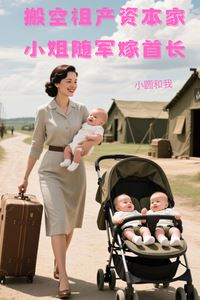
There's a line in this book that I can't stop thinking about. It's so small, so quiet, and it hits harder than any action scene. After Chen Shuang has stripped the mansion of its luxury, after all the scheming and the danger, the narrator just says: 'Only the magnolia flowers in the corner swayed silently in the wind, releasing their faint, lingering fragrance.'
That's it. That's the whole chapter ending. No dramatic music, no foreshadowing, just flowers. But it does something incredible—it grounds the entire story in a physical space that feels real. You can smell those flowers. You can see them moving in the wind while Chen Shuang stands in an empty, darkening house, carrying the weight of hidden wealth and a dead family.
The worldbuilding in this novel is quietly masterful. It's not the kind of book that stops to explain the political situation or the historical context. Instead, it drops you into scenes and lets you piece it together. The neighborhood office where Chen Shuang gets her work permit. The ration coupons she uses to buy supplies. The military transport ship with its diesel fumes and seasick passengers. The green train carriages at Shanghai Railway Station. Every detail is specific, every detail is lived-in.
Let me talk about the train scene for a moment because it's one of the most vivid sequences I've read recently. The air 'thick with coal smoke, sweat, and a restless unease.' The loudspeakers blaring 'stirring marches, barely masking the shouts in various dialects, children crying, and the whistles of train conductors.' This isn't just a setting—it's an atmosphere that makes you feel the weight of a nation in motion, the desperation and hope of people leaving everything behind.
And then the journey south. The climate growing 'humid and oppressive,' the smells intensifying, the young mother with her sick child, the cadre reading documents. Chen Shuang eating her own flatbread and pickles, refusing to engage. The world feels dangerous not because of explicit threats but because of the sheer density of human desperation packed into those carriages.
The military transport ship scene is equally powerful. 'Cramped, humid, filled with diesel fumes and the smell of seawater.' Chen Shuang secretly using mint leaves from her space to help Zhou Ma with seasickness—that tiny detail tells us so much about her character and the world she inhabits.
And then Qiongzhou Island appears through the mist: 'swaying coconut trees, white sand, distant blue mountains. Wild, untamed, full of life—completely different from Jiangnan and Shanghai.' The contrast is intentional. Shanghai was death and conspiracy. This new place is raw and dangerous in a different way, but it's alive. It's a visual and emotional reset.
The author also does something brilliant with the mansion itself. It starts as a symbol of wealth and privilege, then becomes a battlefield where Chen Shuang strips away its luxury to survive, then becomes 'a grave for the original owner's memories,' and finally something she locks behind a key and leaves behind. The mansion is a character in itself.
What about the spiritual spring space? It's mentioned casually but it changes everything about how Chen Shuang navigates this world. She's not just surviving—she's stockpiling. Rice, flour, antibiotics, tools, books. The space is her secret advantage, and the way the author treats it—never explaining where it came from, never making it the focus—is refreshingly practical.
I also want to mention the trial scene. It's brief but devastating. 'Chen Yian—multiple charges including murder—death penalty, immediate execution.' The clinical language of the verdict contrasts with the emotional devastation of Chen Min's screams. The author doesn't dramatize it. He just states the facts and lets the reader feel the weight.
The world of this novel feels like a real place at a real time. Not a fantasy backdrop, not a generic historical setting, but a specific moment in Chinese history where politics, family, and survival collide. And the author trusts us to understand it without over-explaining.
I keep coming back to that magnolia image. It's the quietest moment in a story full of noise, and it's also the most memorable.
Do you think the author will revisit the mansion later? Or is it truly left behind at this point?