Summary

... Read More

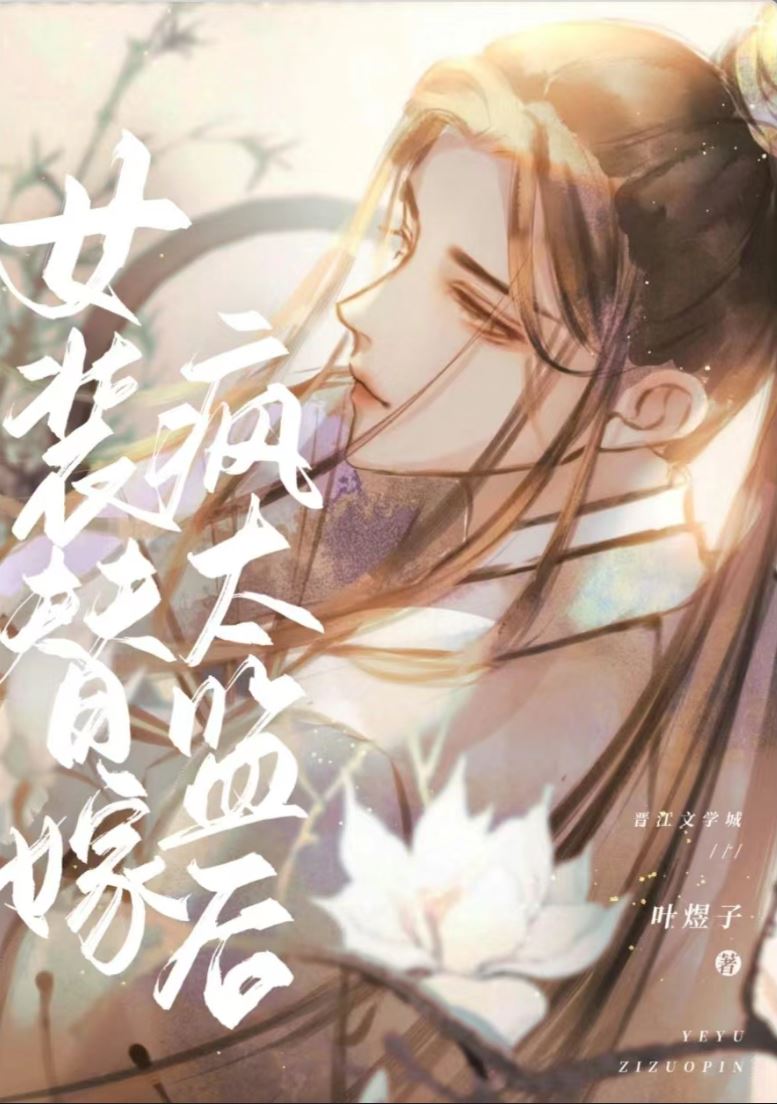
Chu Fengqing, the Second Young Master of the declining Chu family, faces a desperate crisis when his father is imprisoned for alleged embezzlement of disaster relief funds and his elder brother goes missing at the border. To save his family from total destruction, he devises a dangerous plan to infiltrate the capital's most feared power broker, Ji Yujin. Ji Yujin serves as the Governor of the Xichang, a secret police agency run by eunuchs, and rules with an iron fist that strikes terror into the populace. The emperor, seemingly intent on destroying the Chu family through humiliation, grants a marriage between Ji Yujin and Chu Fengqing’s twin sister, Chu Yinyin. However, knowing his frail sister cannot survive the ordeal, Chu Fengqing substitutes himself for her.

The transformation is painful and risky. Chu Fengqing uses an ancient acupuncture technique to permanently alter his voice and suppress his prominent adam’s apple, adopting the identity of the capital's famed beauty, Chu Yinyin. He endures physical suffering from his chronic asthma and fragile health to maintain the disguise. Accompanied only by his loyal servant Chang Wang, he enters the Ji Mansion on his wedding day. The journey is fraught with tension, as Chu Fengqing must navigate the treacherous dynamics of a household ruled by a man known for his cruelty and sadism toward men. He carries hidden weapons, including silver needles and a dagger, prepared for the worst-case scenario of assassination or discovery.

Upon arrival, Chu Fengqing finds the Ji Mansion cold and austere, lacking any warmth or festive spirit. Ji Yujin returns unexpectedly on their wedding night, interrupting Chu Fengqing’s solitary vigil. The confrontation is intense and psychologically charged. Ji Yujin immediately senses something unusual about his new bride, noting the stranger's courage and the subtle signs of illness. Despite his initial hostility and violent temper, demonstrated when he crushes a subordinate and threatens Chu Fengqing’s life, Ji Yujin is inexplicably drawn to the beauty and defiance before him. He chooses not to kill Chu Fengqing, rationalizing his hesitation as settling an old, forgotten debt.

The narrative shifts as external threats emerge. During a carriage journey to the palace to thank the emperor, Chu Fengqing and Ji Yujin are ambushed by assassins. Chu Fengqing, despite his weakened state, displays quick thinking and bravery, saving a mother and child from a stampede and subtly warning Ji Yujin about a rear ambush. This act of protecting someone solely because it was Ji Yujin, rather than out of altruism, confuses and intrigues the Governor. At the palace, they encounter royal rivals, including the Seventh Prince who covets Chu Fengqing’s beauty and the Second Prince, Zhao Yiyu, who was previously engaged to the real Chu Yinyin. Ji Yujin asserts dominance, physically shielding Chu Fengqing and reprimanding the princes, which sparks a complex dynamic of possessiveness and curiosity between the two men.

Back at the mansion, Chu Fengqing’s health deteriorates rapidly due to the cold and stress. Ji Yujin summons a royal physician, who hides the severity of Chu Fengqing’s congenital weakness to avoidexecution. The story concludes with Ji Yujin interrogating the physician about voice-altering techniques, revealing his growing suspicion that his bride is not who he claims to be. Meanwhile, Chu Fengqing remains trapped in the lion's den, balancing his mission to uncover the truth behind his father’s imprisonment with the immediate danger posed by Ji Yujin’s paranoia and the political machinations of the imperial court. The alliance is fragile, built on deception and survival, with both men hiding their true intentions from one another.

Latest Release
DateGroupRelease
2026-09-26knoxt c71
2026-09-26knoxt c70
2026-09-26knoxt c69
2026-09-26knoxt c68
2026-09-26knoxt c67
2026-09-26knoxt c66
2026-09-26knoxt c65
2026-09-26knoxt c64
2026-09-26knoxt c63
2026-09-26knoxt c62
2026-09-26knoxt c61
2026-09-26knoxt c60

Community Reviews

Rating(4 / 5.0, 389votes)
5 stars
129(33%)
4 stars
128(33%)
3 stars
131(34%)
2 stars
1(0%)
1 stars
0(0%)

Popular reviews

... Read More
The dialogue here is so economical it almost hurts. Look at how rarely anyone actually says what they mean: "Young Master, it's done." — just two words but you can feel the whole charged atmosphere behind it. The intimacy of the scene (helping someone dress for a forced marriage) compressed into a report. "En." — Chu Fengqing's signature response. One syllable. Cold. Controlled. And yet right after it, the narrative tells us he felt embarrassment and shyness. The gap between what he says and what he feels IS the character. "Madam" — the steward's use of this title makes Chu Fengqing feel uncomfortable, and that single reaction note tells us everything about how deeply this role violation cuts. The bridesmaid's internal monologue is also doing incredible work: "This lady is really tall." She's observing someone she thinks is a woman, noticing physical details, completely missing the truth right in front of her. That's comedy gold wrapped around dramatic irony. And the crowd gossip—"Who knows? He might still be killing people somewhere else"—perfect. Three words and we learn everything about Ji Yujin's reputation without the author having to deliver a single exposition paragraph. The narrator trusts the characters to convey worldbuilding through their casual conversations. That's craft.
... Read More
There are SO many layers in this passage and I want to unpack them. First: the snow. It's been brewing for days and never came. Chu Fengqing himself is compared to this weather — holding back, building pressure, never releasing. And then it falls the moment he stops holding back. The external world mirrors his internal state. Classic but effective. Second: the illness. It's never fully explained here, but the rules he's lived by — no excitement, no anger, no fast movement, no certain foods — these are symptoms of something that makes emotional intensity physically dangerous for him. The illness is both literal and metaphorical. It represents everything that was taken from him as a child and the way trauma forces you to build walls so high you forget there's anything on the other side. Third: the twin. The fact that Chu Fengqing appears in male form to the imperial physicians, who previously only knew him as the "Madam" in women's clothing, speaks to identity and performance. He has been playing roles his entire life — the model noble son, the careful patient, now possibly something else. His twin connection adds another layer: is there a part of him that exists only in relation to someone else? Fourth: medicine as rebellion. His one act of defiance was staying up late reading medical books. Not fighting. Not riding. Reading. And now that skill becomes the very thing that allows him to reach Ji Yujin. The thing that kept him alive becomes the thing that might save someone he loves. The recurring motif of blood is also striking — from his own lips to Ji Yujin's wound. Blood as life, blood as connection, blood as the price of caring.
... Read More
'The blood dyed the white red bit by bit, which was extremely dazzling.' This line haunted me. Not the violence itself, but the imagery - this pristine white wedding dress, this symbol of some arranged union that probably wasn't wanted by either party, getting stained by the violence that surrounds their world. And Chu Fengqing's emotional journey throughout this chapter is so subtle. He starts off cold, distant, sitting as far away from Ji Yujin as possible in that huge carriage. But then he thanks Ji Yujin for the hot water bottle, he lets himself be pulled closer, he delivers that line about not being afraid when Ji Yujin is there - and I swear my chest tightened. Is it strategy? Probably. But there has to be something real underneath it, right? Because the way Chu Fengqing watches Ji Yujin fight, the way he notices his face looks softer when his eyes are closed... that's not just a husband observing his wife's rival. That's someone seeing a person, not a role.
... Read More
The calluses on Ji Yujin's fingers versus the soft hands of Chu Fengqing - this repetition of physical contrast keeps appearing throughout the chapter. Ji Yujin touches Chu Fengqing's wrist and notices the redness, asks if he's made of tofu. There's something almost tender in his observation, but also a fundamental bewilderment at this delicate creature who's been placed in his world. The wedding dress itself is symbolic - white, pure, untouched, now being dragged through snow and blood. And Chu Fengqing's calligraphy practice, this refined scholarly pursuit that marks his fingers with calluses too... both men are marked by their trades, but in ways that make them vulnerable to each other. The heat exchange is another motif - Ji Yujin's warm hand against Chu Fengqing's cold one, the hot water bottle that arrives just in time, the body heat transferring through thin fabric. Warmth and cold as metaphors for connection and isolation. The carriage ride becomes this floating space between worlds where all the rules might not apply, and what grows there might be dangerous.
... Read More
I have to talk about how the setting of this scene works because the author absolutely weaponized the brothel atmosphere and I am not okay. First, let's establish where we are. We're in what's clearly a high-end brothel or entertainment venue—there's music being played, wine, private rooms, the whole deal. But the genius is how the author uses this setting to heighten the tension between Chu Fengqing and Ji Yujin. A brothel is supposed to be a place of pleasure, of temptation, of moral ambiguity. And these two men—one a doctor known for his cold detachment, the other a powerful figure with enemies everywhere—are standing in THIS PLACE having the most charged emotional exchange of their lives. The sensory details are phenomenal. "The spicy wine was burning hot in his throat" — that's Chu Fengqing drinking to stead himself, to reclaim control. "The aroma of the wine filling the air" — the setting is almost palpable. But the most striking detail is the agarwood scent. Ji Yujin's natural fragrance enveloping Chu Fengqing during the kiss creates this intimate bubble within a public space. It's as if the world around them fades away and only their scents matter. That's worldbuilding through atmosphere, not description. What I love is how the setting mirrors their internal states. The Red Mansion—with its curtains, its hidden desires, its performative pleasures—is a metaphor for their relationship. Everything is layered, ambiguous, full of things left unsaid. Ji Yujin's comment about "responding to the occasion" and doing something "to suit the occasion" directly references the brothel setting, turning the environment into part of their flirtation. The curtains of the Red Mansion become the backdrop for Chu Fengqing's realization that this kiss is "very appropriate" — as if the very walls are endorsing their transgression. There's also the contrast between the public setting and their private moment. They're surrounded by the trappings of pleasure and vice, yet what's happening between them is so raw, so emotionally naked, that it transcends the location. The brothel becomes irrelevant; all that matters is the agarwood scent, the callused hands, the bitten lip, the heartbeat they can both hear. The drinking contest that follows is another brilliant use of setting. Chu Fengqing, the physician who just scolded Ji Yujin for drinking with poison still in his system, initiates a drinking contest. It's rebellious, it's defiant, it's them both pretending this is normal while everything between them has shifted irrevocably. The turbid wine, the porcelain cups, the way Chu Fengqing drinks without changing expression—all of it paints a picture of two people using the setting to mask their true emotions. The author doesn't need elaborate descriptions of the room because the atmosphere does the work. Every detail—the music, the wine, the incense, the curtains—serves the emotional arc. This is how you build a world that feels alive and meaningful.
... Read More
So the Red Mansion literally erupts in screams while they're driving away and I NEED to know what happened. Because the author drops this like "there were utter dreary cries and screams" and then immediately pivots to food at an eating house and I am NOT OKAY with this. This is a masterclass in narrative misdirection — the reader is braced for drama and instead gets a scene about Ji Yujin picking at peanuts and feeding chicken to Chu Fengqing. The contrast is almost comical but also deeply unsettling because we KNOW something terrible just happened. And then cut to Chu Zhengyin in a cell. His son visits him, he's been imprisoned because of slander, and the last thing we get is him asking why his son dresses like a woman and telling him not to come back. This is where the plot threads are converging and I can feel the ground shifting. The escort agency in the south. The evidence. The investigation that went wrong. The father-son dynamic that was already established through the "you're not in good health" conversation and now we're getting the cultural weight of it layered on top. The author is building toward something and I have so many questions. What happened at the Red Mansion? What evidence is Chu Zhengyin protecting? What happens when he dies in that cell? I can't stop thinking about this batch.
See all reviews

Custom lists

See all custom Lists