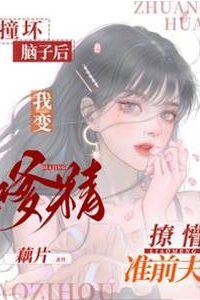
After Crashing My Brain, I Became a Flirty Expert to Tease My Confused Ex-Husband
+Add to Custom List
Genres:
Novel Info
  • Author:
  • 藕片
  • Status:Ongoing

Summary

... Read More

Gu Anyun and Jin Chenyue entered into an arranged marriage three years ago to fulfill a promise made to Jin Chenyue’s ailing mother, Fu Jinyu. Although they were raised together as siblings after Gu Anyun was temporarily placed with the Jin family as a child, they returned to their biological families at age three. The marriage was intended to be a temporary arrangement with a three-year term, after which they would divorce amicably. Gu Anyun, the eldest daughter of the wealthy Gu family, endured the role of Mrs. Jin with cold compliance, suppressing her true personality to maintain peace between the two families. Jin Chenyue, the heir to the Jin Group, fulfilled his marital obligations physically but remained emotionally distant, believing that Gu Anyun resented her confinement within the Jin family.

As the three-year deadline approached, Gu Anyun initiated the divorce proceedings with decisive action. Her frustration peaked when Wen Xinzhi, Jin Chenyue’s former high school girlfriend and a renowned designer, attempted to impose her presence by delivering a custom gown for a charity gala. Gu Anyun rejected the gift and the designer, throwing the gown into a pool and refusing to attend the event. This act of defiance signaled her refusal to continue playing the role of the submissive wife. When Jin Chenyue confronted her, Gu Anyun explicitly stated that she hated everything associated with being the Jin family’s young mistress and that she no longer wished to endure the marriage. Jin Chenyue, surprised by her sudden boldness and hidden emotions, agreed to review the divorce papers but secretly hoped to delay the process.

Gu Anyun’s decision to divorce was not solely based on her lack of feelings for Jin Chenyue. During a visit to her biological parents, she revealed that she felt suffocated by the expectations of her role. Her mother, Cui Tang, expressed regret over forcing the marriage, while her father, Gu Qiaoxi, was furious at Jin Chenyue for causing his daughter’s unhappiness. Gu Anyun clarified that she did not blame anyone but simply desired a life free from the constraints of the marriage, seeking genuine love rather than a partnership built on familiarity and duty.

On the day scheduled for the divorce, Gu Anyun was involved in a severe car accident caused by traffic congestion. She suffered a head injury and fell into a coma. Jin Chenyue, who had been preparing to finalize the divorce, rushed to the hospital and remained by her side for three days. During this time, he reflected on their relationship, realizing that he had misinterpreted her coldness as resentment rather than a sacrifice she made for the family’s harmony. He also discovered that he had developed genuine feelings for her, contradicting his earlier assumption that he was indifferent to the divorce.

While Gu Anyun remained unconscious, Jin Chenyue’s attitude shifted from detachment to concern. He canceled his business commitments and stayed at the hospital, monitoring her condition closely. His friends, including Shen Zhilu and Jiang Ying, observed his change in behavior, noting that he was deeply affected by her condition. Jin Chenyue began to question whether the divorce was the right decision, especially after learning that Gu Anyun had not resisted the marriage out of hatred but out of a sense of duty.

The story reaches a critical turning point as Gu Anyun’s consciousness remains elusive. Jin Chenyue is forced to confront his true feelings and the possibility of losing her permanently. The narrative explores the complexities of their relationship, highlighting the misunderstandings that arose from their sibling-like upbringing and the societal pressures that shaped their marriage. As Gu Anyun lies in a coma, Jin Chenyue must decide whether to proceed with the divorce or fight to save the marriage, while Gu Anyun’s family and friends await news of her recovery.

The aftermath of the accident brings Gu Anyun’s parents into the picture, with her father demanding answers from Jin Chenyue. Meanwhile, Jin Chenyue’s family, particularly his father Jin Fang, expresses concern over the divorce and the accident. The narrative delves into the emotional turmoil of both families as they grapple with the potential dissolution of the marriage and the uncertainty of Gu Anyun’s health. Jin Chenyue’s internal conflict intensifies as he realizes that his actions and words over the past three years may have contributed to Gu Anyun’s desire to leave.

As the story progresses, the focus shifts to Jin Chenyue’s efforts to reconnect with Gu Anyun, even in her unconscious state. He reflects on their childhood memories and the moments that defined their relationship, recognizing the depth of his affection for her. The narrative also touches on the role of Wen Xinzhi, whose presence had previously caused tension between Gu Anyun and Jin Chenyue. With Gu Anyun in a coma, Wen Xinzhi’s influence wanes, allowing Jin Chenyue to reconsider his past interactions with her.

The conclusion of the provided chapters leaves Gu Anyun’s fate uncertain, with Jin Chenyue vowing to protect her and ensure her recovery. The story sets the stage for a potential reconciliation, as Jin Chenyue seeks to understand Gu Anyun’s true feelings and address the issues that led to the divorce. The narrative emphasizes the importance of communication and emotional honesty in relationships, challenging the characters to overcome their past misunderstandings and societal expectations.

Novel Items

More
Document
Kept in the bedside drawer. Gu Anyun repeatedly reminds Jin Chenyue to sign them, referencing his promise made when they got married three years ago. She fears he might go back on his word.
Plant
A birthday gift Jin Chenyue gave Gu Anyun last year. It is in full bloom outside the sunroom, braving frost and snow. Gu Anyun orders it to be cut down, symbolically rejecting the steadfast love and faithful affection it represents. The flower language is nobility, steadfastness, and faithful love.
Clothing
A figure-hugging gown personally delivered by Teacher Wen (Wen Xinzhi) for the important charity gala that evening. Jin Chenyue instructed Wen Xinzhi to ensure Gu Anyun tries it on properly before she leaves.
Event
An upcoming event the day after tomorrow that Shi Jinnian plans to take Jiang Mian to, intending to let him see the world and possibly bid on some collectibles for him to play with.
Clothing
Three sets of high-end custom-made dresses selected by Nan Qiu from the walk-in closet for Gu Anyun's daily wear, each with a distinct style.
Treasure
Jewelry that Fu Ting's mother secretly gave him when they split from the family. He offered to let Ruan Jiaojiao sell it to pay for things, showing his willingness to give her everything he had.
Latest Release
DateGroupRelease
2026-08-11shanghai fantasy c26
2026-08-11shanghai fantasy c25
2026-08-11shanghai fantasy c24
2026-08-11shanghai fantasy c23
2026-08-11shanghai fantasy c22
2026-08-11shanghai fantasy c21
2026-08-11shanghai fantasy c20
2026-08-11shanghai fantasy c19
2026-08-11shanghai fantasy c18
2026-08-11shanghai fantasy c17
2026-08-11shanghai fantasy c16
2026-08-11shanghai fantasy c15

Community Reviews

Rating(4 / 5.0, 23votes)
5 stars
9(39%)
4 stars
4(17%)
3 stars
10(43%)
2 stars
0(0%)
1 stars
0(0%)

Popular reviews

... Read More
Okay, I've been thinking about this book all day and the symbolism is SO rich I need to unpack it. The Australian waxflower is the central symbol here, and it's doing SO much work. Nobility. Steadfastness. Faithful love. And Gu Anyun literally orders it cut down. Why? Because it represents everything their marriage was supposed to be—something pure and enduring—and she can't stand the reminder that it never actually happened. The flower was a gift from him, yes, but it's also a symbol of the romantic ideal that their arranged marriage was supposed to fulfill and didn't. Then there's the divorce papers themselves—this recurring motif of something that should be simple (just sign and it's over) but keeps getting delayed. Three years and they're still unsigned. What does that say about both of them? About him hiding his feelings behind business trips and domineering behavior? About her using the divorce as both shield and weapon? The snow is another symbol I can't ignore. It's always present—falling outside the window, howling in the wind, then stopping after their intimate scene. The cold world outside versus the heated room inside. Is the snow representing the emotional coldness between them? Or the purity that still exists beneath the surface? And the shadows on the marble floor—"like spies, rising and falling at times; like play, yet like capture"—that's the entire marriage in one sentence. Performance and imprisonment, freedom and entrapment, all reflected in that cold, hard surface. This story isn't really about an arranged marriage. It's about two people who are trapped in a performance of something they both want but can't admit to wanting.
... Read More
Can we just take a moment to appreciate how distinctly each character sounds in this text? Because the dialogue work here is genuinely excellent, and Lian Caige is the standout. "Only the vase lady herself could pull off this death angle!" — This line alone tells you everything about Lian Caige's personality. She's playful, affectionate, unapologetically dramatic, and she speaks with this Jiangnan softness that the author conveys through rhythm and word choice rather than explicit description. Compare that to Gu Anyun's dialogue, which is much more clipped and dry. "Sort of." "Yeah, I'm just not interested." "Please roll away gracefully." She's guarded even with her closest friend, and the contrast between how she speaks to Lian Caige versus how she speaks to everyone else is telling. Jin Chenyue's dialogue is almost entirely minimal — "Shut up." "When did you become as gossipy as Fu Chuanzhou?" — which is perfect for his character. He's a man of few words, and when he does speak, it's either practical or defensive. But the real star is Shen Zhilu. His dialogue is witty, probing, and serves as the emotional compass of the story. "Have you ever considered that this might be fate?" and "You like her, don't you?" — these lines do double duty, advancing the plot while also revealing his own personality as someone who sees through facades. The author also uses dialogue to create humor in the most natural way. The exchange between Gu Anyun and Lian Caige about Jin Chenyue's figure is genuinely funny: "Oh right, is his figure good?" "Pretty good. He exercises every day." "Eww~ That's why I said you're impressive!" This is such a natural best-friend conversation. The humor comes from Lian Caige's dramatic reaction and Gu Anyun's deadpan delivery. It feels like something I've actually heard between friends. One thing I want to mention is the narrative voice itself. The third-person limited perspective stays firmly with Gu Anyun, and the prose has this light, almost conversational quality that matches her personality. It's not flowery or overwrought — it's clean and direct, which makes the emotional moments hit harder by contrast.
... Read More
"Probably because she had been woken up after falling asleep, Nan Qiu left, and Gu Anyun tossed and turned in bed, unable to fall asleep no matter what." I need to talk about this opening line because it sets the entire emotional tone for these chapters. Gu Anyun can't sleep. Not because of heartbreak, not because of drama — just because she was woken up. And then she does the most Gu Anyun thing possible: she texts her best friend at 2 AM. But here's the thing that made me genuinely emotional reading this. Gu Anyun is about to get divorced, and her first instinct isn't to cry or panic. It's to tell her best friend, who then immediately video calls her. And their conversation is the most wholesome thing I've read in a romance novel in years. Lian Caige is obsessed with Gu Anyun's beauty, calls her the "vase lady" with genuine admiration, and when Gu Anyun points out that Lian Caige has dark circles under her eyes, Lian Caige bursts into tears of being cared for. This friendship is so pure. In a genre where female friendships often get sidelined for romantic plotlines, Lian Caige is genuinely the most important relationship in Gu Anyun's life right now. She's the one who funded Lian Caige's studio, who shows up, who stays up at 2 AM. And then the accident happens. The emotional whiplash from that 2 AM chat to Gu Anyun lying unconscious in a hospital bed is brutal. Jin Chenyue waiting at the Civil Affairs Bureau, checking his watch, wondering if she changed her mind — and then the call comes. The way the narrative handles this transition is masterful. One moment she's laughing with her friend, the next she's unconscious. Life is that unpredictable. But what really got me was Jin Chenyue's internal conflict. He says he'd rather stay single than gamble with her life, but he's also the one who wanted the divorce so badly. The emotional complexity of a man who realizes too late that he doesn't want to lose someone he's been taking for granted — it's classic but it works because the author makes it feel fresh through Gu Anyun's perspective. She's not pining. She's not suffering. She's just... living. And that makes his realization hit even harder.
... Read More
Let me just say — the pacing in these chapters is absolutely relentless and I am here for it. Chapter 15 opens with Gu Anyun waking up and immediately demanding a hug. That's it. No slow build, no 'how are you feeling' small talk. She's out of the cold wife archetype and into 'clingy disaster' mode within three paragraphs. And then Chapter 16 immediately pivots to the family arriving and witnessing the most compromising position possible. By the time we reach Chapter 17, Jin Chenyue has just dropped a confession that basically says 'I'm not letting you go even if you recover.' Three chapters, zero breathing room. What I love about how the author structures this is the way each scene escalates the emotional stakes while also giving us comic relief. The neurology specialists giving their clinical diagnosis? Funny. The psychologist saying 'you should be happy, she doesn't have major issues'? Hilarious. Gu Qiaoxi calling Jin Chenyue a 'lucky brat'? Peak comedy. But then right after all that laughter, Jin Chenyue says something genuinely vulnerable and the whole tone shifts. That's smart pacing — it keeps you from getting complacent. The chapter endings are also doing heavy lifting. Each one stops at a moment of maximum tension or revelation. The doorway gasp. The family's stunned silence. Jin Chenyue's 'I may not be able to remain a gentleman to the end.' These aren't just chapter breaks — they're hooks that make you immediately want to keep reading. The author clearly understands that this kind of romantic comedy-drama thrives on momentum, and these chapters move like a rollercoaster with no seatbelt.
... Read More
Okay so let me just start by saying that Jin Chenyue is one of my favorite slowly-unpacking characters in recent romance fiction, and this batch of chapters absolutely delivered on that front. On the surface, he's the cold CEO who wants a divorce, right? That's what he tells everyone. But then you have this scene where Gu Anyun gets into a car accident and he doesn't leave the hospital for three days. THREE DAYS. And when Shen Zhilu teases him about liking her, his ears turn red. His EARS. The man can maintain a completely stone-faced expression through everything except a simple comment about his own emotions. What I love most is the contrast between how he treats Gu Anyun when she's awake versus when she's unconscious. When she's conscious, she's cold and distant — the "Mrs. Jin" identity clearly suffocating her. But when she's unconscious, he's sitting by her bedside, touching her face, asking questions that get no answer. The line "Does staying by my side make you so unhappy?" is devastating because it's the first time we see him genuinely vulnerable, and he can only say it to someone who can't respond. And then there's Shen Zhilu, who serves as this perfect mirror character. He's the one who sees everything clearly and keeps trying to tell Jin Chenyue the truth. His line about fate is so good — he's basically saying, look, the universe literally intervened to stop this divorce. That's not coincidence, that's narrative justice. But here's what really gets me: Jin Chenyue's relationship with Gu Anyun isn't just romantic tension. It's about two people who have been performing roles for each other for three years, and now that the performance is ending, neither of them knows who the other person actually is. Gu Anyun was never truly cold — she was just playing the part of the perfect Mrs. Jin. And Jin Chenyue? He's been playing the part of the indifferent husband so well that he might not even realize his own feelings until it's almost too late. The question that keeps haunting me is: when she wakes up, what happens next? Because the dynamic has already shifted. He's seen her vulnerable. She's seen him vulnerable (in his own way). The divorce was supposed to be clean, but it's not going to be, is it?
... Read More
I have never been someone who reads past midnight, but this book? I stayed up way too late and I have zero regrets. The pacing is absolutely ruthless in the best way. Chapter 1 opens mid-scene—no boring setup, no exposition dump, just straight into the tension between these two. We learn everything we need to know about their three-year arranged marriage, the physical intimacy, the divorce papers, and his hidden feelings all in one chapter. That is efficient storytelling at its finest. Chapter 2 slows down a bit with the morning routine, but even then it's never boring. The slow walk from the bedroom through the fifty-meter corridor, the elevator ride, the conversation with Teacher Wen overheard in the reception hall—it's all building this simmering dread. And then Chapter 3 hits us with the waxflower scene and the order to cut it down, and I was like... WHAT JUST HAPPENED. The chapter endings are perfectly calibrated. Each one leaves you with a question or an emotional punch that demands the next chapter. The author never lets you breathe for too long, but also never rushes through the important moments. The transition from the bedroom to the sunroom to the confrontation with Teacher Wen feels like a tightening spiral. Also, the way the author uses Nan Qiu as a pacing device is genius. She's the steady presence who grounds us between the emotional chaos, and her reactions help us gauge how intense things are without the narrative having to tell us directly.
See all reviews

Characters

See all characters

Custom lists

Oops…There is nothing here.