After being forced to marry an ugly husband (BL) - Reviews

After being forced to marry an ugly husband (BL)
+Add to Custom List
Sort
Add review
... Read More
I think what's killing me about this book is how the romance is told through OBJECTS now. Like, they don't hold hands or do cheesy confessions. They exchange calligraphy samples. But read between the lines and it's SO intense. Qingyan copies Qiu Henian's practice pages, leaves his best attempt, and Qiu Henian leaves comments and corrections. That's basically modern dating but with ink and rice paper. And the line where Qingyan realizes this method is 'much more effective than blind practice alone'—I'm dead. He doesn't just mean the calligraphy, bestie. Then there's the dinner scene that I genuinely cannot get over. They're sitting together not talking much, just pushing plates toward each other. The rabbit meat with pork fat, the bean sprouts—he's cooking for her. That's love language. And when Qiu Henian goes to handle Wang Heyao alone because he's protecting Qingyan from the ugliness, and then Qingyan immediately goes to help him take off his robe and brings him a towel after washing his hands? NO WORDS SHARED but it's the most intimate moment in the entire chapter. The author writes: 'The whole sequence flowed smoothly without a word spoken, but it was seamless.' Sister Lan watches and laughs quietly. She SEES it. She sees what they have. That's the thing that wrecked me. It's not fireworks, it's something far more dangerous—it's routine. It's domesticity. And in a genre full of grand romantic gestures, this quiet knowing between two people who've survived together is infinitely more powerful.
... Read More
Okay so let me just say this scene where Qingyan is washing dishes after the banquet and Yang Huai shows up casting this long shadow all the way from the doorway to the basin—what is this show doing to me?? The tension in this chapter is absolutely *chef's kiss*. First you've got Yang Huai showing up at the banquet with those ridiculously expensive jade ruyi gifts, clearly trying to make some kind of statement, and then the unspoken observation happening at the beginning with whoever that someone was watching Qingyan and Qiu Henian's intimate moment. Who was that?? I literally gasped out loud. And then the subplot with Zhang Ju and Liu Youfu being cheap and freeloading while Liu Xiang is out here flirting with Yang Huai behind everyone's back—it's all connected like these little threads of drama weaving together. The author really knows how to layer in conflict without making it feel forced. Every conversation at the dinner table feels like it's hiding something. And don't even get me started on Liu Fayi glaring with red eyes while her brother tries to calm her down—what did she see? What doesn't she know?? The chapter ends on this cliffhanger with Yang Huai approaching Qingyan and that paper fan in his hand and I literally cannot sleep until I read the next chapter.
... Read More
The structural elegance here is effortless but masterful. You close one chapter vibrating with unresolved intimacy—the dark, the massage, the barely-contained want—and then Chapter 64 opens with the softest possible reset: a sleeping cat, heavy snow, a shared bowl of noodles. That contrast isn't accidental; it's emotional regulation for the reader. We get to exhale. But don't think the author's letting us off the hook. The pacing ramps back up through play. Sledding is kinetic joy, then cards are the new arena, and suddenly the stakes are literally clothes. The shift from domestic calm to competitive flirtation feels organic because the rhythm mirrors real relationship cadences: intensity, recovery, then a different kind of tension. And that ending? “Qingyan's clothes came off one by one. Midway through the game, Qiu Henian glanced at h…”—cut off mid-sentence, mid-action. It's a masterclass in denial-that's-still-delight. No cliffhanger scream, just a gentle, persistent tug on the sleeve. You'll open the next chapter before you know it.
... Read More
Let me be honest — on paper, this chapter has very low stakes. There's no war, no betrayal, no life-or-death danger. People are digging vegetables. Discussing farmland. Gossiping about sex. Going to sleep early. Some guy has a face scar and another guy is blushing about it. And yet — and YET — I was on the edge of my seat during the thunder scene. Why? Because the stakes here aren't external. They're intimate. They're about whether two damaged people can trust each other enough to fall asleep in the same bed without flinching at loud noises. Think about it. Qingyan wakes up from a muffled thunder sound and his FIRST instinct is alarm. He sits up suddenly. He's startled. This tells us something crucial — his baseline state isn't calm. He's living with a hypervigilance that comes from past trauma or uncertainty. And Qiu Henian's response? A warm hand on the back of his neck. Guiding him back to bed. Saying "Don't be afraid" in a hoarse, sleep-heavy voice. Patting his back. This is the conflict resolution in action — not through grand gestures but through the daily practice of making someone feel safe. The stakes are also embedded in the land discussion. Ten mu of previously useless land is now an investment. Money has been saved. Labor needs to be hired. Qiu Henian can only help intermittently. Qingyan acknowledges his own limitations — he "knew he couldn't handle it all alone." This is a real conflict: ambition versus capacity. Can they actually pull this off, or will it overwhelm them? And then there's the ongoing tension around the medication issue. Qingyan threatens to pull Qiu Henian's ears in front of San Yao if he takes reckless medication again. The medication represents a deeper conflict — Qiu Henian's health, his autonomy, the balance between care and control. Qingyan wants to protect him but also needs him to participate in his own wellbeing. What makes these low-key stakes work is that the author never lets us forget what's at risk. Every moment of sweetness is shadowed by the knowledge that these people have been hurt before. The medicine incident hasn't been forgotten. Chen Yu's lingering suspicion hasn't fully dissolved. The land hasn't been cultivated yet. The relationship isn't 'fixed' — it's being practiced, day by day, like learning a new language. The thunder scene is the perfect microcosm of all of this. A sudden noise threatens the peace. Fear rises. But then — warmth. A guiding hand. A soft explanation. A half-asleep kiss. Sleep comes. The threat passes. The safety holds. That's the real stakes here. Not whether they'll succeed or fail, but whether they'll keep choosing each other even when the ground shakes. And so far? They're choosing each other. Every night. Through the mud. After the ice breaks. I'm invested.
... Read More
OK so let me just—can we talk about this bath scene because it is EVERYTHING. Qingyan is in the tub, water steaming, heart hammering every time footsteps approach the door, and he's like “what if he opens it right now what if he opens it RIGHT NOW” and then he slaps himself for even thinking that?? The tension is so thick you could spread it on toast. And then he rushes out so Henian can bathe, wraps his hair in a cloth, throws on a robe, and says he'll tend the fire in the other room because obviously that's what happens when someone you're quietly in love with wants to shower alone. But then Henian grabs his arm and drags him into the BEDROOM. The bedroom! With the curtains! And asks “Do you mind?” like he's asking about the weather. I literally lost it. Qingyan's desperation to not seem eager is so painfully endearing—he pushes back by saying “just go wash, if the water cools I'll be tired” and it's the most transparent deflection I have ever encountered in my entire life. The curtain closes, the room goes dim, lamp light filters through, and Qingyan turns his face toward the bedpost like maybe if he stares hard enough at the wall it'll solve everything. This is peak slow burn. Peak. And I am HERE for it.
... Read More
The description of the old doctor's clinic is one of those passages that just paints itself in your head like a painting. Medicine and incense smell mixing together. The sound of chess pieces clicking on a board. Two elderly men playing in silence while the world outside moves on. It felt like stepping into a historical drama and sitting quietly in the corner waiting. "The smell of medicine and incense quietly permeated the hall, which was extremely quiet except for the sound of the chess pieces falling on the board." — I need this as an aesthetic for my room honestly. The way the author writes atmosphere without ever stopping to explain why it matters... it just works. The clinic becomes this sacred neutral space where truth comes out in blood and sunlight. And then the blood under noon light turning blue. That image is so visually striking it basically stuck to my brain. Red becoming blue. Life becoming something else. It is dark and poetic and I could see the whole scene in my head with perfect clarity. The author knows how to write visuals without overdoing it.
... Read More
I keep thinking about Liu Fa's words echoing in Qingyan's head — "Let nature take its course." On paper this is a sweet philosophical statement. But read between the lines and it's loaded. Qingyan is about to become a father and he's not even sure how he feels about it. He can barely imagine having a big belly but thinks a child "seemed quite cute." That's not commitment talking, that's curiosity. The stakes here are quiet but real. Last year everything was survival — finding shelter, dealing with hunters, keeping Erxi safe. This time the stakes are internal. Can Qingyan handle pregnancy? Can he handle being a parent? Is he ready to let himself want this? And Qiu Henian? He's the one who said "let nature take its course" after his father Blacksmith Wang died, sitting alone in the courtyard all night. He's carrying grief AND responsibility AND he's trying not to pressure Qingyan. The fact that he still initiates intimacy every few days even though Qingyan is clearly nervous shows how much he's trying to balance desire with patience. The rabbit snares checking the next morning — that mundane activity after all this emotional weight? That's the author reminding us: life goes on. The stakes aren't disappearing, they're just becoming part of everyday life now.
... Read More
There's this one scene — Qiu Henian and Qingyan walking out of the old doctor's clinic, and right there at the roadside, Liu's ox cart is waiting. I need to talk about how the author uses physical space to communicate what the characters can't. The sun is out. Qingyan specifically chooses to walk instead of riding, saying "It's sunny today, so we'll take a walk and enjoy the sunshine." This tiny detail matters more than you'd think. After all the darkness in the Liu family storyline — the poisoning, the secret pregnancies, the deception — this moment of ordinary warmth feels radical. Two people choosing sunlight over shelter. Choosing each other in broad daylight. And then Liu's daughter-in-law appears with swollen eyes. Not a single word about what's wrong, but the author doesn't need to explain it visually. Her face does the telling. Zhang Ju and Liu Xiang behind her, both grim and silent. Liu Xiang catching Qiu Henian's eye and immediately looking away like he's been guilty of something. The whole scene plays out like a film. The old doctor adjusting medicine. The ox cart creaking at the roadside. The awkward smile that doesn't reach anyone's eyes. When Liu Xiang hurries past and disappears behind the door, it's almost cinematic — a figure retreating from a moment he can't face. Later, the reveal about the dried meat shop in the county town paints another vivid picture: the backyard where Liu Xiang waits, the shopkeeper disappearing the moment he enters, the assistants standing like guards. The author builds these spaces so you can see them, smell them, feel the weight of every doorway. This world doesn't just exist as backdrop. Every location carries emotional gravity.
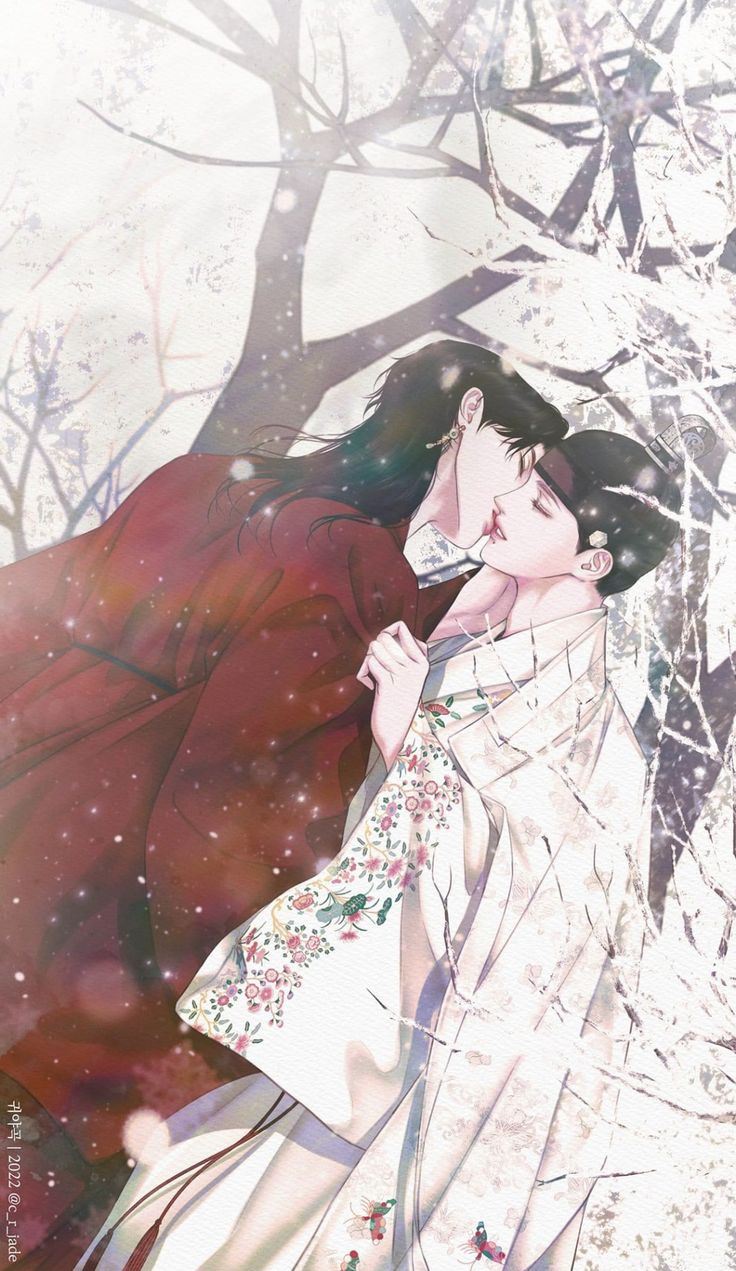
... Read More
The dialogue in this passage sings because it's mostly unsung. So much is communicated in what's left hanging. Qingyan's “It's been like this for the past few days…” trailing off, his voice almost inaudible—that's a lifetime of hesitation in three words. Qiu Henian's “Then what should we do?” isn't a demand; it's an offering. And Qingyan's response—“You… turn away first, don't look at me”—is such a perfect portrait of someone who needs agency even in surrender. Later, the card game banter is gold: “please go easy on me, Young Master Qingyan” delivered with a smile that's equal parts affection and mischief, and Qingyan's domineering “I'll go easy on you!” that immediately undermines itself because he absolutely will not. The voice distinction is razor-sharp. Qingyan's internal monologue (when we get it) is flustered, self-aware, bursting with unspoken feelings. Qiu Henian's are quieter, observant, always leaning in. Even the narrator's tone matches—loving the small gestures, never rushing the emotional beats. It's dialogue that breathes.
... Read More
I literally stopped breathing during that bedroom scene. Not even kidding. Let me set this up for you. It's evening. They're heating bath water. Qingyan goes first, comes back in this thin silk veil thing he'd been saving for next spring, climbs into bed behind the curtain, and waits. The oil lamp is dim. His long hair is spread across both sides of his cheeks and pillow. Qiu Henian lifts the curtain and just... stops. The writing here is INSANE. Every detail matters. The way Qingyan's skin looks warm and moist in the lamp light, partly covered partly exposed, which is honestly more provocative than if he'd shown everything. The two of them sitting up at the same time, chests rising and falling, breathing hot against each other's faces. And then it all falls apart into something so domestic and real. Silk clothes are itchy. Underclothes are too rough. These men can't even fall asleep without complaining about fabric. I was screaming internally because THAT IS SO RELATABLE. The atmosphere shifts from this thick charged silence to just... two guys talking about eggs, rat poison, whether to get a cat, Hunter Liu's hunting plans. The way intimacy dissolves into everyday chatter so naturally. Then back into darkness, the blanket being thrown aside, the black wristband being found by a slender hand in the dark. The worldbuilding in these quiet domestic moments is honestly what makes this story work. You can smell the woodsmoke, feel the autumn chill, hear distant dogs barking.
... Read More
I have to be honest - when I first read this batch I thought 'nothing happens.' And then I realized that's exactly what makes it so good. The stakes here aren't life and death, they're something much more fragile and therefore much more valuable. Qingyan just recovered from a serious illness. Three full days in bed. His body still doesn't feel comfortable. Every plot point in this section is testing whether he can return to normalcy - can he get out of bed? Can he handle a trip to town? Can he work with his hands? Can he stay awake through a book? The smallest events carry enormous weight because we know what almost happened. And then there's the social stakes - the Lantern Festival stall, the relatives and friends gathering, and that spoiler about people who 'hadn't noticed anything.' What hasn't been noticed? Between Qingyan and Qiu Henian? Between their relationship and the world around them? The tension isn't whether they'll survive, it's whether they'll be safe in their happiness. That's a much harder thing to fight for. The author keeps this tension alive through tiny details - the stiffening body, the unanswered question about herbs, the half-asleep murmur that goes unnoticed. Every moment is charged with the question: how long can this peace last, and what will it take to protect it? It's deliciously anxious because the reader knows that domestic happiness in this genre is always under some kind of threat, even when everything looks perfect.
... Read More
The way this passage shifts tonally is actually masterful. It starts as a cozy domestic comedy—Qingyan at the bathhouse, describing his cooking process with the enthusiasm of a food blogger, villagers gulleting over his words. There's warmth, there's humor, you feel like you're sitting in that steaming public bath with them. And then Henian doesn't come home for dinner. The mood pivots so subtly you almost miss it: “After that, he sat by the stove, lost in thought.” One sentence. That's it. The author just drops him into silence and suddenly the cozy atmosphere has an undercurrent of worry. Then Henian arrives, they eat in an oil lamp, and the whole bathing sequence begins—a slow, deliberate unspooling of tension where every action feels weighted. The fire tending, the water pouring, the door closing, the curtain coming down. By the time Henian asks “Do you mind?” the pacing has tightened so much you can feel your own breath holding. And then—spoiler teaser—“Qingyan quickly turned his head and faced the inside of the bed, feeling his nose itching.” The nose itch is such a perfect deflection. The author knows exactly what they're doing here.

Leave a comment

You must be logged in to leave comments. or
