After Being Bent by Reader (GL) - Reviews

After Being Bent by Reader (GL)
+Add to Custom List
Sort
Add review
... Read More
The dialogue in this chapter is incredible because it captures so many different voices. The Weibo comment section reads EXACTLY like a real Chinese novel comment section—savage, fast, conspiratorial. “Perhaps this 'Passerby' is a certain author focused on writing sweet novels?” followed by “Malatang? The third-party?” and “I'll curse anyone who dares talk bad about my husband to death!” This is gold. Ange's messages to Xu Chuanchuan are so distinct—casual but fierce, protective without being overbearing. “Have you finished watching? Don't get angry. She has a lot of brain-dead fans. In any case, we have nothing to feel guilty about. Just ignore them.” The author's narrative voice is also really sharp. When Murong Shi decides to send the torpedo: “When she did so, she felt an indescribable sense of pleasure.” The internal monologue of characters is woven seamlessly into the narration. Even the platform's contribution system descriptions feel like natural exposition rather than info-dumping.
... Read More
There's a theme running through this chapter that I can't stop thinking about: the battle between what's hidden and what leaks out anyway. The medicinal patches. Xu Chuanchuan's grandmother uses them for his back, Xu Chuanchuan uses them for hers. They're a family heirloom of pain management — generational, practical, unglamorous. But the SMELL is what betrays her. No matter how much she tries to be professional, the scent follows her like a fingerprint. And when she tries to cover it with sample perfume, she's essentially layering one mask over another. The perfume is thick, almost comical in its intensity, and Murong Shi catches it immediately. Nothing stays concealed. Then there are the cigarette butts. Not just discarded — HIDDEN. Stuffed into gaps between glass and concrete like contraband. Someone wanted these to not be found. And Murong Shi finds them anyway. Her attention is a scanning technology that detects what people have gone to great lengths to hide. The plastic packaging scatters everywhere in the warehouse and the worker just leaves it. Disposal as avoidance. But Murong Shi says 'photograph it first.' She doesn't want things hidden or swept under the rug — she wants them DOCUMENTED. Made visible. I keep thinking about Xu Chuanchuan's sister too. Xu Xiangxiang wants a new phone — an outward symbol of something — and her mother presumably bought her one last year. The materialism isn't the point; the POINT is that Xiangxiang can ask and Chuanchuan will give, even when it hurts. Love as financial hemorrhage. Something always leaks. Nobody in this chapter is fully concealed. Not their smells, not their problems, not their intentions. The cigarette butts prove it.
... Read More
The way this author builds atmosphere is unmatched. Let me start with Xu Chuanchuan's apartment — first floor, trees shading it front and back, keeping things cool, mosquitoes everywhere, old PC buzzing. In just three sentences you KNOW this place. It's lived-in, slightly messy, humbly comfortable. You can practically hear the computer fan and feel the humid warm air. Then the KFC scene — this is where the worldbuilding really flexes. The scorching sun that forces her indoors, the plastic glove she wears while eating, the staff member she quietly asks not to clear her table. These tiny details make the setting feel impossibly real. But the visual contrast between characters is what really sells it. Murong Shi walking into that KFC like she's on a runway — the deep blue sleeveless shirt, the white jeans showing off those legs, the Cartier earrings making crisp sounds with every step, the ponytail swinging 'like a broom in mid-air.' The author paints her like a storm rolling into a room. And then the mysterious woman in white office wear at the end, emerging from a black Maserati, long ponytail swaying in sync with her movements. The visual echo between these two women is already creating goosebumps for me. The contrast between Xu Chuanchuan's dim, mosquito-filled first-floor apartment and these sharp, high-contrast entrances of powerful women — it's cinematic and I am obsessed.
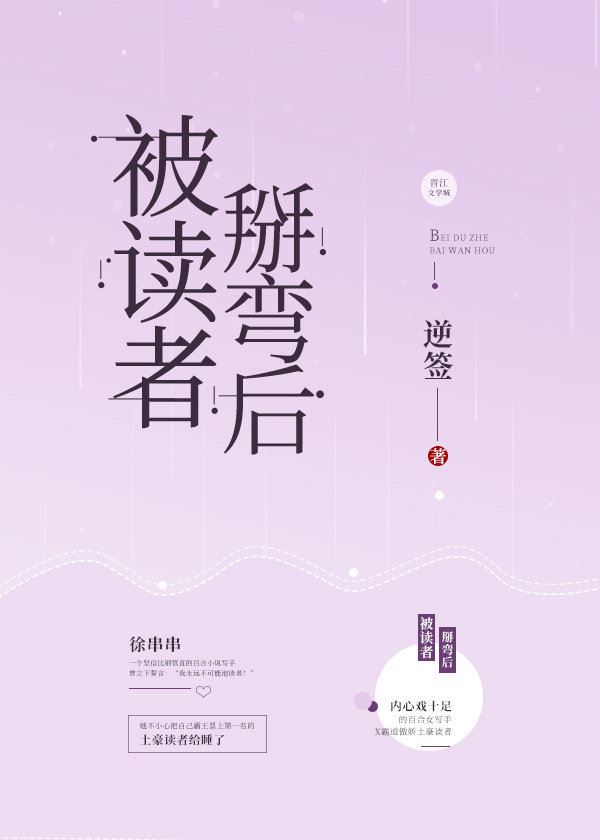
... Read More
I keep coming back to the objects in this chapter. Not the people—the things. Because everything here is layered with meaning and I don't think the author accidently placed any of it. The condom. Okay. Let's be real—this isn't just a weird comedic beat. It's the first physical object that stands between Xu Chuanchuan and Murong Shi as a barrier of misunderstanding. But it's also something else: it represents intimacy that doesn't belong to them, privacy violated by proximity, the ridiculous gap between what these two women are and what they appear to be. One woman is about to discover that her quiet, competent assistant is actually a published novelist hiding her identity. The other woman is sitting on secrets of her own. The condom is the smallest, funniest, most awkward symbol of the fact that NEITHER of them is as transparent as they pretend to be. Then the contract. This is the big one. The contract represents Xu Chuanchuan's secret self—her pen name 'I Love Malatang,' her BL novels, her entire alternative identity that exists only online. When it flies out the window, it's not just paper; it's her private world threatening to collide with her public one. The wind that carries it away is almost sentient in how perfectly timed it is. And Murong Shi's decision NOT to read it—whether honest or calculating—becomes an act of protection disguised as indifference. But here's what really got me: Murong Shi KNEW the pen name. She'd sent a 'Deep-water Torpedo' to an author using that name. She'd been angry enough at someone's writing to attack them publicly, and that someone turned out to be sitting two feet away from her in an office. The contract is the physical proof that these two women are already entangled in ways neither fully understands. Xu Chuanchuan thinks she's hiding from her boss. Murong Shi thinks she's hiding her interest in a writer. Both are true. Both are incomplete. And the white lie—Murong Shi saying the cleaning lady picked it up, implying she didn't see the contents—this lie is loaded with meaning. It's protective. It's suspicious. It's the moment Murong Shi chooses NOT to expose Xu Chuanchuan, but also doesn't reveal that she already knows something. That gap between truth and deception is where the entire relationship will grow. Even Murong Mingshu at the end—skinny, aging, once-beautiful—feels symbolic. She's what happens when you carry family legacy and expectation. The mother who produced the cold, controlled Murong Shi. There's a generational weight there that the text doesn't explicitly state but absolutely hums beneath the surface. This chapter isn't about plot twists. It's about objects becoming symbols and people becoming mysteries to each other.
... Read More
I came into this chapter expecting bureaucracy and got psychological warfare instead and I am NOT mad about it. Let's talk about the structure because the author is playing 4D chess with pacing here. We open with the Xu sisters — domestic, grounded, 500 yuan and an iPhone request. It's warm. It's relatable. It's THREE PARAGRAPHS and then BOOM we're at work and Xu Chuanchuan's sweating bullets because Murong Shi is coming. That transition is *chef's kiss*. One minute she's playing older sister, next minute she's a junior employee facing the daughter of the boss like she's about to be interrogated. The whiplash mirrors exactly how Xu Chuanchuan's day goes from normal to anxiety-inducing in the span of a phone call. Then the walking tour itself — it's structured like a detective story where the detective is just documenting negligence. Each location escalates: the warehouse entrance (trash everywhere), the stairwell (cigarette butts in walls), the smoking room (the smell hits you). By the time we're at the iron door, you can practically smell the tobacco through the screen. And the little moments of physical comedy — the back sprain, the grab, the 'low blood sugar?' — they puncture the tension perfectly. You're leaning in, wondering what Murong Shi will do next, and then HUHN, someone's back hurts, we're humanizing everyone. The chapter ends on an object in the corner of the smoking room that Xu Chuanchuan crouches to pick up, and we cut there. I need to know what it is. The pacing doesn't let me rest and I love it.
... Read More
There's something deeply symbolic about killing a mosquito mid-crime and then getting emotionally attacked by real human drama at KFC. Think about it — Xu Chuanchuan spends her life crafting romantic fantasies for other people while her own love life is a blank page. She's a yuri author who's never dated anyone. She writes about intimate moments she's never experienced. The mosquito represents all the tiny annoyances of her isolated life, and she swats at it with this performative cruelty — 'let's see how you'll bite me now' — like she's asserting some control over a world that largely ignores her. Then the Coke gets destroyed. Her small pleasure, taken by someone else's passion. That's basically her life in a nutshell, isn't it? Her creative output belongs to her readers, her time belongs to her day job, and her personal emotional life is nonexistent. The recurring motif of drinking — the half-finished Coke, the carton of milk from her purse — these beverages represent the small comforts she clings to, and almost all of them get spilled or interrupted. Even the 'literature city' platform where she publishes is described with this almost religious reverence ('Lord,' 'Great God'), suggesting that her creative identity is both her armor and her cage. What I find most fascinating is how the book is quietly asking: what happens when the storyteller has no story of their own? And will the women entering her life fill that void or complicate it even more?
... Read More
Let me just say this about Ange: the woman has more writer friends than most people have actual friends. "The number of yuri writers she befriended was more than enough to form a harem"—and yet she tells Xu Chuanchuan, "You are the one I've known for the longest." My heart. Six years. Six years of daily writing sessions, QQ friendships, pen name exchanges, and Ange being the only constant in this woman's life. And now here comes Fragrant Citrus with her toxic breakup drama and her sub-accounts and her Weibo posts, dragging everyone else into her mess. Meanwhile Xu Chuanchuan just wants peace—she literally refused to fight back when someone offered to help her curse out Fragrant Citrus's alt accounts. She's that wholesome. And then you've got Murong Shi, who's basically the queen of chaotic energy, reading novels in her car, getting mad at strangers online, spending a hundred yuan on a random act of internet vigilante justice. She's furious at Passerby getting cursed but also thrilled to watch the drama unfold. This woman is unhinged and I love her. The dynamic between these characters—Ange's fierce loyalty, Xu Chuanchuan's gentle confusion, Murong Shi's competitive chaos—is already giving me so much to work with.
... Read More
Let me just sit with the imagery in this chapter for a moment because the setting is DOING SO MUCH HEAVY LIFTING. We get this tiny luggage manufacturing company — less than 50 employees, business sluggish for a year, the original owners made their real money in real estate and just... abandoned this place to their younger sister. An empty shell. And Murong Shi, daughter of the boss, comes in with her expensive heels and her camera and her demand to see the 'dirtiest and messiest' parts first. The warehouse sequence is gorgeous in its bleakness. Discarded plastic packaging falling everywhere. A worker who doesn't even recognize the new boss and just THROWS his load down and walks away. The cigarette butts — not just in the stairwell but STUFFED into a gap between glass and concrete like someone was hiding evidence. A smoking room so unused nobody's in it during work hours. Xu Chuanchuan describing it all with this resigned humor — 'Who would be so unethical as to—hiss!' — the sentence dies because her back hurts and she can't even finish the thought. The company is held together by people who are too tired to care less. And Murong Shi moving through all of this in her designer shoes, pointing out details Xu Chuanchuan missed, ascending stairs she shouldn't be able to ascend in heels — she's an alien organism in this decaying ecosystem. But here's the thing: she's not disgustedi by it. She's FOCUSED. This is what she wanted. A company worth fixing. The contrast between the crumbling physical space and Murong Shi's sharp, almost predatory attention to detail creates this atmosphere that's equal parts depressing and thrilling. Like watching someone walk into a burned building and immediately start planning the renovation.
... Read More
Okay so can we talk about how this batch uses physical spaces almost like they're doing emotional storytelling? The bathroom scene. The condom. Xu Chuanchuan finds it, freezes, and then Murong Shi walks in. Not just any entrance—she enters at the exact moment of maximum vulnerability. The author didn't even try to hide the tension. Xu Chuanchuan's line 'This isn't mine!' is the kind of panicked denial that says absolutely nothing while confessing everything. And Murong Shi? She just chuckles. 'What are you panicking for?' That single line does more work than an entire chapter of internal monologue would. It's playful, dangerous, and it flips their entire power dynamic in one beat. Then there's the office—a converted factory building, three floors of open space. I love that detail. It's not some sleek corporate tower; it's got history, it's lived-in. When Murong Shi walks in and everyone scatters 'like frightened birds,' you can literally feel the atmosphere shift from chaotic to controlled in one breath. These workers had grown comfortable because Murong Mingkun was away. Murong Shi's presence reasserts authority without a single word. But the genius move is that she doesn't explode. She just... stares blankly and leaves. Xu Chuanchuan expected drama and got silence instead. That's worldbuilding through behavior, not description. And the weather. Of course it's raining—or rather, the sun is playing hide-and-seek, cool breeze blowing, windows open—because the moment Xu Chuanchuan's most precious secret (her unpublished contract) goes flying out that very same open window. The wind isn't just weather; it's narrative force. It's the universe conspiring to almost expose her. When she sprints downstairs and sees Murong Shi's black Maserati idling at the entrance like it was waiting for this exact moment? That's not coincidence writing—that's the author tightening the screws. The home scene with Murong Mingshu is painted differently though. Cotton and linen skirts. Bag-of-bones frame. Beautiful features underneath age. It's intimate in a way the rest of the chapter isn't. We get this private glimpse into Murong Shi's life beyond the CEO mask, and it makes the character feel three-dimensional instead of just 'cold beautiful boss.'
... Read More
I need to talk about the perfume scene because it wrecked me in a very specific way. Xu Chuanchuan smells like medicinal patches — her grandmother's back pain remedies, her own sore spine, her whole life of practical suffering made into a scent — and Murong Shi's nose CATCHES IT immediately. 'You smell of medicine.' Not 'you smell bad,' not 'could you change,' just an observation so dry it could crack concrete. And Xu Chuanchuan's reaction? She PANICS. She flees back to her desk like her life depends on it, digs through her bag, dabs sample perfume onto her wrists and 'other parts of her body' like she's trying to erase herself. The desperation in that gesture — she doesn't want to be someone who smells like illness and old remedies around this woman. She wants to be invisible, or scentless, or anything but what she is. Murong Shi notices the perfume too, obviously. She has a sensitive nose — she caught the medicine from across the room — and she catches the heavy floral cover-up immediately. And she says NOTHING about it. Doesn't comment, doesn't reward the effort, doesn't punish it. Just 'Let's go.' This is the kind of emotional violence that isn't violent at all. It's the violence of being seen and not acknowledged, of performing yourself into exhaustion for someone who won't even tell you whether you did it right. And yet. And YET. When Xu Chuanchuan's back gives out and she grabs Murong Shi's arm, Murong Shi holds her hand. Holds it. Doesn't let go until she's assessed the situation and offered help. The woman who couldn't be bothered with small talk suddenly has physical contact that's almost gentle. I'm not okay.
... Read More
The pacing in this chapter is absolutely ruthless and I love it. Let me walk you through how it moves: Opens slow. Very slow. Xu Chuanchuan on her bike, stuck in traffic, having a casual phone call with her sister. Nine zero seconds of red light. The author literally makes us FEEL the boredom. And then—BAM. Murong Shi appears. Same scene, different perspective, suddenly charged with meaning we didn't have before. The traffic jam that felt like nothing is now a framing device for the most important sighting of the chapter. Then we cut to Xu Chuanchuan's apartment, instant noodles, QQ chat with Ange about some Cosplayer drama. Wait, what? We're just... chilling now? Hanging out with Ange, talking about a honeytrap rejected? It's a breather. A genuine breather. The reader exhales. They think they're safe. And then Chen Lina shows up. Then Xu Xiaomei asks for help. Then the doorbell rings. And suddenly we're in full-on comedic tension mode with Jiang Shaohua pressing his advantage, Xu Chuanchuan panicking behind the desk, the surveillance cameras cutting to Murong Shi's office like we're in a thriller now. The shift from workplace comedy to something genuinely tense happens in the span of maybe two paragraphs. Xu Chuanchuan is bluffing, Jiang Shaohua is pushing, the courier arrives at just the wrong moment—and then Murong Shi's voice comes over the phone: "Have him get lost." The pacing essentially does a three-act structure within a single chapter: setup (the bike), complication (Jiang Shaohua arrives), climax (Murong Shi intervenes). No wasted breath. Every scene transition is either a perspective shift or a location change that raises the stakes. Even the Ange subplots—the Citrus thing—feels like it's setting up future complications rather than being filler. I don't think I've ever read a chapter that moved this fast and still made me want to immediately turn the page.
... Read More
I need to talk about this one moment where Xu Chuanchuan is sitting alone at KFC and just... feels it. 'Aside from herself, every other table was seated by two or more people. Suddenly, sadness filled her.' That's it. That's the tweet. That's the entire emotional thesis of her character right there. She's 25, making good money from writing, has a great friend in Ange, but she's also completely alone in this way that has nothing to do with physical proximity and everything to do with emotional intimacy. And Ange! Oh my god, their friendship is everything. The way Ange teases her about dating, offers to 'give hands-on instruction,' then immediately pivots to 'I'll head to Thailand' — it's hilarious but underneath all the jokes there's this genuine care. Ange is the friend who says 'stop eating takeout, go outside, meet people' because she actually worries. And Xu Chuanchuan's response about having no dating experience and therefore no idea how to write intimate scenes? That's not just a writing problem, that's a deeply human vulnerability she's exposing. The fact that she laughs it off and says 'I'm as straight as a pen!' while internally probably feeling something much more complicated — that tension between who she is and who her readers expect her to be? That's the emotional core I'm here for. This book understands loneliness in a way most novels completely miss.

Leave a comment

You must be logged in to leave comments. or
