Summary

... Read More
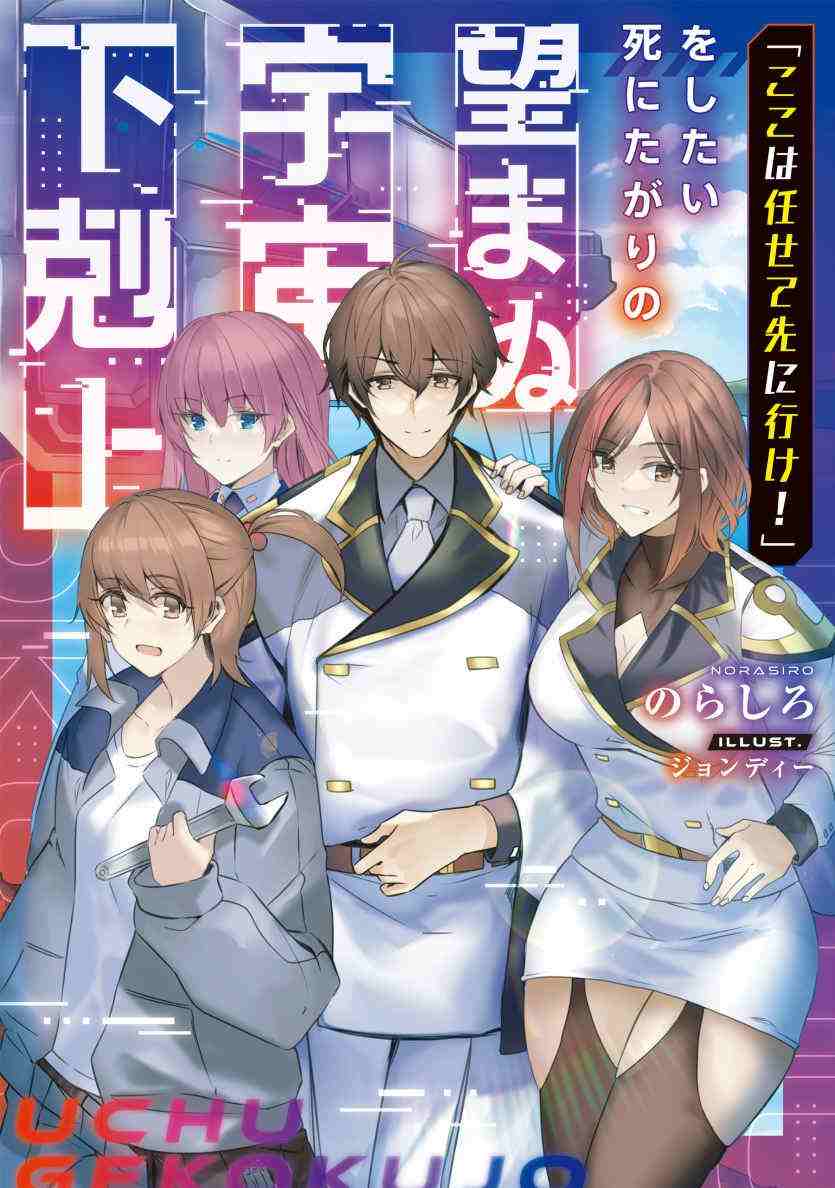
Qiu Zhenyang transmigrates into the body of the S-level alpha protagonist in an interstellar mecha novel, where he discovers he is about to assault Ling Mu, a cannon fodder omega he was supposed to despise and abandon. Rather than following the original plot, Qiu Zhenyang chooses to temporarily mark Ling Mu during his estrus to prevent him from being eliminated, recognizing the tragic fate awaiting the omega if he fails the Interstellar Academy entrance exam.

Qiu Zhenyang had grown up idolizing his father, a general who saved Ling Mu’s father during a war. Ling Mu’s family, once close to his, fell into ruin after his father’s death, and his mother manipulated Qiu Zhenyang into an engagement only to later abuse Ling Mu and his sister. Qiu Zhenyang vows to protect Ling Mu and correct the original tragedy. He gives Ling Mu crystal cores to help him pass the exam, but faces resistance from Ling Mu’s stepbrother Lin Nuo, who spreads rumors about Ling Mu being marked.

As they navigate life at the Interstellar Academy, Qiu Zhenyang continues to support Ling Mu despite the latter’s distrust. The story explores themes of fate, redemption, and the complexities of relationships in a highly stratified society. Through mutual understanding and Qiu Zhenyang’s unwavering support, they begin to build a genuine connection, challenging the predetermined roles of the novel's characters.

Latest Release
DateGroupRelease
2026-09-26knoxt c91
2026-09-26knoxt c90
2026-09-26knoxt c89
2026-09-26knoxt c88
2026-09-26knoxt c87
2026-09-26knoxt c86
2026-09-26knoxt c85
2026-09-26knoxt c84
2026-09-26knoxt c83
2026-09-26knoxt c82
2026-09-26knoxt c81
2026-09-26knoxt c80

Community Reviews

Rating(4 / 5.0, 359votes)
5 stars
109(30%)
4 stars
144(40%)
3 stars
106(30%)
2 stars
0(0%)
1 stars
0(0%)

Popular reviews

... Read More
The transition from the bedroom to the bar is a masterclass in shifting atmosphere. You start in this warm, dim, intimate space — curtains drawn, someone tucked into bed, breathing gradually calming down — and then you're suddenly thrust into the harsh reality of a shared-gender bathroom in a nearly empty academy bar. The contrast is jarring in the best way. It reminds you that this universe operates on different social rules than ours (shared bathrooms across all genders is a detail the author drops casually but which says a lot about worldbuilding confidence). The bar itself is described with just enough texture to feel real without bogging down the narrative. About 4-5 bars on the entire academy grounds, hidden in secret corners of the commercial street, mostly ignored by students who prefer studying. This single paragraph does three things: it establishes the Interstellar Academy as a place where academics dominate social life, it creates a sense of a lived-in world where certain spaces exist but aren't necessarily popular, and it gives the characters a secluded location for their dramatic confrontation that feels plausible within the setting. And that moment when Ling Mu takes off his jacket — the dim bar light catching his collarbones and white arms — that's pure visual storytelling. The author doesn't need dialogue here. A single descriptive beat conveys beauty, vulnerability, and the shifting power dynamic between the three characters. It's the kind of scene that belongs in a film adaptation. I'm genuinely surprised this isn't already on screen somewhere.
... Read More
I keep coming back to this one line: "Making friends is their own choice. I have no right to restrict them." Said with what the text describes as a light smile, then immediately followed by turning around and walking away. That is some next-level controlled delivery. The contrast between the gentle words and the absolute emotional refusal behind them ischef-level writing. Then you have Zhuo Hang absolutely losing it: "Hurry up, the omega you like is about to be kidnapped. Even if you're not worried, brother is worried for you." This guy is living in a completely different reality from his best friend. He thinks Qiu Zhenyang is playing hard to get. He thinks this is normal boyfriend behavior. The dramatic irony here is thick enough to cut with a knife. And Cheng An'an's dialogue throughout is so calculated — every compliment to Cao Shuhuan is performative, every gesture is designed to trigger a specific response. But the moment Qiu Zhenyang doesn't react, Cheng An'an goes completely silent. No more lines from him in this chapter. Just internal panic. The author is making a point: Cheng An'an only has dialogue when he's performing. When the performance fails, he has nothing. Qiu Zhenyang's mom on the video call is a whole different flavor of voice — chattering like a bird, demanding to know if her son got first place, calling him Yangyang. It's warm, slightly suffocating, and immediately establishes her as a character who loves her son but operates on a completely different wavelength from whatever political game he's now entangled in.
... Read More
'The throbbing in their bodies can't be blocked at all in such close proximity!' You don't even need me to explain what's happening in that cave scene, do you? But what I love is how the author grounds the supernatural elements in physical sensation. We've got the warm breath, the solid chest muscles pressed against Qiu Zhenyang, the pheromones mixing like some invisible force pulling them together. It's not just 'they're attracted to each other'—it's written in the body. And then the environment around them matters too. A cave, a fire, the dark space outside the light. It feels intimate and slightly dangerous, like anything could happen in that moment and the story knows it. The contrast between that enclosed, heated space and then stepping outside into the open test area with all those other students is really effective. You go from this private, almost violent intimacy to walking three meters apart behind Ling Mu, watching him stumble through exhaustion. The lighthouse itself is described as 'towering... reaching the clouds,' which gives it this almost mythical quality. It's not just a building—it's a destination, a goal, something you can see from far away drawing you in. The whole world feels lived-in because the rules of it matter: crystal cores have value, omegas can learn to pilot mechas at the Academy, pheromones have this power that affects behavior. None of this is background decoration.
... Read More
Let me tell you about the tension in this chapter because it is NOT subtle. On the surface, it's two people sharing a meal. But underneath? It's a whole war. Ling Mu has been kicked out of his family, running on empty, protecting his sister the only way he knows how — by keeping everything locked down and refusing help. Every time Qiu Zhenyang gets close, he flinches. He almost throws the ointment away. He yells at his sister for even considering that she might need taking care of. But Qiu Zhenyang is relentless, and not in an aggressive way — in this terrifyingly gentle way. He doesn't push harder when pushed back; he just stays. The stakes here aren't about saving the world or winning some big battle. They're about whether two damaged people can let themselves trust someone without getting destroyed. And the smallest moment carries the most weight — when Ling Mu lies to his sister and says he passed the test. He's been carrying this entire burden alone, and the second someone offers to share it, his first instinct is to protect the illusion that he's fine. That's real stakes. That's the kind of conflict that makes you sit on the edge of your seat even when absolutely nothing seems to be happening.
... Read More
That pheromone sticker keeps coming back to haunt the narrative. It's such a perfect symbol for the whole system this story operates in. Ling Mu covers himself up—tries to hide his biological reality, manages his appearance, controls what others can perceive—and then a single crooked sticker reveals everything. The mark represents more than just mating or partnership in this world. It's currency, it's vulnerability, it's a public declaration that the individual has lost autonomy over their own body. When Lin Nuo reveals it, he's not just exposing information—he's weaponizing biology. The cafeteria full of omegas watching becomes a court of public opinion, and the verdict is already written before Ling Mu opens his mouth. There's also the canteen layout itself that mirrors this. Food on one side, nutrient reagents on the other—and more people buying the chemical solution than actual meals. Survival is manufactured, not natural. The body is treated as a chemical project. This thematic thread connects everything: the competition results based on crystal cores, the omega-only classes, the alpha restraints, the pheromone manipulation. Every system in this world reduces people to their biological functions. The mark makes that reduction literal and visible. Even QZY's family dynamic reflects it—his mother comforting him about second place, immediately steering toward marriage-adjacent concerns about his future. Everyone is performing their roles within a rigid hierarchy. The only genuine moments are the friendships—Yuan Chenyu dragging QZY to sit with him, QZY's instinctive rush to help Ling Mu. Those human connections exist despite the system, not because of it.
... Read More
Okay so let me just say this: Cheng Anan walking out of that lounge and seeing Ling Mu dragging Qiu Zhenyang into the store?? My heart dropped through the floor. He already thought things were weird after the school test when Qiu Zhenyang completely ghosted him, and now THIS. The tension is delicious. I love how the author builds this slow-burn worry without ever confirming whether Qiu Zhenyang is actually romantically interested in Ling Mu or if he's just being aggressively supportive in the most chaotic way possible. The engagement was broken apparently, which adds this whole layer of history between the characters, but nothing is confirmed yet. And then the whole side-piece storyline with Qiu Zhenyang showing up at the restaurant? Chef's kiss. The author knows exactly what they're doing here—dangling just enough mystery to keep me scrolling at 2 AM. The plot moves at this perfect pace where every chapter ends with either a revelation or a question that makes you immediately open the next one. The restaurant conflict itself is compact but effective—a public confrontation that establishes power dynamics between Qiu Zhenyang and the unnamed rival. I need to know what happened before Chapter 87 and why Qiu Zhenyang's behavior has shifted so dramatically. This subplot is weaving itself into something genuinely compelling.
See all reviews

Custom lists

See all custom Lists