After Amnesia, Mistaking Him for My Husband, President Chu Wants to Ascend Every Day - Reviews

After Amnesia, Mistaking Him for My Husband, President Chu Wants to Ascend Every Day
+Add to Custom List
Sort
Add review
... Read More
I keep coming back to the hands in this text. They're everywhere — Tan Qinyin hooking her finger through Chu Nanyu's knuckle, Lu Yanzhi's knuckles turning white from clenching, Chu Nanyu's 'well-defined, fair, and slender' hands that Tan Qinyin examines like they're something precious, the 'large hand' that blocks her phone screen. Hands are how these characters touch, control, reject, and connect. They're the physical language of a story where words fail. Then there's the name 'husband.' Tan Qinyin changes it in her phone from 'Chu Nanyu' to 'husband' — a tiny act of reclamation, of making the fabricated memory feel real. But names are also what Lu Yanzhi loses. She doesn't call him husband. She doesn't call him anything. He's reduced to 'Brother Lu' — a title that's both intimate and distant, like their relationship now. The name 'husband' belongs to someone else now, and he can't take it back without hurting her. The novel-within-a-novel is the biggest symbol though. Tan Qinyin wants to write 'The Iceberg Husband Keeps Getting Teased into a Smile' — she's going to turn her own life into fiction, control the narrative, decide how the story ends. But whose story is it really? Is she writing about Chu Nanyu because she's falling for him, or because it's safer to love a character she controls than a real man who might hurt her? And what about Lu Yanzhi — is he a character in her story at all, or has he been written out? The peanut soup is another detail that sticks with me. It's domestic, intimate, the kind of thing a real husband would remember. Chu Nanyu performs this role so well that Tan Qinyin's body responds to it — she smiles, she hooks his finger, she feels safe. But it's a performance. Or is it? The line between fabricated memory and genuine emotion is thinner than any of them realize. And Shen Yaoyue. That name. It appears once, in a phone call flashback, and it changes everything. Who is this person? Why did Tan Qinyin ask about them right before asking 'do you like me?' and then hanging up? The name is a ghost in the text — absent but omnipresent, like the truth that's been there all along.
... Read More
Okay so let me just... sit with this for a second. The whole Lu Yanzhi-Chu Nanyu-Tan Qinyin situation is absolutely delicious and I have so many thoughts. First off, Chu Nanyu. This guy is so calm about the whole thing. His friend's wife has amnesia and thinks HE is her husband, and he just... agrees? No drama, no hesitation, just 'alright' and starts bringing her peanut soup the next morning. But here's the thing that got me — when Tan Qinyin hooks her finger through his knuckle and says 'thank you, husband,' the text says 'the lingering warmth on his fingertips seemed to hold the touch of the woman.' That line hit me like a truck. Is he feeling something? Or is he just good at acting? I need to know. And Lu Yanzhi! Poor guy. He shows up, his wife looks at him like he's a stranger, and then watches her call another man 'husband' while that man carries her to the car. The trash can kick at the end? Chef's kiss. That's not anger, that's pure helpless frustration. He can't force her to remember him without risking her mental health, and he can't exactly tell Chu Nanyu to back off because... well, his brother-in-law vouched for him. The dynamic between Lu Yanzhi and Chu Nanyu is everything though. They don't even throw punches — it's all silent glares, clenched knuckles, and loaded pauses. When Chu Nanyu carries Tan Qinyin past Lu Yanzhi and just... lifts his eyelids slightly to meet his gaze 'without any extra emotion,' that's not calm, that's dominance. He's asserting himself without saying a word. Also the detail about Tan Qinyin changing his contact from 'Chu Nanyu' to 'husband' on her new phone? I literally gasped. She has no memory of him but her subconscious still wants him close. That's either the sweetest thing or the most manipulative thing depending on how you look at it. Who else is noticing the Lu-Chu family tension? Tan Yan literally says 'I know the relationship between the Lu and Chu families isn't harmonious' — so these two guys have history beyond just this situation. What did I miss? What happened between their families?!
... Read More
The pacing in these chapters is so deliberate it almost hurts. The author takes their time — and I mean that as a compliment. Every scene lingers just long enough for the emotional weight to settle before moving to the next beat. Look at how the hospital scene unfolds: Tan Qinyin wakes up, doesn't recognize Lu Yanzhi, Tan Yan covers, Chu Nanyu arrives with soup, Tan Qinyin lights up, Lu Yanzhi darkens, they step into the corridor for 'the talk,' back to the room, the carrying scene, the car ride, the contact name change. It's a chain of emotional escalations that never lets you catch your breath, but each beat gets its own space to breathe. No rushing. The corridor conversation between Tan Yan and Lu Yanzhi is a masterclass in pacing. It's the only scene where the romantic tension pauses and the plot actually moves forward — explaining the amnesia situation, establishing the rules, raising the stakes about Chu Nanyu 'overstepping.' It's necessary exposition but it doesn't feel like exposition because it's wrapped in Lu Yanzhi's raw emotion. 'You're saying I should calmly watch as my wife calls another man husband?' That line does triple duty: it's plot explanation, character revelation, and emotional devastation all at once. The flashback to the phone call where Tan Qinyin asks 'Who is Shen Yaoyue?' and then 'Lu Yanzhi, do you like me?' before hanging up — that's dropped in right when we need it most. It reframes everything. This isn't just about amnesia. There was ALREADY trouble in the marriage before the accident. The pacing here is surgical: reveal the amnesia crisis, let it sink in, then drop the bomb that the crisis might have been coming anyway. The chapter ends on the contact name change and the novel title idea. Perfect cliffhanger. Not a cliffhanger of danger or drama, but of emotional implication. What happens when she starts writing him? What happens when Lu Yanzhi finds out? The author knows exactly how to keep you scrolling.
... Read More
I need to talk about the bedroom scene because the author really went all out here and I am HERE for it. "The room was decorated in cool-toned Morandi colors, simple yet elegant." — okay first of all, Morandi colors on a man who supposedly can't even share a bed with his wife? The aesthetic matches his personality perfectly. Everything is muted, controlled, put together but emotionally distant. It's a man cave disguised as a bedroom. But then — "The crisp, clean scent unique to him lingered in the air around her, and she blinked. A strange, unfamiliar feeling surged straight to her heart." This is the kind of sensory detail that makes me actually feel like I'm in the room. The scent isn't described as cologne or perfume, it's described as UNIQUE TO HIM. That's intimate in a way that doesn't require physical contact. And then the hairdryer scene! The low hum, the rustling, her patting the bed — it's so domestic and ordinary and that's exactly why it works. This isn't a dramatic confession scene or a rain-kiss. It's two people in a bedroom at night and the tension comes from what's NOT happening. He lies on the edge. She pulls his arm into her embrace. He doesn't pull away. The silence after she says "This way, you won't run off in the middle of the night" is deafening. The hospital VIP infusion room is another standout — quiet, clinical, but somehow more intimate than the bedroom because now they're forced to interact without the buffer of their own space. "The VIP infusion room was very quiet." Four words and I can picture the whole scene. The author knows how to use silence as a setting.
... Read More
The stakes in this section are deceptively low on the surface but actually really high underneath. Let me explain. On the surface: a woman notices her husband sleepwalks, he gets a fever, they go to the hospital. Sounds like a slice-of-life chapter. But the REAL conflict is internal and it's building like a pressure cooker. Chu Nanyu's conflict: he's physically repulsed by sleeping near his wife (hence the sleepwalking avoidance) but he also clearly feels guilty about it. "I didn't want it to be like this" — he wants things to be different but doesn't know how. His fever forces him into a position where he CAN'T maintain his emotional distance. He's vulnerable, dependent on her care, and he hates it even as he needs it. Tan Qinyin's conflict is subtler but equally important. She's caught between her physiological memories from her past life and her current reality. That "strange, unfamiliar feeling" in the bedroom — is it attraction? Is it nostalgia? Is it the ghost of a previous relationship resurfacing? She doesn't fully understand her own emotions, which makes her reactions unpredictable and therefore dangerous to Chu Nanyu's carefully maintained walls. The stakes escalate when she discovers her novel on the computer. Now she has a fictional version of their relationship that she's already written — meaning she has expectations, a narrative arc, a projected ending. What happens when reality doesn't match her story? Or worse — what if reality matches it too closely? The hospital scene raises the stakes one more time. He's sick, she's caring for him, and for the first time he's not pushing her away. The conflict isn't resolved — it's just paused. And that pause is more terrifying than any argument could be, because it means he might actually let her in.
... Read More
The stakes in this story are deceptively simple on the surface — a woman with amnesia, a pretend husband, a real husband watching from the sidelines. But dig into it and the conflict is layered like an onion that'll make you cry. On the external level, the conflict is clear: Lu Yanzhi vs. Chu Nanyu, fighting over a woman who can't remember either of them. But the real tension comes from the fact that NEITHER man can actually do anything about it. Lu Yanzhi can't force Tan Qinyin to remember him — the doctor literally says it could cause permanent damage or a mental breakdown. Chu Nanyu can't confess that he's not her real husband because... well, why would he? The situation benefits him, and he's clearly not unhappy about it. But the internal conflicts are where this story lives or dies. Lu Yanzhi is fighting something he can't name — jealousy, yes, but also guilt. That phone call flashback reveals everything: Tan Qinyin asked 'Who is Shen Yaoyue?' and then 'Do you like me?' and hung up. Something happened BEFORE the accident. Is he guilty of whatever caused that conversation? Is that why she's distancing herself even before the amnesia? Chu Nanyu's internal conflict is more subtle but just as important. He's playing a role, but the text keeps showing us cracks in the performance. His back stiffens when she plays with his hand. He notices the redness at her eyes. He brings her soup from a specific auntie. These aren't the actions of a man just doing a favor for his friend. He's investing. And that's dangerous — for her, for Lu Yanzhi, and increasingly for himself. The stakes keep rising too. It's not just 'will she remember' anymore. There's the family history between the Lu and Chu families. There's Shen Yaoyue. There's the fact that Tan Qinyin is a writer who's about to immortalize this whole situation in fiction. Every layer adds pressure. And the author isn't rushing to resolve any of it — they're building a slow, inevitable collision course. The trash can kick. That's the moment the conflict becomes physical. Lu Yanzhi can't scream, can't fight, can't force his wife to remember. So he kicks a trash can. And then Chu Nanyu carries her out past him like he owns the place. The next confrontation is coming, and it's going to be explosive.
... Read More
This batch of chapters has such a weird rhythm and I need to unpack why it works even though it feels all over the place. It starts with the ring finger scene — intimate, quiet, domestic. Then jumps to the next morning with the sleepwalking reveal. Then she writes for hours. Then he gets sick. Then hospital. Then... a shopping mall? The transitions are so abrupt sometimes I had to re-read to make sure I wasn't missing a chapter break. But here's the thing — the abruptness actually mirrors how these two people's lives are proceeding. They're not a couple going on dates and having continuous conversations. They're two strangers sharing a house, moving through separate routines, occasionally colliding. The pacing of the narrative matches the pacing of their relationship: disjointed, sporadic, with long stretches of nothing happening between moments that matter. The fever scene is where the pacing really picks up though. Everything accelerates — she notices his flush, checks his temperature, insists on the hospital, the doctor's diagnosis, the IV drip. It goes from "just a slight chill" to 39.3 degrees in about three paragraphs and I was hooked. The author knows exactly when to speed things up. And ending on the shopping mall? Classic cliffhanger energy. They're at the hospital, things have been emotionally charged, and then — driver takes them to a mall. What's happening next? I need to know. The author is good at leaving you hanging just when you think the scene is over.
... Read More
Okay so let's talk about Chu Nanyu sleepwalking to the sofa for TWO CONSECUTIVE nights. Like, that's not an accident, that's a pattern. The girl catches him and he's all "it must have been another sleepwalking episode" and she's just sitting there like... bro, you literally moved yourself to the couch while half-asleep. That's not sleepwalking, that's avoidance with extra steps. But here's what actually got me — when he's sick at the hospital and he takes her hand, his palm is SCORCHING from the fever, and she says "I know" like she understands something he's not saying out loud. He literally says "I didn't want it to be like this" and she doesn't push. That moment where her cool palm meets his burning hand? That's the first time in the whole book I felt like these two might actually be on the same wavelength. And Tan Qinyin's reaction to finding out he sleepwalks — she doesn't make a huge deal out of it. She just notes it, files it away, and then later when he's sick she's the one insisting on going to the hospital. She's observant, yeah, but she's also not using his quirks against him. That's rare for this genre. Most heroines would be like "OH SO YOU CAN'T EVEN TOUCH ME IN YOUR SLEEP HOW DARE YOU" and throw a tantrum. Instead she's just... quietly noting that his health isn't great and dragging him to the doctor. The dynamic is shifting. I can feel it. He's still keeping distance but she's not playing the rejected wife card. She's too busy being genuinely caring and writing her novel to spiral. And honestly? That might be what finally cracks him.
... Read More
The dialogue in this text is so restrained it's almost painful. Everyone is holding back, and that's where the real conversation happens. Take Chu Nanyu. He says almost nothing and every word lands. 'Have breakfast.' 'Hold on tight.' 'As you wish.' Three words, four words, two words — but they carry so much weight because of what surrounds them. His dialogue is sparse because he doesn't need to fill space. He's the kind of character who speaks only when necessary, which makes those moments infinitely more powerful. Lu Yanzhi's dialogue is equally telling in what he doesn't say. 'I'm Lu Yanzhi.' That's it. When Tan Qinyin doesn't recognize him, he doesn't beg, doesn't explain, doesn't break. He just states his name like a man trying to hold onto something by the thinnest thread. And later: 'You're saying I should calmly watch as my wife calls another man husband?' That's the only time we see him truly lose composure, and it comes out as a question — not an accusation, not a shout, but a broken inquiry. That's such good character voice. Tan Qinyin's dialogue is the most natural and lively. 'Husband, my whole body hurts! Hold me, please.' 'Husband, can you carry me?' 'Your hands are really beautiful.' She's spontaneous, physical, affectionate — and the dialogue reflects that completely. Even her WeChat messages feel real: the firework emojis, the spinning emojis, the casual 'Mm-hmm.' She sounds like an actual person, not a novel character. Tan Yan is the mediator voice — calm, explanatory, trying to hold everything together. 'I know you're uncomfortable, but given Yinyin's current state, this is the only way for now.' He's the glue, and his dialogue reflects that: practical, reassuring, always moving the situation forward. The narrative voice itself is worth noting too. It's close third person, drifting between characters' internal states without ever fully settling in one head. We get Lu Yanzhi's clenched knuckles, Chu Nanyu's stiffened back, Tan Qinyin's physiological redness at the corners of her eyes. The narrator observes everything but judges nothing. That restraint makes the emotional moments hit harder because the text doesn't tell you how to feel — it just shows you what's happening.
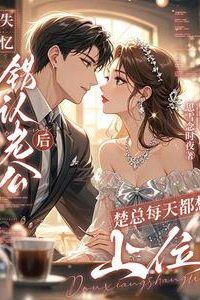
... Read More
Chu Nanyu's dialogue is basically one word answers and I'm obsessed with it. "Habit." "Sometimes." "Occasionally." "Mm." "Alright." "Goodnight." The man has the emotional range of a teaspoon and yet every single one of those clipped responses is loaded with meaning. When Tan Qinyin asks if he sleepwalks to the bathroom or hallway and he says "Occasionally" — that's not just information, that's him admitting he's been avoiding her bed for days and he's too proud to say it directly. The dialogue between these two is fascinating because it's so asymmetrical. She talks more, asks more questions, initiates more. He responds minimally. But the author makes his silence feel like dialogue. When she says "It seems your health isn't that great after all" and he just sighs? That's a whole conversation in one punctuation mark. And then there's the hospital scene where he actually opens up: "Yinyin, I didn't want it to be like this. Don't be angry with me, okay?" This is the most words he's said in an entire chapter and it hits different BECAUSE it's rare. The author earned this moment by making him say so little everywhere else. He Wenzhou's dialogue is the perfect contrast though — "Speak properly" from Chu Nanyu and "I'd be sad if you forgot me" from He Wenzhou in the same scene. The author uses side characters' voices to highlight how different Chu Nanyu is. He Wenzhou is all flourish and warmth; Chu Nanyu is all restraint. That contrast makes both of them more distinct.
... Read More
Can we talk about the peanut soup?? I know this sounds ridiculous but this one detail destroyed me. Chu Nanyu remembers she wants peanut soup 'not too sweet' — and he goes out of his way to get it from Auntie Liang the next morning. While Lu Yanzhi is standing there watching his wife smile at another man while eating soup that man arranged for her. The emotional violence of a romantic gesture performed by the wrong person is something else entirely. But here's what really got me — Tan Qinyin's moment when she asks 'Husband, can you carry me?' She says it almost involuntarily, like a phrase her body remembers even when her mind doesn't. And Chu Nanyu just... does it. Proper gentleman hold, 'hold on tight,' that crisp voice with a hint of gentleness. Meanwhile Lu Yanzhi is standing there watching the man he presumably has history with cradling his wife like she's something precious. The text says 'an invisible hand were squeezing his heart, making his breathing heavy and labored.' That's Lu Yanzhi. That's him right there, physically unable to look away from the man holding the woman he loves. And then — AND THEN — Tan Qinyin wants to WRITE Chu Nanyu into her novel. 'The Iceberg Husband Keeps Getting Teased into a Smile.' She's literally going to turn this real-life romantic tension into fiction while the real husband watches from the sidelines. I couldn't breathe. But the most heartbreaking moment for me was actually quieter. When Tan Qinyin says 'I don't really remember you. Do we know each other?' to Lu Yanzhi. She's so polite about it, so gentle. She's not trying to hurt him, she genuinely doesn't know who he is. And Lu Yanzhi? He just stays composed. 'Yinyin, we are—' and Tan Yan has to save him by saying 'he's my friend.' The real husband gets reduced to 'friend' in front of his own wife. I'm not okay.
... Read More
The wedding ring scene at the very beginning is doing SO much symbolic work and I think the author knows it. Tan Qinyin notices his bare knuckle and immediately asks "Tell me, do we not have wedding rings?" This isn't just about jewelry — it's about the marriage itself. The rings are gone, the commitment is... what? Also lost? The question hangs in the air and his answer "They must have been lost" is almost too casual, like he's already accepted that things between them are incomplete. But then she brightens up at "We'll replace them tomorrow" and suddenly the scene shifts from melancholy to hopeful. The rings are a symbol of their union, and the fact that she cares enough to notice they're missing means she still believes in what they represent. Then there's the fever. Fever in literature is never just a fever — it's vulnerability, it's the body betraying its composure, it's when the controlled man finally loses control. Chu Nanyu, who sleepwalks away from his wife, who sleeps on the edge of the bed, who gives one-word answers — he can't pretend he's fine when his body is running at 39.3 degrees. The fever strips away his armor. And the novel she discovers on her computer? "Iceberg Husband" — a story about "a bright, sunny girl and an icy, aristocratic young man falling in love after an arranged marriage." She literally wrote his story without knowing it. The meta-layer of her creating fiction that mirrors their reality is too much. Is she writing herself into happiness, or is the universe writing them?

Leave a comment

You must be logged in to leave comments. or
