Acting School - Reviews

Acting School
+Add to Custom List
Sort
Add review
... Read More
Okay so this batch starts with what seems like a sweet crew dinner and I am HERE for it at first—birthday party, beachside restaurant, sixty-seventy people, guitar, cake, the works. Very wholesome. And then BAM, phone call from Sister Wen and suddenly we're in straight corporate thriller territory. The structure here is genius, honestly. The entire birthday setup functions as a pressure cooker before the bomb drops. We get the slow burn of Li Mu noticing Zhuang Qin sleeping on someone else's shoulder, getting jealous, peeling lobsters for him—it all builds this soft, domestic atmosphere. Then the phone call shatters it. The 20 million offer being deliberately downgraded to 3 million. The company SABOTAGING his career by bottlenecking his income. That's a massive plot twist that recontextualizes everything. What I love is how the plot doesn't just give us exposition—it wraps the drama in these mundane, tender moments. Zhuang Qin walking into a dark restaurant thinking it's a power outage before the birthday song erupts. The crew celebrating him while his own company is systematically strangling his earnings. The contrast between the warmth of the set family and the cold calculation happening back at Yuedong Media is just *chef's kiss*. The pacing is also really deliberate. We spend time on the car ride, on Li Mu's quiet jealousy, on the lobster peeling—small beats that make the contract reveal hit harder because we're already invested in Zhuang Qin's daily life. "He can't drink," Li Mu interjects, and suddenly you're hyper-aware of how closely he watches every detail of Zhuang Qin's life. Then ten minutes later, we learn his company won't let him drink in the most literal financial sense either.
... Read More
Okay so I just finished chapters 190-194 and honestly I am not okay. Let me just say this upfront: the two hundred million gamble subplot is the single most stressful thing this author has cooked up, and I am HERE for it. On the surface, this batch is about Li Mu finding out Zhuang Qin might be sick and scrambling to get back home. Cute, right? Small moment. But the PLOT underneath is this absolute trainwreck of financial pressure, a gambling contract that locks up most of his earnings for two years, and a birthday party that somehow cost nearly a million yuan out of Zhuang Qin's own pocket because no admission was charged. The math alone is giving me anxiety. What struck me most is how the author layers the tension. It starts with something as mundane as Li Mu failing to join a fan group — wrong answers, rejected applications, "no small accounts" — and then BAM, you're suddenly learning that Zhuang Qin is essentially working himself to death funding his own birthday event while barely having enough money to renew his lease. The pivot from comedic fandom bureaucracy to full-blown existential crisis is so sharp I nearly choked. And Li Mu's reaction? He doesn't just text back. He CALLS the assistant, finds out Zhuang Qin's family is all abroad, arranges a doctor, changes his flight, notifies his shooting schedule — all within, what, ten minutes? The way the plot accelerates from "my friend can't join the fan group" to "I'm booking a flight home RIGHT NOW" is Masterful. The Qiu Ming scene at the end was also funny gold. "Xiao Ming, don't go anywhere these next few days, look after the yogurt." The cat pooping line. The acquisition plan tangent. It's these little breadcrumbs that make the world feel lived-in. My only question: when does the author let this man BREATHE? Zhuang Qin is one deadline away from a complete nervous breakdown and I need to know if he's going to crack before the birthday party or after. Also, what the hell is the actual payout structure of this gamble? Because right now it looks like Zhuang Qin is pouring millions into a hole that only opens wider.
... Read More
Let's talk about Li Mu because oh my god, the man is SO INTO this. Every single moment in this chapter is a masterclass in quiet pining. First he finds out Zhuang Qin sleeps on Xiao Lian's shoulder and his ENTIRE expression changes. 'Does he do this often?'—not 'why is he sleeping' but 'WHO IS HE SLEEPING ON.' The jealousy is immediate and transparent. Then he kicks Qiu Ming under the table when the producer tries to peel Zhuang Qin's lobster because apparently Li Mu has decided THAT IS HIS JOB NOW. He's peeling lobsters he doesn't even like eating for a guy he's clearly crazy about. And the best part? When Qiu Ming casually drops the 'you two are fuck buddies' comment and Li Mu's immediate, sharp 'We're not fuck buddies'—bro is protecting the boundary like his life depends on it. But then internally Qiu Ming corrects it to 'lovers' because even the people around them know it's more than friendship, even if they won't say it out loud. Then Li Mu sits across from Zhuang Qin watching him on the phone, visible only from behind, and you just KNOW he's wondering who that call is from and who's hurting him. The distance between them at that table is physically tangible. And Zhuang Qin—he's so oblivious. He politely declines Qiu Ming's help with the lobster, clearly uncomfortable with intimacy outside his close circle. But Li Mu just... never stops. He keeps peeling. Keeps watching. Keeps caring in this quiet, persistent way that says everything without a single confession.
... Read More
Okay so let me just say this: the author has mastered the art of making you dread something because you know EXACTLY why it's happening and there's nothing either character can do about it. The plot thread about the moved kiss scene is the single most devastating piece of storytelling in these chapters. Zhuang Qin himself pushed for it to be shot earlier — maybe two months ahead of schedule — and now he's having a full-blown internal crisis because he has to actually SHOOT it. What the hell was he thinking?? The timeline compression creates this beautiful narrative trap where the audience watches him walk right into a corner he built himself, and every message exchange with Li Mu is basically ticking toward the inevitable. The structure here is brilliant in its simplicity. We open with warm, casual bonding — soup culture, childhood stories, small gifts exchanged. Everything feels cozy and safe. Then Li Mu asks about rehearsal, and the floor drops out. The kiss scene revelation hits like a truck, and suddenly ALL the sweetness before it retroactively becomes loaded with tension. Every yogurt delivery, every small gift, every 'you're like a reckless child' text — it all takes on new meaning when you realize Zhuang Qin is mentally preparing for something he doesn't want to do with the person he's getting closer to. And what really gets me is the parallel subplot with Director Guo drafting sub-scenes. The director is literally breaking down the impossible into manageable pieces while Zhuang Qin is trying to do the same mentally. Two characters approaching the same problem from different angles. Does the author plan to resolve this with a compromise? Or is the heartbreak part of the point?
... Read More
This batch of chapters is a masterclass in building dread through slow accumulation. Chapter 184 starts almost domestically—Li Mu at his computer, Zhuang Qin texting about his junior brother. It's quiet. We think, okay, this is a character moment, a glimpse into their relationship. But then Li Mu starts searching. The mood shifts subtly from domestic to investigative, and we realize this isn't just about a birthday event. Something is simmering. Then the next morning—Zhuang Qin at 5:30 AM, unable to sleep, heading to the set. The pacing here is almost suffocating in the best way. He's restless, anxious, and the author doesn't rush him to the point of conflict. Instead, we get the car ride, the plainclothes entrance, the casual chat with Mei Qingqiu, the brief interaction with Director Qu. Each small beat adds weight. By the time he spots the stunt double, our stomachs have already dropped. And the confrontation with Zheng Fengbai? Instant voltage. Their history is woven into every line of dialogue—the ruined suit, the climbed ladder, the director's comparison. The assistant's hostility, Mei Qingqiu's protective outburst, Zheng Fengbai's reluctant concession to check the wires. It's chaos contained within a single scene, and it ends on such a perfect cliffhanger with "But..." trailing off. What's brilliant is how the author uses Zhuang Qin's past-life memory as a pacing device. We know about the drowning incident from the water scene. We know he almost died. And now he's back in a similar situation, watching a stunt double who looks like him, worrying about outdated equipment. The echo creates tension without the author having to spell it out.
... Read More
I need to talk about how this chapter manages to do absolutely nothing in terms of plot fireworks and yet I am completely consumed by it. Look at the structure. It starts mid-conversation—Li Mu and Zhuang Qin already in a comfortable rhythm. Then we cut to filming, which could easily become boring technical detail, but Director Guo's explanation of his methods pulls us in with genuine intellectual interest. Then the lunch scene, which is pure character, and then the eel rice climax that lands with the quiet force of a bomb. What's remarkable is how the author never lets the energy dip below a steady hum. There's no dragging, no padding. Every beat does double duty—Director Guo's explanation simultaneously advances our understanding of his character AND deepens our appreciation for Li Mu's performance, AND gives us an excuse for Director Zhou to voice the reader's own confusion. The Xiao Lian subplot about hugging thighs and ambiguous scenes adds levity without derailing the emotional current. And the entire chapter builds toward that single moment where Li Mu places a container of food on a table and changes the temperature of every relationship in the room. The transition from set to dressing room feels natural, almost seamless, like we're walking alongside these characters rather than being told we're changing locations. The chapter ends on a question—Li Mu asking about Zhuang Qin's favorite dish—and it's the kind of ending that doesn't demand attention but quietly holds it. That's control. That's the author trusting the reader to sit with something rather than overwhelming them.
... Read More
Can we just take a moment to appreciate that this entire chapter is basically about two men who cannot look at each other directly unless someone forces them to? 'I mean when you're not filming. You should sit together when you're not busy. Sit on the sofa or a bed and gaze at each other for a while.' Director Zhou drops this like it's totally normal advice and I am wheezing. This man has no idea what he's unleashing. But then—then—the actual scene happens later, and it's SO much more layered than a simple acting exercise. Zhuang Qin deliberately looks at Li Mu with sincere pleading eyes, and Li Mu looks back and sees something 'world-weary' that many people his age wouldn't possess. He sees contradiction. Vitality mixed with something heavy. And Zhuang Qin? He notices the blue in Li Mu's pupils, the way his long eyelashes cast fan-shaped shadows, the perfect line of his straight nose and jaw. He's taking in every detail of this person's face while simultaneously panicking about yogurt distribution. The romantic tension here is not in grand gestures—it's in the fact that they are seeing each other more clearly now than they have before, even as they stumble through this awkward apology. The ending is killing me. Zhuang Qin muttering about bringing yogurt flavors back from China and then literally bumping into Li Mu's back because he's too distracted to watch where he's going? That is the physical comedy equivalent of your heart beating so fast you forget how to walk. And Li Mu stopping looking at him mid-conversation? 'Li Mu stopped looking at him a' — the text cuts off right there and I will personally hunt down whoever wrote this if they don't give us the rest of that sentence.
... Read More
"Bye, see you in Thailand." That's it. That's the entire opening line and it does SO much work. Two people who clearly have history, saying something that sounds casual but carries the weight of a promise. Li Mu doesn't rush off — he stays in the car, watches, waits. The silence between his words and Zhuang Qin's reaction is where the real conversation happens. Then later, the back-and-forth with Director Guo has this wonderful comedic timing built right in. Every time Guo drops some information that's clearly designed to push them closer together, Zhuang Qin just gives this legendary "……" response. It's the verbal equivalent of a speechless stare and I live for it. The author lets these pauses do the heavy lifting instead of filling them with exposition. Zhuang Qin's internal monologue is where the voice really shines though. When he thinks about wanting to "hug his thigh" — meaning basically leech off Li Mu's better living situation — but then immediately reins it in because it would be "obvious and annoying," that's such a specific, honest voice. It's not polished or self-assured. It's someone who wants things but is constantly second-guessing whether they deserve them or whether wanting them makes them look desperate. And Li Mu? He barely says anything in this whole passage and yet every time he does, it lands. The way he watches Zhuang Qin without speaking, the half-smile, the deliberate timing — the author trusts us to read his silence as eloquently as his words. That's skilled writing right there.
... Read More
The dialogue in this section is surprisingly natural for a translated work, which is never a given. What stands out most is how each character has a distinct voice without needing narration to tell us so. Li Mu's messages are short, practical, punctuated with action — Where's your assistant? Isn't he with you? I'm on the way. These aren't emotional declarations; they're a man who expresses care through logistics. Zhuang Qin's dialogue is fragmented, defensive, deliberately minimizing — It's nothing. Someone drunk knocked on my door. It's all good now. The gap between what he says and what he's feeling is where the real writing lives. And the security guard? Perfect. Which floor do you live on? The seventeen-floor exchange with Li Mu, the casual suspicion beneath professional politeness — that guard sounds like an actual tired night worker, not a plot device. The narration itself has a consistent tone too. It's observational without being clinical, intimate without being overwritten. Lines like He felt like a frightened bird saying through the door are the kind of metaphor that earns its place because it's earned through context. The writer trusts us to understand Zhuang Qin's vulnerability without spelling it out with internal monologue. And then there's the humor — Li Mu taking the freight elevator, the guard assuming he might be a pervert, the absurdity of having your license plate automatically recorded. These moments prevent the piece from becoming unrelentingly dark. The voice stays grounded even when the situation is frightening.
... Read More
The pacing in this passage is absolutely masterful and I'm still recovering. It starts slow — Zhuang Qin closing his eyes, working himself up mentally, Li Mu observing quietly. Ten minutes pass. Just ten minutes. But the author makes every second feel heavy with anticipation. Then the scene begins and suddenly everything accelerates. The kiss hits hard and fast, but then it deliberately slows down again — Li Mu twisting the chin gently, the nose against the cheek, the soft sucking. Time stretches. We're inside those five seconds of screen time but reading maybe two thousand words. And then the aftermath. The breathing. The water. The blood. The conversation. The author keeps pulling back the camera, widening the frame, until we're watching two guys sitting on a carpet in a quiet room trying to figure out what just happened. The pacing never rushes, never drags. It just breathes. Like them. Exactly like them.
... Read More
Here's the thing that kept me awake last night: the script is about an assassin. Cang Xin—Cold Heart, or perhaps Hidden Heart—is a crime thriller about murder and violence. And yet none of the characters are discussing plot structure or theme. They're discussing kissing scenes, bed scenes, public reputation, partnership approval. The conflict isn't on the page; it's around the page. Zhuang Qin's conflict is layered like an onion that makes you cry. On the surface: should he accept this role? The pragmatic answer is yes—it's a prestigious project, an award opportunity, a chance to work with a director who clearly believes in him. But beneath that: can he hide this from Min-jie forever? Can he perform intimacy with another man without his own heart getting confused? The stakes aren't just professional; they're existential. “I'm not gay. Who cares about public opinion? It's just acting.” But the repetition itself undermines the assertion. Why say it three times if you're not worried about it? Guo's conflict is more opaque but equally tense. He's a former journalist—someone trained to observe, to report, to reveal truth. Now he's directing fiction, creating lies that feel real. The stakes for him seem to be about discovery: finding the right actor, the right face, the right body. “This appearance!!!” he thinks when he sees Qiu Ming. But is he casting a role, or is he making a move? The text refuses to confirm either interpretation, which means we're left with the suspense of uncertainty. Qiu Ming's conflict is the quietest but possibly the deepest. He wants Li Mu's attention, but Li Mu wants nothing. He offers coffee, connections, friendship, and receives indifference. The stakes here are emotional survival—can he keep showing up for someone who doesn't show up for him? The spilled coffee, the frantic search for a coaster, the immediate pivot to “I know a guy who roasts his own beans”—these are the desperate gestures of a man trying to be useful, to matter, to be essential. And Li Mu? Li Mu's conflict is the absence of visible conflict, which is itself a kind of tension. He's tall, handsome, successful, emotionally impenetrable. What could he possibly be fighting? The answer, I suspect, is everything and nothing. The fact that he notices the script immediately—“Cang Xin”—suggests that something about it resonates, even if he won't admit it. The external conflict is clear: will Zhuang Qin take the role? Will Guo find his lead actor? Will Qiu Ming win Li Mu's attention? But the internal conflicts—identity, desire, self-deception, unrequited love—are where the real drama lives. And the assassin in the script? He's everywhere and nowhere, a fictional mirror reflecting the dangerous games these men are playing in reality.
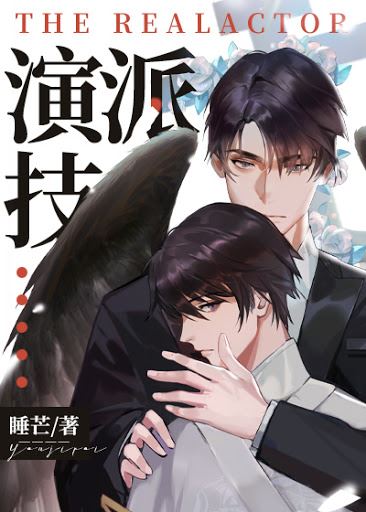
... Read More
This section of the novel operates like a slow exhale after holding your breath for fourteen chapters. The author makes a deliberate structural choice here: after all the suspense and tension from before, we get a chapter that's almost domestic in scope. Zhuang Qin wakes up. Xiao Dao visits. They talk. Shifu checks everyone's health. Shiniang gets surgery. Xiao Lian goes home. It should feel mundane, and honestly part of me wanted more drama, but that's exactly why it works. The pacing here is trusting the reader to understand that recovery is its own kind of tension. You can feel the author resisting the urge to pile on more conflict—no new villains, no sudden emergencies, just life moving forward with people who are healing at different speeds. The transition from Zhuang Qin's insomnia-ridden night into the quiet morning routine is particularly well-handled. Early darkness, early light, sun filtering through curtains onto old wooden floors—this is the visual equivalent of a deep breath. Then Xiao Dao disrupts that calm, bringing the emotional complications back into focus, and then we move into the medical results which provide genuine relief. The chapter doesn't end on a cliffhanger. It ends on Shiniang's surgery being successful, on Zhuang Qin feeling grateful, on life going on. And that's radical for this genre. Most novels would throw in a plot twist right here to keep you hooked, but the author is saying: this peace is the point. This is what Zhuang Qin is fighting for. The pacing choice itself is a statement.

Leave a comment

You must be logged in to leave comments. or
