Acting School - Reviews

Acting School
+Add to Custom List
Sort
Add review
... Read More
'I like being an actor. I don't like being a star.' Zhuang Qin says this while standing on a beach in Thailand, sunscreen on his nose, and somehow both lines about protecting his skin and hiding from public cruelty operate on the exact same metaphorical level. He won't tan because he doesn't want to get sunburnt — small thing, right? But he also won't let himself be exposed, won't leave his house alone, won't knock on Xiao Lian's door in the middle of the night because 'people might recognize and scold him.' The sunscreen is him trying to exist in sunlight without damage. The star vs actor distinction is him trying to perform without being consumed. Both are about control. And then Li Mu hands him yogurt he doesn't want, he throws it in his bag anyway, and later he and Xiao Lian hatch a plan to offload sponsored yogurt onto other people. Of course. Protection, avoidance, deflection — the pattern repeats at every scale from physical sunscreen to career choices to snack distribution.
... Read More
I am not okay. I am literally not okay. Let me just sit with this for a moment. Li Mu, a man whose personality seems to be 'professional distance and mild intimidation,' walks into a room with pockets FULL OF SNACKS. Full. Of. Snacks. And his first instinct isn't to eat them himself—it's to offer one to Zhuang Qin. With the question 'Do you like seaweed?' delivered in the most casual tone possible. This man could have just handed it over. He didn't. He asked. He wanted permission. He wanted to make sure he wasn't doing something wrong. And then Zhuang Qin feeds him one back and says 'we cooperate well together' and I swear to god Li Mu's entire face changes because the word 'cooperate' hits him differently. Their whole relationship has been this slow burn of proximity and unspoken things, and now they're sitting in a dressing room in Thailand eating convenience store snacks and pretending this is normal. It's the most romantic scene I have ever read and neither of them would call it that. I've re-read this passage five times. Five. The sweetness is in the lack of any drama whatsoever. No grand confessions. Just a man who likes his co-star enough to carry snacks in his pockets. That's it. That's the moment. My heart cannot handle this.
... Read More
What I love about this passage is how grounded it feels. You can practically feel the heat on set. 'One hour of shooting in this weather is equivalent to shooting in a studio for two or three hours.' Zhuang Qin covered in sweat, Director Guo reluctantly abandoning his night scene idea because he sees how exhausted his lead actor is. This isn't some glamorous Hollywood production—it's real, sweaty, money-draining filmmaking where every shot counts. And then the dinner scene! Qiu Ming bringing in an entire team of chefs from China, a full hotel restaurant converted into a private dining space, waiters specially imported. Director Guo's internal reaction—'finally learned what capitalism is'—this single line tells you everything about the production's scale. Meanwhile Li Mu's cleanliness issues are so vividly portrayed: the disinfectant spraying, the separate small plates, the mental image of him at a buffet with 'so many people walking around in front of a few pots of food.' Tomorrow's scene setup is also fascinating—the Water Festival, crowded streets, strange smells mixing together, An Ke getting lost because his sensory navigation is overwhelmed. You can almost smell the festival. The contrast between today's brutal heat and tomorrow's chaotic festival atmosphere creates this really textured sense of place.
... Read More
"The empty lens was fixed on the rotating electric fan in the room. After spinning for a few seconds, it slowly stopped." I literally sat up when I read this. Five shots, no dialogue from Zhuang Qin, just a fan dying down and characters moving around a dark room—and it is SO much more uncomfortable and charged than any actual romantic scene could be. This is the kind of direction that makes you lean forward in your seat. What's brilliant is how the narrative mirrors this: the author gives us almost nothing external drama here, just the tension of anticipation, the fear of what's coming next. Zhuang Qin reading the script and thinking 'if it was the next scene, he really wouldn't know how to shoot it'—he's bracing himself. Meanwhile, Director Guo is adding scenes on a whim, Xiao Lian is losing his mind, and Li Mu is internally debating whether to cut scenes altogether. Three different people, three different ways of handling pressure, all orbiting this one film shoot. And then the 'Memory of Youth Ways' subplot drops in like a plot bomb—Zhuang Qin got his role rewritten, his character written OUT of the show, and now he's playing second lead in something that was supposed to be his breakthrough. The layers of professional betrayal and comeback potential here are insane. I need to know what happens next.
... Read More
I need to talk about Song Ke because this guy is quietly doing the most in this entire passage. Five bodyguards, wearing sunglasses at night, stern-faced like a secret service detail — and he's just being genuinely considerate. When he notices Zhuang Qin instinctively stepping back from the fan crowd, he doesn't make a scene, he just asks what's wrong and then quietly repositions himself as a shield. The line "Your fans are really dedicated" at the end felt like the most Song Ke thing ever — not jealous, not dismissive, just an honest observation from someone who genuinely doesn't understand that kind of fandom intensity because he's never experienced it. And Zhuang Qin's response? Thanking him sincerely and promising to treat him to a meal. These two have this easy, no-drama camaraderie that I actually really appreciate in a genre where male friendships sometimes get sidelined for rivalry drama. Meanwhile there's the Li Mu situation looming over the hotel scene — Zhuang Qin walks in and immediately spots him in a thin white V-neck sweater, and the text takes a full beat to describe his lean muscles and long legs through that sweater. That's not an accident in the writing, folks. That's the author winking at us.
... Read More
'The resort was indeed luxurious, with a secluded wilderness resort hotel nearby, next to a narrow, deep blue river that had frozen over.' Just stop. That description is everything. Deep blue frozen river, secluded wilderness, expensive-as-hell resort. You can SEE this place. And then the author contrasts it perfectly with Xiao Lian's internal monologue about the prices: 'even he couldn't help but marvel at the rates. No wonder the place was so empty.' The emptiness becomes atmospheric — this is a place for the ultra-wealthy, isolated from the world below. The snow itself is a character. 'The snow's so thick, you won't get hurt' — but then the snow has more friction than expected, which is what causes Zhuang Qin to lose control. The author uses environmental detail to drive plot, which is masterful. The cable car scene through the 'snowy mountain forest' gives me major cinematic vibes. Everything is white and cold and vast and silent until it isn't. The fogged-up goggles, the blur of white, the increasing speed — it reads like a sequence from a survival thriller. And that final image: two bodies tumbling through powder, snow spraying into the air, the cold biting through scarves. I'm physically shivering just reading it.
... Read More
Okay, let me just say this: the whole audition scene was tense as hell, but it was that final exchange between Li Mu and Director Guo that really got under my skin. Think about it — Guo Baozhen goes out there all confident, ready to land his dream actor, and Li Mu basically dismantles him in two sentences. "Are you asking for my number, or is someone else asking for it?" What does that even mean?! Like, we all know it's Zhuang Qin whose heart is doing backflips somewhere in that theater, but Li Mu calling him out like that… chills. Actually chills. The stakes here are surprisingly layered. On the surface, it's just a casting call. But underneath? It's about power dynamics, about who holds the cards. Li Mu has all the power in this scene — he's the famous actor who doesn't need this role, he's the one who gets to decide who gets to approach him. And then he deliberately deflects Guo Baozhen toward Zhuang Qin without even looking at him directly. The boy by the door. The guy in the cap and mask. What killed me was that Zhuang Qin, who literally just seconds ago was begging the director to chase after Li Mu, ends up being the very person Li Mu has in mind. He's standing right there, watching everything unfold from a distance, completely powerless in a way that contrasts so sharply with Li Mu's cool control. I kept thinking — what was Zhuang Qin's face doing right at that moment? Did he realize it? The author really knows how to make you care about who gets what. By the end of this chapter, I was simultaneously rooting for Li Mu to give his number AND terrified that he wouldn't. Because if he does, everything changes between them, right? So many things hanging in the balance with just one phone number.
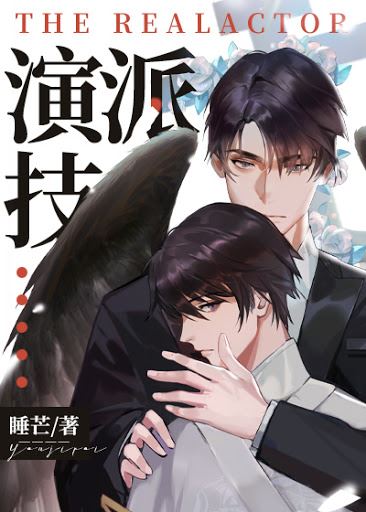
... Read More
I need to talk about how Li Mu's dialogue reads. The man says things like 'I don't want to shoot it' with such flat finality. No explanation, no plea, just... done. It's hilarious because we know he's doing this out of some misguided protectiveness, but his face must be absolutely stone the entire time. And Director Guo is such a chaotic force. 'No!' — just straight up refusing him. Then pivoting to this whole internal monologue about dating plans like he's playing matchmaker in real time. The transition from professional director to wingman in two seconds is comedy gold. Zhuang Qin's messages are so uniquely him though. Typing, deleting, sending a voice note that cuts off mid-sentence. His punctuation tells the whole story — 'Hmm?' when he learns Zhuang Qin wanted the scene, and later just staring at the phone. He doesn't have the words for this. The author's narrative voice also deserves love. Things like 'Two people stood under a sunshade' feel almost cinematic, like a paused frame. And Director Guo's internal matchmaking plan — the italics, the specificity about living together and holding hands — it's funny without being slapstick.
... Read More
I keep coming back to the symbolism in this chapter and it's not even trying that hard which makes it better. The cat — found abandoned by the roadside, malnourished and thin, with blue eyes that are "very clear" — is basically a mirror for both Zhuang Qin and Li Mu. They're both creatures in their own ways, both navigating a world that doesn't always treat them gently, both pretending they don't need anyone when they clearly do. The fact that it's white, timid, and flinches at first touch... this thing knows about survival. And then there's the cigarette smoke. Jiang Zhuo scrubbing clothes with a cigarette in his mouth, the blue-lit bathroom with its curtain cracks, the smoky atmosphere around every moral decision. Cigarettes as punctuation marks for existential moments. Classic but it works because it's tied to specific emotional states, not just mood decoration. The name "Yogurt" itself is loaded. It's something Zhuang Qin is contractually bound to, something associated with obligation and forced consumption (he literally vomited from drinking it for a commercial). But Li Mu chose it anyway, and Zhuang Qin lets it just be a name. There's something profound about reclaiming something that was once tied to discomfort and making it yours through choice. And the drugs and money in the script — substances that promise escape but deliver destruction — parallel everything happening in the real-world framing narrative. Two kinds of dependencies, two kinds of people trying to figure out what they're willing to sacrifice.
... Read More
"I'll never doubt you're padding again." / "..." That exchange is a masterclass in what NOT to say and how a conversation can carry five layers of meaning in three lines. Zhuang Qin makes an innocent(??) comment about padding, Li Mu's silence says everything, and Zhuang Qin immediately backpedals with 'Did I say something wrong again?' This is not witty banter — this is two people who care too much about each other's reactions navigating landmines they can't see. But the real dialogue gold is how sparse it is overall. So much is communicated through action and implication: the whispered 'I'm the same,' the 'You decide,' the 'Aren't you going to check if I'm padded?' These aren't big confessions, they're tiny cracks in the armor. And that's what makes the voice feel so authentic — these characters don't have the luxury of grand romantic declarations, they have stolen moments and half-finished sentences and the constant threat of being interrupted by a director yelling cut. Zhuang Qin's internal monologue about how 'being an actor was indeed tough, having to persist through such circumstances' while simultaneously being a man who 'knew what should be done at this moment' — that's such a specific, funny, human voice. He's trying to intellectualize his way through an emotional situation and it's not working at all.
... Read More
'Take two, the second attempt!' 'Fourth time…' 'Fifth…' I need to talk about how the author used repeated attempts as a pacing device and honestly it was genius. On the surface, this is comedy — the actors can't get it right because of physiological complications. But underneath, each NG is building tension that has nothing to do with the scene they're filming and everything to do with the real feelings between them. By the fifth attempt, I wasn't thinking about the kiss anymore, I was thinking about how long these two were going to keep dancing around whatever this is. And then Director Guo calls cut after the real take and Li Mu nearly destroys the shower curtain. That release! The pacing goes from slow and strained (five attempts, growing frustration, awkward apologies) to sudden frantic action (tearing the curtain shut) to quiet aftermath (just holding each other in the tub). It's a perfect three-act structure compressed into one scene. The author also weaponized silence beautifully. When Zhuang Qin finally sits down and can't find words, when Li Mu just says 'You decide' in a hoarse voice, when they're both pressed against each other after cut and neither moves — those silences are louder than any dialogue could be.
... Read More
There are two scenes in this chapter that absolutely painted worlds for me, and they couldn't be more different. The first is the gift-checking scene with Xiao Dao paranoidly taste-testing everything like he's in a spy thriller. “Some poisons are colorless and tasteless, and what about those hidden needles, is that real?” This immediately establishes the world Zhuang Qin lives in — one where celebrities receive gifts that could genuinely be weapons. The contrast between Zhuang Qin's casual dismissal (“It's not that exaggerated; don't believe everything you read online”) and Xiao Dao's genuine fear says so much about their dynamic and the industry they're in. But the second scene — the AR glasses video call — is where the worldbuilding really shines. Zhuang Qin putting on the glasses and seeing “a huge screen displaying a startup logo appear before his eyes” and thinking “he knew about this projection technology, but he didn't know the quality could be this good.” The detail about it being clear even in a bright environment, comparable to “a movie theater in a completely dark setting” — this is a tech enthusiast's dream description. Then there's Li Mu adjusting his phone angle, shifting slightly so his nose appeared higher. This tiny, almost invisible detail tells us everything about Li Mu — he's awkward with personal video calls, he's self-conscious, but he still cares enough to perfect the angle. The contrast between his professional confidence (building AR technology) and his personal clumsiness (bad video angles) is devastating in the best way.

Leave a comment

You must be logged in to leave comments. or
